
We may earn a commission when you buy through links on this page, at no extra cost to you. Learn more
Choosing the Best Cheap 3d Printer for Beginners is less about chasing the biggest speed number and more about avoiding frustrating setup. Auto-leveling, ready-made models, simple software, and dependable print recovery can make the difference between a printer that gets used and one that gathers dust.
Compact printers suit bedrooms, desks, classrooms, and family workspaces, while enclosed designs offer an added layer of reassurance around children. Think about whether you mainly want small toys and learning projects, larger functional parts, or colorful multi-material creations.
The seven options below range from approachable mini printers to faster, more capable machines. Their prices and features vary considerably, so the right choice depends on how much convenience, print volume, speed, and creative flexibility you expect from your first printer.
| Product | Title | Key Features | Price |
|---|---|---|---|
 |
#1Best Starter Entina Tina2C Mini Printer Brand: Entina
|
|
Check Latest Price |
 |
#2Best Speed FlashForge Adventurer 5M Brand: FLASHFORGE
|
|
Check Latest Price |
 |
#3Best All-Rounder Bambu Lab A1 Printer Brand: BAMBULAB
|
|
Check Latest Price |
 |
#4Best Value Hephi3d Tina2C Printer Brand: HEPHI3D
|
|
Check Latest Price |
 |
#5Best Creative Kit Bambu Lab A1 mini Kit Brand: BAMBULAB
|
|
Check Latest Price |
 |
#6Best for Kids AOSEED AI Printer for Kids Brand: AOSEED
|
|
Check Latest Price |
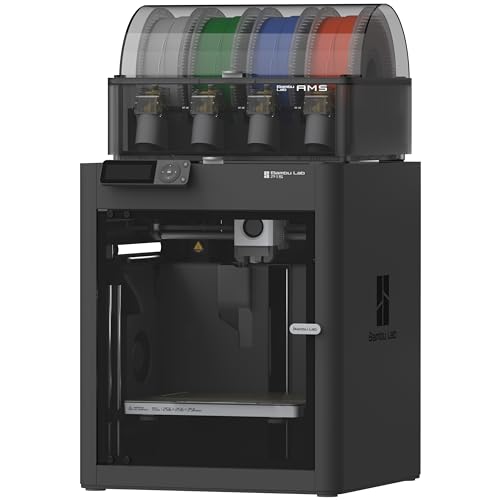 |
#7Best for Growth Bambu Lab P1S Combo Brand: BAMBULAB
|
|
Check Latest Price |
What to Look for in Best Cheap 3d Printer For Beginners
- Prioritize automatic leveling and a fully assembled design if you want to start printing with minimal adjustment.
- Check the printer’s build size against the objects you plan to make, since compact beginner models are best suited to smaller projects.
- Look for app access, ready-to-print model libraries, or included test files if you do not yet know how to create and slice models.
- Consider Wi-Fi, offline card printing, or USB support so you have a backup when app-based printing is inconvenient.
- For children, favor an enclosed, quiet design with straightforward controls and age-appropriate material support.
#1 · Best Starter
Entina Tina2C Mini Printer
The Entina Tina2C is built around a low-friction first experience. It arrives fully assembled, uses intelligent auto-leveling, and can reportedly begin a first print in as little as eight minutes. The Poloprint Cloud app adds AI-powered search, photo-to-print tools, STEM courses, and more than 3,500 models, making this a natural fit for families, students, and first-time makers who want guidance rather than a blank canvas.
Its compact body, rounded edges, integrated LED, and low-noise operation make it appropriate for a home, office, or creative corner. Printing can happen through 2.4G Wi-Fi or a TF card, so beginners are not limited to one workflow. The flexible magnetic build plate also helps with model removal, while the quick-swap printhead keeps routine maintenance approachable.
Pros
- Fully assembled beginner setup
- Auto-leveling and power-loss recovery
- 3,500+ model library
- Wi-Fi and TF-card printing
- Quiet compact design
Cons
- Mini format limits larger projects
- App-centered features may not suit everyone
In everyday use, the Tina2C emphasizes convenience over maximum scale. A bendable magnetic plate can make finished models easier to remove, and the self-cleaning nozzle plus quick-swap printhead are useful touches for new users who have not yet learned extensive maintenance. Power-loss recovery can also reduce wasted filament when an interruption occurs.
At $199.99, it occupies a sensible middle ground among the small beginner-focused choices. It offers more guided creativity than a basic plug-in printer, while remaining less ambitious than the faster, larger-format machines below. Choose it when compact size, family learning, and a large ready-made library matter more than advanced materials or oversized parts.
#2 · Best Speed
FlashForge Adventurer 5M
The FlashForge Adventurer 5M is aimed at beginners who want an easier start without giving up substantial performance. Automatic bed leveling removes a common setup hurdle, while the CoreXY structure is designed for rapid printing with travel speeds up to 600mm/s and acceleration up to 20,000mm/s². Its 220 x 220 x 220mm print size also gives users more room than mini models.
A 280°C direct-drive extruder, dual-fan cooling, vibration compensation, and a standard 0.4mm nozzle support a broad range of projects. The dual-sided PEI platform is designed for adaptability and easier removal, and the detachable nozzle can be changed in about three seconds. Flash Studio remote monitoring adds app-based status checks and control for convenient oversight.
Pros
- Large 220mm build volume
- Automatic bed leveling
- Very high advertised speed
- Quick nozzle changes
- Remote app monitoring
Cons
- More performance than some beginners need
- Optional nozzle sizes add extra decisions
The Adventurer 5M is a strong choice if waiting for prints is your main annoyance. Its 35-second warm-up to 200°C and high-flow 32mm³/s nozzle are intended to keep the machine moving, while automatic leveling simplifies the initial routine. The PEI platform and direct extruder make it more versatile than the smallest starter machines.
Priced at $249, it costs more than the most basic compact options but brings a noticeably larger working area and speed-focused design. It is especially appealing for beginners who expect to progress into rapid prototyping or repeated projects. Those who mainly want small educational models may find the extra capability less important than a simpler mini printer.
#3 · Best All-Rounder
Bambu Lab A1 Printer
The Bambu Lab A1 is a ready-to-use FDM printer that combines beginner-friendly automation with higher-end convenience. Full-auto calibration handles Z-offset, bed leveling, and related adjustments, while active flow-rate compensation is designed to keep extrusion consistent. A simplified touchscreen, quiet motor-noise cancellation, and a one-clip nozzle swap make the machine approachable for users who want fewer manual chores.
Speed and precision are central to the A1’s appeal, with acceleration listed at 10,000mm/s². It can also support multi-color printing through the separately required AMS lite system; shoppers wanting that capability need the A1 Combo or must purchase AMS lite separately. That distinction matters when comparing its headline creative potential with the advertised printer package.
Pros
- Full automatic calibration
- Quiet operation
- Active flow-rate compensation
- Quick-swap nozzle
- Optional multi-color capability
Cons
- AMS lite is not included in this listing
- Costs more than compact starter models
The A1 suits someone who wants a polished first printer but does not want to outgrow it immediately. Automatic calibration and the accessible touchscreen reduce the learning curve, while the quick nozzle system supports future experimentation. Its quiet operation is a practical advantage for home offices, bedrooms, or shared creative spaces.
At $299.99, it is one of the pricier open beginner models here, but the extra cost buys a more comprehensive feature set than the smallest machines. It is a better long-term fit than a mini printer for shoppers who value speed, calibration, and refinement. Remember that multi-color printing requires the additional AMS lite hardware.
#4 · Best Value
Hephi3d Tina2C Printer
Hephi3d’s Tina2C is designed to be almost immediately usable: it arrives fully assembled and factory preset, with auto-leveling and a stated five-minute path to the first print. The package includes starter PLA filament, essential tools, and a TF card containing test models and slicer software. That combination makes it particularly attractive to beginners who want a complete entry kit rather than separate accessories.
The accompanying app offers one-tap printing, more than 3,500 online models, STEM learning content, and over 25 design modules. Yet this printer is not locked to that ecosystem: users can also work with Wiibuilder or Cura, upload by Wi-Fi, use a TF card, or connect through USB Type-C. Silent printing, bed detection, resume printing, and a quick-release hotend add practical convenience.
Pros
- Lowest listed price among similar mini options
- Includes filament, tools, and TF card
- Open-source software flexibility
- Auto-leveling and resume printing
- One-tap app printing
Cons
- Compact build limits object size
- Feature set may take time to explore
For a first printer, the supplied starter kit is a meaningful advantage because it lets users begin without immediately shopping for basic tools or sample material. The app is useful for quick projects, while Cura and Wiibuilder support give more ambitious makers a route toward customized models. The quick-release hotend is another beginner-friendly maintenance feature.
At $189.99, it is the least expensive option in this group and undercuts the similarly compact Entina model. It makes the most sense for families, STEM learners, or gift buyers who value included accessories and software choice. If you expect large parts or advanced filament work, its mini format is the main limitation to consider.
#5 · Best Creative Kit
Bambu Lab A1 mini Kit
The Bambu Lab A1 mini is a compact, ready-to-use beginner printer bundled here with an LED Lamp Kit. That bundle gives the printer a clear creative purpose: users can print compatible lamp models and turn them into decorative lights, gifts, or room projects. Automatic calibration and simple setup keep the emphasis on making rather than repeated adjustments.
Beyond the lamp projects, the A1 mini is positioned for toys, décor, functional tools, and personalized gifts. Access to MakerWorld provides ready-to-print models, while the Bambu Handy app supports connected print management. Its compact footprint, quiet operation, and claimed high-speed printing make it suitable for a home, studio, desk, or other space where a larger printer would be intrusive.
Pros
- Includes LED Lamp Kit
- Automatic calibration
- Connected Bambu Handy app
- Access to MakerWorld models
- Compact and quiet
Cons
- Mini format restricts larger creations
- Lamp projects depend on compatible models
The included lamp kit gives this package more direction than a printer sold alone. It can be a fun way for beginners to see a practical result from their first prints, especially when making personalized décor or gifts. Automatic calibration and the connected ecosystem further reduce the number of technical decisions before starting.
At $224.10, the A1 mini kit costs more than the Hephi3d Tina2C and Entina Tina2C, but it includes a distinct creative accessory and Bambu Lab’s broader connected experience. It is best for shoppers who specifically like decorative projects and want a neat, quiet machine. Buyers planning larger functional parts should look toward the full-size alternatives.
#6 · Best for Kids
AOSEED AI Printer for Kids
The AOSEED AI 3D Printer is designed as a family-oriented creative device, with an enclosed, pinch-resistant body, quiet operation, and a leveling-free platform. Its app provides access to more than 12,000 human-reviewed and print-tested models across 17 design modules. Children can create through voice, text, or image prompts using AI Doodle, AI MiniMe, and MINIMAKIE without already knowing 3D design software.
The printer also combines one-tap printing, fast Wi-Fi, voice control, and compatibility with iOS, Android, and Windows. A built-in camera enables real-time smartphone monitoring and time-lapse videos, while filament runout detection pauses a job when material is depleted. It supports single-color printing only; multi-color designs must be printed as separate pieces and assembled.
Pros
- Enclosed kid-focused design
- 12,000+ model library
- AI-assisted creation tools
- Built-in camera and time-lapse
- Filament runout detection
Cons
- Single-color printing only
- More expensive than basic mini printers
The AOSEED’s strongest real-world advantage is the way it turns printing into a guided activity rather than a technical project. A child can choose or generate a design, start it with one tap, and let an adult check progress remotely. The claimed 20-minute completion time for small toys may also help maintain attention, while the quick-release nozzle simplifies changes.
At $280.47, it is priced close to the Bambu Lab A1 but serves a different audience. Its extensive child-focused library, enclosed construction, AI tools, and camera make it compelling for families. For adults who want open-ended maker control or multi-color output, the single-color limitation and highly guided ecosystem may be less appealing.
#7 · Best for Growth
Bambu Lab P1S Combo
The Bambu Lab P1S Combo is the most capable and expensive printer in this roundup, but it can still appeal to a beginner who wants room to grow. Its enclosed design is intended to improve performance with advanced filaments, and automatic bed leveling removes one of the more tedious setup steps. The listed setup time is 15 minutes, keeping the initial barrier relatively manageable.
Its headline feature is multi-color and multi-material printing, with capability for up to 16 colors when connected to the Bambu Lab AMS. The machine also lists speeds up to 500mm/s and acceleration of 20,000mm/s². Filament support includes PLA, PETG, TPU, PVA, PET ABS, and ASA as ideal options, with PA and PC listed as capable.
Pros
- Enclosed printer design
- Automatic bed leveling
- Up to 16-color capability
- Very high advertised speed
- Broad filament support
Cons
- Highest price in the roundup
- AMS connection is required for color printing
- Not recommended for carbon or glass fiber reinforced polymer
The P1S Combo makes sense for someone who already knows that single-color beginner projects will not be enough. Its enclosure, high speed, and AMS-based color potential support a much wider creative path than the compact starter printers. Automatic leveling and the stated 15-minute setup keep it accessible, even though its capabilities may take longer to learn fully.
At $549, it is a substantial jump from every other option here. That premium is justified only if you expect to use multi-color work, advanced filament options, or a larger long-term toolkit. For a child’s first printer or occasional small models, the simpler machines offer better value; for serious growth, the P1S Combo is the strongest upgrade path.
Frequently Asked Questions
What is the best cheap 3D printer for a complete beginner?
The Entina Tina2C and Hephi3d Tina2C are the most directly beginner-focused choices because they arrive assembled, include auto-leveling, and provide ready-to-print models. The Hephi3d version has the lowest listed price and includes filament, tools, and a TF card.
Do these beginner 3D printers need manual bed leveling?
The listed models generally reduce or remove that task through automatic or full-auto leveling. The AOSEED printer specifically describes a leveling-free platform, while the Bambu Lab models and both Tina2C options list automatic leveling features.
Which printer is best for children?
The AOSEED AI printer is the most specifically designed for children, with an enclosed pinch-resistant body, kid-focused model library, one-tap printing, and camera monitoring. The Entina and Hephi3d Tina2C models are also positioned for families and STEM learning.
Can these printers make multi-color objects?
The Bambu Lab A1 can use multi-color printing with separately required AMS lite hardware, and the P1S Combo supports up to 16 colors when connected to Bambu Lab AMS. The AOSEED printer supports single-color printing only, although separate parts can be assembled into multi-color designs.
Is a faster printer better for a beginner?
Not necessarily. High-speed models such as the FlashForge Adventurer 5M and Bambu Lab P1S can save time, but compact printers with guided apps, ready-made models, and simple setup may be easier for a first project.
Final Thoughts
For the easiest low-cost entry, the Hephi3d Tina2C is the strongest value pick, while the Entina Tina2C offers a similarly approachable experience with Wi-Fi, app tools, and a large model library. The Bambu Lab A1 mini kit is a fun alternative if decorative lamp projects and the Bambu ecosystem appeal to you.
Choose the FlashForge Adventurer 5M or Bambu Lab A1 when you want more speed and room to develop. Families should look closely at the AOSEED, while ambitious makers who specifically want enclosed, multi-color capability should consider the Bambu Lab P1S Combo despite its much higher price.

Olivia
Writer at Helmet Today, covering helmet reviews, fit and riding safety.


