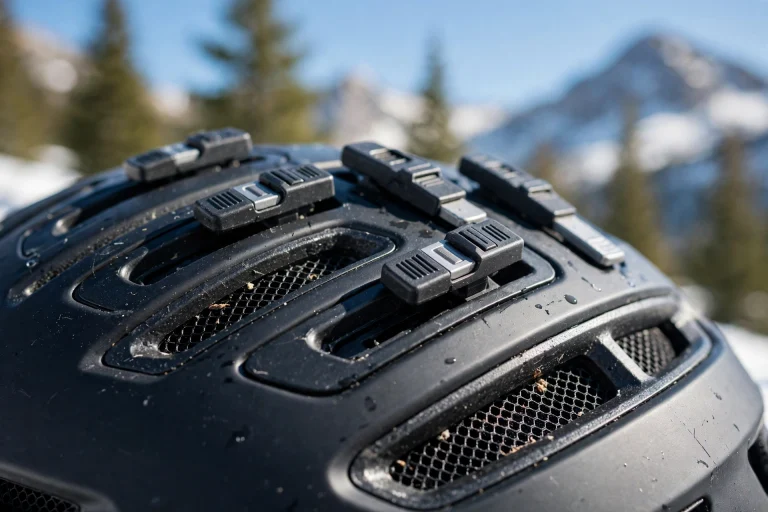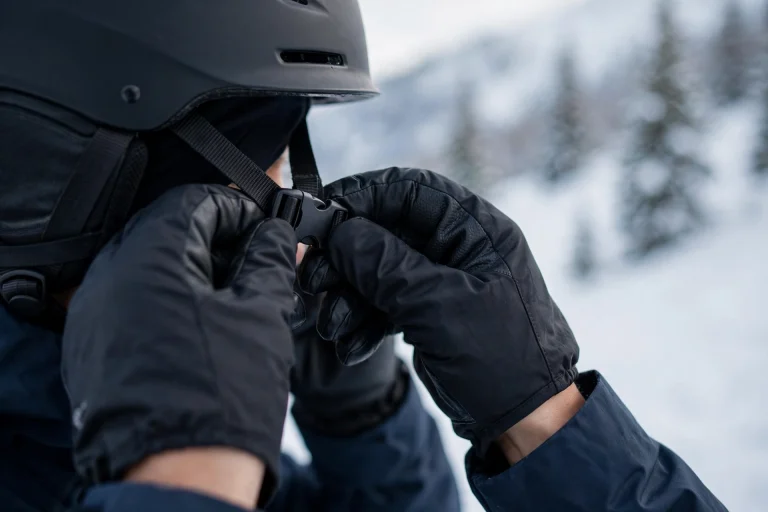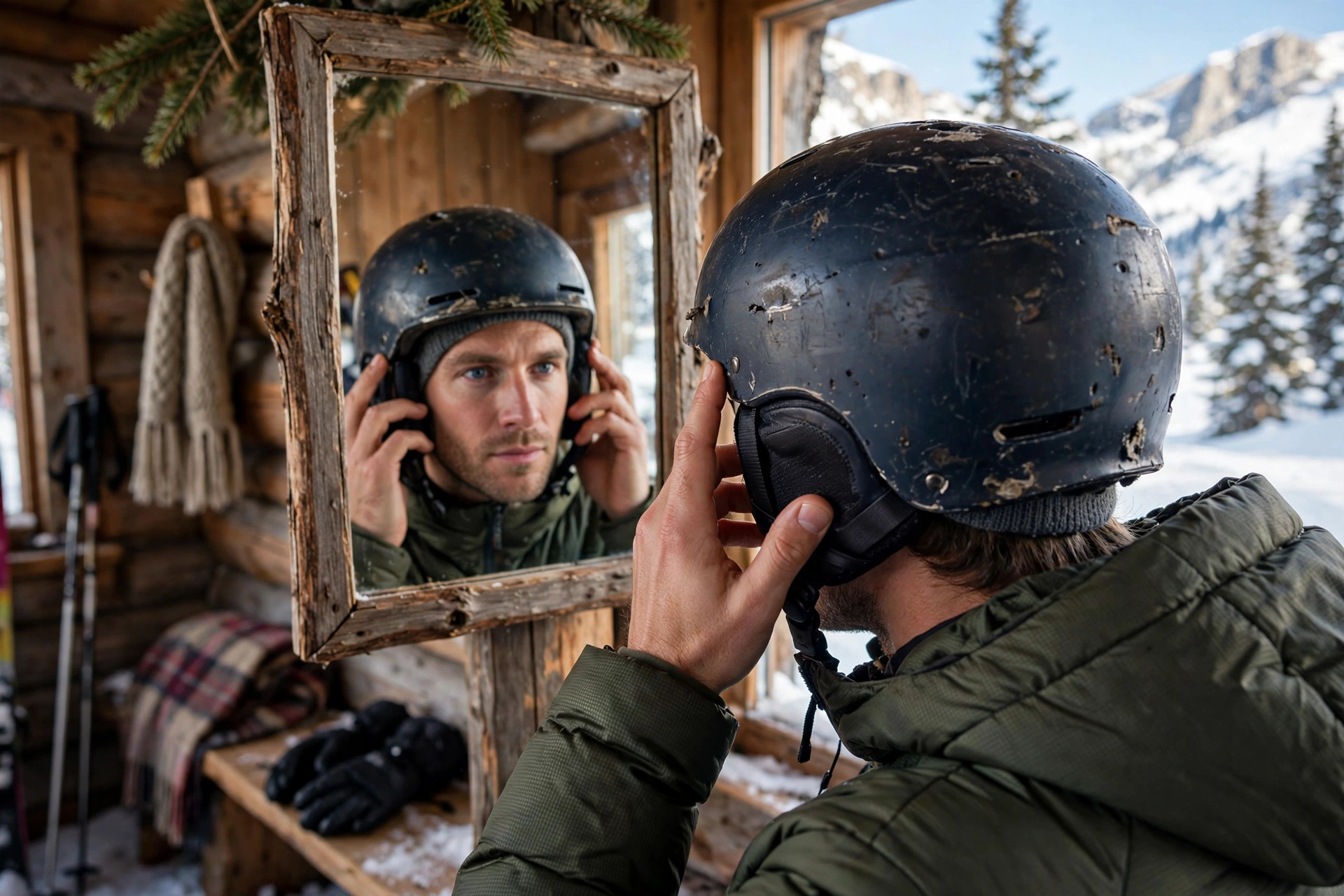
A ski helmet that still fits after years of use should sit level on your head, feel snugly even all the way around with the dial or pads taking up no more than a little slack, and stay in place without rocking when you shake and tilt your head — if it has developed wobble, pressure points, or a forehead gap that was not there before, the pads have compressed or your fit has changed and it is time to adjust, repad, or replace it. Helmets do not usually change shape, but the comfort padding inside them slowly does, and that is what decides the fit.
A helmet pulled from the closet for its fifth season rarely fails loudly. It just feels slightly off — a wobble on the lift, goggles that no longer meet the brim, a sore spot by midday. Because the shell and foam still look fine, most skiers ignore it. But a helmet protects properly only when it stays correctly positioned on your head in a fall. This guide gives you the checks that reveal whether an older helmet still fits, and helps you decide between new pads and a new helmet.
What Are the Quick Fit Checks for an Older Helmet?
Put the helmet on the way you actually ski: no thick hat underneath, goggles in hand. First, position. The front edge should sit level, roughly an inch or two above your eyebrows — not tipped back like a cap, not pulled down over your eyes. If it will not sit level without sliding, something has changed.
Second, the movement test. With the chin strap unbuckled, shake your head side to side and nod. A helmet that still fits moves with your head, with at most a slight shift. If it rocks independently, slides forward over your eyes, or thumps against the back of your head, it is too loose — and new looseness points at compressed padding or a tired fit system.
Third, buckle the strap and try to roll the helmet off by pushing up at the front and back edges. A well-fitted helmet resists and your skin moves with it; a worn one lifts and rotates noticeably. Finish with comfort: wear it around the house for ten minutes, because a bad fit announces itself as a forehead hot spot or temple pressure well before the ten minutes are up.
Why Does a Helmet’s Fit Change Over the Years?
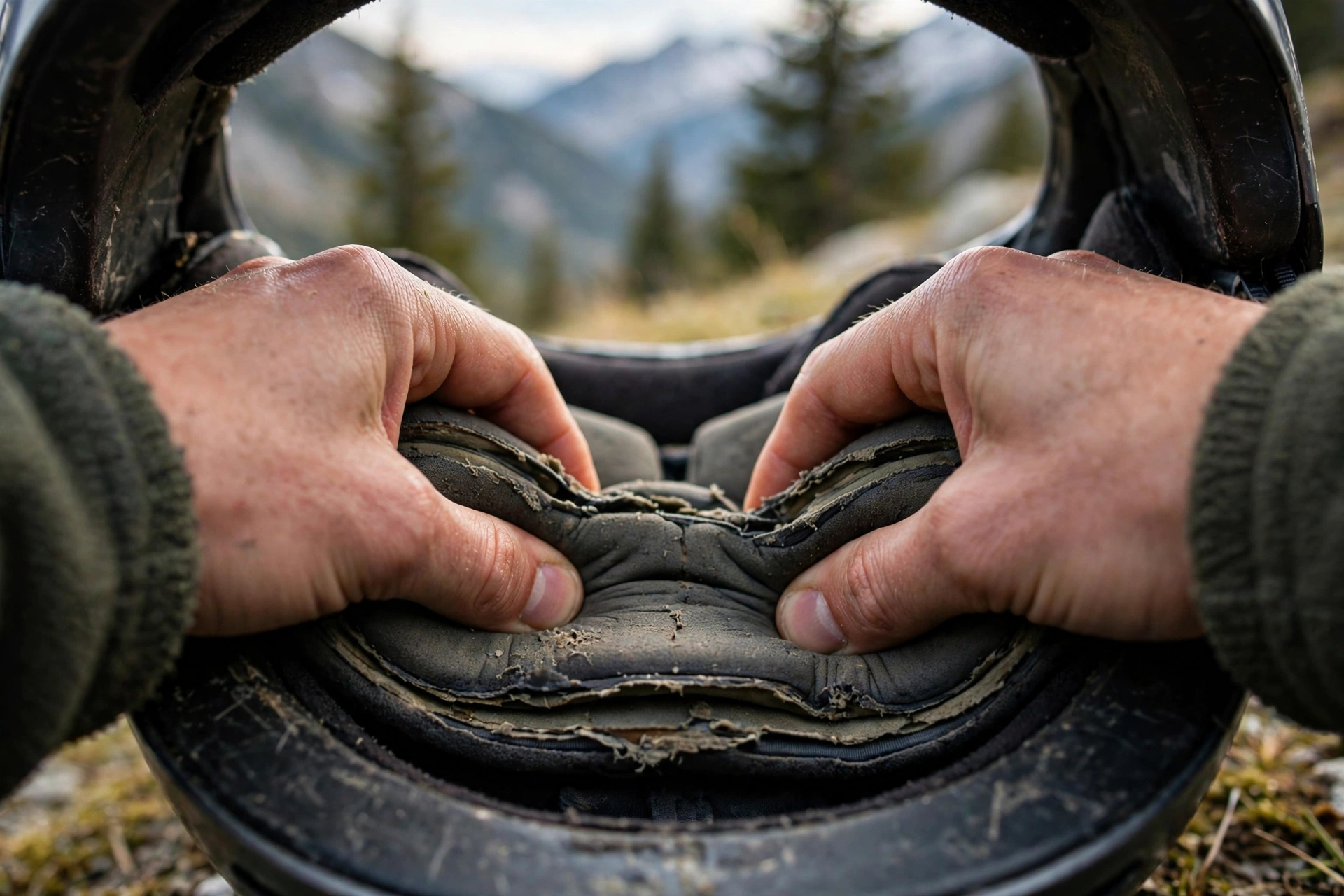
The main culprit is the comfort liner. The soft pads that make a helmet feel plush are foam and fabric, and in general terms they compress gradually under seasons of use, sweat, and being stuffed into gear bags. A few millimeters of compression around the whole head adds up to a visibly looser fit — the helmet is the same size, but you are now wearing it with thinner padding.
The fit system ages too. Rear dial adjusters can loosen, crack, or lose their grip, straps stretch slightly, and adjusters slip. Even how you wear it can drift: a different hairstyle, or a switch from a balaclava to a bare head, subtly alters how a helmet sits.
What usually does not change is the protective EPS foam itself, which holds its shape unless it has absorbed an impact or been damaged by heat or solvents. That distinction matters: a helmet that feels loose because its pads are tired may be perfectly sound underneath, while a helmet that still feels snug but has taken a hard crash is not. Fit and safety overlap, but they are not the same check.
Do Goggles Tell You Anything About Fit?
Yes — the goggle interface is one of the most honest fit gauges you own. Your goggles should meet the helmet’s brim with little or no gap across the forehead. The old “gaper gap” is not just a style joke: it means cold air blasts your forehead on every lift, and it often appears as a helmet’s pads compress and the helmet starts riding higher or tilting back.
Check the strap and frame too. Goggles that used to sit flat and now pinch your nose or push the helmet up are telling you the helmet’s position has shifted. Test the whole system together — helmet, goggles, and the thin liner or balaclava you ski in — because that layer changes the fit by more than most people expect.
Can New Pads or a Fit Dial Fix an Old Helmet?
Often, yes. Many manufacturers sell replacement liner and pad kits for their helmets, and a fresh set restores the fit of a helmet whose shell and foam are sound. In general terms, a repad is the right fix when the looseness is even all around, the fit system works, and the helmet has never taken a significant impact. Match the kit to your exact model and size — pads are model-specific.
A broken or slipping fit dial is sometimes replaceable too, if it is part of a removable fit system. If the dial is integrated and the shell or its mounts are damaged, that is different: structural damage is replacement territory, not repair territory.
Know the limits of refreshing an old helmet. New pads cannot fix a helmet that was the wrong size to begin with, a helmet with cracked foam or a damaged shell, straps that are frayed, or a buckle that does not hold. Pads restore fit; they do not restore protection. If the helmet carries extra technology — a rotational liner of the kind described in our guide to what MIPS is and how it works — that liner should still move freely after repadding; if it is torn or delaminated, the helmet has done its service.
When Should You Replace It Instead?
Replace the helmet if any of these are true: it has absorbed a hard impact, the EPS foam shows cracks, dents, or crumbling, the shell is cracked or deeply gouged, straps or buckles are damaged, or the fit stays loose with fresh pads and the dial fully tightened. A helmet you cannot make fit is a helmet that cannot do its job.
Age itself is a reason to look seriously at replacement. In general terms, manufacturers commonly suggest replacing a helmet after about five years of use, because materials age — pads degrade, plastics and adhesives tire, and designs improve. A heavily used helmet showing fit problems at year five is telling you it is finished. If you have run the checks, repadded where you could, and the helmet still rocks, gaps, or hurts, replace it — a helmet that fits like new is one you will wear correctly on every run.
Frequently Asked Questions
Q: My helmet wobbles now but fit perfectly two seasons ago. What changed?
A: Almost always the comfort pads. Seasons of use compress the liner foam by a few millimeters, which is enough to turn a snug fit loose. If the shell, foam, and fit system are undamaged, a replacement pad kit for your model usually restores the original fit.
Q: Can I wear a thicker balaclava or hat to make a loose helmet fit?
A: It is not a good fix. Thick layers under a helmet are not what the fit was designed around — they can let the helmet shift in a fall and change how it sits. Ski with the thin liner you fitted the helmet with, and if it is still loose, repad or replace the helmet instead.
Q: Does a helmet that still fits still protect like new?
A: Not necessarily. Fit is only one part of the picture: a helmet that has taken a hard impact, or one whose foam, straps, or shell have degraded with age, should be replaced even if it feels fine. Check the helmet’s condition, not just its fit.

Olivia
Writer at Helmet Today, covering helmet reviews, fit and riding safety.