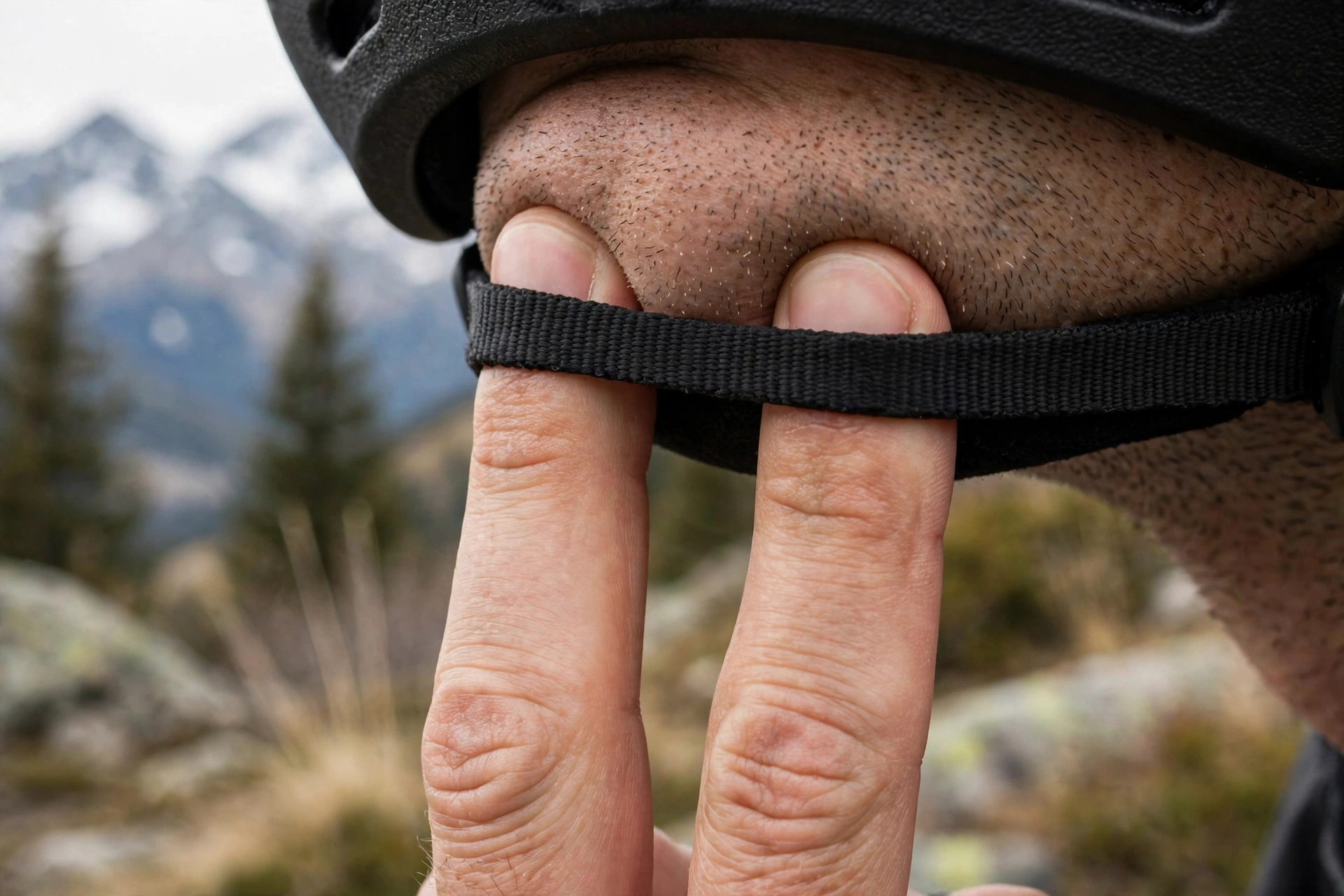
There is no official slope rulebook for chin straps — in general terms, the “rules” are resort and ski-school helmet policies plus one simple standard: the strap should be buckled on every run and snug enough that about two fingers fit between the strap and your chin. An unbuckled or loose helmet can shift or come off entirely in a fall, which is precisely the moment it is supposed to stay put.
Watch a lift line and you will see every variation: straps dangling open, buckles done up under loose loops of webbing, straps so slack the helmet tips back like a cap. The helmet in each case is certified, expensive, and nearly useless, because certification assumes the helmet is worn as intended. This guide sets out the simple rules that do exist, the checks behind them, and what to do when a strap fails.
Are There Official Rules About Ski Helmet Chin Straps?
Not strap-specific ones. No general law or industry rule dictates how tight your chin strap must be, and slope patrol is not measuring anyone’s webbing. What does exist, in general terms, is a layer of policy above it: some resorts require helmets in terrain parks or for certain programs, many ski schools and rental operations require helmets — properly worn — for lessons and for their own rental fleets, and children’s programs commonly insist on them without exception.
The other “rule” comes from the manufacturer. Every helmet’s instructions describe how the retention system must be adjusted and fastened, and the helmet’s certification was earned with the strap done up correctly. Skiing with the strap open is, in the maker’s terms, using the product incorrectly.
So treat strap discipline as the rule even if nobody enforces it: buckled for every run, adjusted before the first run, and checked whenever the helmet comes off and goes back on. It takes two seconds and it is what turns a helmet from headwear into protective equipment.
How Tight Should a Ski Helmet Chin Strap Be?
The standard check is the two-finger test: with the buckle fastened, you should be able to slide two fingers — flat, stacked — between the strap and your chin, and no more. Tighter than that and the strap will dig, distract, and tempt you to loosen it mid-day; looser and the helmet can lift and roll off the back of your head in a tumble.
Pair it with the roll-off check. Buckle up, then grip the helmet and try to roll it forward and backward off your head. A correctly adjusted helmet resists: it may shift slightly with your skin, but it should not pop off your forehead or expose the back of your skull. If it rolls off, tighten the strap and sort the side straps before skiing.
Also check with your mouth: open wide and yawn. The helmet should pull down slightly on top of your head as you do — a sign the strap system is engaged with the whole fit, not just hanging from the buckle. Make these checks your habit at the top of the first lift, not in the parking lot where gloves and haste get in the way.
How Do You Adjust the Side Straps and Buckle?
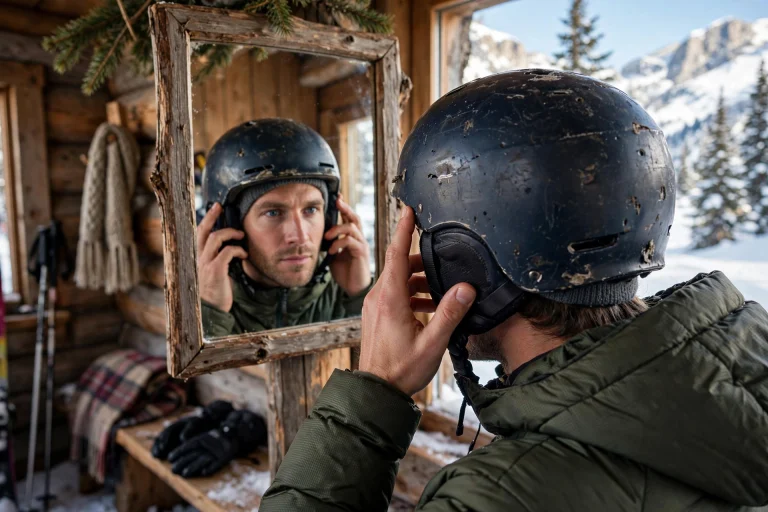
The chin strap is only half the system; the side straps decide where the helmet sits. On each side, the two straps should meet at a divider just below your earlobe, forming a neat V with your ear in the middle. If the divider sits way below the ear or up against it, slide it along the webbing until it sits right — this one adjustment fixes most “my helmet tips backward” complaints.
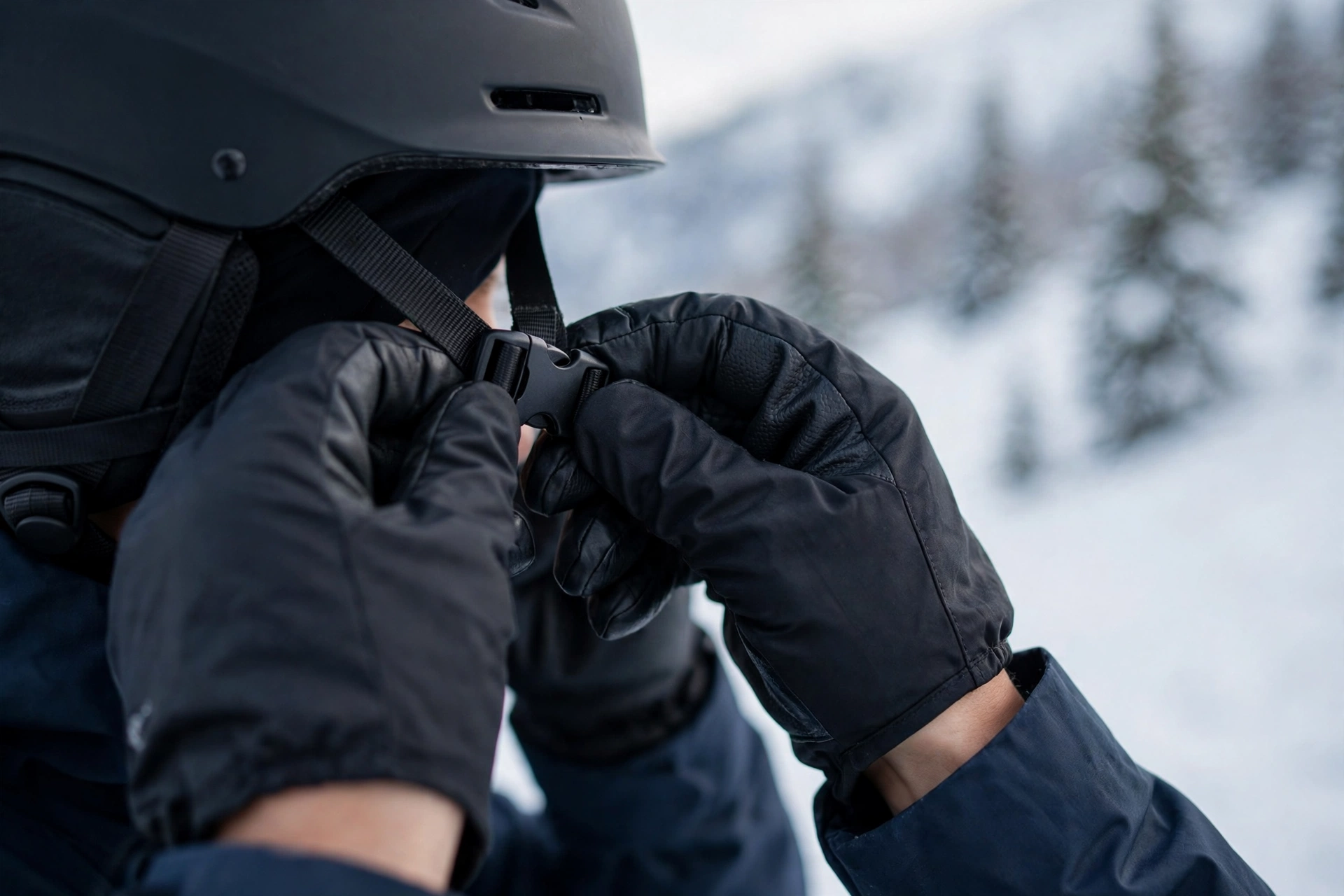
Adjust with gloves off, indoors or on a calm lift, because fiddly sliders defeat gloved fingers. Set the overall length first so the buckle sits roughly centered under your chin, then balance the two sides so the helmet sits level rather than pulled toward one ear. Buckles vary — simple snap buckles, magnetic self-closing ones, and padded chin cups all appear on ski helmets — but the test afterward is the same two-finger check.
Once adjusted, mark your settings mentally and resist re-fiddling daily. Straps mostly need re-checking after the liner is washed, after a child has “helpfully” adjusted them, or when you switch between wearing a thin balaclava and not.
What Strap Checks Should You Do Before Every Trip?
Give the webbing a slow once-over at the start of the season and after any big fall. Look for fraying, cuts, faded stiff sections, and stitching coming loose where straps anchor to the shell. Run each strap through its slider: a divider that slips freely will loosen itself during the day, and a strap that creeps is a strap that needs the slider or webbing replaced.
Click the buckle open and shut several times. It should engage with a positive click and hold against a firm tug. Cracks in the plastic, a buckle that releases under pressure, or grit jammed in the mechanism that cleaning cannot shift are all stop signs. Check the goggle strap too while you are at it — a worn goggle retainer is how goggles vanish, and it shares the same webbing-and-plastic world.
Remember why this matters beyond the strap itself: every protective feature in the helmet assumes it stays in position. Rotational protection is a good example — as our guide to what MIPS is and how it works explains, the low-friction liner works only if the helmet is seated correctly when the impact arrives. A loose retention system quietly undermines the whole design.
What Should You Do If a Strap or Buckle Breaks?
Do not ski on a broken retention system, and do not improvise one with tape, cord, or a borrowed strap from another model. A strap that fails inspection is the helmet telling you it can no longer do its job. Some manufacturers sell replacement straps and buckles for specific models; if yours is one of them, fit the exact part and repeat the full adjustment and roll-off checks.
If no exact replacement exists, the helmet is finished — replace it, however good the shell looks. On a trip, a rental shop can put you in a sound helmet the same day, which beats nursing a broken one through a week of skiing.
For children, check straps more often than your own: small hands loosen dividers, buckles get chewed and slammed in car doors, and growing heads change the geometry every season. Build the two-finger check into the family’s top-of-lift routine and it becomes automatic for everyone.
Frequently Asked Questions
Q: Can I leave my chin strap unbuckled on gentle slopes?
A: No. Falls happen at any speed, and an unbuckled helmet can come off before your head reaches the snow. Buckling up takes two seconds — make it part of putting the helmet on, every single run.
Q: Why does my chin strap keep loosening during the day?
A: Usually a worn or smooth slider letting the webbing creep, or a divider positioned too low. Reset the dividers just below your ears, check that the sliders grip, and replace any strap hardware that no longer holds its setting.
Q: Should a child’s chin strap be tighter than an adult’s?
A: The same two-finger standard applies to everyone. What differs is how often you check: kids fiddle with buckles and grow fast, so verify the fit at the start of every ski day rather than assuming last week’s setting still works.

Olivia
Writer at Helmet Today, covering helmet reviews, fit and riding safety.