How long a welding helmet battery lasts depends on the battery type and how you use the helmet: in general terms, a solar-assisted auto-darkening helmet’s battery can last several years of regular use, a replaceable lithium cell typically lasts a year or more, and a rechargeable fan or PAPR battery lasts a single shift to a few shifts between charges.
“Battery life” means different things for different helmets, and the confusion causes most of the worry. A passive filter helmet has no battery at all; an auto-darkening helmet has a small cell for its electronics; a fan or PAPR helmet has a larger battery that does real work every minute. Each has its own lifespan.
What Kind of Battery Does Your Welding Helmet Have?
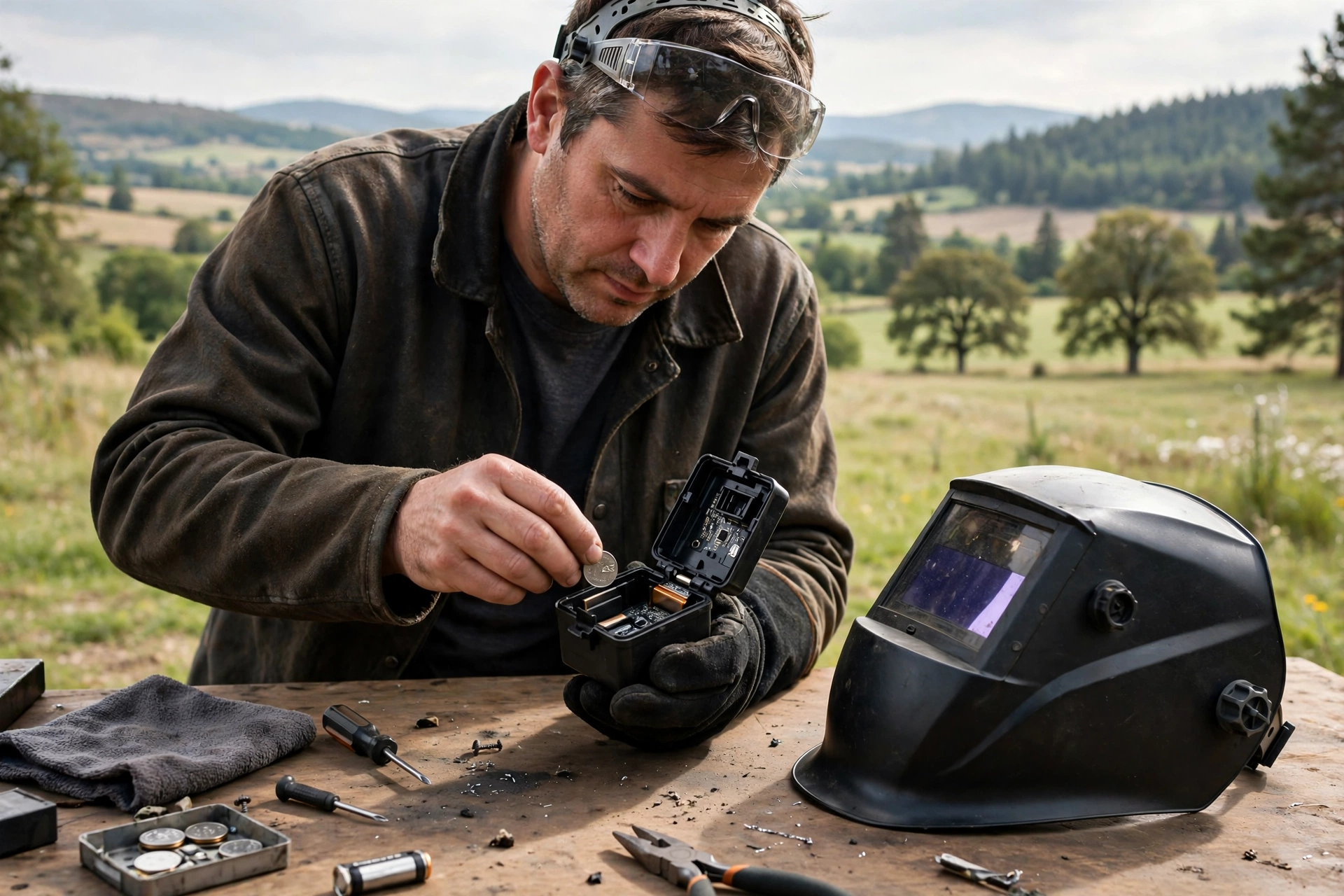
Most auto-darkening helmets use a small lithium coin cell, a pair of AAA cells, or a built-in rechargeable cell, often combined with a solar panel. The solar panel charges the cell from the welding arc and ambient light, which is why many auto-darkening helmets seem to run for years without attention — the battery is topped up every time you weld.
Fan and PAPR helmets use larger rechargeable lithium-ion packs, worn on the helmet or on a belt. These power a motor continuously, so they drain far faster than a filter cell — hours, not years — and their lifespan is measured in shifts per charge and in total charge cycles over their life.
Some helmets have no replaceable battery at all: the cell is sealed into the filter cartridge, and when it dies, the whole cartridge is replaced. This is common in lower-cost helmets and is worth knowing before you buy, since it changes the long-term cost of ownership.
How Long Does an Auto-Darkening Filter Battery Last?
In general terms, a solar-assisted filter battery lasts several years of regular workshop use, because the solar panel recharges it during welding and the electronics draw very little power between welds. Welders who weld daily may still get years from a cell, while occasional welders may get even longer.
A non-solar filter battery lasts less long but still, in general terms, a year or more of regular use, depending on how often the helmet darkens and how long it stays dark. Helmets left switched on, or stored where sensors keep triggering, drain faster — so switch the helmet off, or cover the sensors, when it is not in use.
Warning signs of a dying filter battery include slow darkening, flickering, failure to darken at all, and a low-battery indicator where fitted. Do not ignore these: a filter that does not darken reliably is not protecting your eyes, and the fix — a new cell or cartridge — is cheap compared with the risk.
How Long Do Fan and PAPR Batteries Last?
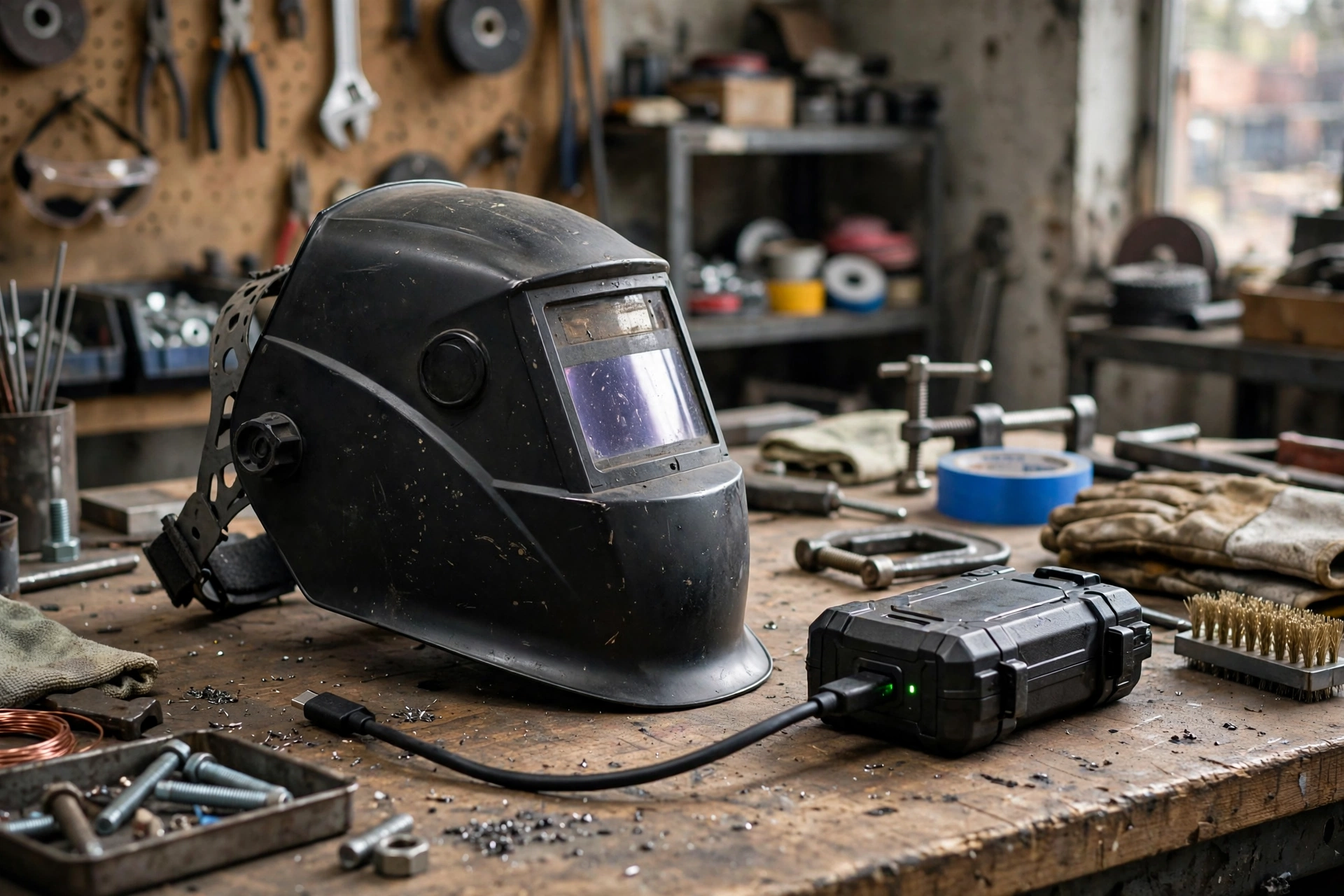
A fan or PAPR battery typically lasts one full shift on a charge, with higher fan speeds shortening that and lower speeds extending it. Makers usually quote a runtime at a given speed, and that figure is the honest guide — but cold workshops, old batteries, and clogged filters all reduce it, so treat the quoted figure as a best case.
Over its lifetime, a rechargeable pack lasts a number of charge cycles — in general terms, hundreds of cycles before its capacity drops noticeably. A pack used daily will therefore last a year or two before runtime shortens, while one used occasionally lasts much longer in calendar terms.
Carry a spare for critical work. A PAPR battery that dies mid-shift leaves you without both airflow and filtration, so a charged spare pack, or a second helmet for the rest of the shift, is standard practice where fume protection depends on the battery. Charge packs fully before each shift and do not leave them flat for long periods, which ages them faster.
What Makes a Welding Helmet Battery Last Longer or Shorter?
Usage pattern is the biggest factor. Frequent darkening, long periods switched on, high fan speeds, and cold storage all shorten battery life, while switching off between jobs, using the lowest comfortable fan speed, and storing the helmet at room temperature all extend it.
Storage matters more than most welders expect. A helmet left in a cold van, a hot car, or a damp workshop ages its battery faster than one kept indoors at moderate temperature. Lithium cells in particular dislike both deep cold and high heat, and a battery stored flat for months may not recover fully.
Age is the final factor. Even an unused battery loses capacity over time, so a helmet that has sat on a shelf for years may have a weaker battery than its “new” status suggests. If you buy a helmet that has been stored for a long time, check the battery before relying on it for a full shift.
- Filter cell: years with solar assist, a year or more without
- Fan/PAPR pack: about a shift per charge, hundreds of charges in its life
- Switch off: helmets left on drain for nothing
- Store well: room temperature, charged, not flat and not frozen
When Should You Replace the Battery or the Helmet?
Replace a filter cell as soon as darkening becomes slow, unreliable, or intermittent — do not wait for it to fail completely. If the cell is replaceable, swap it; if it is sealed into the cartridge, replace the cartridge. Keep a spare cell in the workshop so the swap takes minutes, not days.
Replace a fan or PAPR pack when its runtime no longer covers a shift, even on a low speed. A pack that fades halfway through the day is not just inconvenient — for a PAPR, it ends your respiratory protection mid-shift, which is a safety failure, not a comfort issue.
Replace the helmet when the filter itself degrades, the shell is damaged, or the headgear no longer holds a fit — battery replacement does not fix those. And remember that eye and face protection only works when the helmet is worn and working: a helmet with a dead battery that you wear anyway, hoping the arc is dim enough, is not protection. The same worn-and-working principle applies across helmet types, including the rotational-force management explained in this guide to what MIPS is for helmets — protection depends on equipment in proper working order, not just on owning it.
Frequently Asked Questions
Q: Do solar-powered welding helmets ever need a new battery?
A: Yes, eventually — the solar panel extends the battery’s life by recharging it during welding, but the cell still ages and will one day need replacing or, in sealed-cartridge helmets, a new cartridge. In general terms, that day comes after several years of regular use, not months.
Q: Can I leave my welding helmet switched on between jobs?
A: You can, but it drains the battery for no benefit. Switch the helmet off, or cover the sensors, when you are not welding — it costs nothing and can add months to a filter battery’s life.
Q: How do I know if my PAPR battery is dying?
A: The clear sign is runtime: a pack that used to last a full shift but now fades partway through has lost capacity. Most PAPR units also show a battery indicator — when it drops faster than it used to, or the low-battery alarm comes earlier, the pack is nearing replacement.

Olivia
Writer at Helmet Today, covering helmet reviews, fit and riding safety.