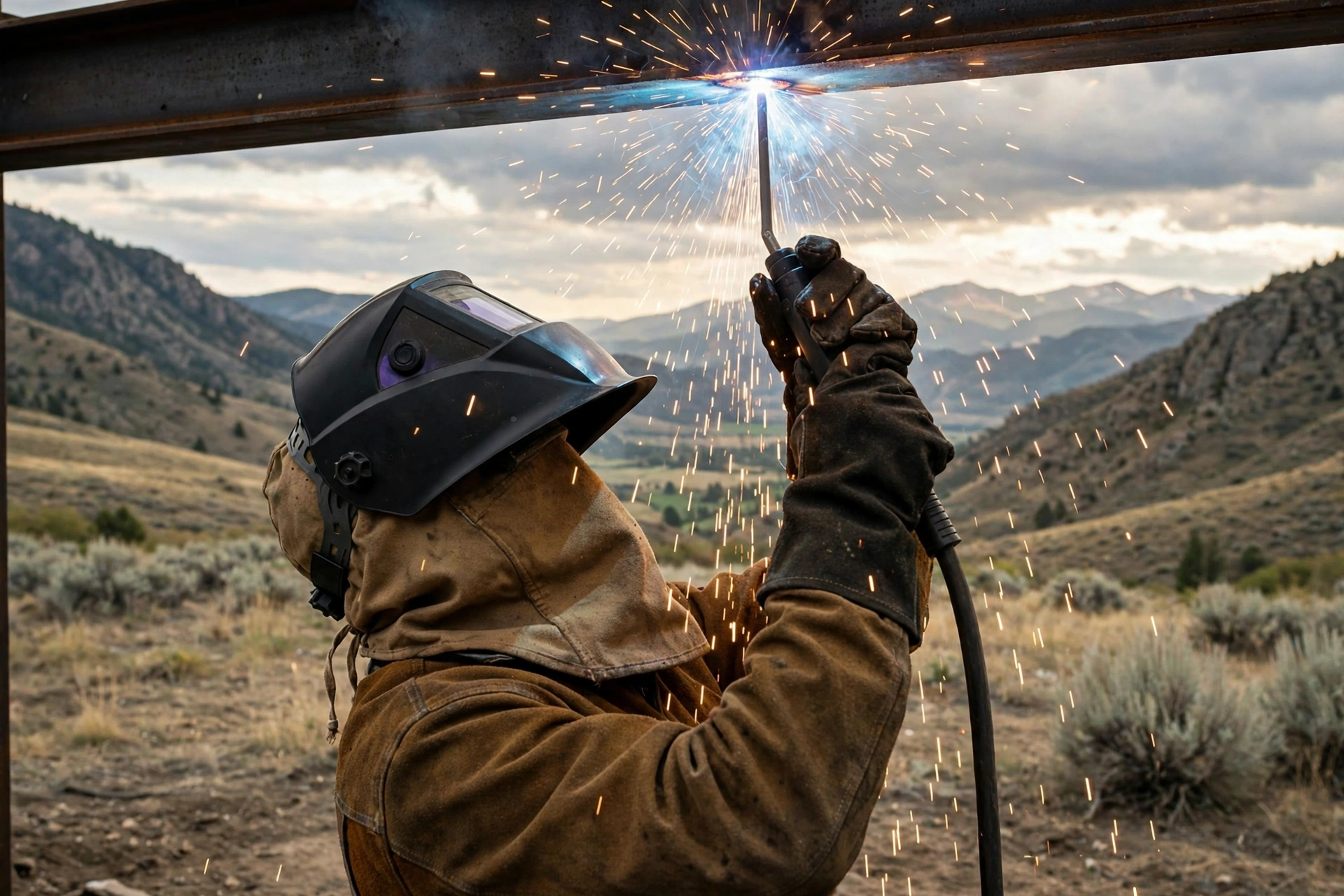
For overhead welding, spark protection means a welding helmet with full head, neck, and ear coverage, a secure fit that stays put when you look up, and flame-resistant clothing sealing every gap — in general terms, overhead work drops hot sparks and molten metal straight down onto you, so every gap between helmet, collar, and clothing is a burn waiting to happen.
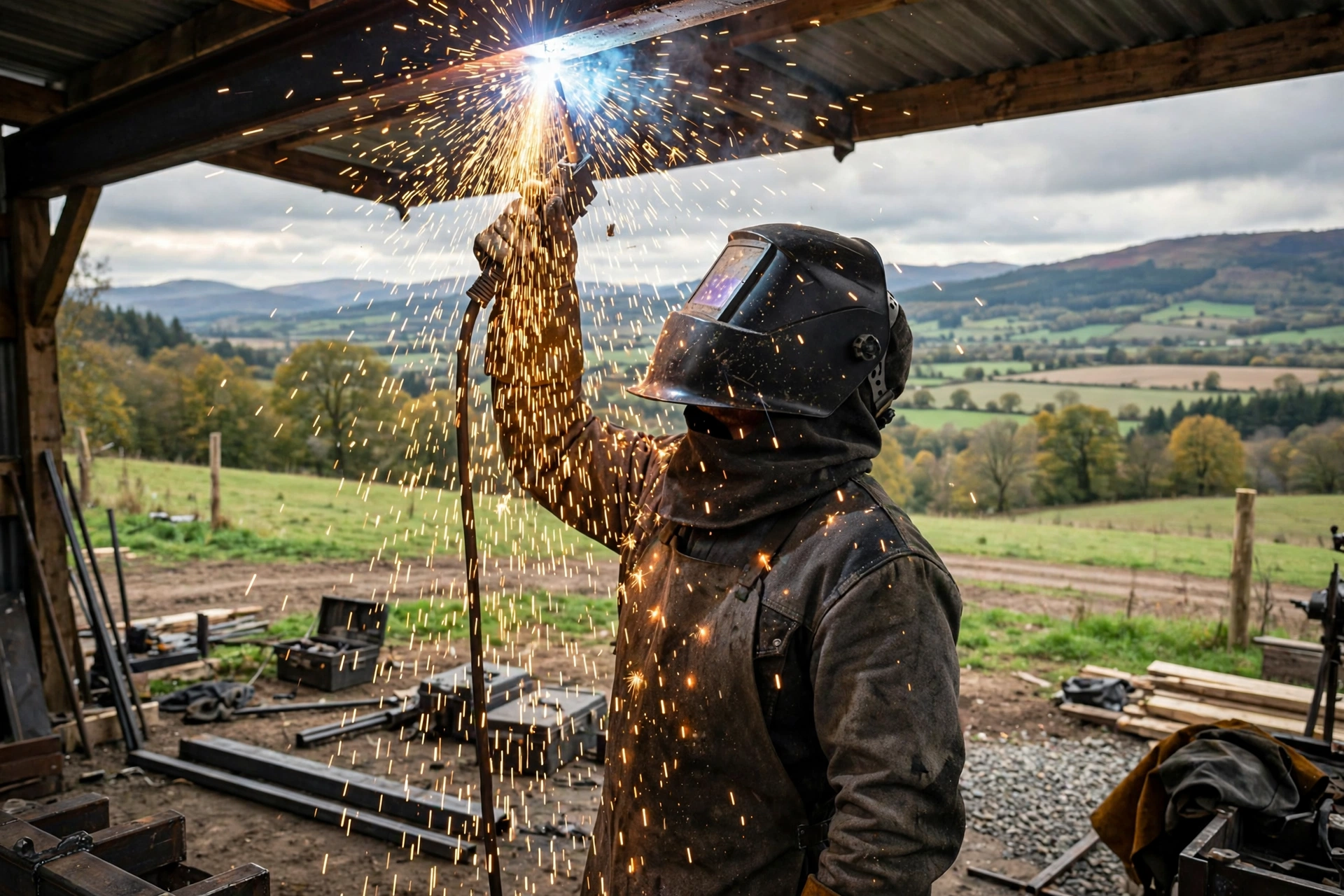
Overhead welding is among the least forgiving positions. Gravity works against you: sparks, slag, and spatter that would fall harmlessly away in flat welding fall directly onto your helmet, neck, shoulders, and arms. The helmet’s job here is not just eye protection — it is keeping hot metal off your skin.
Why Is Overhead Welding Harder on Helmets and Skin?
Gravity directs everything downwards. In flat welding, sparks fall to the floor; overhead, they fall onto the welder. The helmet’s top, the neck, the ears, and the shoulders all become landing zones, and any gap in coverage — between helmet and collar, around the ears, under the chin — collects hot material.
The working position adds strain. Looking up for long periods tires the neck, and a heavy or poorly balanced helmet makes that worse, tempting the welder to tilt the helmet or loosen the headgear — both of which open gaps. A helmet that is comfortable looking up is a safety feature here, not a luxury.
Visibility is worse overhead. The welder looks up into the arc against a bright background, often in an awkward posture, and the weld pool is harder to see than in flat work. A clear lens, a good shade setting, and a helmet that stays stable when tilted back all help the welder see the work rather than fight the equipment.
What Helmet Coverage Do You Need Overhead?
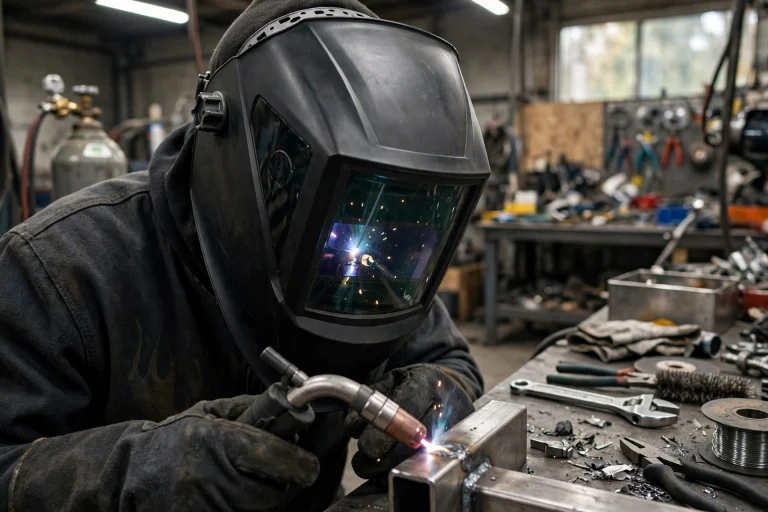
Full coverage is essential: a helmet that covers the whole face, the ears, and the back of the neck, with no exposed skin at the sides or rear. Some helmets offer extended side and rear coverage specifically for overhead work, and a bib or leather drape attached to the helmet can close the gap to the collar.
Ear protection deserves special attention. Hot sparks landing in or on the ear are painful and can cause real injury, so ear covers — either built into the helmet or worn as flame-resistant ear protection underneath — are important overhead in a way they are not in flat welding.
Check the helmet’s seal when looking up. Tilt your head back in the helmet’s working position and check for gaps at the chin, neck, and sides. A helmet that seals well when you look straight ahead may gape when you tilt back, and that gap is exactly where overhead sparks will land.
How Should the Helmet Fit for Overhead Work?
Snug and stable, with the headgear tightened enough that the helmet does not slide forward when you look up. A helmet that slips forward when tilted back blocks your vision and exposes the neck — the worst combination overhead. Tighten the headgear, test it by looking up and moving, and adjust until the helmet stays put.
Balance matters. A helmet that is front-heavy pulls forward when you look up, straining the neck and opening the rear gap. A well-balanced helmet, with its weight centred over the head, stays in place with less headgear tension and less fatigue over a long overhead session.
Use the helmet’s adjustments. Most welding headgear lets you set the helmet’s distance from the face and its tilt; for overhead work, a slightly closer setting can improve the seal and reduce the leverage that pulls the helmet forward. Set it for the overhead position, not for the flat position you use most.
What Clothing and Accessories Seal the Gaps?
A flame-resistant hood or bib under or over the helmet closes the neck gap. A welding hood worn under the helmet covers the neck, ears, and shoulders, while a leather bib attached to the helmet drapes over the chest and shoulders. Either is far better than a bare neck under a helmet that gapes when you look up.
The jacket collar must meet the helmet. A high collar, fastened fully, with no gap to the helmet’s lower edge, stops sparks reaching the neck and chest. Check the collar in the working position — a collar that meets the helmet standing straight may gap when you tilt back, so test it overhead.
Protect the arms and shoulders too. Overhead sparks land on the shoulders and upper arms, so flame-resistant sleeves, a jacket with no open pockets facing upwards, and gloves that cover the wrists are all part of the same protection. A helmet alone cannot cover what clothing leaves exposed.
- Full coverage: face, ears, and back of neck covered, no gaps
- Stable fit: helmet stays put when you look up, not sliding forward
- Sealed neck: hood or bib plus a fully fastened high collar
- Covered arms: flame-resistant sleeves with no upward-facing pockets
What Should You Check Before and After Overhead Welding?
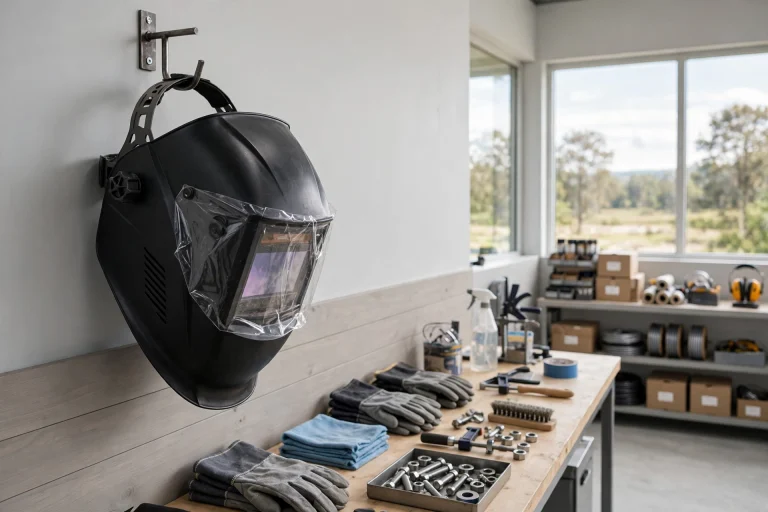
Before starting, inspect the helmet: shell condition, lens clarity, headgear tension, and the fit in the overhead position. Check the bib or hood, the collar, and the gloves — overhead work punishes any gap, so a pre-job check in the actual working posture catches problems that a standing check misses.
During the work, stop if sparks are getting in. Sparks inside the helmet, on the neck, or in the ears mean a gap has opened — stop, refit, and seal it rather than pushing on. Burns from overhead spatter happen fast and are entirely preventable by stopping to fix the gap.
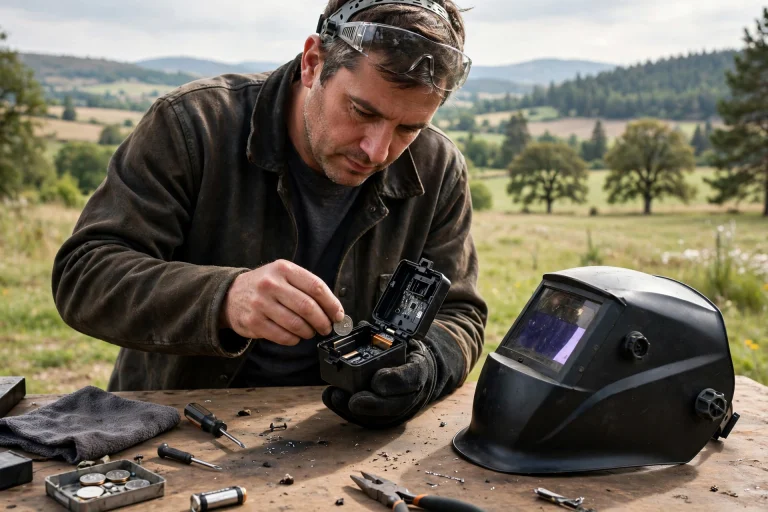
Afterwards, inspect the helmet for heat damage: check the shell, lens cover, and bib for scorching or melting, and replace any heat-damaged cover lens before the next job. A cover lens that has taken overhead spatter all day may be too marked to see through safely — and the helmet’s protection, like the rotational-force management explained in this guide to what MIPS is for helmets, depends on equipment kept in proper condition and worn correctly, not just on owning the right model.
Frequently Asked Questions
Q: Why do I keep getting burned on the neck when welding overhead?
A: In general terms, sparks are reaching a gap between your helmet and your collar, which opens when you tilt your head back. A flame-resistant hood or bib under the helmet, plus a fully fastened high collar checked in the overhead position, closes that gap.
Q: Do I need special ear protection for overhead welding?
A: Yes — sparks falling into the ear are a real overhead risk, so ear covers built into the helmet or flame-resistant ear protection worn underneath are important. Ordinary earplugs alone do not cover the outer ear, which is where sparks land.
Q: Can I use my normal welding helmet overhead?
A: Yes, provided it gives full face, ear, and neck coverage, fits stably when you look up, and is combined with a hood or bib and a fastened collar that seal every gap. If your helmet gapes at the neck when tilted back, add a bib or choose a helmet with better overhead coverage.

Olivia
Writer at Helmet Today, covering helmet reviews, fit and riding safety.