To store a welding helmet so the lens lasts longer, keep it in a cool, dry place away from sunlight and heat, protect the lens with a cover or a helmet bag, store it lens-up or hanging rather than lens-down, and never stack heavy objects on it — in general terms, lenses degrade through scratches, heat, moisture, and UV exposure, and good storage removes all four.
Welding helmet lenses — both the auto-darkening filter and its replaceable cover lenses — are the most expensive consumable part of the helmet, and the most easily damaged in storage. A helmet tossed on a bench, left in sunlight, or buried under tools will need new cover lenses far sooner than one stored with a little care.
What Damages a Welding Lens in Storage?
Scratches are the most common damage. A lens left face-down on a bench, rubbing against tools, or stored loose in a toolbox picks up scratches that scatter light and blur the view of the weld pool. Even fine scratches matter, because a welder stares through the lens for hours and any flaw becomes eye strain.
Heat and sunlight degrade filters. Prolonged heat — a sunny windowsill, a car in summer, a spot near a heater — ages the filter’s electronics and liquid-crystal layer, while direct sunlight can trigger and wear the auto-darkening sensors. A filter stored hot and bright will darken more slowly and less evenly over time.
Moisture causes its own problems. Damp storage fogs lenses, corrodes contacts, and encourages mould on headgear and liners. A helmet stored damp in a workshop corner over winter may look fine but perform poorly when it is next used.
Where Is the Best Place to Store a Welding Helmet?
Indoors, at room temperature, dry, and out of direct sunlight. A shelf, a hook on the wall, or a cabinet in the workshop all work, provided the spot is not next to a heater, a window, or a damp wall. The ideal is boring: cool, dry, dark, and stable.
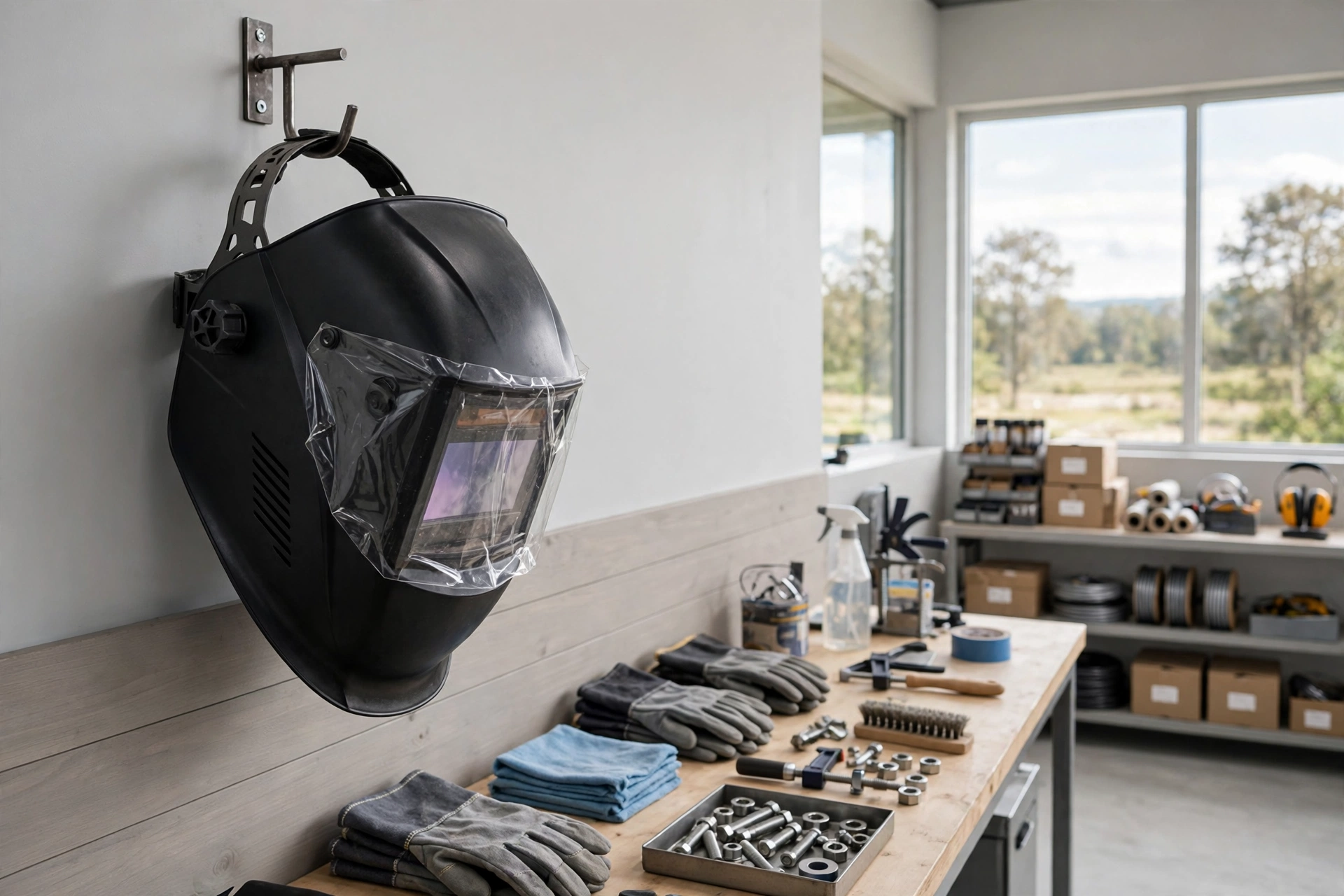
Hang the helmet if you can. A hook through the headgear or a dedicated helmet hanger keeps the lens off surfaces, lets air circulate around it, and stops anything being stacked on top of it. Hanging also keeps the helmet visible and accessible, so it is actually used rather than forgotten in a corner.
If hanging is not possible, store the helmet lens-up on a clean shelf, with nothing resting on it. Lens-up keeps the lens away from bench grit and stops the helmet’s own weight pressing the lens against a surface. A soft cloth under the helmet adds protection where the shelf is rough.
Should You Use a Helmet Bag or Cover?
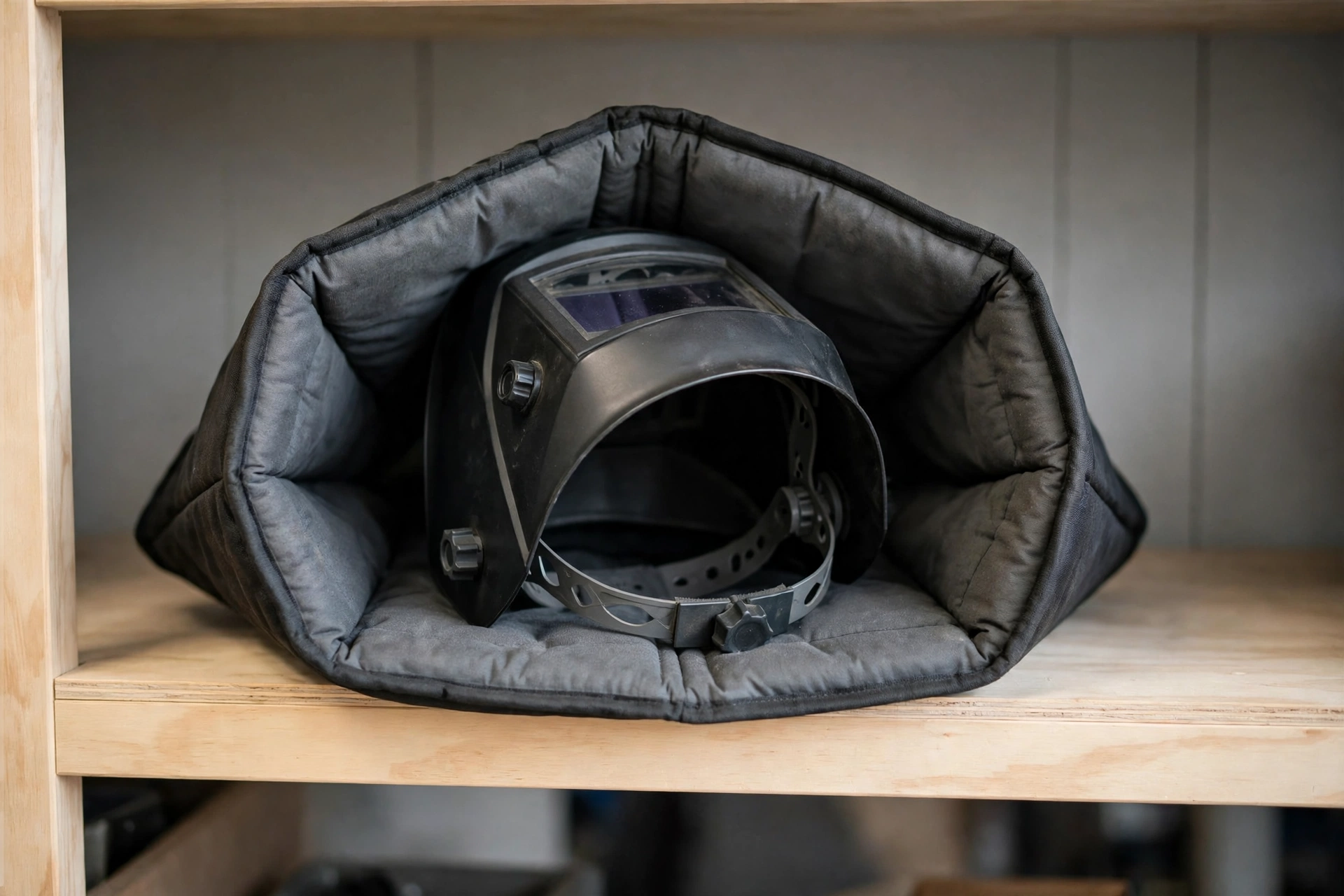
Yes, in general terms — a helmet bag or a lens cover is cheap insurance for the lens. A padded bag protects the lens from scratches and dust, keeps the helmet clean, and makes it easy to carry to and from jobs. For a helmet that travels between sites, a bag is close to essential.
For a helmet that stays in one workshop, a simple lens cover may be enough: a cover that clips over the lens, or even a clean cloth draped over the helmet, keeps dust off and prevents accidental scratches. The key is that the lens is covered whenever the helmet is not in use.
Make sure the helmet is clean and dry before bagging it. A helmet put away dirty traps grit against the lens, and one put away damp traps moisture — both defeat the purpose of the bag. Wipe the lens and shell, let the helmet air-dry if it has been used in damp conditions, and then bag it.
What Storage Mistakes Shorten a Lens’s Life?
Stacking things on the helmet is the worst. Tools, cables, and other helmets piled on top scratch lenses, crack cover plates, and distort headgear. A helmet should never be the bottom of a pile, and nothing heavy should rest on it at all.
Leaving the helmet in a vehicle is another common mistake. Cars and vans swing between hot and cold, bake in sun, and vibrate constantly — all bad for filters, batteries, and lenses. A helmet that lives in a van needs a bag and, ideally, to come indoors overnight rather than staying in the vehicle.
Storing near chemicals is a quieter risk. Solvents, paints, and cleaning chemicals stored beside a helmet can attack lens coatings and shell materials through vapour, even without direct contact. Keep the helmet away from the chemical shelf, not on it.
- Cool, dry, dark: room temperature, no direct sun, no damp
- Lens protected: bag or cover on whenever the helmet is idle
- Nothing on top: never stack tools or helmets on a stored helmet
- Clean before storing: wipe the lens, dry the helmet, then bag it
How Should You Look After Cover Lenses and Batteries in Storage?
Replace cover lenses before they are too scratched to see through. A cover lens is a consumable designed to take the damage so the filter does not have to — using a heavily scratched cover lens to save money just means you are looking through scratches all day. Keep a spare cover lens with the helmet so replacement is immediate.
For auto-darkening helmets, think about the battery in storage. Switch the helmet off, or cover the sensors, so it does not keep triggering in a bright workshop, and store it at room temperature rather than in a cold van — both habits extend battery life, as well as filter life.
Inspect the helmet when you take it out of storage, not just when you put it away. Check the lens for scratches and fogging, the filter’s darkening response, the headgear, and the shell — a helmet that has sat unused for months deserves a check before it goes back to work. And remember that protection, including the rotational-force management explained in this guide to what MIPS is for helmets, depends on equipment in proper working order — a lens you cannot see through clearly is a safety problem, not just an inconvenience.
Frequently Asked Questions
Q: Can I store my welding helmet in the garage over winter?
A: In general terms, yes if the garage is dry and the helmet is bagged and kept off the floor — but cold, damp garages age batteries and encourage mould, so an indoor shelf is better where possible. If garage storage is your only option, bag the helmet, keep it off concrete, and check it before use in spring.
Q: How often should I replace the cover lens?
A: Whenever it is scratched, pitted, or marked enough to affect your view of the weld pool — for a daily welder that may be every few weeks, for an occasional welder far less often. Treat the cover lens as a consumable: replacing it promptly protects the expensive filter behind it.
Q: Does sunlight damage an auto-darkening filter in storage?
A: Yes — prolonged direct sunlight can wear the sensors and age the filter’s light-sensitive layer, and heat from sun worsens the effect. Store the helmet out of direct sunlight, ideally in a bag or cabinet, to keep the filter responding quickly and evenly.

Olivia
Writer at Helmet Today, covering helmet reviews, fit and riding safety.