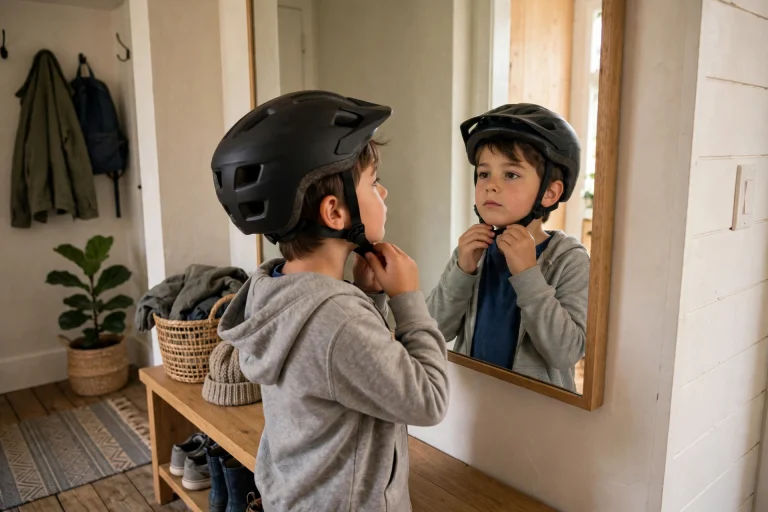
In general terms, a child’s helmet needs replacing when they outgrow it, after any hard knock, or when the helmet itself shows signs of wear. Children grow quickly, and a helmet that fitted perfectly last year may be too small now. Parents should check the fit regularly and replace the helmet as soon as it no longer fits snugly.
Helmet replacement is one of those jobs that is easy to put off, because a helmet that looks fine from the outside can feel like it still has life in it. The truth is that fit and condition matter more than appearance. A helmet that is too small, too loose, or damaged inside cannot protect properly, whatever it looks like. This guide explains how to tell when a child’s helmet needs replacing, how often to check, and how to choose the next size.
How Do You Know When a Child Has Outgrown a Helmet?
The clearest sign is that the helmet no longer fits snugly. If the helmet sits high on the head, leaving the forehead exposed, or if it perches on top of the head rather than sitting down over it, it is too small. If the fitting system is adjusted as far as it will go and the helmet is still loose, it is time for the next size. Another sign is that your child complains the helmet hurts, pinches, or gives them a headache, which often means it has become too tight.
Check the fit at the start of every season, and more often for younger children, who grow fastest. A quick check takes a minute: put the helmet on, check it sits level and low on the forehead, shake the head gently to see if it rocks, and check the chin strap. If any of those checks fail and the helmet cannot be adjusted to fit, it is time to replace it. Do not be tempted to keep a small helmet going with the straps loosened, since a loose helmet can shift in a fall.
How Often Should a Child’s Helmet Be Replaced?
There is no fixed schedule that suits every child, because growth rates vary so much. In general terms, a young child may outgrow a helmet in a year or less, while an older child may get two or three years from one. The helmet should be replaced whenever it no longer fits, whatever its age, and after any hard knock, whatever its condition appears to be. A helmet that has been in a crash has done its job, and the foam inside may be compressed even if the shell looks undamaged.
Wear and tear also matters. Straps that are frayed, a buckle that no longer clicks shut firmly, fitting pads that have gone flat, or a shell that is cracked or dented are all reasons to replace a helmet. Check the helmet regularly, not just when your child complains about it. A quick look over the shell, straps, and foam every few weeks will catch problems early, before they become a safety issue.
How Do You Choose the Next Size Helmet?
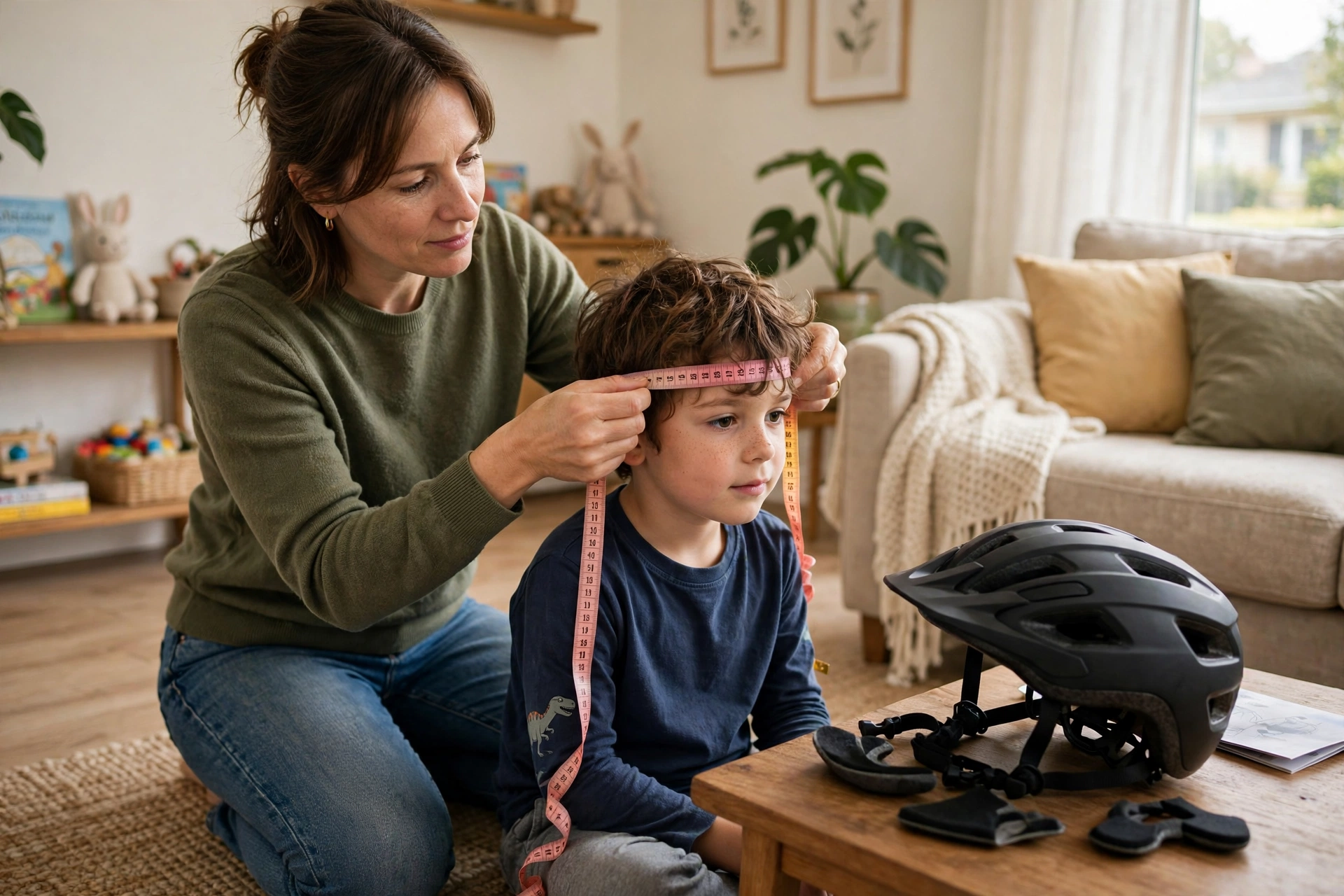
Start by measuring your child’s head. Use a soft tape measure around the widest part of the head, just above the eyebrows and ears, and compare the measurement with the size guide for the helmet you are considering. Remember that sizing varies between makers, so a size label is only a starting point, and your child should always try the helmet on before you buy it if possible.
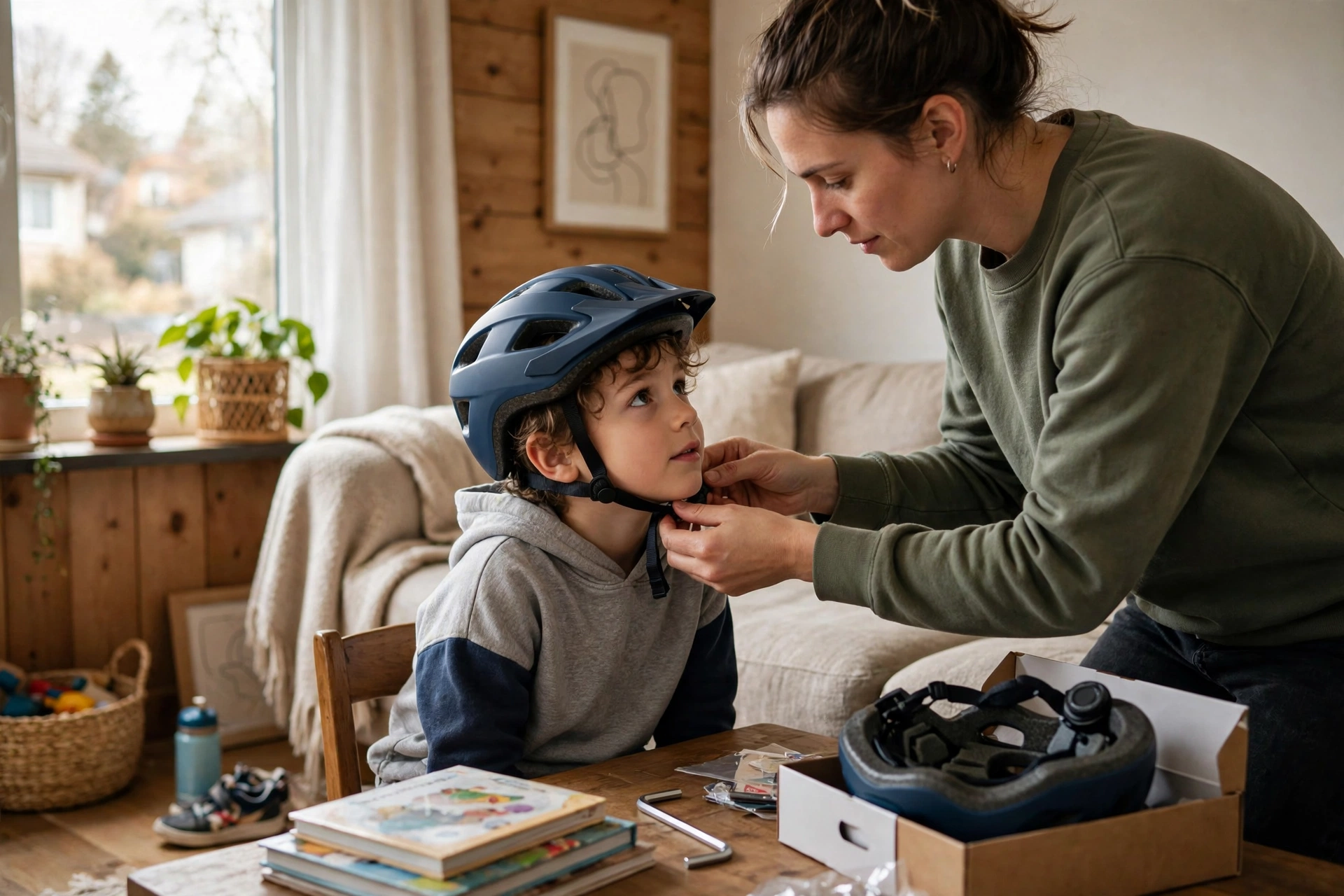
When your child tries on a new helmet, check it sits level and low on the forehead, feels snug all around without pressure points, and does not rock from side to side. Ask your child to wear it for a few minutes in the shop, since a pressure point that is not obvious at first can become uncomfortable quickly. If the helmet is between sizes, the smaller size is usually the better choice if it fits snugly, since fitting pads can be adjusted, but a helmet that is too big cannot be made to fit. If you are learning about helmet technology, reading about what MIPS is for helmets can help you understand one of the features you may see listed on the box.
What Should You Do with an Old Helmet?
An old helmet that has been outgrown but is still in good condition should not be passed on to another child without a careful check. A second-hand helmet may have hidden damage, and a helmet that fitted one child may not fit another. In general terms, it is safer to buy a new helmet for each child than to hand one down, unless you know its full history and it still fits the new owner properly.
A helmet that is damaged or has been in a crash should be thrown away, not given away or sold. Cut the straps before you dispose of it, so nobody can pick it up and use a helmet that is no longer safe. Some areas have recycling schemes for helmets, so check what is available locally. An old helmet that is still in good condition but too small can sometimes be donated through a school or community scheme, but only if you are confident it is undamaged and you are honest about its history.
How Can You Make Helmet Replacement Easier?
Let your child be part of choosing the new helmet. A colour or design they picked feels like theirs, and a child who likes their helmet is far more likely to wear it without complaint. Try the helmet on at home with the rest of their kit, so the first time they wear it is not in a rush before a ride.
Keep a note of when you bought the helmet and what size it is, so you can track how quickly your child is growing out of them. Some parents find it helpful to check the fit at the same time each year, such as at the start of the school year or the cycling season. A regular check means a helmet that no longer fits is caught early, rather than discovered on the morning of a ride.
Frequently Asked Questions
Q: How long does a child’s helmet usually last?
A: It depends on how fast your child grows. In general terms, a young child may outgrow a helmet within a year, while an older child may get two or three years from one. Replace it whenever it no longer fits, whatever its age.
Q: Can I hand my child’s old helmet down to a younger sibling?
A: In general terms, it is safer to buy a new helmet for each child, unless you know the old helmet’s full history, it is undamaged, and it fits the younger child properly. A helmet that has been in a crash should never be handed down.
Q: Does a helmet expire even if it has never been in a crash?
A: Helmets do wear out over time, particularly with regular use in sun and weather. In general terms, a helmet that is several years old and showing signs of wear should be replaced, even if it has never been in a crash. Check the maker’s guidance for your specific helmet.

Olivia
Writer at Helmet Today, covering helmet reviews, fit and riding safety.