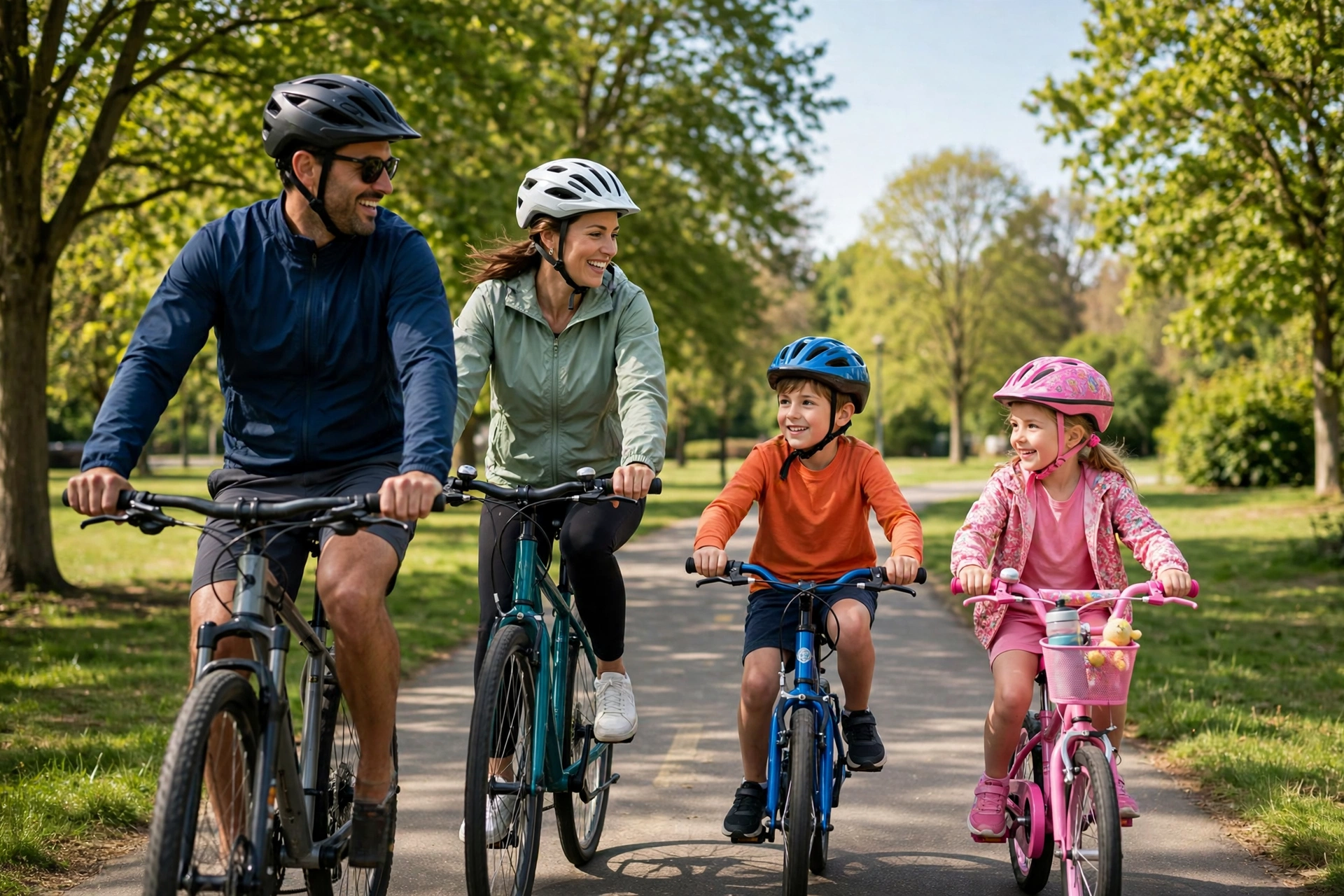
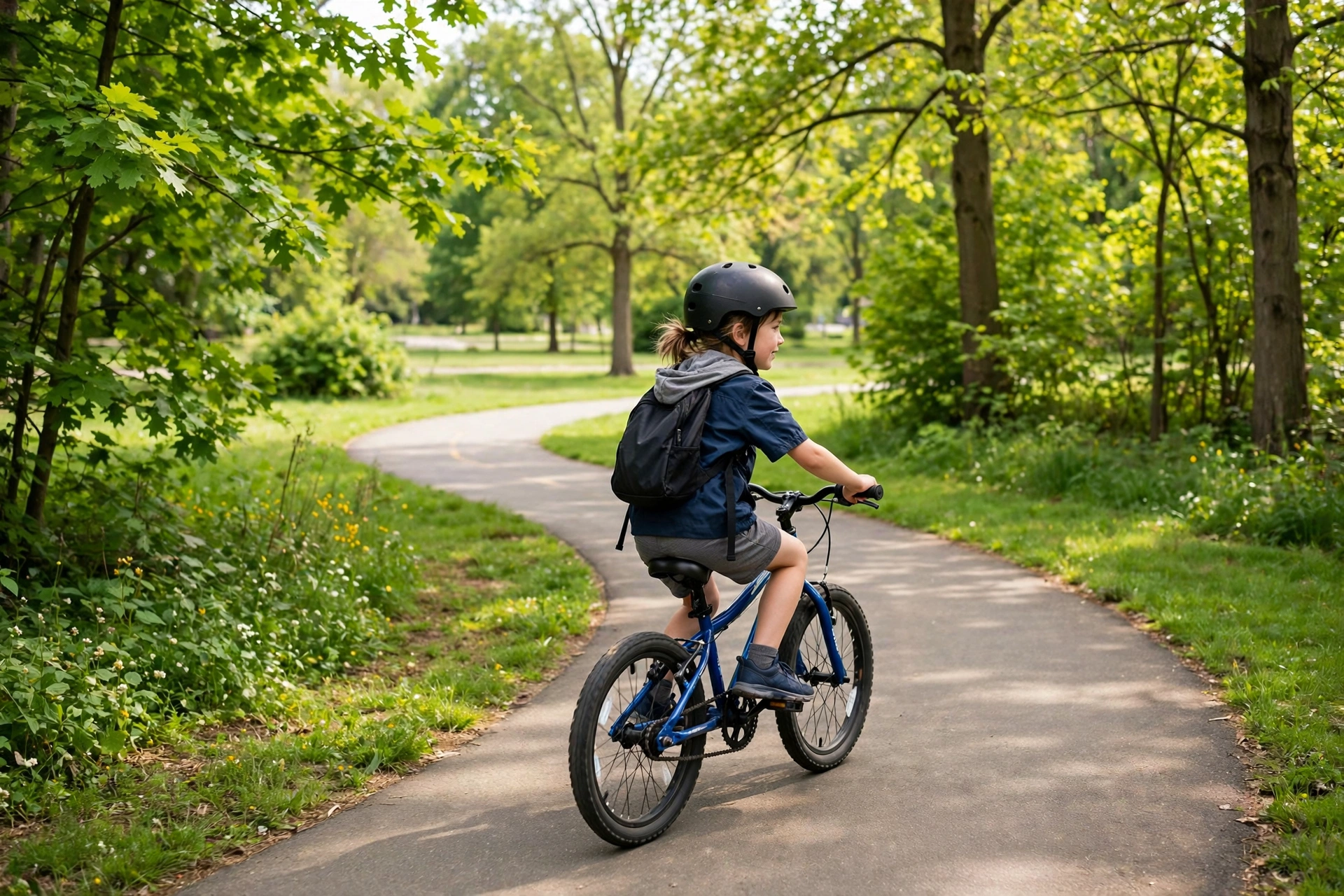
Yes, in general terms, children should wear a helmet on a family bike ride, just as adults should. Family rides are relaxed and fun, but they still take place on roads and paths where falls can happen. A helmet for every rider, whatever their age, is the simplest rule a family can follow.
Family bike rides are one of the best ways to spend time together outdoors, and they help children build confidence and fitness on a bike. The pace is gentle and the routes are usually chosen to be safe, but a child can still fall, particularly on a loose surface, a wet path, or a busy stretch of road. This guide explains what kind of helmet suits a family bike ride, how it should fit, and how parents can make helmet-wearing a habit the whole family enjoys.
What Kind of Helmet Suits a Family Bike Ride?
A standard cycling helmet is the right choice for a family bike ride. It is light, well ventilated, and designed for the kind of riding a family does on roads and cycle paths. For younger children, a helmet with a little extra coverage at the back can be a good choice, since children tend to fall backwards more often than adults. Look for a helmet that meets a recognised bicycle helmet safety standard for your region, and check the label inside to confirm which standard it meets.
Children who ride in a child seat or a trailer do not need a helmet in the same way, though many parents choose one anyway. A child in a seat is low down and well supported, but a helmet can still help in a fall, and it gets the child used to wearing one from an early age. Once a child is riding their own bike, a helmet is essential. If your child already owns a well-fitting cycling helmet, that is the right helmet for a family ride, provided it still fits and has never taken a hard knock.
How Should a Child’s Family Ride Helmet Fit?
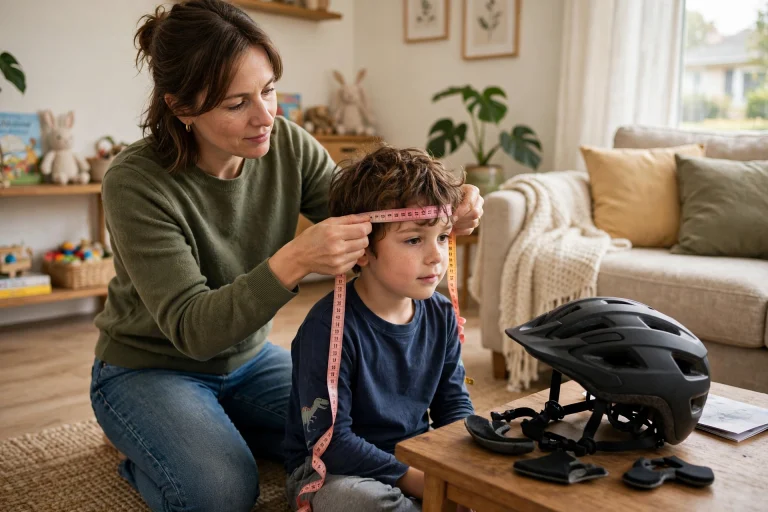
A family ride helmet should sit level on your child’s head, low enough to cover the forehead, and snug enough that it does not rock from side to side when they shake their head. It should feel comfortable with no pressure points that throb after a few minutes, and it should stay in place during the whole ride. If the helmet moves easily, it is too loose, whatever the size label says.
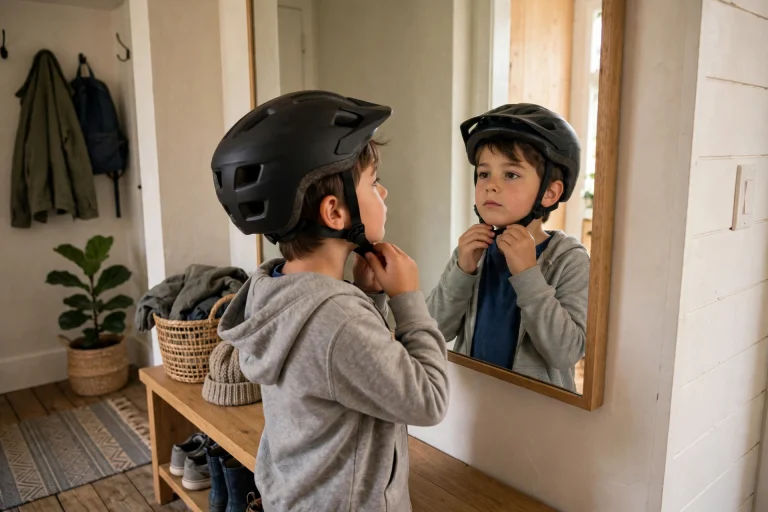
The chin strap should be done up snugly under the chin, with only one or two fingers fitting between the strap and the chin, and it should be fastened before every ride. Check the fit regularly, because children grow quickly and a helmet that fitted in spring may be too small by autumn. If you are learning about helmet technology, reading about what MIPS is for helmets can help you understand one of the features you may see listed on the box.
How Do You Plan a Family Bike Ride?
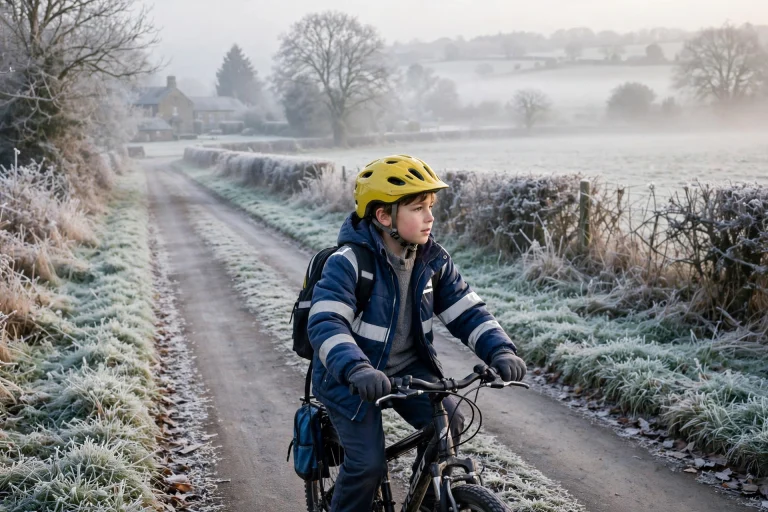
Choose a route that suits the youngest or least confident rider in the family. Traffic-free cycle paths, park routes, and quiet country lanes are ideal for family rides, while busy roads and steep hills are best avoided until children are older and more confident. Check the route in advance if you can, and look for places to stop for a rest, a snack, and a drink. A ride with regular breaks is far more enjoyable for children than a long, unbroken stretch.
Think about distance too. A ride that is too long will leave a child tired and miserable, and a tired child is more likely to fall. Start with short rides and build up gradually as your children’s fitness and confidence grow. Let children have a say in where you ride and where you stop, since a ride they helped plan feels like their adventure rather than a chore imposed by adults.
What Else Should a Family Take on a Bike Ride?
Water and snacks are the most important extras on a family bike ride, particularly on a warm day. Children get thirsty quickly when they are active, and a hungry child is a grumpy child. Pack more water than you think you will need, and bring snacks that are easy to eat on a break, such as fruit, biscuits, or sandwiches.
A basic repair kit is also worth carrying. A puncture repair kit or a spare inner tube, a small pump, and a multi-tool will deal with the most common problems on a family ride. Make sure at least one adult knows how to fix a puncture, and that the bikes are checked before you leave: tyres pumped up, brakes working, and chains oiled. A bike that is in good working order is far safer and more enjoyable to ride than one that is not.
How Can You Make Helmets a Family Habit?
The simplest way to make helmets a family habit is for the adults to wear one too. Children copy what adults do far more readily than what adults say, and a parent in a helmet normalises the habit in a way no lecture can. Make putting on a helmet part of the getting-ready routine, alongside putting on shoes and grabbing a water bottle, so it becomes automatic rather than a negotiation.
Let children choose their own helmet colour or design if you are buying a new one. A helmet a child picked feels like theirs, and a child who likes their helmet is far more likely to wear it without complaint. Praise children for wearing their helmet without fuss, and keep the tone light. A helmet is simply part of the kit, like the bike itself, not a sign that cycling is dangerous.
Frequently Asked Questions
Q: Does my child need a helmet on a traffic-free cycle path?
A: Yes, in general terms. Even on a traffic-free path, a child can fall on a loose surface, a wet patch, or a tree root. A helmet protects the head in exactly those everyday falls, and it is a sensible habit on every ride.
Q: Should adults wear a helmet on a family bike ride too?
A: In general terms, yes. Adults fall too, and a parent in a helmet sets an example that children will follow. A helmet is sensible kit for every rider on a family ride, whatever their age.
Q: What if my child refuses to wear a helmet on a family ride?
A: Stay calm and matter of fact. Explain that a helmet is part of the kit, like the bike itself, and that the ride does not happen without one. Letting your child choose their own helmet, and wearing one yourself, usually solves the problem over time.

Olivia
Writer at Helmet Today, covering helmet reviews, fit and riding safety.