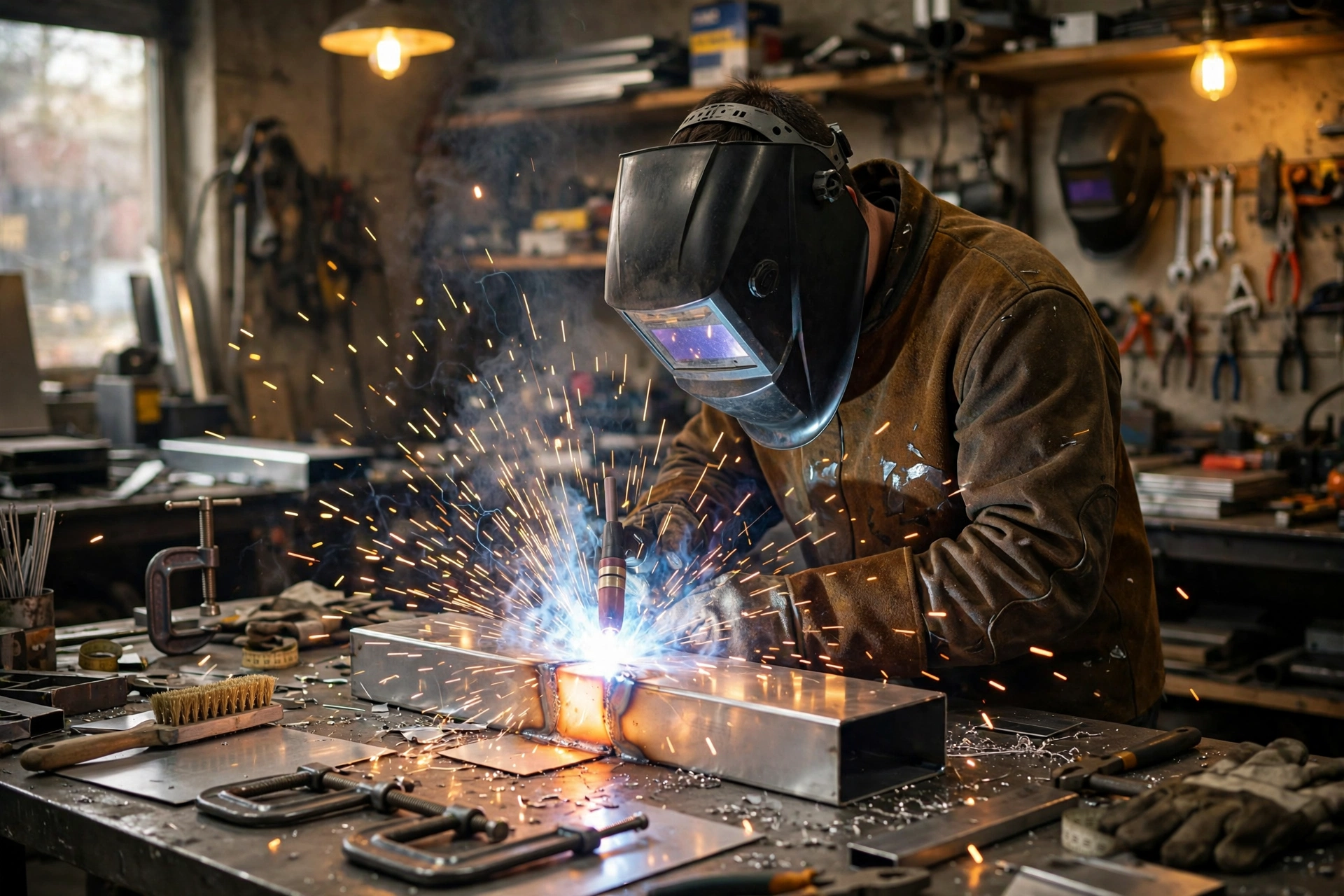
For aluminium welding, a welding helmet shade of around 10 to 13 is the usual range in general terms, with the exact shade depending on the welding current — but the safest choice is the darkest shade that still lets you see the weld clearly. Aluminium welding is bright. The arc gives off intense light, including ultraviolet and infrared light that can damage the eyes, and the shiny aluminium reflects that light back at the welder. A shade that is too light leaves the eyes exposed; a shade that is too dark means the welder cannot see the weld pool properly and the work suffers. Getting the shade right is one of the most important safety decisions a welder makes.
This guide explains how welding shades work, why aluminium needs a darker shade than some other metals, how the welding current changes the choice, and how to check whether the shade is right in practice. It is written in general terms: the right shade depends on the job, the equipment, and the welder’s own eyesight, and the maker’s guidance for the helmet and the welding machine should always be followed.
What Does a Welding Helmet Shade Number Mean?
A welding helmet shade number measures how much light the lens lets through. The higher the number, the darker the lens and the less light reaches the eyes. A shade 9 lens lets through more light than a shade 12 lens, and the difference is easy to see: looking through a shade 12 feels much darker. The shade system is used for both fixed-shade lenses and auto-darkening helmets, which switch from a light state to a dark state when the arc starts.
The shade protects against three kinds of light. The first is the bright visible light of the arc, which can dazzle and tire the eyes. The second is ultraviolet light, which can burn the surface of the eye — the injury often called arc eye or welder’s flash — even from a brief exposure. The third is infrared light, which carries heat and can damage the eyes over time. A proper welding lens filters all three, not just the visible brightness, which is why ordinary sunglasses are never a substitute for a welding shade.
Why Does Aluminium Welding Need a Darker Shade?
Aluminium welding needs a darker shade for two reasons: the arc is bright, and the metal is reflective. Aluminium is usually welded with a process that produces a very bright, intense arc, and the current used is often high, especially on thicker material. A bright arc needs a darker lens to bring the light down to a level the eyes can handle comfortably over a whole working session.
The reflection makes it worse. Aluminium has a bright, shiny surface that reflects the arc light back toward the welder, including light that comes from the sides and from below the weld. That reflected light can reach the eyes even when the welder is looking at the weld through the lens, because it bounces off the work and into the helmet from the edges. A darker shade helps, but so does the fit of the helmet: a helmet that sits close to the face and has good side coverage lets less reflected light in around the edges.
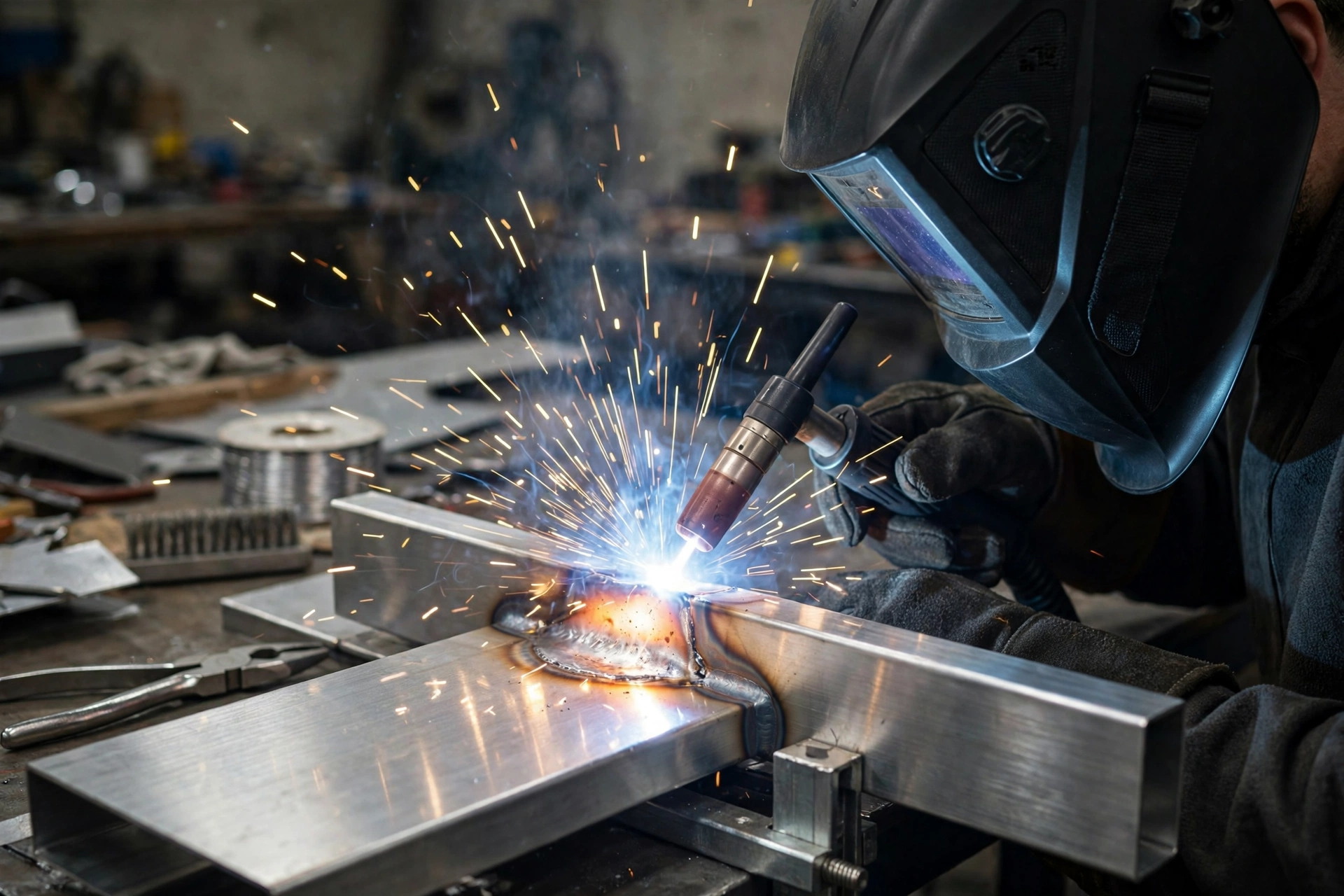
How Does Welding Current Change the Shade You Need?
In general terms, the higher the welding current, the darker the shade needed. A low-current weld on thin aluminium might be comfortable at shade 10, while a high-current weld on thick plate might need shade 12 or 13. This is the most useful rule of thumb for choosing a shade: start with the shade that matches the current, then adjust it up or down by one step depending on what the welder can see.
It is important to remember that the shade is not a setting to set once and forget. A welder who moves from thin sheet to thick plate, or from one process to another, needs to change the shade to match. Auto-darkening helmets make this easy, because the shade can be changed with a dial, but it still has to be done — the helmet cannot know the current has changed. A quick check at the start of each new job, looking at the arc and asking whether it is comfortable and the weld pool is clear, is a good habit that takes seconds. If you want to understand how the inside of a helmet protects the head during an impact, reading about what MIPS is for helmets can help you see how modern helmet layers work together.
How Do You Know If Your Shade Is Right?
The simplest test is comfort and clarity. With the right shade, the arc should be bright enough to see the weld pool clearly, but not so bright that it hurts, dazzles, or leaves spots in the vision after the welder looks away. The weld pool — the small, glowing area of molten metal — should be easy to see, with its edges and its movement clear. If the pool is hard to make out, the shade is probably too dark. If the arc is painful to look at, the shade is too light.
What Else Matters Besides the Shade Number?
The shade is the headline, but a welding helmet has to do more than filter light. The fit matters: a helmet that is too loose will slip and let light in around the edges, while one that is too tight will be uncomfortable over a long shift and may be worn incorrectly. The headgear should be adjusted so the helmet sits level, covers the face fully, and can be flipped up and down easily without slipping.
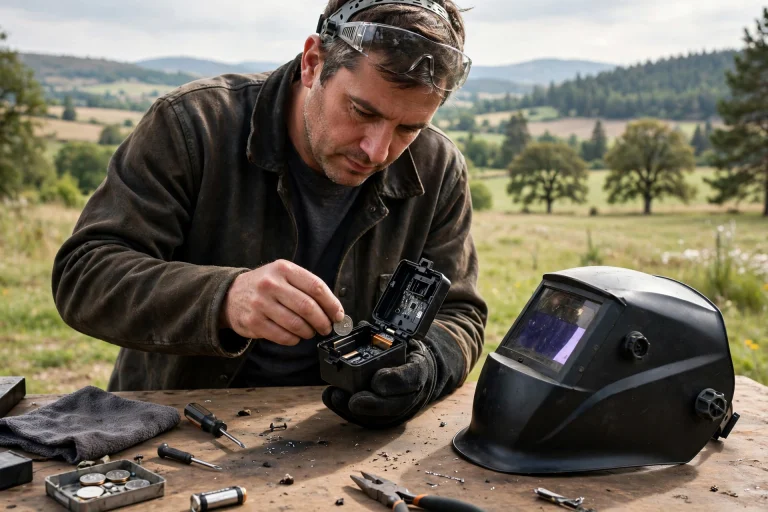
Finally, the helmet should be checked as a whole. The shell should be free of cracks, the headgear should hold its adjustment, and the auto-darkening lens should switch reliably — a lens that is slow to darken, or that flickers, is not safe to use and should be repaired or replaced. In general terms, a welding helmet is safety equipment, and it should be treated like it: inspected regularly, kept clean, and replaced when it no longer works as it should. The shade is only one part of that, but it is the part the welder’s eyes depend on most.
Frequently Asked Questions
Q: What shade should I use for aluminium welding?
A: In general terms, shade 10 to 13 is the usual range, with the exact shade depending on the welding current. Higher current needs a darker shade, and the darkest shade that still lets you see the weld clearly is the safest choice.
Q: Can I use the same shade for aluminium as for steel?
A: Not always. Aluminium is more reflective and often welded at high current, so it may need a darker shade than a similar steel weld. Check the shade chart for the process and current being used.
Q: What should I do if the arc hurts my eyes even with a dark shade?
A: Stop and check the helmet. The lens may be damaged or dirty, the shade may still be too light, or light may be leaking in around the edges. Darken the shade, inspect the lens, and check the fit before welding again.

Olivia
Writer at Helmet Today, covering helmet reviews, fit and riding safety.