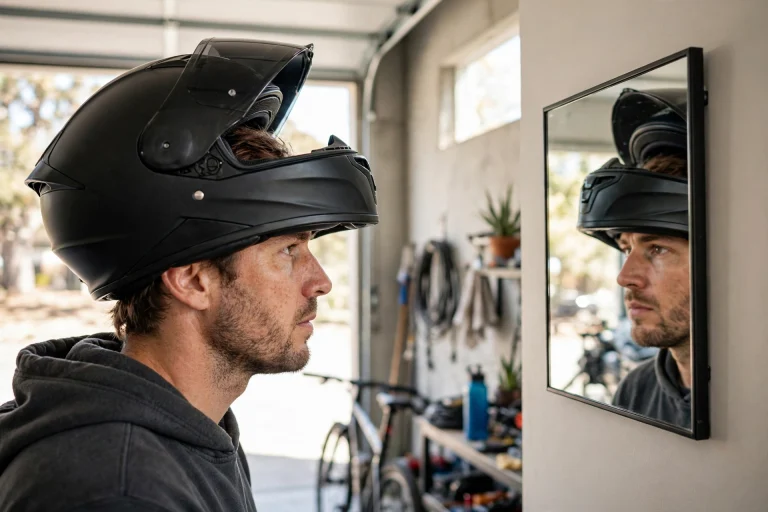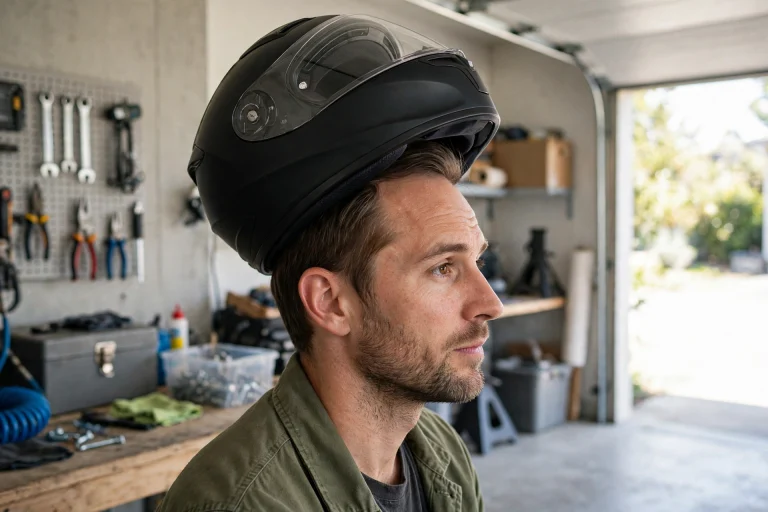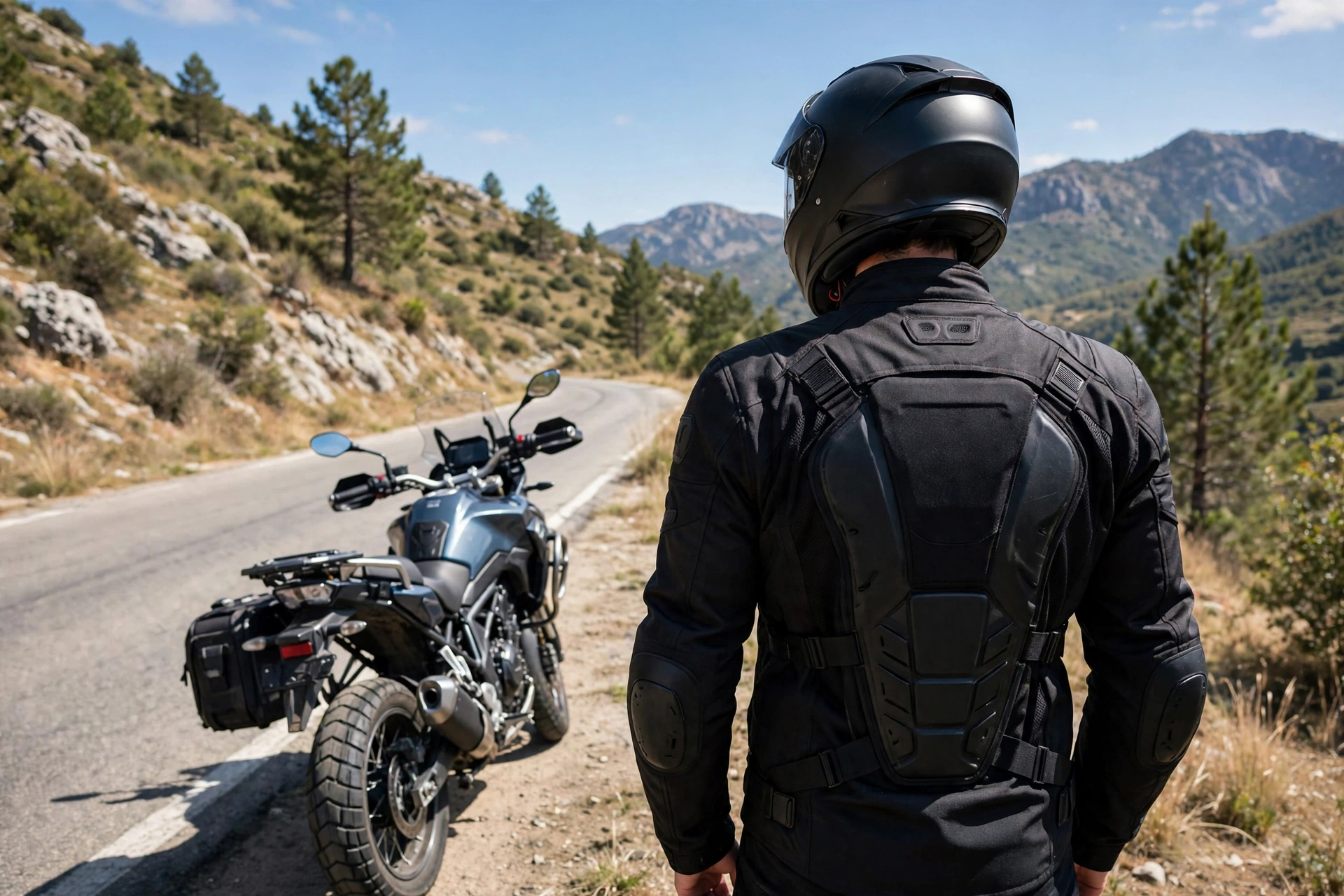
In general terms, a helmet and a back protector fit together well when the helmet sits level on the head and the back protector sits flat against the back, with only a small gap between them and neither one pushing the other out of place. The two are designed to work as a system: the helmet protects the head, the back protector protects the spine, and the gap between them should be small enough that neither leaves the other exposed, but large enough that they do not clash when you move.
Many riders buy a helmet and a back protector separately and never check how they work together, and then find that the helmet presses on the top of the protector, or the protector pushes the helmet forward, or the two catch when the rider looks around. This guide explains how the two should meet, how to check the combination, and what to do when they do not fit together well.
How Should a Helmet and a Back Protector Meet?
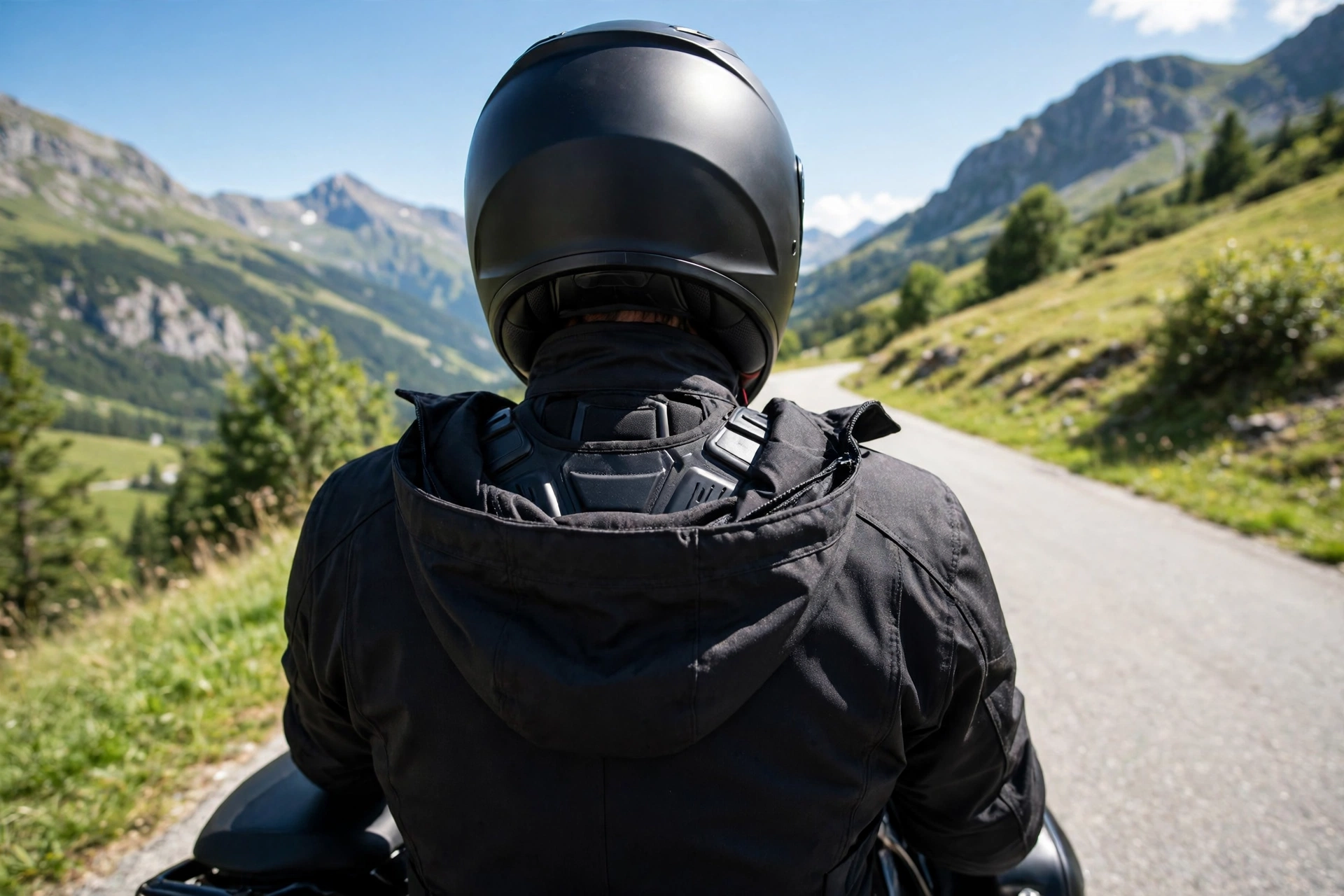
The back protector should sit flat against the back, from the base of the neck down to the lower back, and the helmet should sit level on the head with its rear edge just above the top of the protector. There should be only a small gap between the two — enough that the helmet can move freely when you turn your head, but not so much that a large stretch of the neck is left unprotected between them.
When you look down, the back of the helmet will come closer to the top of the protector, and when you look up, the gap will open slightly. That movement is normal. What matters is that the helmet does not press hard on the protector when you look down, and that the protector does not push the helmet forward when you lean into a riding position. In general terms, the two should feel like neighbours, not rivals.
How Do You Check the Fit of the Two Together?
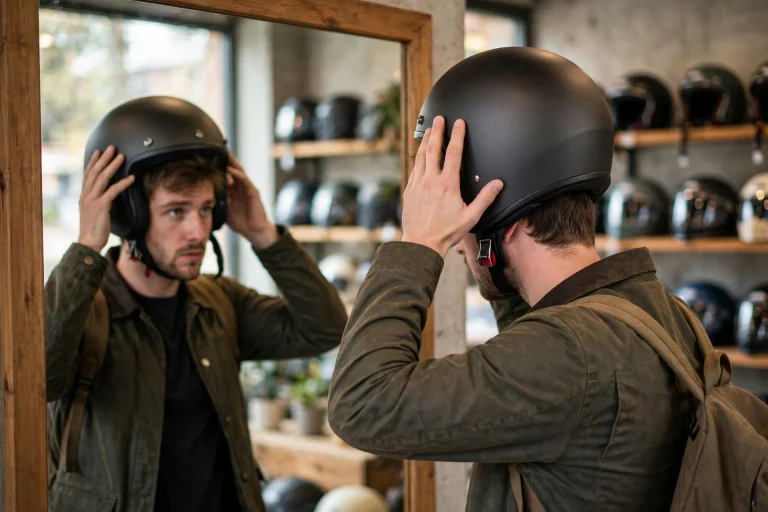
Put the back protector on first, settle it in its normal position, and fasten its straps so that it sits flat and does not shift. Then put the helmet on and check the fit as usual: level on the head, front edge about two fingers’ width above the eyebrows, and steady when you shake your head gently. If the helmet will not sit level because the protector is pushing it, the protector may be sitting too high or may be too long for your back.
Check the gap between the helmet and the protector with a mirror, or ask someone else to look. The gap should be small and even, and the protector should not be pressing the helmet forward. Turn your head left and right, look down, and look up, and check that the helmet moves freely without catching on the protector at any point. Lean forward into your riding position and repeat the check, since that is when the two are most likely to meet.
What Should You Look for When Choosing a Back Protector to Wear with a Helmet?
Choose a back protector in the right length for your back. A protector that is too long will reach too high and clash with the helmet, while one that is too short will leave part of the back unprotected. Measure your back as the maker advises, and try the protector on with your helmet before you buy, in your normal riding position, rather than just standing upright.
Look for a protector that is shaped to follow the curve of the back and that stays flat against it when you move. Some protectors are made in segments that flex with the body, which can help them sit well under a jacket without riding up. The straps should be easy to adjust and should hold the protector firmly without digging in, because a protector that shifts around will not stay where it needs to be in a fall.
Think about how the protector works with your jacket as well as your helmet. A protector worn under a jacket should fit smoothly without bunching, and the jacket should be roomy enough to allow for it. If you want to understand how some helmets handle the twisting forces that can happen in a fall, reading about what MIPS is for helmets can help you decide whether that feature is worth looking for, but the fit of the helmet and the protector together should come first.
What Problems Can Happen When They Do Not Fit Together?
The most common problem is the helmet pressing on the top of the protector when the rider looks down. This can push the helmet forward over the eyes, or lift it at the back, and it can also be uncomfortable over a long ride. The fix is usually to lower the protector slightly, choose a shorter protector, or try a helmet with a shorter rear edge, depending on which item is causing the clash.
Another problem is the protector pushing the helmet forward when the rider leans into a tucked position. This can happen when the protector is too long, sits too high, or is worn over a jacket that bunches up at the neck. In general terms, the protector should sit flat and low enough that it does not meet the helmet until the head is tilted well down, and it should not force the helmet out of its normal position.
How Do You Keep the Combination Working Well?
Check the combination at the start of each riding season and whenever you change either item. A new helmet with a different rear shape, or a new protector in a different length, can change how the two meet, so the fit check should be done again rather than assumed. Put the protector on first, then the helmet, and run through the full check: level helmet, small even gap, free head movement, and no pressing or pushing in your riding position.
Keep both items in good condition. Check the helmet after any significant impact and replace it if there is any sign of damage, even if there is no visible crack, because the foam inside can be compressed by a hard knock. Check the protector for cracks, worn straps, or bent segments, and follow the maker’s guidance on inspection and replacement. In general terms, a helmet and a back protector that are both in good condition and fitted together properly are far more useful than either one alone.
Frequently Asked Questions
Q: Should my helmet touch my back protector?
A: In general terms, no — there should be only a small gap between the helmet and the back protector, so the helmet can move freely when you turn your head. The helmet should not press hard on the protector, and the protector should not push the helmet out of place.
Q: How do I know if my back protector is too long?
A: If the top of the protector reaches the helmet and pushes it forward, or presses on it when you look down, it may be too long for your back. Try lowering it slightly, and if it still clashes, try a shorter protector in the right size for your back length.
Q: Should I wear a back protector under or over my jacket?
A: Most back protectors are designed to be worn under a jacket, sitting flat against the back, but some are made to be worn over it. Follow the maker’s guidance for your model, and always check the fit with the helmet on in your normal riding position.

Olivia
Writer at Helmet Today, covering helmet reviews, fit and riding safety.