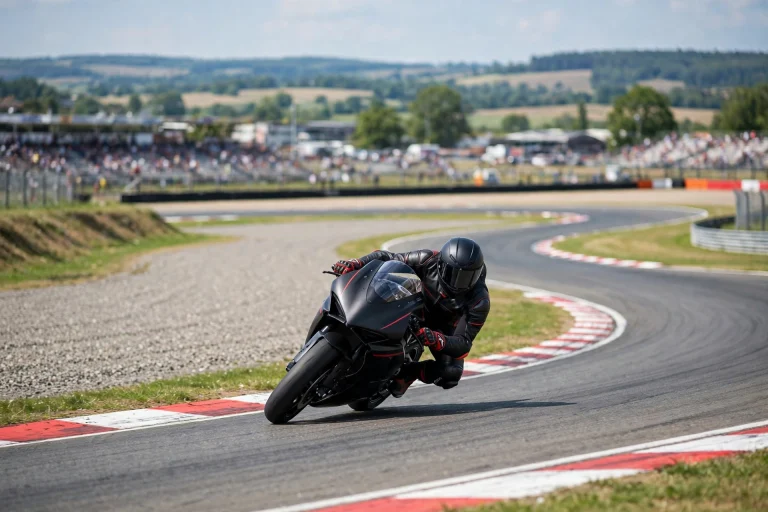
An Isle of Man TT helmet is a full-face road racing helmet worn by riders who compete in the Isle of Man TT races, where motorcycles race at very high speeds on public roads that are closed for the event. It is built to protect the rider’s head in a crash, to cut through the wind at speed, and to keep vision clear in rain, spray, and changing light. For TT riders, the helmet is one of the most important pieces of safety kit they wear.
The Isle of Man TT is one of the oldest and most famous motorcycle road races in the world. Riders race around a long course made up of ordinary public roads, passing through towns and villages and across open countryside. The course includes fast straights, tight bends, jumps, and stone walls close to the edge of the road. Because the speeds are so high and the margin for error is so small, the helmet a TT rider wears has to be among the best available.
What makes an Isle of Man TT helmet different?
A TT helmet looks like other full-face road racing helmets, but it is chosen and set up for the demands of a long road course. The shell is shaped to reduce wind drag at very high speed, so the rider’s head is not pushed around by the airflow. The visor is wide and clear, giving a broad view of the road ahead, which matters when the rider is reading bends, braking markers, and surface changes at speed.
Ventilation is also important. A TT lap takes a long time compared with a short circuit lap, and the rider works hard the whole way round. Good airflow through the helmet helps keep the rider cool and stops the visor from misting up. Many TT helmets have vents that can be opened or closed, so the rider can adjust the airflow to suit the weather on the day.
What safety standards do TT helmets meet?
In general terms, helmets worn at the Isle of Man TT must meet the safety standards set by the event organisers and the governing body for the races. These standards cover impact protection, penetration resistance, and the strength of the visor and the chin strap. A helmet that does not meet the required standard cannot be used in the races, and scrutineers check helmets before the event begins.
Most top-level road racing helmets are tested to a recognised standard such as the FIM homologation for racing helmets or a national standard for motorcycle helmets. The FIM standard is used in many forms of international motorcycle racing, and it sets strict limits on how much force can reach the rider’s head in a crash. Riders and teams choose helmets that carry the right approval for the event they are entering.

How is a TT helmet fitted for a rider?
Fitting starts with measuring the rider’s head and trying on the right shell size. The helmet should sit level on the head, with the top of the visor opening just above the eyebrows. The cheek pads should press gently against the cheeks without squeezing, and the helmet should not twist easily when the rider turns their head. A good fit feels snug all round, with no loose spots.
Riders often try several sizes and pad thicknesses before they settle on a combination. Some helmets come with interchangeable cheek pads and crown liners, so the fit can be fine-tuned. The rider will wear the helmet for a practice session to check that it stays comfortable and that the visor does not fog. If anything feels wrong, the fit is adjusted before race day.
The chin strap must be fastened correctly every time the helmet is worn. A double D-ring fastening is common on racing helmets, and it should be pulled snug under the chin. A loose strap can let the helmet come off in a crash, so riders check it as part of their routine before they go out on the course.
Why is the visor so important at the TT?
The visor is the rider’s window on the road, and at TT speeds there is no time to look twice. A clear, scratch-free visor gives a sharp view of the surface ahead, including damp patches, white lines, and changes in the road. Riders often carry spare visors in different tints, so they can swap to a clear visor for dull weather or a tinted visor for bright sunshine.
Rain is a real problem on the Isle of Man, and a visor that mists up or becomes covered in spray can be dangerous. Many TT riders use an anti-fog insert on the inside of the visor, which helps keep the view clear in damp conditions. Some also use tear-off strips, which are thin clear layers that can be peeled away during the race to remove dirt and insects from the visor.
What else do TT riders wear with their helmet?
A helmet is only one part of a TT rider’s safety kit. Riders also wear a full leather race suit, which protects the skin in a slide and often includes built-in armour at the shoulders, elbows, knees, and back. Many riders also wear an airbag suit, which inflates in a crash to protect the chest and back. Gloves and boots complete the outfit, protecting the hands and feet.
Some riders wear a neck support or a back protector under their leathers, and many use a system that lets the helmet move slightly in an angled impact, an idea similar to MIPS in other sports helmets. The aim is the same across all the kit: to spread the force of a crash and to reduce the risk of serious injury.
How should a TT helmet be looked after?
A racing helmet needs regular care to stay safe. After each session, the rider or their team wipes the shell clean and checks the visor for scratches. The lining can be removed in many helmets and washed, which keeps it fresh and helps it keep its shape. A helmet that smells of sweat and has a flattened lining will not fit as well as it should.
Helmets should be stored in a cool, dry place away from direct sunlight, ideally in a padded bag. They should never be left on a fuel tank in the sun or hung on a mirror by the strap, because heat and stretching can damage them. A helmet that has been in a crash should be replaced, even if it looks fine, because the inside may have absorbed the impact.
Do Isle of Man TT riders wear the same helmet as road riders?
Not usually. TT riders wear full-face racing helmets built for very high speeds and long laps, while road riders often choose helmets for comfort and everyday use. A TT helmet meets stricter racing standards and is fitted for the demands of the course.
Can a fan buy a helmet like the ones used at the TT?
Yes, in general terms, many racing helmets used at the TT are sold to the public. They are usually more expensive than a basic road helmet, and they should be fitted by a dealer. A racing helmet is only useful if it fits your head properly.
How often should a TT helmet be replaced?
A racing helmet should be replaced after any crash, and in general terms after a few years of regular use, because the materials age and the lining wears. Always follow the maker’s guidance and replace a helmet sooner if it is damaged or no longer fits well.

Olivia
Writer at Helmet Today, covering helmet reviews, fit and riding safety.