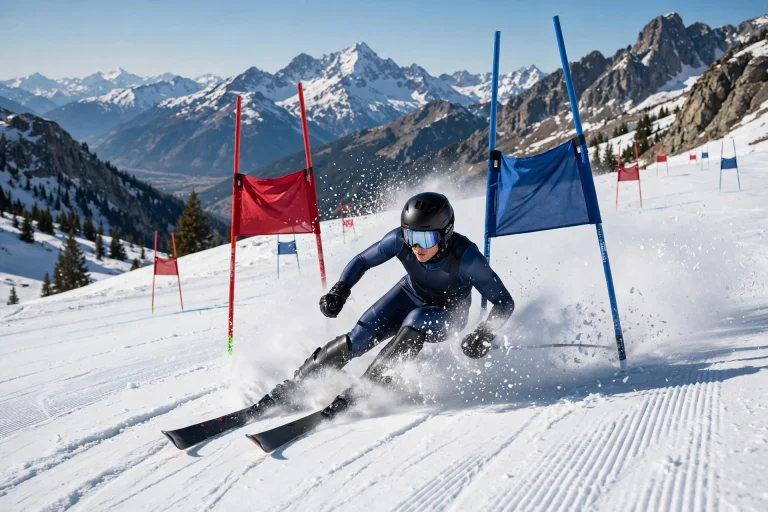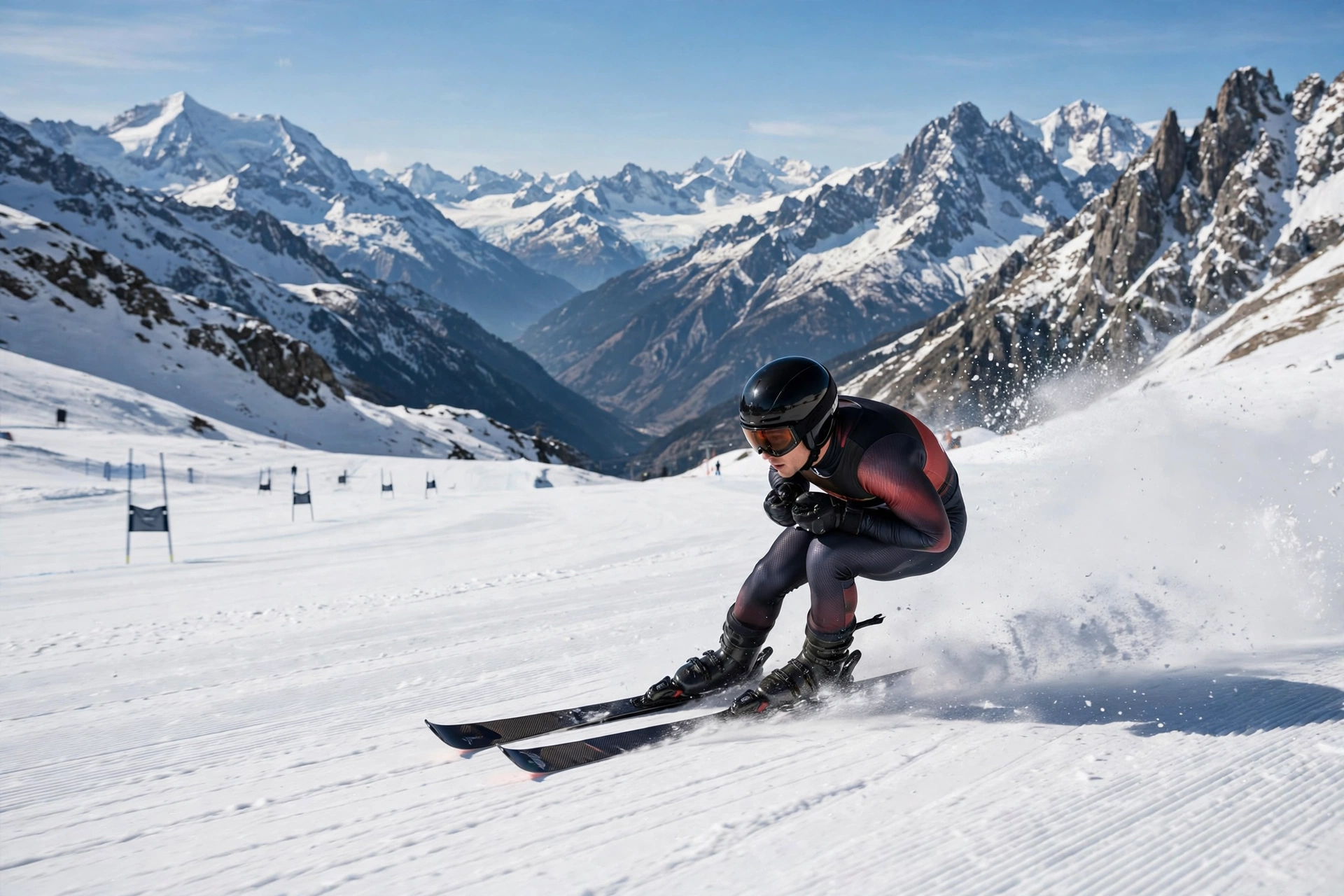
A ski helmet for Super-G racing is a hard-shell race helmet, made to protect a ski racer’s head at high speed on a Super-G course, where the turns are open and the pace is fast. Super-G, short for super giant slalom, is an alpine ski racing discipline in which skiers race down a long course with gates set wide apart, making fast, sweeping turns. It is one of the speed disciplines of alpine racing, and the helmet needs to protect the head at racing pace on a fast, open course.
In general terms, a Super-G helmet is a specialist racing helmet, similar in many ways to a giant slalom helmet but made with the extra speed of the discipline in mind. It has a hard shell, full ear coverage, and a close fit made to work with racing goggles, and it is built to stay stable and protective when the skier is moving quickly down the mountain. It is not a general piste helmet, and it is worn by racers who train and compete in the discipline.
What is Super-G racing?
Super-G is an alpine ski racing discipline that sits between giant slalom and downhill in character, with a course that is longer and faster than a GS course and gates set further apart. Skiers get one run, and they must read the course as they go, since they have only a course inspection on foot beforehand rather than a practice run. That makes it a test of speed, judgement, and nerve as well as technique.
The course is set on a prepared piste, with a mix of turns, rolls, and flatter sections where the skier carries speed. The snow is usually firm and fast, and the skier needs to hold an edge, stay balanced over changing terrain, and keep their line through each gate. A fall at Super-G pace can be a hard one, which is why the helmet, and the rest of the racer’s protective kit, is taken very seriously.
What makes a Super-G helmet different?
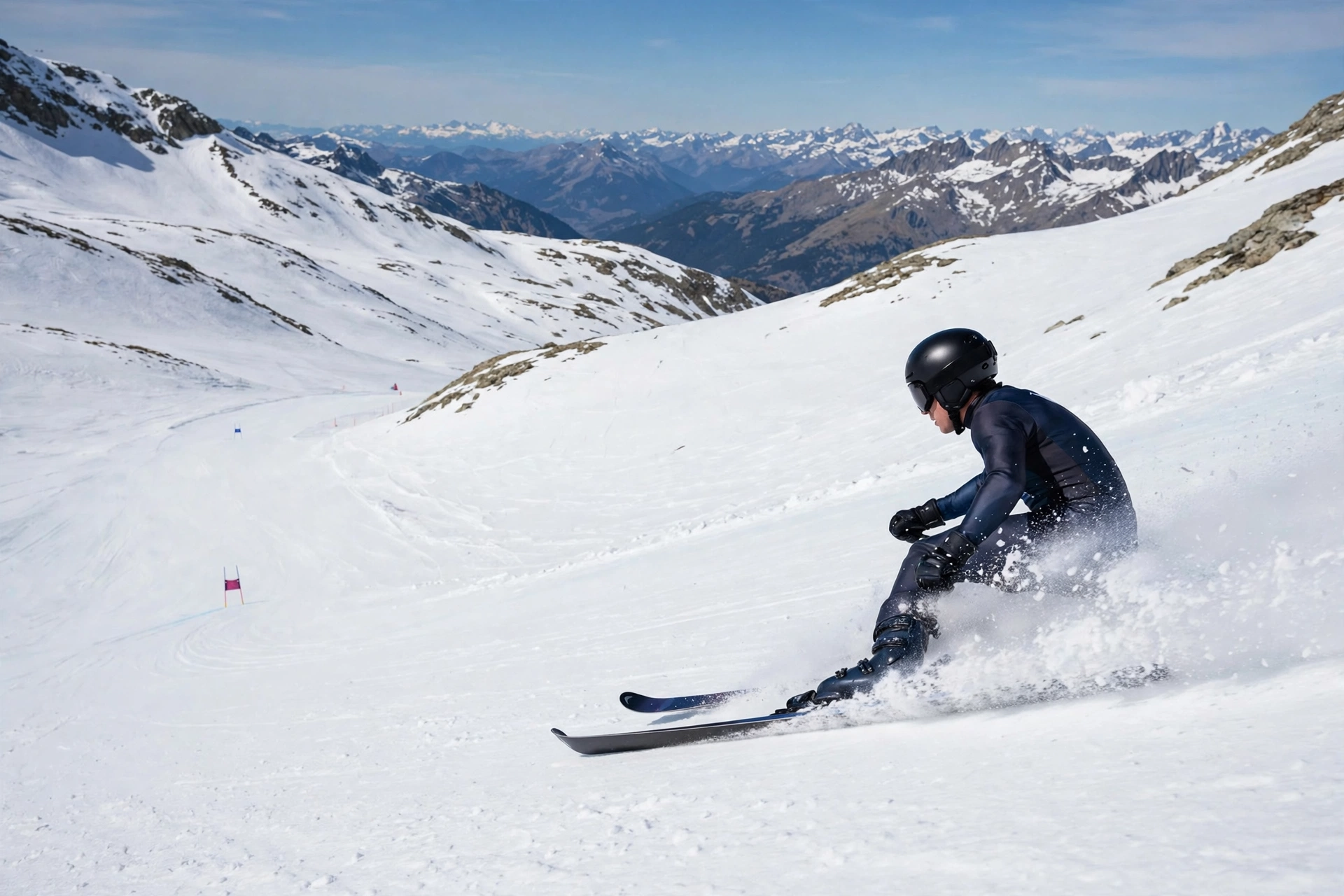
A Super-G helmet is built around a hard shell with full, firm ear coverage, made to protect the sides of the head and to hold the helmet steady at speed. The shell is shaped to work with racing goggles, with a smooth front that lets the goggles sit flush, and the fit is snug and close, so the helmet does not move or lift as the skier gains speed. It is a purposeful, no-frills helmet, made for the race course.
Some race helmets also include a system designed to reduce rotational forces in a fall, such as MIPS, and it is worth asking about when you choose a helmet. Many Super-G racers use a chin guard as well, fitted across the front of the helmet to protect the chin and lower face. In general terms, the chin guard is common in speed racing, because skiers can catch a gate or be hit by snow and ice thrown up at speed. The helmet and guard are checked together before each run, so the racer knows the whole setup is secure.
How should a Super-G helmet fit?
A Super-G helmet should fit very snugly, with no movement when you shake your head, and no pressure points that would distract you at speed. It should sit level, low at the front, and it should work with your goggles so there is no gap between the top of the goggles and the helmet, and no pressure on the bridge of your nose. Try the helmet on with your goggles and any balaclava you race in, so the fit you check is the fit you race in.
The ear pads should sit flat over your ears without pressing painfully, and the chin strap should be snug and secure, with the buckle fastened firmly. A racing helmet that is too loose will shift in a fall and protect less well, while one that is too tight will be a distraction long before the finish. Racers often try several sizes and pad combinations, and they check the fit again on snow before race day.
What about goggles, vents, and aerodynamics?
Goggles and helmet work as a pair in Super-G, so they should be tried together. The goggles should sit flush against the helmet with no gap, the strap should fit over the helmet without slipping, and the ventilation should line up so the goggles do not fog at speed. Many racers carry a spare lens for changing light, and they check both lenses with the same helmet before the race.
The helmet shell is shaped to be stable in the airflow at speed, with a smooth profile that does not catch the wind or lift. Vents are usually simple and robust, since the helmet is worn in cold air at speed, and they should be checked for snow and ice before each run. In general terms, the whole setup is checked as a system, not as separate pieces, before the racer leaves the start gate.
How do you look after a Super-G helmet?
After racing, let the helmet dry naturally at room temperature, away from direct heat, and wipe the shell clean of snow and dirt. Do not leave it in a hot car or near a radiator, as heat can damage the materials inside the helmet over time. Check the vents for snow and ice, and make sure they move freely before the next run.
Check the shell for cracks or dents, the ear pads for wear, and the chin strap and buckle for damage after every race. In general terms, a racing helmet that has taken a hard impact should be replaced, even if it looks fine on the outside, because the inner liner may have been compressed. A helmet that has protected you in a crash has done its job and should not be relied on again.
Who should use a Super-G racing helmet?
A Super-G racing helmet is made for racers training and competing in Super-G, and it is the right choice for anyone racing in a speed discipline regularly. Skiers in a race programme, from juniors to masters racers, usually wear a proper race helmet for speed training and racing, and many ski clubs ask their racers to use one for gate and speed work on the course.
For general piste skiing, a normal ski helmet is usually a better choice, since a race helmet is heavier and made for the race course rather than comfort on a long day. If you are starting Super-G racing, ask your coach or race programme which helmet and chin guard they recommend, and make sure it fits with your goggles before you buy. The right helmet is the one that fits, protects, and lets you focus on the course ahead.
Is a Super-G helmet the same as a downhill helmet?
In general terms, Super-G and downhill helmets are similar hard-shell race helmets, made for speed racing with full ear coverage. The designs may differ in detail, but both are built for fast courses and a snug, stable fit.
Do Super-G racers wear chin guards?
Many do, in general terms, to protect the chin and lower face from gate contact and from snow and ice thrown up at speed. A chin guard is a common part of speed racing kit.
Can I use a Super-G helmet for normal skiing?
You can, but a general ski helmet is usually more comfortable for a full day on the piste. A Super-G helmet is heavier and made for racing, with firm ear coverage and a snug race fit.

Olivia
Writer at Helmet Today, covering helmet reviews, fit and riding safety.