You can tell if a helmet has been in a crash by looking for the signs of impact: cracks or dents in the shell, compressed or deformed foam inside, scuffed or ground-down areas, damaged straps and buckles, and a fit that has changed — and in general terms, any helmet that shows these signs should be replaced. A crash leaves marks, but not always obvious ones. The shell can look fine while the foam inside is compressed, so a proper check means looking at the helmet closely, inside and out, and asking about its history if it is not yours.
Helmets are designed to absorb the force of one hard impact by crushing or deforming inside, which is what protects your head. Once that has happened, the helmet cannot absorb a second impact in the same way. That is why knowing whether a helmet has been in a crash matters so much — and why a helmet with a crash in its past should not be trusted again.
What are the signs of a crash on the outside?
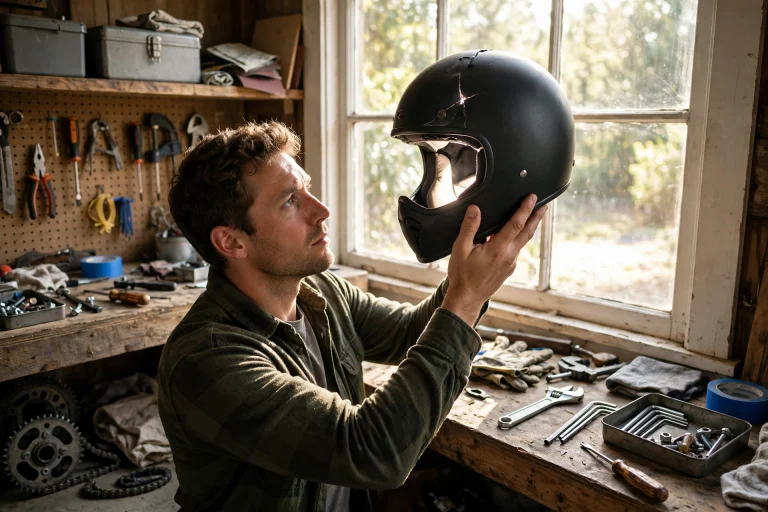
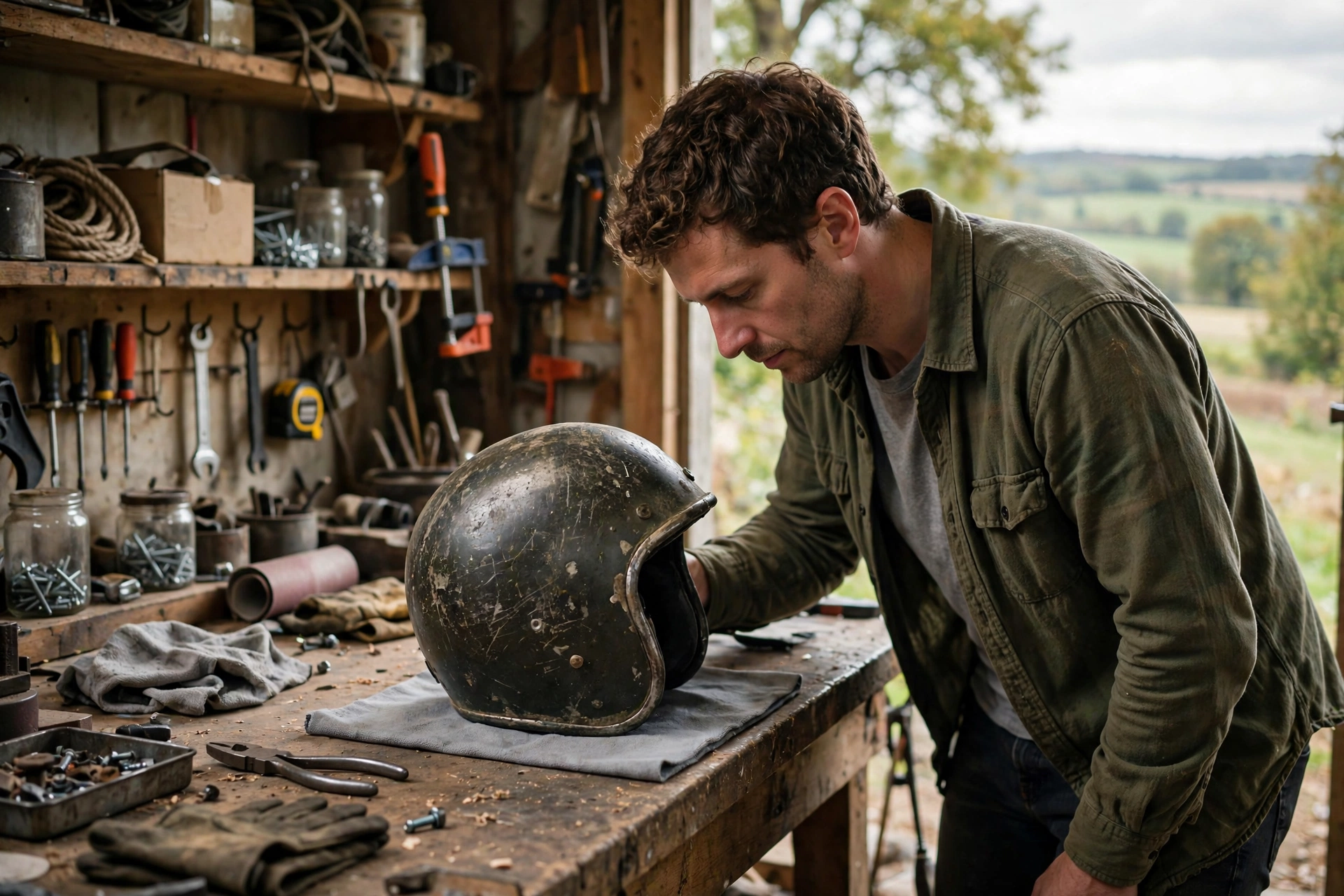
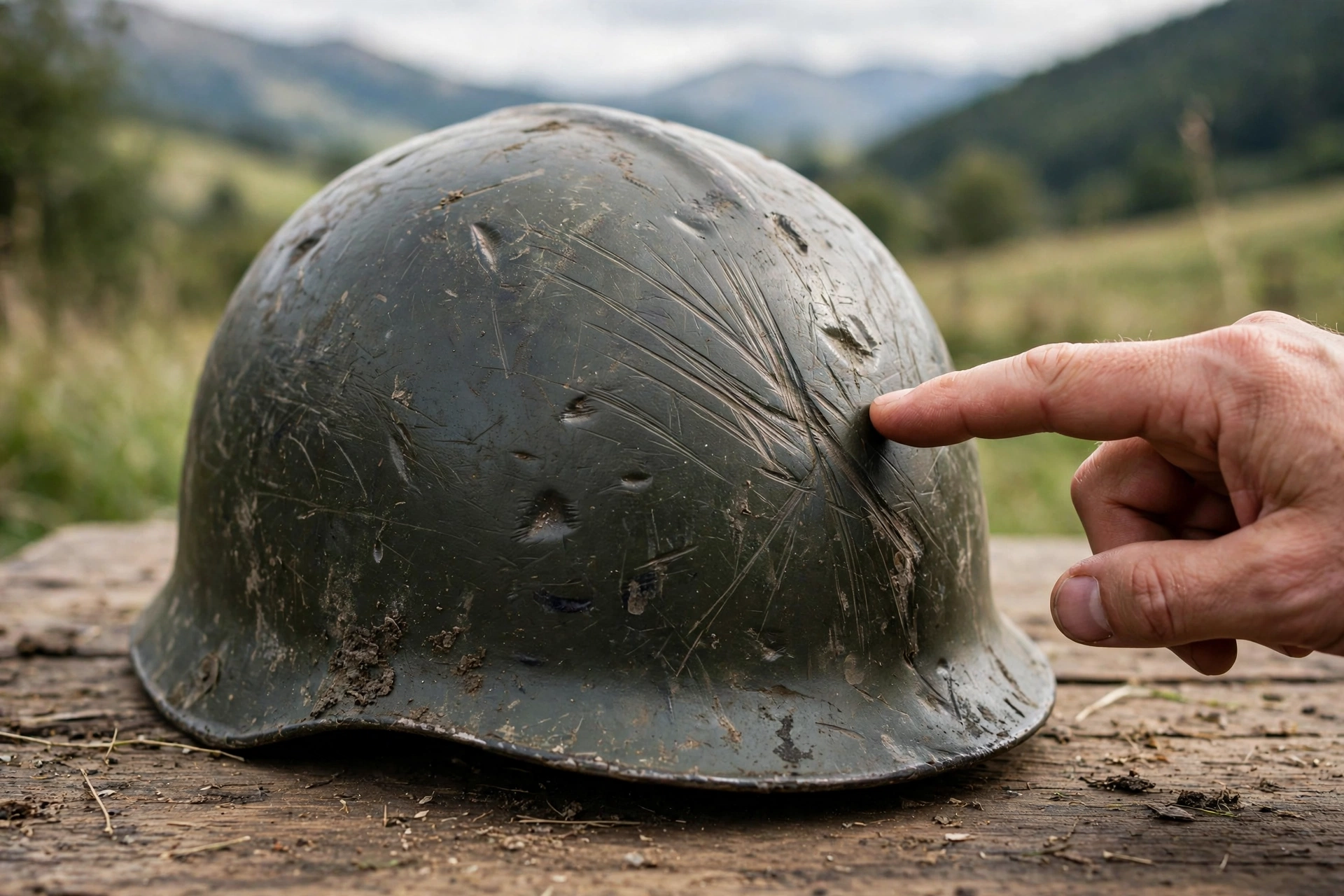
The outside of a helmet that has been in a crash often shows scrapes, scuffs, or flat spots where it slid or hit the ground. Look for scratches that run in one direction, patches where the paint or coating has been ground away, and dents or cracks in the shell, especially around the edges and the vents. A deep scrape that goes through the outer layer is a strong sign of a hard impact.
Check the visor, the peak, and any mounts or fittings too, because these often break or bend in a crash. A visor that is cracked or missing, a peak that is bent out of shape, or a vent cover that has popped off all suggest the helmet took a hit. Run your hands over the shell as you look, because a dent or a crack can be easier to feel than to see, and press gently around any mark to see if the shell flexes or gives.
What are the signs of a crash on the inside?
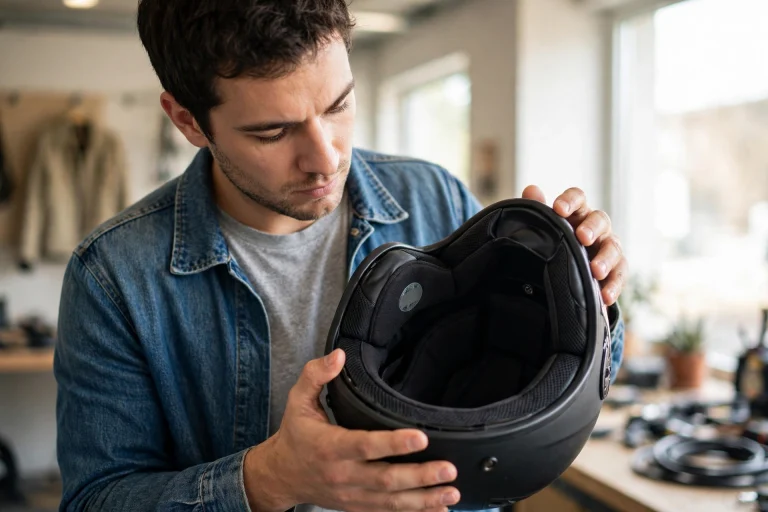
The inside of a helmet often tells the story more clearly than the outside. Take out the lining and padding if your helmet allows it, and look at the foam liner for dents, cracks, or areas that feel harder or softer than the rest. Compressed foam is the classic sign of a crash: the liner has done its job by crushing, and it will not crush the same way again.
Check the inner shell for cracks and the straps for fraying, stretched webbing, or buckles that no longer hold firmly. Look for sweat stains or wear that does not match the age of the helmet, and check whether the fit has changed — a helmet that feels loose when it used to fit snugly may have a deformed liner. In general terms, any change in the foam or the fit after a fall is a reason to stop using the helmet.
How can you check a second-hand helmet’s history?
Checking a second-hand helmet’s history is hard, and that is the main reason to be cautious about buying one. Ask the seller directly whether the helmet has been in a crash, dropped, or damaged, and when it was bought. Look at the label inside for the date of manufacture, and check the shell and liner carefully using the steps in this guide. If the seller cannot answer, or the helmet shows any of the signs above, do not buy it.
In general terms, a helmet with an unknown history is a risk, because the damage from a crash is not always visible. Some helmets include a system designed to reduce rotational forces in a fall, such as MIPS, and that liner should be checked for damage too, but no liner can tell you the helmet’s history on its own. If you cannot verify that a second-hand helmet has never been in a crash, the safest choice is to buy a new one.
What should you do if a helmet has been in a crash?
If a helmet has been in a crash, stop using it and replace it. In general terms, a helmet that has absorbed a crash has done its job and should not be relied on again, even if the damage looks minor. The foam inside may be compressed, the shell may be weakened, and the helmet may not protect you properly in the next impact.
Do not pass a crashed helmet on to someone else, and do not keep it as a spare. Mark it clearly so nobody uses it by mistake, and dispose of it or recycle it following the maker’s guidance. If the crash involved an injury, keep the helmet and note what happened, because the maker or an insurer may want to see it. Otherwise, replace it as soon as you can, and do not ride, work, or play in it in the meantime.
Can a helmet look fine and still be unsafe after a crash?
Yes, a helmet can look fine on the outside and still be unsafe after a crash. The foam liner can compress without any visible mark on the shell, and a crack can hide under the surface finish or beneath the lining. This is why a helmet that has been in a crash should be replaced even when it looks undamaged, and why a quick glance is not a proper check.
Some riders and workers are tempted to keep a helmet that looks fine after a low-speed fall, but the force involved is often greater than it feels at the time. In general terms, if your head hit the ground or an object hard enough to notice, the helmet took a real impact. When in doubt, treat the helmet as crashed and replace it — a new helmet costs far less than a head injury.
Does a dropped helmet count as crashed?
A helmet dropped from a low height onto a soft surface is not the same as a crash, but a hard drop onto concrete or a hard floor is a different matter. In general terms, if a helmet falls hard enough to dent or crack the shell, or if you are unsure how hard it hit, treat it as damaged and check it carefully using the steps in this guide.
Do not hang a helmet from a handlebar or a mirror, where it can fall and hit the ground. If a dropped helmet shows any sign of damage, replace it rather than risking another ride in it.
Should you replace a helmet after every fall?
In general terms, yes, if your head hit the ground or an object in the fall. A helmet that has absorbed an impact should be replaced, even if it looks fine, because the foam inside may be compressed.
Can a shop tell if a helmet has been in a crash?
A shop can inspect a helmet for visible damage, but it cannot always tell whether the foam inside is compressed. If the helmet has a known crash in its history, replace it rather than asking a shop to clear it.
Is it safe to buy a second-hand helmet?
In general terms, no, it is not recommended, because you cannot verify whether it has been in a crash. A new helmet with a known history and a current certification is the safer choice.

Olivia
Writer at Helmet Today, covering helmet reviews, fit and riding safety.