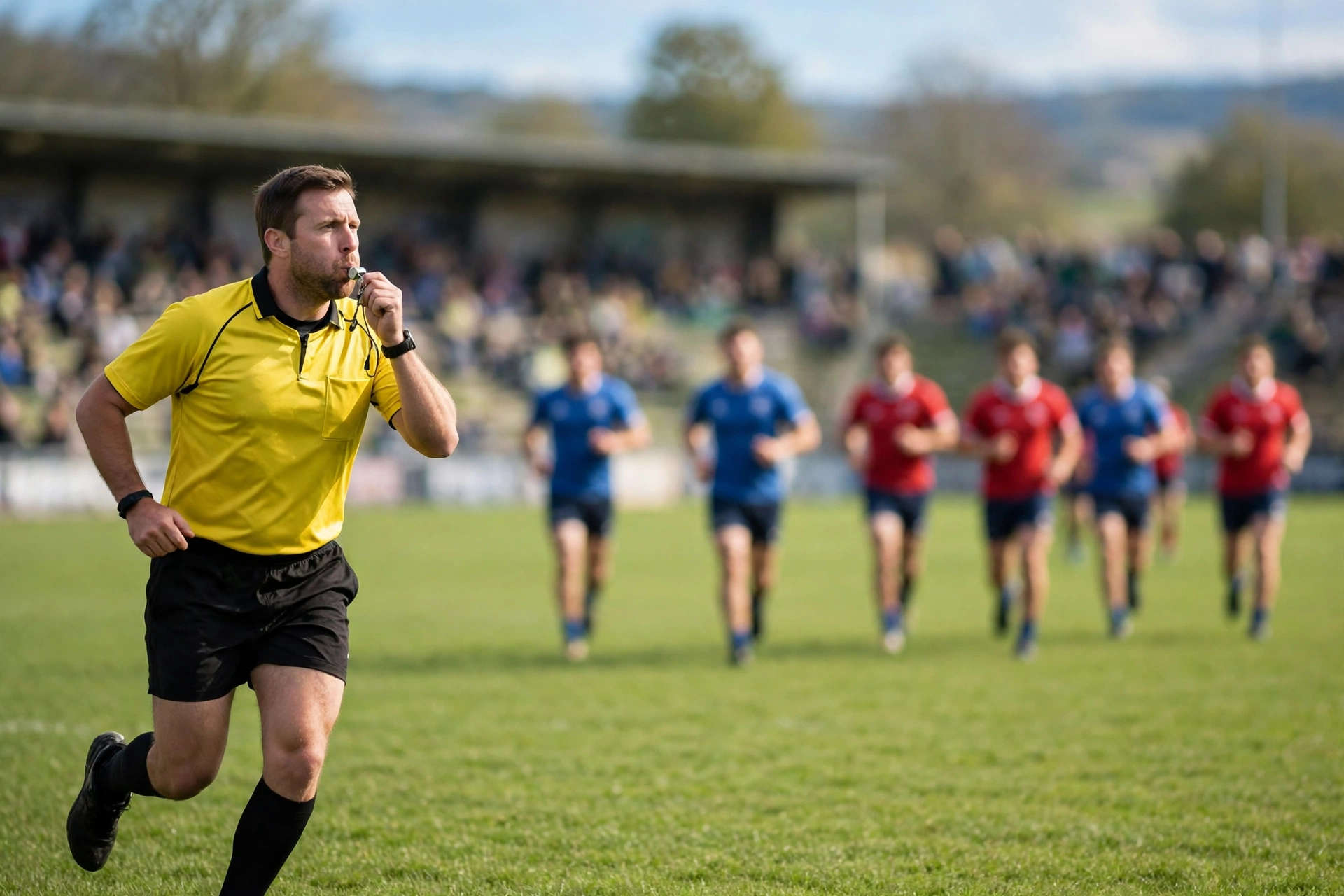
Rugby referees do not normally wear a helmet during a match: in general terms, the referee runs the game in a shirt, shorts, and boots, with no head protection, and there is no rule requiring referees to wear one. That surprises some people, because referees spend the whole match in the middle of the action, close to tackles, rucks, and fast-moving players. But a referee’s job is to watch play, stay out of the way, and keep moving, and a helmet is not part of the standard kit for that role.
This guide explains what rugby referees actually wear on their heads, why a helmet is not normally part of the job, what head risks referees do face, and when wearing some form of head protection might be sensible. In general terms, the honest answer is that most referees rely on positioning, awareness, and fitness rather than on a helmet, and anyone considering extra protection should understand the trade-offs before choosing it.
Do rugby referees wear helmets?
No, rugby referees do not wear helmets in normal match play. If you watch a professional, club, or school match, the referee will be wearing a brightly coloured shirt so players and spectators can pick them out, and their head will be uncovered. This is true at every level of the game, from junior rugby to the international stage. Referees carry a whistle, cards, and sometimes a microphone, but not a helmet.
The reason is simple: a referee is not a player, and the laws of the game do not ask referees to take part in contact. A referee’s job is to follow play at a safe distance, read what is happening, and make decisions. A helmet would add weight and heat, narrow the referee’s hearing, and could make it harder to communicate with players.
What head risks do rugby referees face?
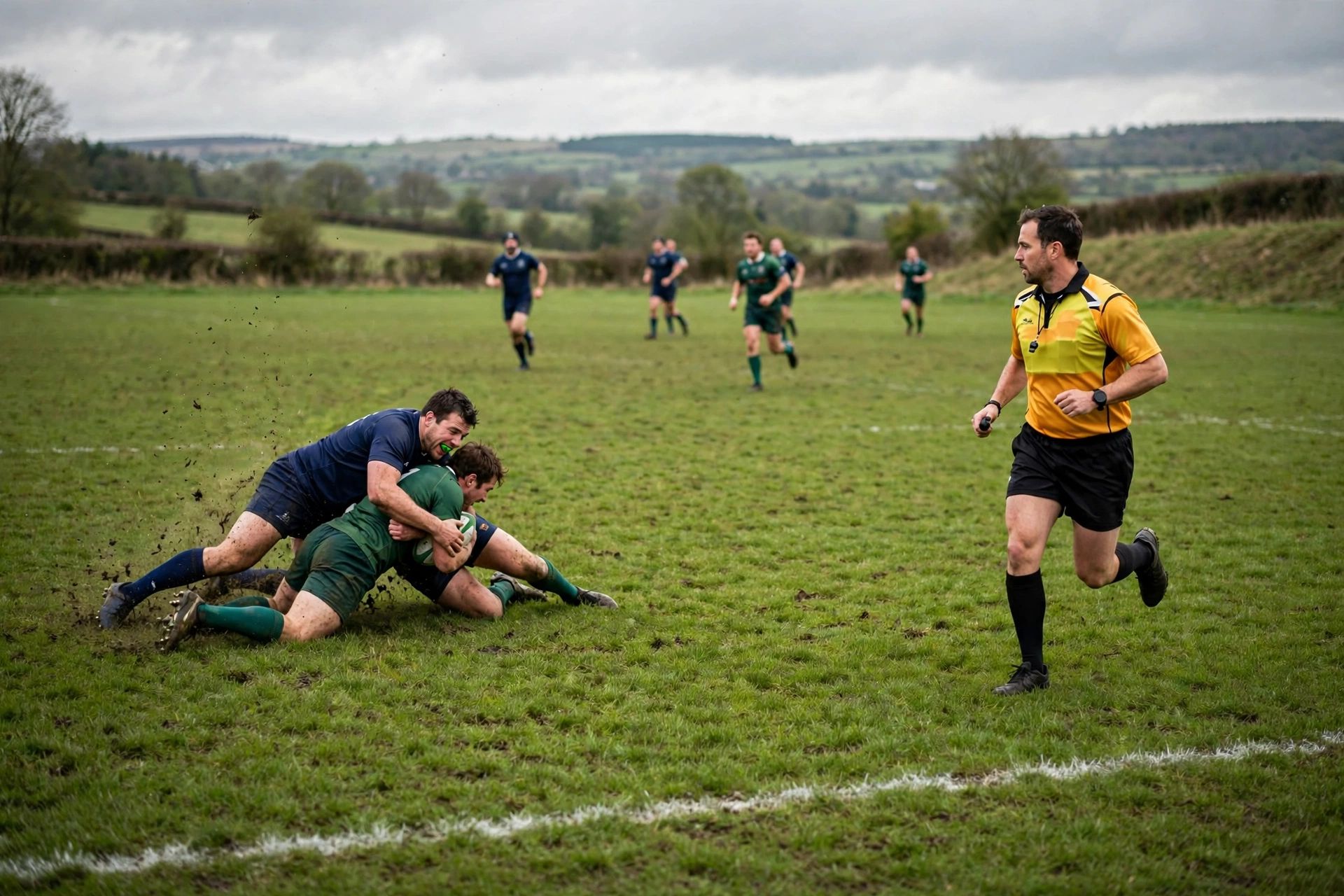
Referees face real but limited head risks, mostly from being in the wrong place at the wrong moment. Play can change direction quickly, and a referee who is tracking the ball can be caught by a player running a support line, a winger chasing a kick, or a loose ball bouncing off a ruck. Collisions between referees and players do happen, and a clash of heads or a shoulder to the head can cause a cut, a bruise, or in rare cases a concussion.
The other risks are less dramatic but still worth noting. A referee can slip on wet grass and fall, be struck by a ball kicked from close range, or collide with a goalpost while following play behind the line. In general terms, these are the same kinds of accidents that can happen to anyone moving quickly on a rugby field. Fitness, good positioning, and watching the game as well as the ball are the main ways referees reduce these risks.
Can a rugby referee wear a scrum cap?
There is no rule that stops a referee from wearing a soft headguard, often called a scrum cap, if they want extra protection. In general terms, a scrum cap is a soft, close-fitting padded cap worn by some players to protect the ears and scalp from scrapes and knocks. It is not a hard helmet, and it is not designed to prevent concussion, but some referees who have had a previous head injury, or who referee fast, physical matches, choose to wear one for peace of mind.
The trade-off is comfort and communication. A scrum cap can be warm, can muffle sound slightly, and can make a referee look unusual to players who expect an uncovered head. Most referees decide the benefits are not worth it for a normal match. But for a referee returning after a head injury, or one who referees youth games where play is less predictable, a soft cap is a reasonable, honest option to consider with a doctor or a referee society.
What do referees wear instead of a helmet?
Instead of a helmet, referees wear the kit that helps them do their job well: a distinctive shirt, shorts, socks, and studded boots for grip on the grass. A cap or sun hat is common in hot weather, and a waterproof top is worn in the rain. Some referees wear a headband to keep sweat out of their eyes, and in cold weather a thin beanie can be worn before the match, though not usually during play.
The most important protection a referee has is not something worn at all. It is fitness, which keeps the referee in the right position and able to move out of danger, and awareness of where the next phase of play is heading. A fit referee who reads the game well rarely ends up in a collision, while an unfit referee who stands still in a busy channel is at risk whatever they wear. In general terms, good positioning is the referee’s real head protection.
How do referees stay safe without a helmet?
Referees are trained to follow play from the open side, where they can see the ball and the defenders without standing in the path of runners. They learn to angle their runs, to keep moving after each phase, and to get out of the way when the ball is turned over. This is taught in referee courses and reinforced by assessors who watch how a referee moves, not just how they blow the whistle.
Referees also rely on the players to look out for them. If a referee is hurt, the match stops and the injury is treated like any other head injury on the field. In general terms, the safety system for referees is built on training, positioning, and respect, and it works well enough that helmets have never become part of the kit.
When might a rugby referee consider head protection?
A referee might consider head protection after a head injury, when returning to the game and wanting extra reassurance. A soft scrum cap is the sensible choice here, because it adds a little padding without changing how the referee moves or hears. It is worth talking to a doctor first, since a cap does not prevent concussion, and a referee who is not fully recovered should not be on the field at all.
Another case is refereeing at youth or school level, where young players can be unpredictable and the ball can go anywhere. A referee who feels exposed in that setting may choose a cap for comfort, and nobody will object. Helmets designed for cycling or other sports are not suitable, though: the soft cap is the only form of headgear that fits the game, and hard helmets of other sports have no place on a rugby field. Hard helmets used in some other sports sometimes include a system designed to reduce rotational forces in a fall, such as MIPS, but that kind of technology belongs to the sport it was designed for, not to refereeing.
Do rugby referees wear helmets?
No, in general terms rugby referees do not wear helmets during a match. There is no rule requiring one, and referees rely on positioning, fitness, and awareness to stay safe instead.
Can a rugby referee wear a scrum cap?
Yes, nothing in the laws stops a referee from wearing a soft scrum cap for extra protection. It is a personal choice, often made by referees returning after a head injury or refereeing unpredictable youth games.
What should a referee do after a head knock?
Stop the match and get checked, just as a player would. In general terms, any head knock should be treated seriously, and the referee should not continue if there are symptoms such as dizziness, confusion, or headache.

Olivia
Writer at Helmet Today, covering helmet reviews, fit and riding safety.