American football coaches do not normally wear a helmet: in general terms, coaches stand on the sideline in team clothing, with no head protection, and there is no rule requiring them to wear one. That can seem surprising, because coaches stand just a few yards from full-speed play, and players are regularly tackled out of bounds or run into the sideline area. But a coach’s job is to watch, call plays, and manage the team, and a helmet is not part of the standard kit for that role.
This guide explains what American football coaches actually wear on their heads, why a helmet is not normally part of the job, what head risks coaches do face on the sideline, and when wearing a helmet might be sensible. In general terms, the honest answer is that most coaches rely on the marked-off sideline area, awareness, and the players’ care rather than on a helmet, and anyone considering extra protection should understand the trade-offs first.
Do American football coaches wear helmets?
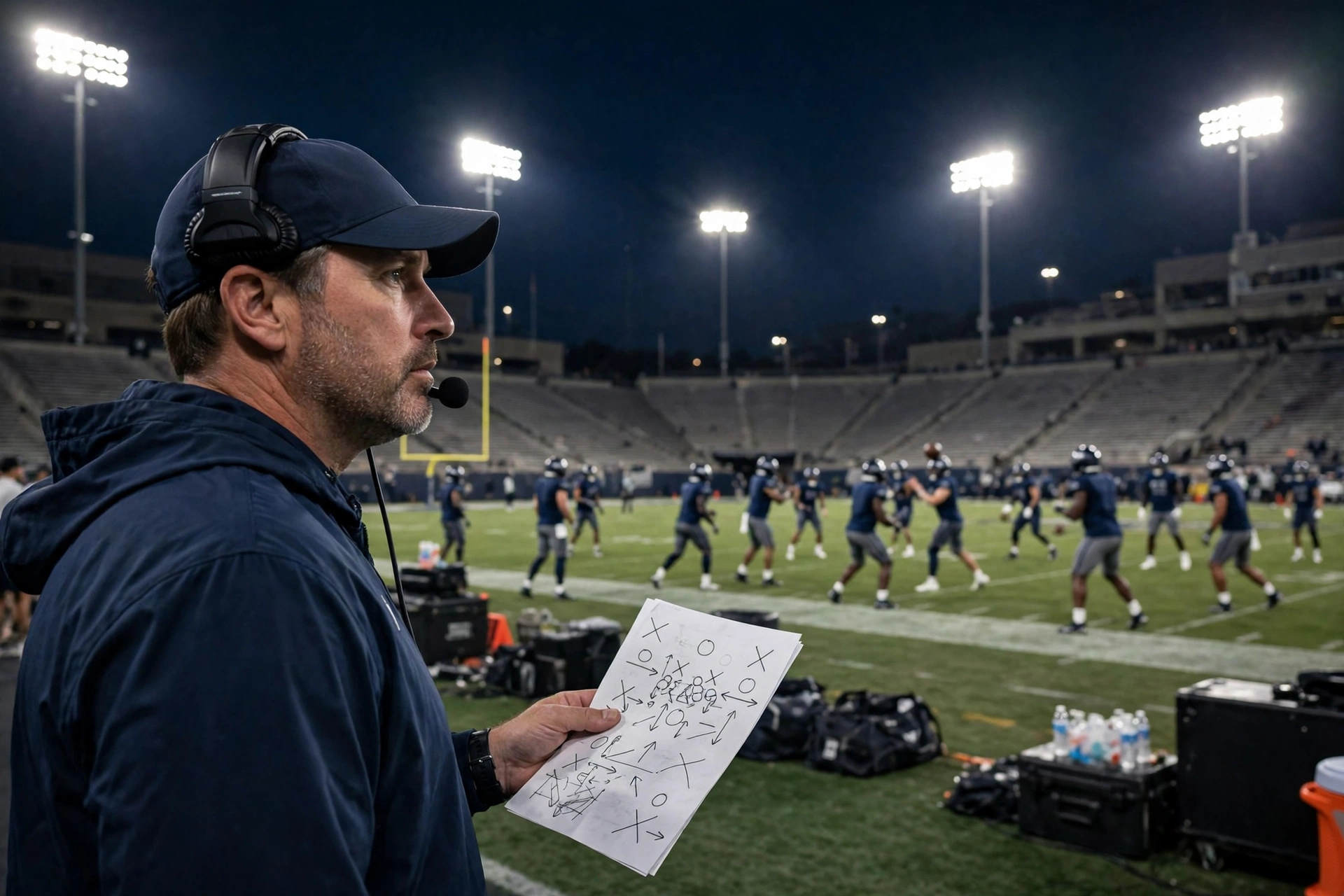
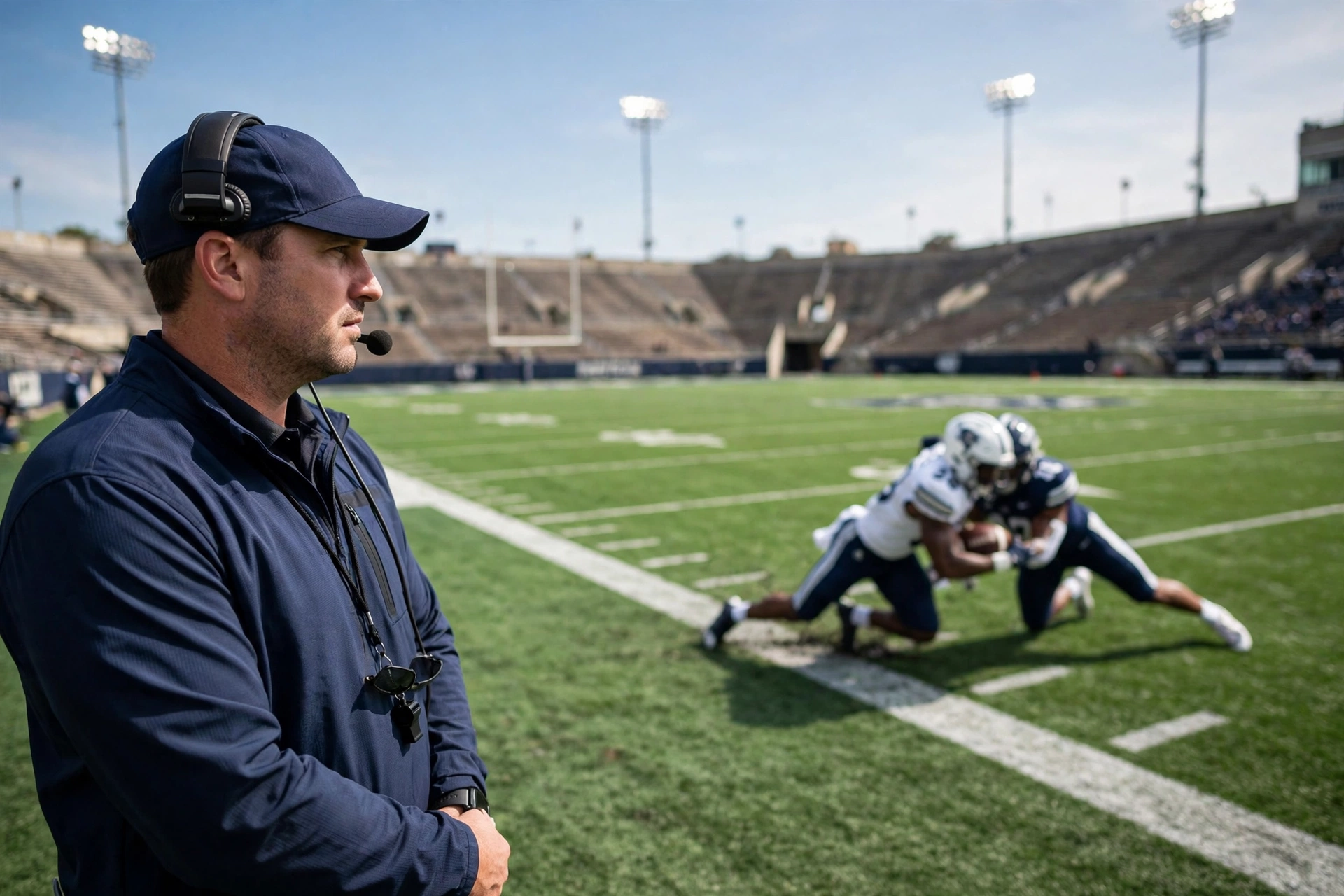
No, American football coaches do not wear helmets in normal games. If you watch a college or professional game, the head coach and assistants will be wearing team shirts, caps, or headsets, and their heads will be otherwise uncovered. Players wear hard helmets because they take part in contact; coaches do not take part in contact, so they do not wear the same protection.
The sideline has its own safety system. Coaches must stay behind a marked line, and officials keep a clear area around the field so that play has room to run out of bounds without hitting people. A helmet would add weight and heat, muffle the headset, and make it harder to communicate with players and other coaches.
What head risks do American football coaches face?
Coaches face real but limited head risks, mostly from play spilling onto the sideline. A ball carrier tackled out of bounds, a receiver pushed off the field, or a pile of players sliding across the ground can all reach the area where coaches stand. Collisions between coaches and players do happen, and a knee, elbow, or helmet to the head can cause a cut, a bruise, or in rare cases a concussion.
Other risks come from the ball itself, kicked or thrown from close range, and from slips and falls on wet turf or muddy ground. Coaches who pace the sideline while watching play are more exposed than those who stand still, because they may not see a tackle coming. In general terms, these are the same kinds of accidents that can happen to anyone standing close to a fast, physical sport, and the risk is higher in games with narrow sidelines or crowded team areas.
Can an American football coach wear a helmet?
There is no rule that stops a coach from wearing a helmet if they want extra protection, and in practice some coaches do wear one in particular situations. The most common is practice, where a coach who steps onto the field to run a drill, hold a blocking pad, or demonstrate a technique is much closer to contact than on the sideline. A coach who joins a drill is effectively taking part in play, and a helmet is sensible there.
The trade-off is comfort and communication. A helmet is heavy, warm, and muffles the voice and the headset, which makes it harder to call plays and talk to players. Most coaches decide the benefits are not worth it during a game, when they are behind the line and can see play coming. But for a coach who works with young players, or who has had a previous head injury, a light practice helmet is a reasonable, honest option to consider.
What do coaches wear instead of a helmet?
Instead of a helmet, coaches wear the kit that helps them do their job: team shirts, caps, visors, and headsets for talking to the coaching box and other coaches. A cap shades the eyes from the sun, and a rain jacket with a hood is worn in bad weather. Some coaches wear a sun hat or a beanie in cold weather, and ear protection is built into the headset itself.
The most important protection a coach has is not something worn at all. It is the marked sideline area, awareness of where the play is going, and the habit of keeping an eye on the field at all times. A coach who watches the ball and knows when a tackle is heading their way can step back in time, while a coach who is looking at a play sheet when play turns toward them is at risk whatever they wear. In general terms, attention and position are the coach’s real head protection.
How do coaches stay safe without a helmet?
Coaches are expected to stay behind the line that marks the team area, and officials will warn them if they step too far forward. The best habit is to stand a step or two behind that line, facing the field, with a clear path to move back. Assistant coaches and team staff also watch out for each other, calling a warning when a play is heading toward the sideline.
Coaches also rely on the players to avoid them when possible. If a coach is hurt, the game stops and the injury is treated like any other head injury on the field. In general terms, the safety system for coaches is built on lines, awareness, and respect, and it works well enough that helmets have never become part of the kit.
When might an American football coach consider a helmet?
A coach might consider a helmet when taking part in practice drills, where the risk of contact is much higher than on the sideline. If a coach is holding a pad for tackling practice, demonstrating a block, or standing in the middle of a live drill, a helmet is sensible protection, and many teams already expect coaches to wear one in those moments. It is the one situation where a coach’s role is close enough to a player’s role to justify a player’s protection.
Another case is coaching young players, where the ball can go anywhere and players may not yet have the control to avoid the sideline. A coach who feels exposed in that setting may choose a light helmet for peace of mind, and nobody will object. Helmets used by players are the right choice here, because they are designed for the impacts of the sport, though a coach should make sure the helmet fits properly and does not block the headset. Some modern helmets include a system designed to reduce rotational forces in a fall, such as MIPS, and a coach choosing a helmet for practice should look for one that fits well and suits the drill, rather than the cheapest option.
Do American football coaches wear helmets?
No, in general terms American football coaches do not wear helmets during a game. There is no rule requiring one, and coaches rely on the marked sideline area, awareness, and positioning to stay safe instead.
When might a coach wear a helmet?
A coach might wear a helmet during practice drills, when stepping onto the field and joining contact work. That is the situation where a coach’s role is closest to a player’s, and a helmet is sensible protection there.
What should a coach do after a head knock on the sideline?
Stop and get checked, just as a player would. In general terms, any head knock should be treated seriously, and the coach should not carry on if there are symptoms such as dizziness, confusion, or headache.

Olivia
Writer at Helmet Today, covering helmet reviews, fit and riding safety.