We may earn a commission when you buy through links on this page, at no extra cost to you. Learn more
Good binoculars turn a distant speck into a bird you can actually identify: the flash of a wing bar, the shape of the bill, the color of the legs. Bad ones leave you guessing at a blur. The five 8×42 binoculars below are all proven birding choices, from a premium Nikon with the widest view here to a budget Celestron that costs far less and still performs.
Our top pick overall is the Vortex Diamondback HD 8×42, which balances sharp optics, rugged waterproofing, and a lifetime warranty. If you want the widest field of view, the Nikon Monarch M7 8×42 is the premium step up, while the Celestron Nature DX ED 8×42 offers ED glass at a mid-range price.
As an Amazon Associate, Helmet Today earns from qualifying purchases — at no extra cost to you. Prices change often, so use the Check Price buttons to see today’s deal.
| Product | Key Features | Best For | Price |
|---|---|---|---|
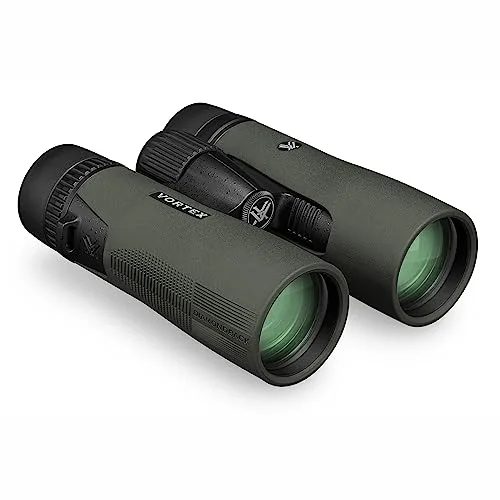 Vortex Diamondback HD 8×42 |
8×42 with HD glass elements; fully multi-coated lenses; 393 ft field at 1000 yds; waterproof and fogproof; lifetime VIP Warranty; 21.8 oz | Best Overall | Check Price on Amazon |
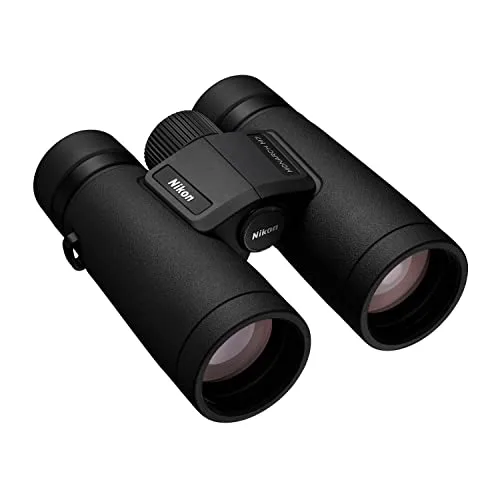 Nikon Monarch M7 8×42 |
ED glass; widest field here at 435 ft at 1000 yds; 17.1 mm eye relief; waterproof and fogproof; locking diopter; 23.6 oz | Best Premium / Widest View | Check Price on Amazon |
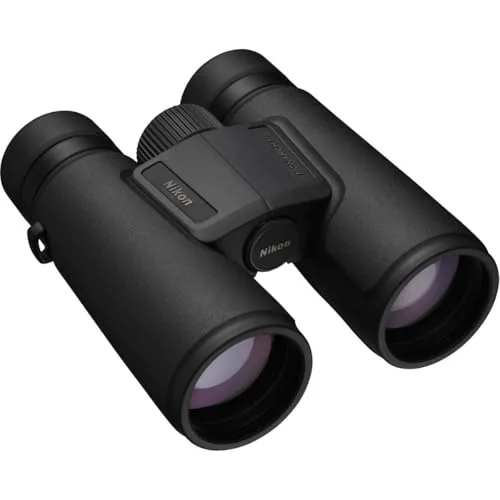 Nikon Monarch M5 8×42 |
ED glass; longest eye relief here at 19.5 mm; 335 ft field at 1000 yds; waterproof and fogproof; 22.2 oz | Best for Glasses Wearers | Check Price on Amazon |
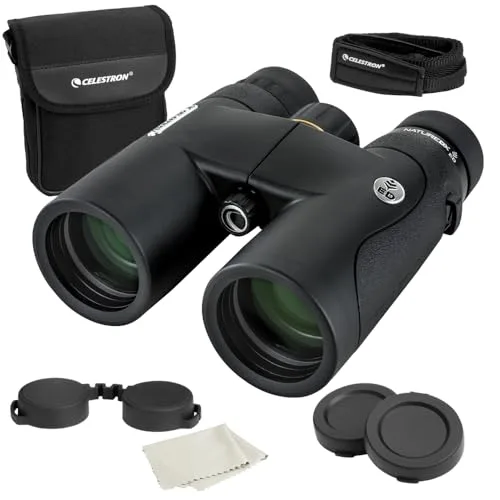 Celestron Nature DX ED 8×42 |
ED glass with BaK-4 prisms; 393 ft field at 1000 yds; 6.5 ft close focus; waterproof and fogproof; full accessory kit; 24.9 oz | Best ED-Glass Value | Check Price on Amazon |
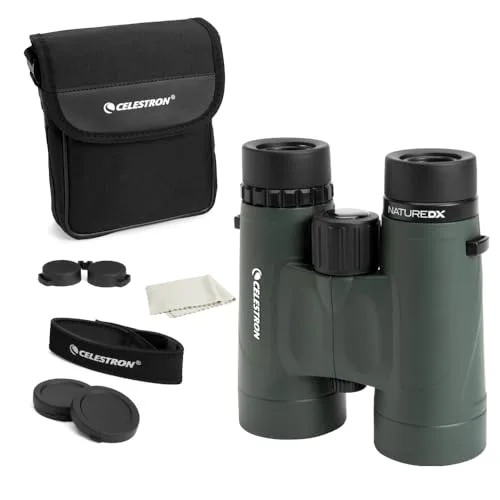 Celestron Nature DX 8×42 |
Fully multi-coated BaK-4 prisms; 388 ft field; 6.5 ft close focus; 17.5 mm eye relief; waterproof and fogproof; 22.2 oz | Best Budget | Check Price on Amazon |
1. Vortex Diamondback HD 8×42 — Best Overall
The Vortex Diamondback HD 8×42 is the best overall birding binocular here because it gets the fundamentals right: select HD glass elements for resolution and color fidelity, fully multi-coated lenses with a dielectric coating, and an Armortek exterior coating that shrugs off scratches. Twist-up eyecups, a smooth center focus wheel, and a diopter make it easy to set up for your eyes.
With a 393-foot field of view at 1000 yards and a 5-foot close focus, it finds birds fast and focuses close enough for butterflies and feeder birds. Rubber armor, a tripod-adaptable body, and argon-purged waterproof and fogproof construction make it a true field tool, and the GlassPak harness is included. Best of all, it carries Vortex’s unlimited lifetime VIP Warranty.
Key Features:
- 8×42 with select HD glass elements for resolution and colour fidelity; fully multi-coated lenses with dielectric coating plus Armortek exterior coating
- Twist-up eyecups, centre focus wheel, diopter on the right eyepiece; 393 ft field of view at 1000 yds, 5 ft close focus
- Rubber armour, tripod adaptable; argon purged, O-ring sealed, waterproof and fogproof; GlassPak harness included
- Unlimited unconditional lifetime VIP Warranty; 21.8 oz
Pros:
- Sharp, bright image with a wide field and close focus for feeder birds and butterflies
- Waterproof and fogproof with a harness included, plus the strongest warranty here
- Lightest binocular in this roundup at 21.8 oz
Cons:
- No ED glass — bright high-contrast edges fringe slightly
- No locking diopter, so the diopter setting can drift in a bag
2. Nikon Monarch M7 8×42 — Best Premium / Widest View
The Nikon Monarch M7 8×42 is the premium pick, and its headline feature is the widest field of view here: 435 feet at 1000 yards. That extra width makes it noticeably faster to find a moving bird in a tree or across a marsh. ED glass plus multilayer lens and prism coatings keep the view sharp and high-contrast.
High-eyepoint turn-and-slide eyecups, a smooth center focus, and long 17.1 mm eye relief make it comfortable for long sessions, and the locking diopter holds your setting. Waterproof, fogproof, and rubber-armored, it is built for field use, with an 8.2-foot close focus and a weight of 23.6 oz.
Key Features:
- ED glass plus multilayer lens and prism coatings for sharp, high-contrast views
- Widest field here: 435 ft at 1000 yds; high-eyepoint turn-and-slide eyecups, smooth centre focus, long eye relief (17.1 mm)
- Waterproof, fogproof, rubber-armoured, with oil- and water-repellent coatings
- 42 mm objectives, 8.2 ft close focus, locking diopter, 23.6 oz
Pros:
- Widest field of view here, so finding moving birds is faster
- ED glass with a locking diopter and long eye relief for comfortable viewing
- Oil- and water-repellent coatings keep the lenses clear in bad weather
Cons:
- Lags rivals in dawn and dusk brightness
- Highest price in this roundup, and the supplied neck strap is basic; lens caps come off easily
3. Nikon Monarch M5 8×42 — Best for Glasses Wearers
The Nikon Monarch M5 8×42 is the pick for glasses wearers, with the longest eye relief here at 19.5 mm and turn-and-slide eyecups that make it easy to get the full field of view with glasses on. ED glass cuts chromatic aberration, and dielectric multilayer prism coatings plus phase-corrected roof prisms keep the image clean and bright.
The fiberglass-reinforced polycarbonate body is waterproof to 1 meter for 10 minutes and fogproof, with nitrogen filling and O-ring seals. At 22.2 oz it is comfortable on a long walk, though its 335-foot field is the narrowest here and its 8.2-foot close focus is longer than its rivals.
Key Features:
- ED glass cuts chromatic aberration; dielectric high-reflective multilayer prism coatings plus phase-corrected roof prisms
- Longest eye relief here at 19.5 mm, with turn-and-slide eyecups — the most glasses-friendly pick
- 335 ft field at 1000 yds; 8.2 ft close focus; 22.2 oz
- Waterproof (1 m / 10 min) and fogproof, nitrogen filled, O-ring sealed; fibreglass-reinforced polycarbonate body
Pros:
- Longest eye relief here, making it the most comfortable pick for glasses wearers
- ED glass with phase-corrected prisms for a clean, high-contrast image
- Waterproof and fogproof in a light, durable body
Cons:
- Narrowest field in this roundup (335 ft vs the M7’s 435 ft)
- 8.2 ft close focus is longer than rivals, so near butterflies and feeders are harder
4. Celestron Nature DX ED 8×42 — Best ED-Glass Value
The Celestron Nature DX ED 8×42 brings ED glass — the feature that removes color fringing on high-contrast edges like white birds against dark water — to a mid-range price. Fully multi-coated lenses and phase-coated BaK-4 prisms keep the image bright, and the 393-foot field matches the Vortex for finding birds fast.
A 6.5-foot close focus is good for butterflies and feeder birds, and 17.8 mm of eye relief works well with glasses. It is waterproof and fogproof, nitrogen filled, and tripod adaptable, and it ships with a case, strap, rainguard, lens caps, and cloth. At 24.9 oz it is the heaviest pick here.
Key Features:
- ED glass — no colour fringing; fully multi-coated, phase-coated BaK-4 prisms
- 393 ft field at 1000 yds (7.5 degrees); 6.5 ft close focus; 17.8 mm eye relief, 5.25 mm exit pupil
- Waterproof and fogproof, nitrogen filled; tripod adaptable
- Case, strap, rainguard, lens caps and cloth included; 24.9 oz
Pros:
- ED glass at a mid-range price, with no color fringing on bright edges
- Good close focus and eye relief for feeder birds, butterflies, and glasses wearers
- Full accessory kit included in the box
Cons:
- Heavier than the price suggests — neck carry tires on long walks
- Focus wheel takes about a week to learn; slow near-to-far jumps
5. Celestron Nature DX 8×42 — Best Budget
The Celestron Nature DX 8×42 is the budget pick, and it is a proven one: an Amazon Best Seller in binoculars, with fully multi-coated, phase-coated BaK-4 prisms, a 388-foot field, and a 6.5-foot close focus. With 17.5 mm of eye relief and twist-up eyecups, it works for glasses wearers too.
Waterproof and fogproof with nitrogen purging, it handles rain without worry, and at 22.2 oz it is comfortable to carry. It has no ED glass, so expect mild chromatic aberration and some softening toward the edges, and weaker low-light performance than the pricier glass here.
Key Features:
- Fully multi-coated, phase-coated BaK-4 prisms; 388 ft field (7.4 degrees); 6.5 ft close focus
- 17.5 mm eye relief; twist-up eyecups; tripod adaptable
- Waterproof and fogproof, nitrogen purged; 22.2 oz
- Best Seller track record in the binoculars category
Pros:
- Lowest price here, with a Best Seller track record and thousands of happy owners
- Good field of view and close focus for the money
- Waterproof and fogproof, with comfortable eye relief for glasses wearers
Cons:
- No ED glass — mild chromatic aberration and image softening toward the edges
- Weaker low-light performance than the pricier glass in this roundup
Buying Guide: How to Choose Binoculars for Bird Watching
Magnification and objective size
8×42 is the birding sweet spot: enough reach to identify birds, a wide field to find them fast, and a bright 5.25 mm exit pupil. 10x narrows the field and shakes more.
Glass type (ED vs standard)
ED, or extra-low-dispersion, glass removes color fringing on high-contrast edges such as white birds against dark water. The two Celestrons show the price of going without it.
Field of view
The wider the field at 1000 yards, the faster you find a moving bird. Here the M7 leads at 435 feet, the Vortex and Nature DX ED tie at 393 feet, the Nature DX follows at 388 feet, and the M5 trails at 335 feet.
Eye relief for glasses wearers
15 mm is the practical minimum with glasses on. The M5 at 19.5 mm, the Nature DX ED at 17.8 mm, and the Vortex at 17 mm are the comfortable picks.
Close focus and weather sealing
5 to 6.5 feet of close focus matters for butterflies and feeder birds. All five here are waterproof and fogproof, so rain is not a differentiator — weight and warranty are, and the Vortex lifetime VIP warranty is the strongest.
Frequently Asked Questions
Are 8×42 binoculars the best choice for bird watching?
Yes, for most birders. 8×42 gives you enough magnification to identify birds, a wide field to find them quickly, and a bright image in low light.
Do I need ED glass in my binoculars?
ED glass removes color fringing on bright, high-contrast edges, most visible on white birds against dark water or sky. It is worth paying for if you bird often, but a good non-ED binocular like the Celestron Nature DX is still a fine starter pair.
What eye relief do I need if I wear glasses?
Look for at least 15 mm of eye relief, and 17 mm or more is more comfortable. Twist-up or turn-and-slide eyecups let you set the right distance, and the Nikon Monarch M5 at 19.5 mm is the most glasses-friendly pick here.
Conclusion
For most birders, the Vortex Diamondback HD 8×42 is the best binocular for bird watching in this roundup because it balances sharp optics, a wide field, rugged waterproofing, and a lifetime warranty at a fair price. The Nikon Monarch M7 8×42 is the runner-up for birders who want the widest field of view and premium ED glass, while the Celestron Nature DX 8×42 is the smart budget pick for beginners.

Olivia
Writer at Helmet Today, covering helmet reviews, fit and riding safety.