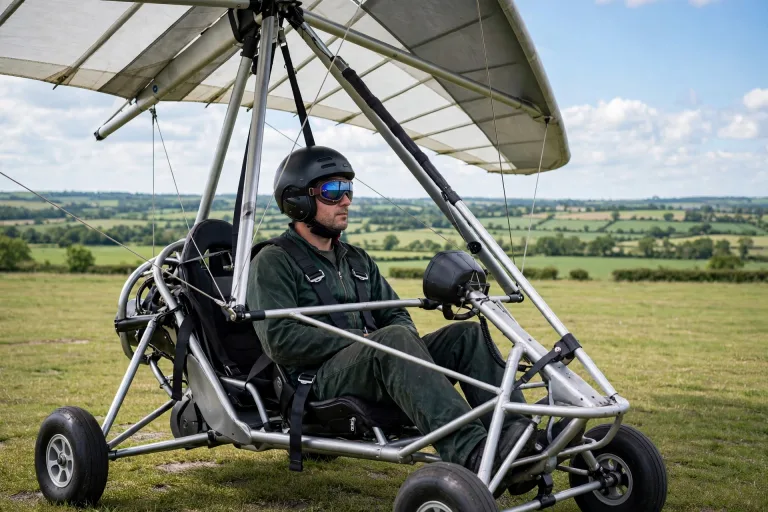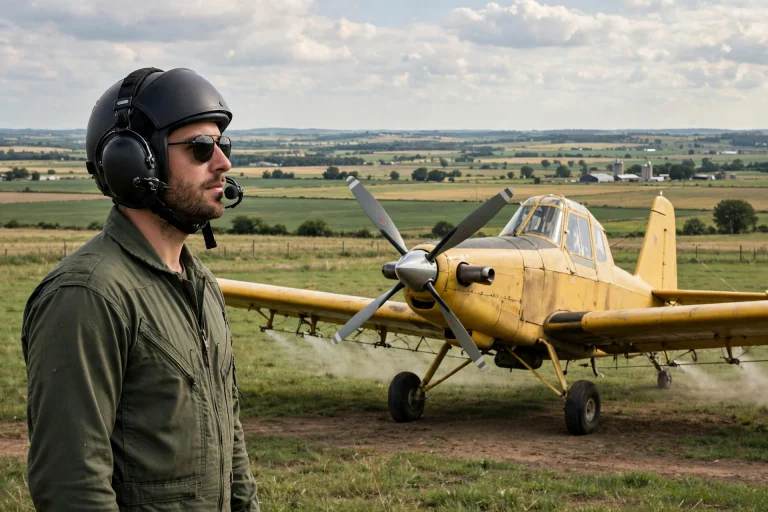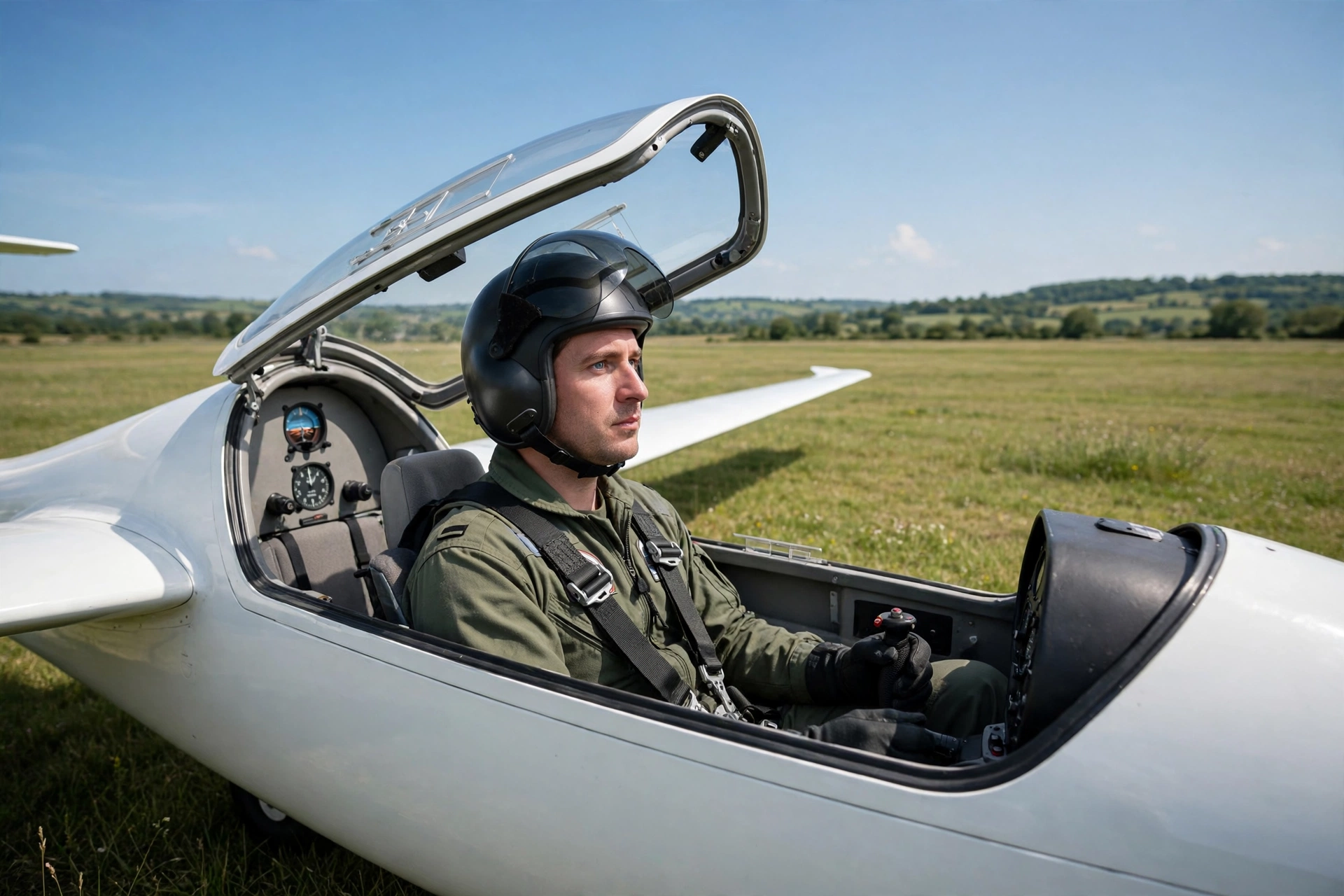
A helmet for glider pilots is a light protective helmet worn to guard the head while flying a glider, and in general terms a light aviation or open-face helmet is what most glider pilots use. A glider is an engineless aircraft that soars on rising air, and the pilot sits in a small cockpit where a bump during launch, landing, or turbulence can send the head against the canopy or the frame.
Gliders, also called sailplanes, are towed into the air or launched by winch, then fly free, using thermals and ridge lift to stay aloft for hours. The cockpit is snug, with the pilot reclined and the canopy close overhead. A helmet will not stop a rough landing from happening, but it can reduce the force of a knock to the head if the glider jolts or the pilot is thrown against the cockpit. In general terms, that is the main reason glider pilots wear one.
What is a glider?
A glider is an aircraft with no engine that flies by using rising air to gain height and stay aloft. It has long, slender wings and a smooth fuselage, and it is launched by being towed behind a powered aircraft or pulled into the air by a winch on the ground. Once released, the pilot searches for thermals, which are columns of warm rising air, and circles in them to climb.
Gliders are used for sport flying, for cross-country flights that can cover long distances, and for training new pilots. Some flights last only a few minutes, while others last many hours. The pilot sits low in the cockpit with a good view ahead and to the sides, but with very little room to move, so anything that can be bumped in a jolt is close to the head.
What kind of helmet do glider pilots wear?
In general terms, glider pilots wear a light open-face helmet, often a leather or fabric flying helmet, or a modern composite helmet made for light aviation. The helmet should be light enough to wear for hours without tiring the neck, and slim enough to fit inside the cockpit without pressing against the canopy or blocking the pilot’s view.
Some glider pilots wear a helmet with a built-in headset, which makes radio communication easier and keeps the headset in place. Others wear a separate headset over a thin helmet. Whatever style you choose, the helmet should fit well, fasten securely under the chin, and be in good condition, with no cracks or damage to the shell or the lining inside.
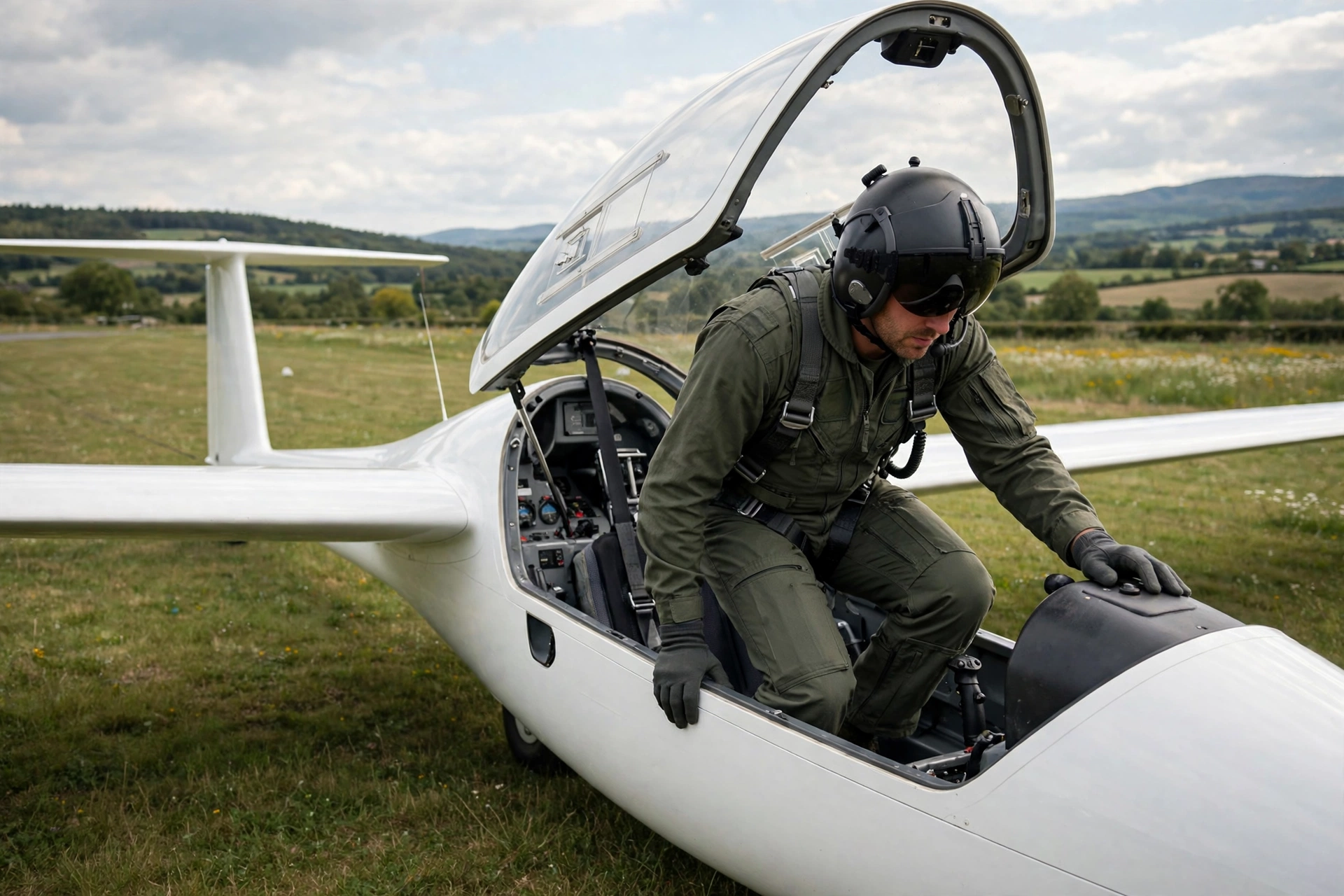
Why do glider pilots wear a helmet?
A helmet matters in a glider because the launch and the landing are the moments when the head is most at risk. A winch launch accelerates the glider quickly and can be bumpy, and a tow launch involves a sharp climb behind another aircraft. On landing, a glider comes down on a single wheel or a skid, and a rough field or a crosswind can make the touchdown jolting.
There are other moments too. Turbulence can throw the glider about, and a sudden jolt can send the pilot’s head against the canopy frame. In an aerobatic glider, the forces are stronger still. A helmet will not make a bad landing safe, but it can reduce the force of a knock to the head, and many gliding clubs and schools ask their pilots to wear one as a matter of routine.
How should a helmet for glider pilots fit?
A helmet for glider flying should sit level on your head, low enough at the front to cover your forehead, and snug all round without pressing painfully on your temples. It should not tip forward over your eyes or slide back when you nod, and it should stay in place when you shake your head gently from side to side.
The chin strap should be snug enough that you can fit only a finger or two between the strap and your chin. Try the helmet on with any headset you plan to wear, and sit in the cockpit if you can, because the canopy is close and a helmet that is too tall or too wide can press against it. Make sure the helmet does not block your view of the instruments or the horizon.
What features matter in a glider pilot helmet?
Weight matters more in a glider than in most sports, because a flight can last for hours and a heavy helmet will tire your neck. Look for a light helmet with a comfortable lining, and one that lets air flow through so you do not overheat in a sun-warmed cockpit. A lining that can be removed and washed is useful too, since a helmet worn for long flights will pick up sweat.
Some helmets include a system designed to reduce rotational forces in a fall, such as MIPS, and it is worth asking about when you choose. A good fit matters more than any single feature: a helmet that shifts in turbulence is a distraction, and a distraction in a glider is the last thing a pilot needs. If you use a headset, check that it sits comfortably with the helmet and that the ear cups seal well against noise.
How do you look after a glider pilot helmet?
After a flight, wipe the shell clean and let the helmet dry naturally, away from direct heat. Do not leave it in a hot car or next to a radiator, as heat can damage the materials inside over time. If the lining is removable, take it out and wash it following the maker’s instructions, and let it dry fully before you put it back.
Check the helmet regularly for cracks, dents, or loose parts, and check the chin strap and buckle for wear. In general terms, a helmet that has taken a hard knock should be replaced, even if it looks fine on the outside, because the inner lining may have been compressed. The same applies to a helmet that has been dropped hard onto a hard surface. When in doubt, replace it.
Do glider pilots need a helmet?
In general terms, yes, a helmet is sensible for glider flying. The cockpit is small, the canopy is close, and a jolt during launch, landing, or turbulence can send your head against a hard surface.
Can you wear a motorcycle helmet in a glider?
In general terms, a motorcycle helmet is usually too heavy and too bulky for a glider cockpit. A light aviation or open-face helmet is a better fit, and it will not tire your neck on a long flight.
When should a glider pilot helmet be replaced?
Replace it after a hard knock, if the shell or lining is damaged, or if the strap and buckle are worn. A helmet that has protected you in a jolt has done its job and should not be relied on again.

Olivia
Writer at Helmet Today, covering helmet reviews, fit and riding safety.