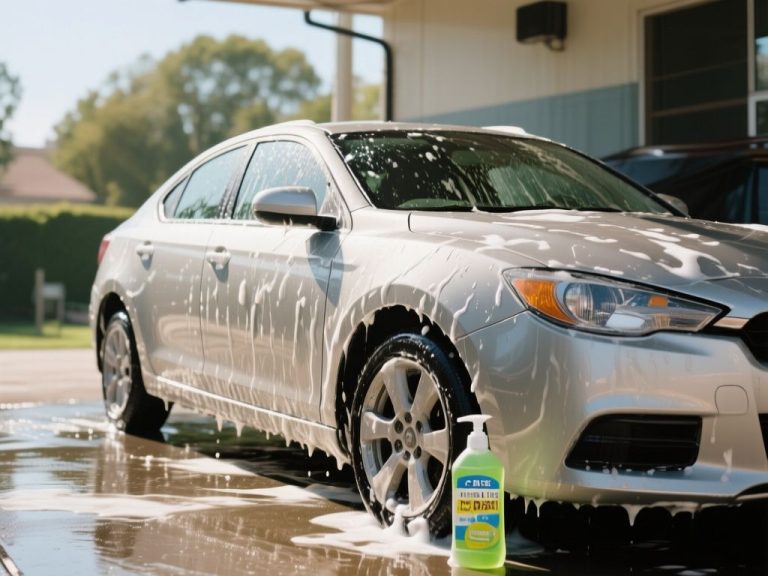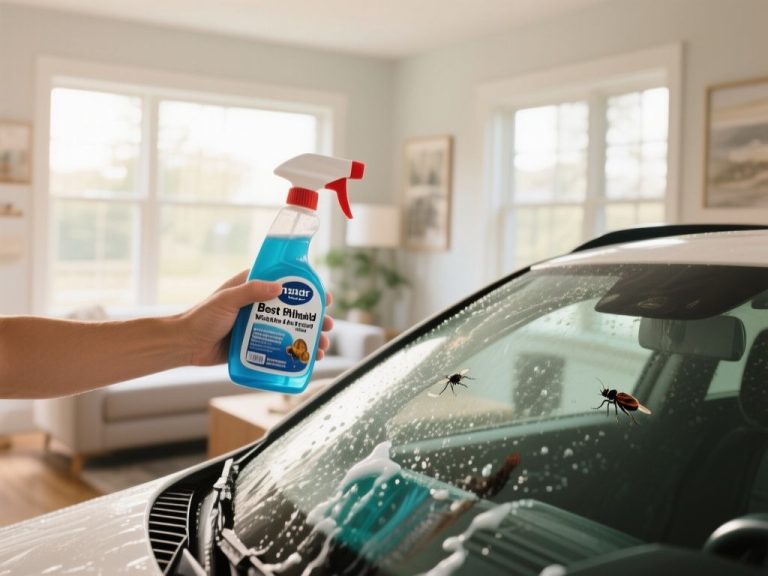

Glass cleaner can be used on car paint in an emergency, but it is not a good routine choice. Most glass cleaners are formulated for hard, non-painted glass and may contain ammonia, alcohol, solvents, or detergents that strip wax, leave residue, or irritate plastic trim. A pH-neutral automotive wash or detail spray is safer.
Why is glass cleaner risky for car paint?
Glass cleaner is designed to remove fingerprints, smoke film, grease, and mineral deposits from glass, not to protect a vehicle’s painted finish. Automotive paint has a clear coat on top, and that clear coat benefits from products made to clean without removing protection.
The main concern is not that one quick application will instantly destroy the paint. A modern factory finish is tougher than many people assume. The concern is repeated exposure, especially when the cleaner is sprayed onto hot paint, left to dry, or wiped across dusty surfaces.
Common glass-cleaner ingredients create several possible problems:
- Ammonia: Some formulas contain ammonia, which can weaken or remove certain waxes and may contribute to fading or drying of unprotected trim over time.
- Alcohol and solvents: These help dissolve oily fingerprints, but they can also strip protective products such as wax, sealant, or some spray coatings.
- Detergents: Strong cleaning agents may leave a dull film or interfere with the finish’s existing protection.
- Fragrance and additives: These may leave streaks or a greasy residue when used on glossy paint.
Product formulas vary, so the label matters. An ammonia-free glass cleaner is generally less concerning than an ammonia-based formula, but “ammonia-free” does not mean “safe for every automotive surface.” It may still contain alcohol or other ingredients that are unnecessary for paint.
Will glass cleaner damage a car’s clear coat?
A brief, accidental application usually will not damage a healthy clear coat permanently if it is wiped off promptly and the surface is rinsed or washed afterward. Clear coat is engineered to withstand sunlight, rain, road grime, and normal washing.
Damage becomes more likely under harsher conditions. For example, spraying cleaner onto a sun-heated hood and allowing it to evaporate can leave concentrated ingredients behind. Wiping that surface with a dry towel can also create fine scratches, particularly if the paint already has dust or grit on it.
Glass cleaner is more likely to cause visible trouble when the vehicle has one or more of these conditions:
- Aged, failing, or heavily oxidized paint
- Freshly repainted panels that have not fully cured
- Aftermarket vinyl wraps or paint-protection film
- Ceramic coatings or spray coatings with specific care requirements
- Unpainted textured plastic trim near the glass
- Existing wax or sealant that the owner wants to preserve
The practical distinction is simple: glass cleaner may not immediately ruin paint, but it is the wrong tool for maintaining paint. Occasional emergency use and regular detailing are very different situations.
Can you use glass cleaner on car windows and mirrors?
Glass cleaner is usually appropriate for exterior windows and mirrors, provided the product label permits automotive use and the surfaces are genuine glass. Windshields, side windows, rear glass, and glass mirror faces are the surfaces these products are meant to clean.
Care is still needed around the edges. Overspray can land on painted panels, rubber seals, plastic trim, wiper blades, or a window tint film. Some window tints are applied to the inside of the glass and can react poorly to ammonia-based cleaners, so an ammonia-free product is the safer choice for tinted windows.
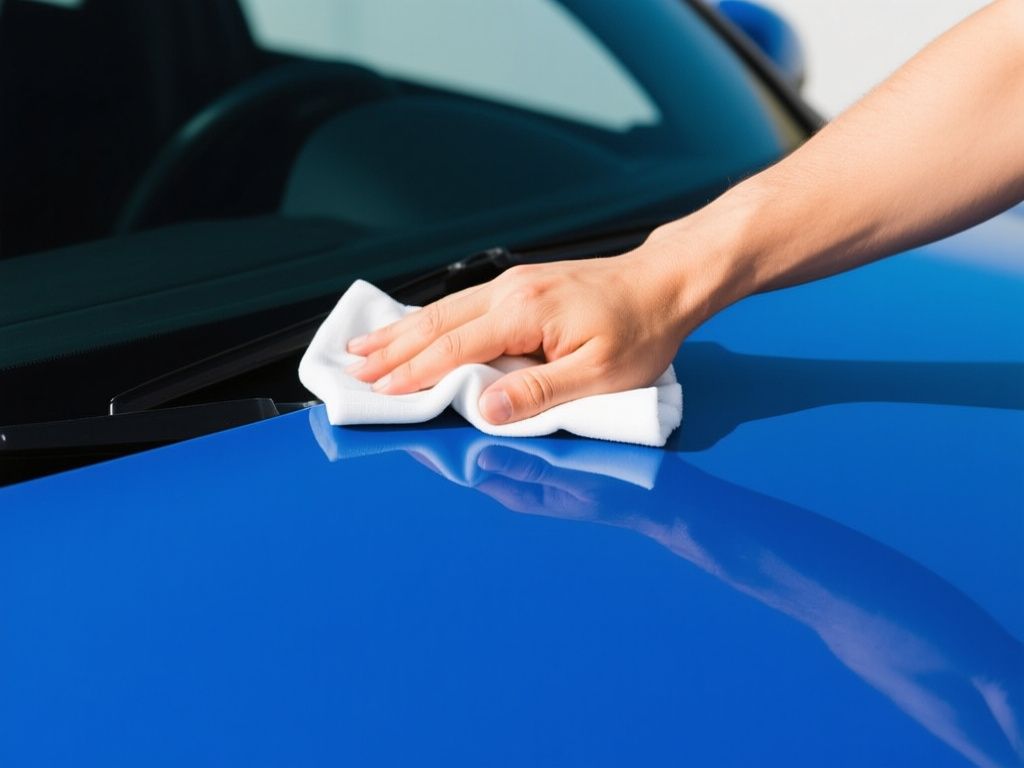
Use two clean microfiber towels for better results. Spray the cleaner onto the towel rather than flooding the glass, then wipe one direction on the inside and the opposite direction on the outside. If streaks remain, a dry microfiber towel usually removes them without requiring more product.
Do not use ordinary glass cleaner on plastic “glass.” Many vehicles use clear plastic for instrument-cluster lenses, navigation screens, convertible windows, and some headlight covers. These surfaces can scratch, haze, or develop stress damage from solvents. A product specifically labeled for the material is the safer option.
What should you use on painted car surfaces instead?
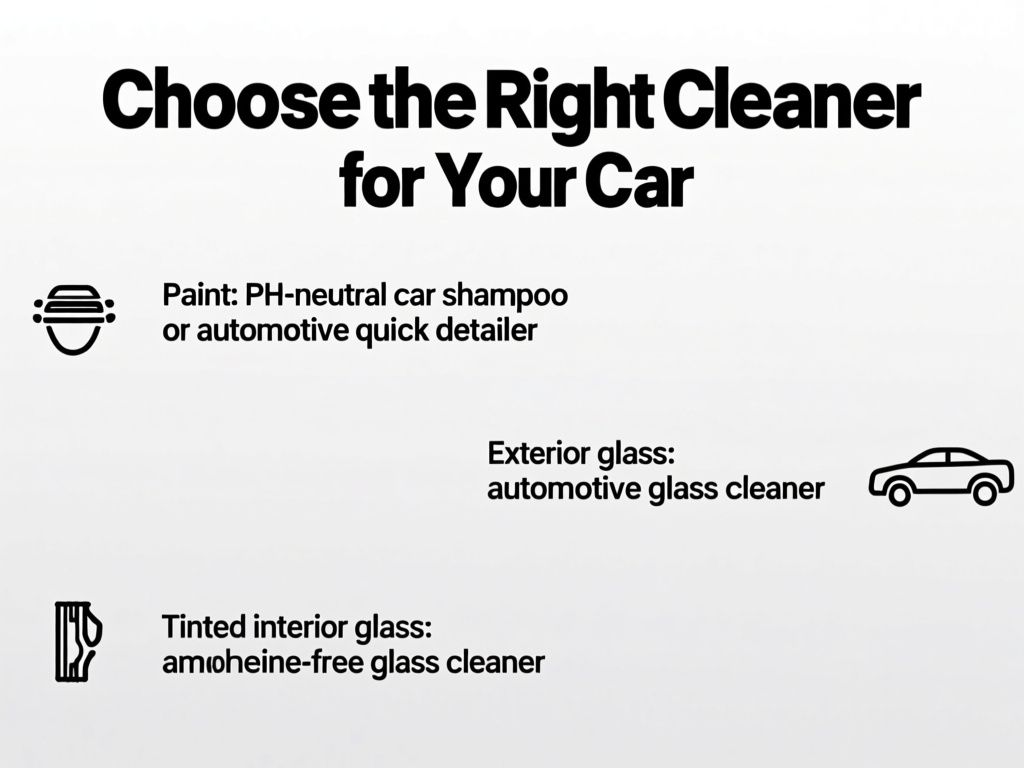
A pH-neutral automotive car shampoo is the best choice for ordinary washing because it loosens dirt while reducing the chance of stripping wax or sealant. For light dust or fingerprints between washes, an automotive quick detailer used with a clean microfiber towel is more suitable.
| Surface or situation | Recommended product | Why it fits |
|---|---|---|
| Heavy dirt, road film, or mud | pH-neutral car shampoo and water | Suspends grit so it can be rinsed away with less rubbing |
| Light dust or fingerprints | Automotive quick detailer | Provides lubrication while removing minor surface contamination |
| Greasy paint contamination | Automotive panel wipe or diluted detailing cleaner | Designed for vehicle finishes and coating preparation |
| Tree sap, tar, or adhesive | Automotive tar or adhesive remover | Dissolves the specific contaminant with clearer usage instructions |
| Bird droppings | Water or rinseless-wash solution | Softens abrasive material before it is gently removed |
Microfiber matters as much as the liquid. A clean, plush towel traps particles better than an old cotton rag, paper towel, or worn shirt. If the towel touches the ground, wash it before using it on paint again; one tiny stone fiber can make more damage than the cleaner itself.
For a normal wash, rinse loose dirt first, work from the roof downward, and use a separate towel or mitt for the lower panels. The bottom of a car usually carries the most grit. This simple habit reduces swirl marks far more effectively than searching for a particularly strong cleaner.
What happens if you already used glass cleaner on the paint?
If glass cleaner has already touched the paint, do not panic. The safest response is to remove the residue rather than repeatedly rubbing the area to inspect it.
- Move the vehicle into shade. Let a hot panel cool before cleaning it.
- Rinse the area with clean water. This dilutes and removes much of the remaining product.
- Wash the panel with car shampoo. Use a clean microfiber wash mitt and gentle pressure.
- Dry with a clean microfiber towel. Blot or lightly glide the towel; do not scrub.
- Check the finish in good light. Look for streaks, hazing, or new scratches after the surface is dry.
- Reapply protection if needed. If the area had wax or sealant, a compatible spray wax or sealant can restore protection.
If the paint looks normal after washing, there is usually no reason to polish it. Polishing removes a small amount of clear coat, so it should not be used simply because a household cleaner was used once.
Persistent haze may be residue rather than paint damage. Wash the panel again, try a dedicated automotive paint cleaner if appropriate, and avoid aggressive rubbing. If the surface feels rough, has visible etching, or shows dull patches that do not improve after cleaning, a professional detailer can identify whether correction is needed.
Can glass cleaner remove wax or ceramic coating?
Glass cleaner can reduce the performance of wax, sealants, or some spray coatings, especially with repeated use. The exact effect depends on the formula, the product protecting the car, and how long the cleaner remains on the surface.
Traditional carnauba wax is relatively easy to weaken with strong detergents and solvents. Synthetic sealants may tolerate more exposure, while ceramic coatings generally resist chemicals better but still require compatible maintenance products. Chemical resistance does not make a coating immune to scratching, residue, or improper cleaning.
Owners of ceramic-coated vehicles should follow the coating manufacturer’s care instructions. Some coatings have approved maintenance sprays that help preserve water behavior and slickness. Using a household glass product on the paint can make the surface feel different even when the coating is not visibly damaged.
Is ammonia-free glass cleaner safe for car paint?
Ammonia-free glass cleaner is a better choice around vehicles, particularly for tinted windows and nearby trim, but it is still not the preferred paint cleaner. The absence of ammonia removes one concern; it does not guarantee that every other ingredient is suitable for clear coat, wax, plastic, vinyl, or ceramic coatings.
When a label says a product is safe for “glass and automotive surfaces,” that wording deserves careful reading. It may mean painted metal as well as glass, or it may refer only to factory glass and hard interior surfaces. If paint compatibility is not stated, use a product intended specifically for automotive paint.
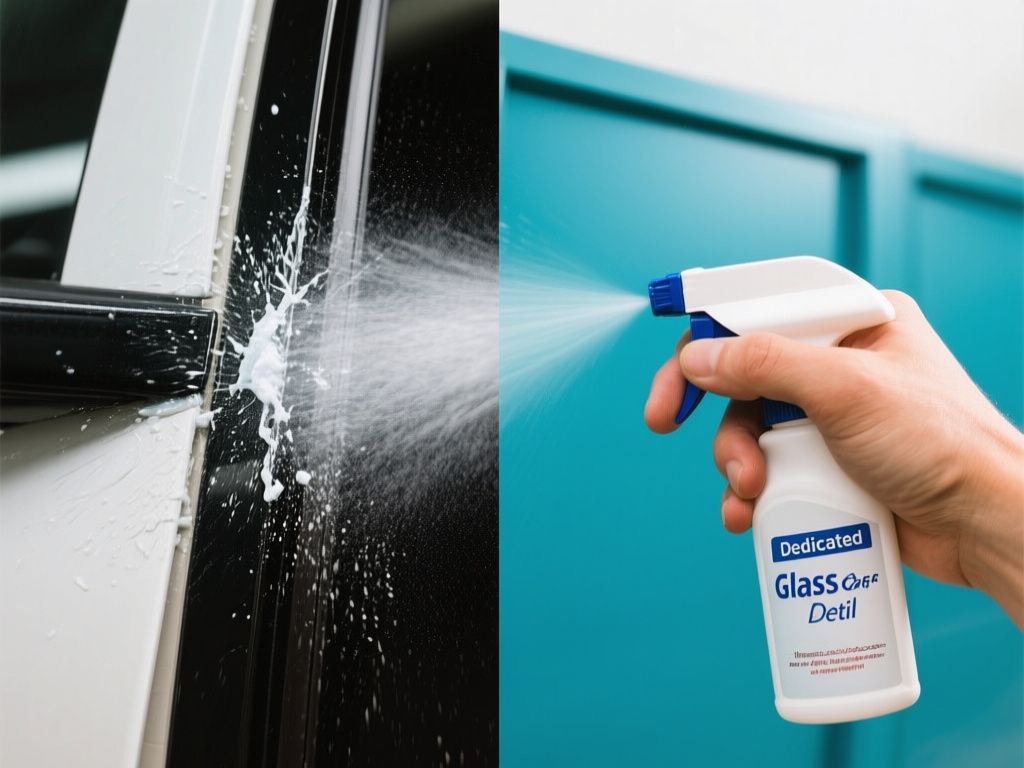
What common mistakes make the problem worse?
Most problems associated with glass cleaner come from the way it is used, not from a single ingredient alone. Avoid these habits:
- Cleaning in direct sun: Heat speeds evaporation and concentrates residue.
- Using a paper towel: Paper can leave lint and may drag grit across soft clear coat.
- Wiping dry dust: Dust contains abrasive particles, so lubrication and rinsing come first.
- Spraying directly onto the car: Overspray can reach trim, badges, rubber, and protected surfaces.
- Using one towel everywhere: A towel used on wheels or lower panels should not return to the hood.
- Scrubbing bird droppings: Soaking and softening the material is safer than grinding it into the paint.
- Polishing immediately: Abrasive correction is unnecessary unless cleaning reveals actual defects.
A small amount of appropriate product and a clean towel usually outperform a large amount of strong household cleaner. The goal is to lift contamination, not to dissolve every substance on contact.
Frequently Asked Questions
Can I use Windex on my car’s paint?
Windex and similar glass cleaners are not recommended as regular paint cleaners. A single use is unlikely to cause permanent damage, but the product may strip wax, leave residue, or affect nearby trim. Wash the panel with car shampoo afterward.
Can I use glass cleaner on a car windshield?
Yes, glass cleaner is suitable for a genuine car windshield when the label allows automotive use. Spray a small amount onto a microfiber towel to reduce overspray, and choose an ammonia-free formula if the vehicle has window tint or sensitive interior materials.
Does glass cleaner remove car wax?
Some glass cleaners can weaken or remove wax, especially after repeated applications. The result depends on the formula and the wax, but an automotive shampoo is the better maintenance choice when preserving protection matters.
Can glass cleaner be used on ceramic-coated paint?
It is better to avoid it unless the ceramic-coating manufacturer specifically approves that product. Ceramic coatings resist many chemicals, but household glass cleaner can still leave residue or reduce the coating’s intended surface behavior.
What can I use for fingerprints on car paint?
Use an automotive quick detailer with a clean, soft microfiber towel. Lightly mist the towel or panel, wipe gently, and turn to a dry side for the final pass. If the paint is dusty or gritty, wash it instead of wiping it dry.
Is rubbing alcohol safer than glass cleaner for car paint?
Rubbing alcohol is not a general-purpose paint cleaner. Diluted isopropyl alcohol is sometimes used in detailing to remove oils before applying a coating, but concentration, paint condition, and product instructions matter. For routine cleaning, car shampoo or a paint-safe detailer is safer.
The straightforward rule is to reserve glass cleaner for glass and use automotive products on painted panels. If an accidental spray happens, rinse and wash it promptly; the bigger threat to the finish is usually rubbing grit across the surface.

Olivia
Writer at Helmet Today, covering helmet reviews, fit and riding safety.