
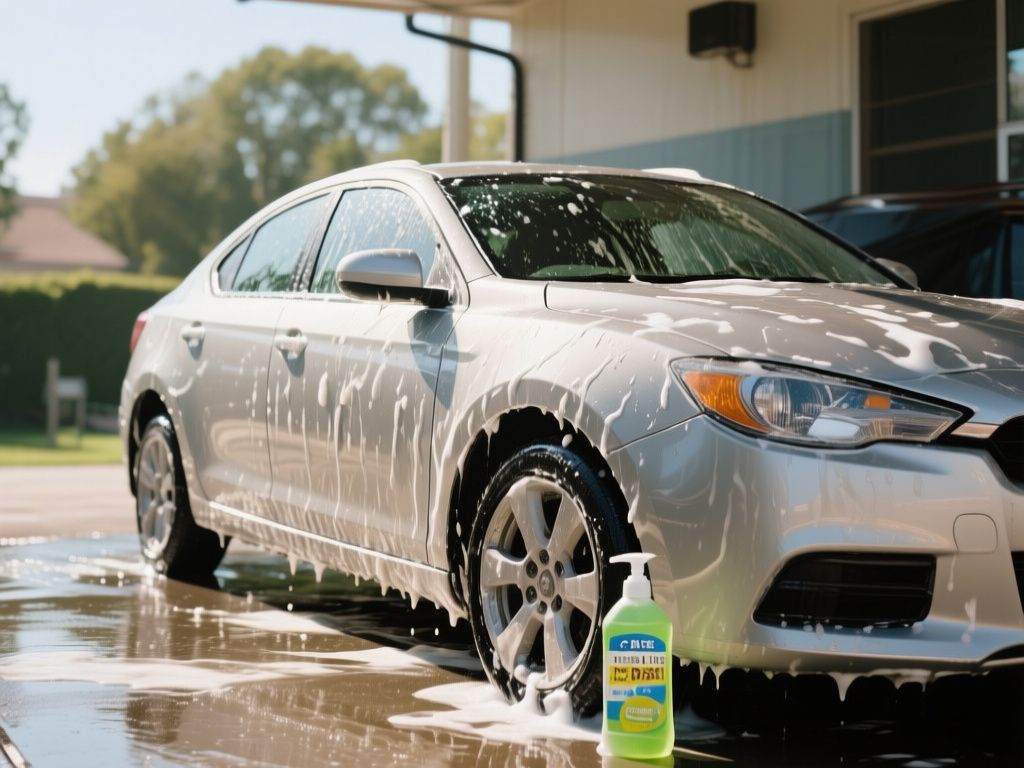
Yes, dish soap can wash a car in a pinch, but it should not be your regular car-washing product. Dish soap cuts through grease by design, and that can strip protective wax or sealant from paint. For routine cleaning, use a pH-balanced car shampoo, a soft wash mitt, and plenty of clean water.
Why do people use dish soap on cars?
Dish soap is easy to find, inexpensive, and effective at removing oily residue. A few drops can break down cooking grease from plates, fingerprints from glass, and road film on a vehicle. That cleaning power is exactly why some people reach for it when a car shampoo is not available.
Dish soap is also convenient for a quick wash before selling a car, applying a new wax, or removing heavy grime from a neglected vehicle. In those situations, removing old surface products may be the goal rather than preserving them.
The catch is that dish soap is formulated for hard, nonporous kitchen surfaces, not automotive paint, rubber, plastic trim, or existing protective coatings. It cleans, but it does not provide the lubrication and finish-friendly formula found in products made specifically for vehicles.
Does dish soap damage car paint?
A single wash with diluted dish soap usually will not permanently damage modern automotive paint. Most factory paint systems have a clear coat—a transparent protective layer over the colored paint—and that clear coat is designed to withstand ordinary cleaning.
Repeated use can cause problems indirectly. Dish soap may remove wax, weaken some spray sealants, and leave rubber or plastic trim looking dry over time. The bigger risk is often not the soap itself but the way the car is washed: too little water, a rough sponge, or rubbing grit across the paint can create fine scratches called swirl marks.
Paint protection varies from car to car. A vehicle with an unprotected finish may show fading, oxidation, or water spotting sooner than one covered with a quality wax, sealant, or ceramic coating. Dish soap will not strip a factory clear coat in one ordinary wash, but it can remove some of the products applied on top of that finish.
What does dish soap remove from a car?
Dish soap is especially good at removing oils and loosely attached surface products. Its surfactants—cleaning ingredients that help water spread and lift oily material—surround grease so it can rinse away.
A dish-soap wash may remove or reduce:
- Road film and oily traffic residue
- Fingerprints and greasy smudges
- Old wax and some spray sealants
- Tree sap residue after it has been softened
- Food, drink, and other household spills
It will not solve every type of contamination. Brake dust, tar, iron particles, mineral water spots, and baked-on bugs often need dedicated automotive cleaners or a separate decontamination step. Scrubbing harder is usually the wrong response because pressure can grind particles into the clear coat.
When is dish soap acceptable for washing a car?
Dish soap is reasonable as an occasional emergency cleaner when the car needs attention and no car shampoo is available. It can also be useful when the owner deliberately wants to remove an old layer of wax before applying a fresh protective product.
It may be suitable in these situations:
- The car has heavy greasy road film.
- An oily substance has spilled on the exterior.
- Old wax needs to be removed before polishing or resealing.
- The vehicle is being prepared for professional paint correction.
- A normal car shampoo is unavailable and the car needs a basic wash.
Dish soap is a poor choice for a valuable, freshly detailed, or ceramic-coated vehicle. Ceramic coatings and paint-protection films are designed to last, so using a product that removes surface protection defeats part of the reason for installing them.
How should you use dish soap if it is your only option?
The safest approach is to use a small amount in plenty of water and keep the wash gentle. A strong concentration does not make the process safer or necessarily cleaner; it simply leaves more detergent to rinse away and may remove more protection.
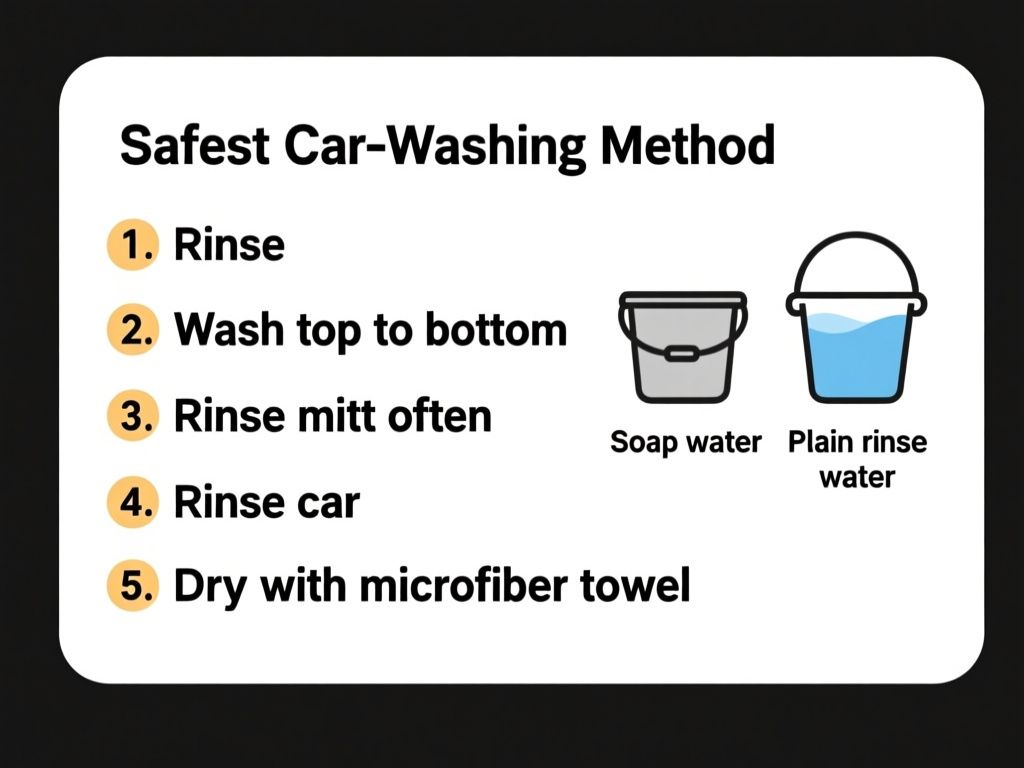
- Wash in the shade. A cool surface gives the soap time to loosen dirt without drying into spots.
- Rinse the car first. Use a hose or pressure washer on a moderate setting to remove loose grit before touching the paint.
- Fill two buckets. Put diluted soap in one bucket and plain rinse water in the other. The second bucket keeps dirt from returning to the wash solution.
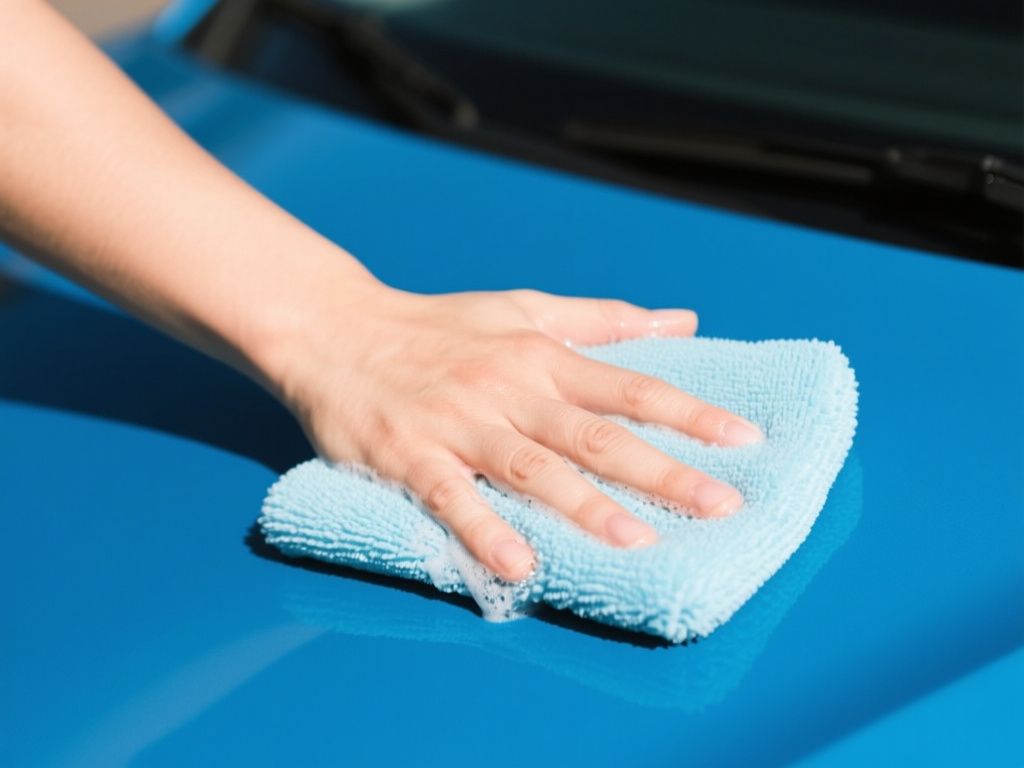
- Use a clean microfiber mitt. Avoid an old household sponge, stiff brush, or rough towel.
- Work from top to bottom. The roof and upper doors are normally cleaner than the rocker panels and bumpers.
- Clean one small section at a time. Rinse the mitt often, especially after washing the lower parts of the car.
- Rinse thoroughly. Soap left in door seams, mirrors, trim, and grilles can dry into visible residue.
- Dry with a clean microfiber drying towel. Blot or glide lightly rather than pushing the towel hard against the paint.
Avoid washing the engine bay, convertible-top fabric, interior, or wheels with ordinary dish soap unless the product label and material allow it. These areas contain different finishes and components, including electrical connectors, coated leather, delicate plastics, and specialized wheel surfaces.
What is the safest way to wash a car?
A pH-balanced car shampoo is the better everyday choice because it is designed to clean automotive surfaces while providing more lubrication between the wash mitt and the paint. “pH-balanced” means the product is formulated near neutral rather than strongly acidic or alkaline.
Car shampoos also tend to rinse more cleanly and work with the waxes, sealants, or coatings already on the vehicle. Some contain additives that improve water behavior or add a small amount of gloss, although they do not replace a dedicated protective product.
| Cleaning product | Best use | Effect on protection |
|---|---|---|
| Car shampoo | Routine exterior washing | Usually preserves waxes and sealants when used correctly |
| Dish soap | Occasional degreasing or wax removal | May remove wax and some surface protection |
| Glass cleaner | Automotive glass only, if approved | Can damage tint or nearby trim if misused |
| Household all-purpose cleaner | Specific exterior materials only when diluted and approved | May stain, dry, or fade trim and coatings |
The washing tools matter as much as the liquid. A clean mitt, separate wheel brushes, two buckets, and a soft drying towel will usually prevent more paint damage than switching between two similar shampoos.
Can dish soap remove car wax?
Dish soap can remove some wax, especially when the wax is old, thin, or already weakened by weather and repeated washing. It does not guarantee complete removal, however, because wax products differ and surface contamination can remain underneath.
Someone preparing to apply a new wax may use dish soap as one part of the preparation, but a proper surface-cleaning process is more reliable. After washing, the car may still need tar removal, iron-particle removal, clay treatment, or light polishing. The correct step depends on what is actually bonded to the paint.
Dish soap should not be treated as a paint-preparation shortcut. A clean-looking panel can still contain invisible contamination that prevents a new product from bonding evenly.
Can I use dish soap on car windows and wheels?
Dish soap can clean exterior glass, but automotive glass cleaner is usually a better choice because it is less likely to leave a film. Any residue becomes especially noticeable at night when headlights shine across the windshield.
Wheels require more care because their finishes vary. Painted, clear-coated, chrome, polished, and anodized wheels do not all react the same way to cleaners. Diluted dish soap is generally mild enough for a brief cleaning of many wheel surfaces, but it may not remove brake dust effectively, and it should not be left to dry.
Never use the same mitt or bucket for wheels and painted body panels. Brake dust can contain sharp metallic particles that scratch clear coat when carried onto the doors or hood.
What mistakes cause the most car-washing damage?
Most wash-related paint damage comes from trapped grit and poor technique, not from a particular brand of soap. The following habits create unnecessary risk:
- Using one bucket for everything: Dirt removed from the car remains in the water and returns to the paint.
- Washing in direct sun: Water and detergent dry quickly, leaving mineral spots and streaks.
- Using circular scrubbing motions: Scratches become visible from many viewing angles, while straight-line marks are often less noticeable and easier to polish.
- Using household towels: Cotton or rough fabric can drag grit across the clear coat.
- Applying too much pressure: Pressure does not replace lubrication and can force dirt into the surface.
- Letting soap dry: Dried detergent can leave a film and may be harder to remove from textured trim.
- Cleaning wheels last with the bodywork tools: Wheel grime can contaminate the equipment used on paint.
Automatic car washes vary widely. Touchless systems avoid brushes but may use stronger chemicals, while brush systems can introduce grit from previous vehicles. A careful hand wash with clean tools is usually gentler, but it takes more time and depends heavily on technique.
Should you wash a car with dish soap regularly?
Regular use is not recommended. Dish soap may be acceptable for an occasional emergency wash, but car shampoo is the sensible choice for weekly or biweekly maintenance because it better supports the vehicle’s paint protection and exterior materials.
For a car with no wax or sealant, the difference may not be obvious after one wash. Over several months, however, repeatedly removing protection can leave the paint more exposed to ultraviolet light, rain, road salts, bird droppings, and mineral deposits. Protection products do not make paint invulnerable, but they give owners more time to remove contaminants before they bond or etch the finish.
A simple maintenance routine works well: rinse loose dirt, use a pH-balanced shampoo with a clean mitt, rinse thoroughly, dry gently, and renew the wax or sealant when water behavior and surface slickness noticeably decline.
Frequently Asked Questions
Will dish soap ruin my car’s clear coat?
One diluted wash normally will not ruin a factory clear coat. Repeated use can remove wax or sealant, while aggressive scrubbing and dirty tools can create scratches that are more serious than the soap itself.
Can I use laundry detergent to wash my car?
Laundry detergent is not a good substitute for car shampoo. It can contain stronger cleaning agents, fragrances, builders, or bleaching ingredients that may leave residue or affect trim, rubber, and protective coatings.
Can dish soap remove bird droppings?
It can help clean bird droppings after they have been softened with water, but soaking is more important than strong soap. Bird droppings can etch clear coat, so place a wet microfiber towel over the spot for several minutes and wipe gently.
Is dish soap safe for a ceramic-coated car?
An occasional diluted wash may not immediately harm a ceramic coating, but dish soap can reduce the coating’s water behavior by removing maintenance products or surface oils. Use the shampoo recommended for the coating whenever possible.
What can I use if I have no car shampoo?
Use a small amount of mild dish soap in a large bucket of water, rinse the vehicle first, and wash gently with a clean microfiber mitt. Rinse thoroughly and consider applying a compatible wax or sealant afterward because the wash may have reduced existing protection.
How often should a car be washed?
Many cars benefit from washing every one to two weeks, with more frequent cleaning in winter, near the coast, or after exposure to bird droppings, tree sap, road salt, or heavy mud. The right interval depends on the vehicle’s environment and how quickly contaminants build up.
Use dish soap only when its grease-cutting behavior is useful; for ordinary maintenance, keep a bottle of automotive shampoo, a separate wheel brush, and clean microfiber towels in the garage.

Olivia
Writer at Helmet Today, covering helmet reviews, fit and riding safety.