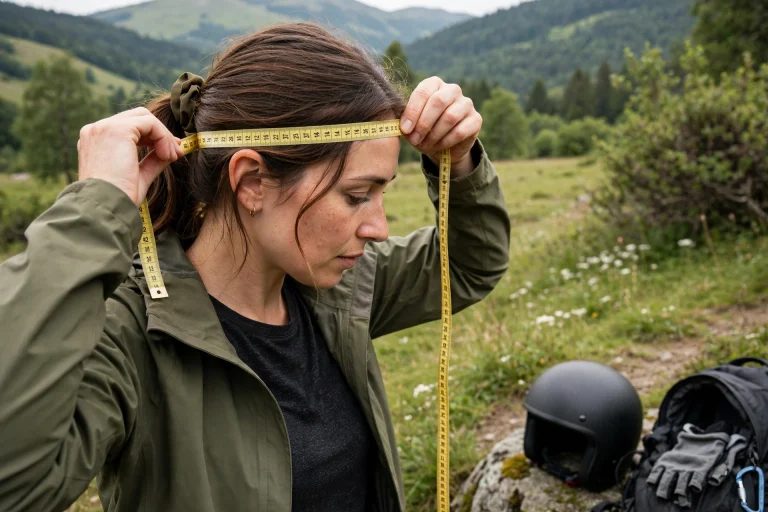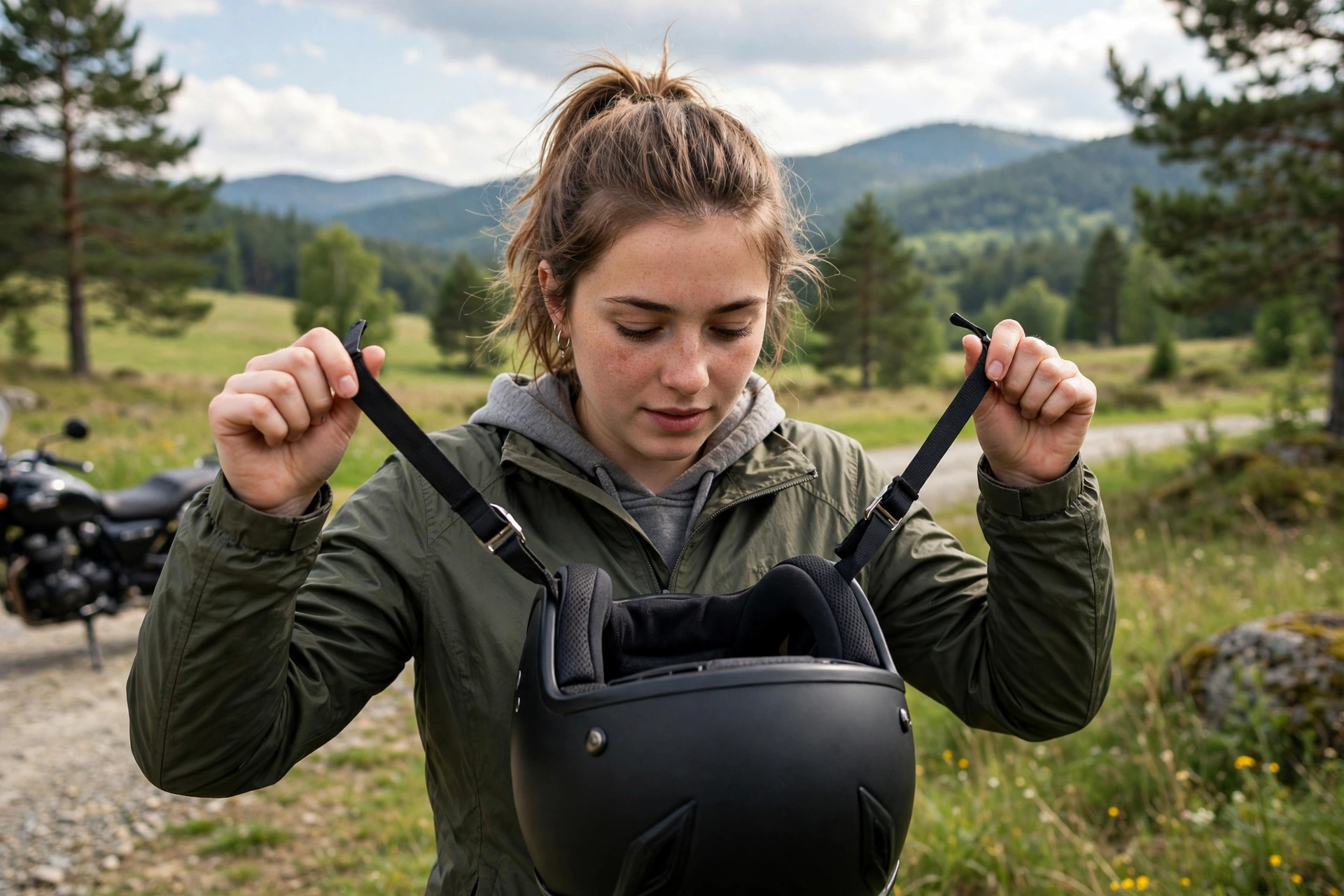
To put on a motorcycle helmet the right way, hold it by the chin straps, pull the straps outward to spread the opening wide, then roll the helmet onto your head front-to-back — forehead in first — so your ears clear the cheek pads instead of folding. Once it is down, settle it level, then fasten the strap before you do anything else.
Most people yank a helmet straight down over their head, which folds their ears, tears at the liner over time, and makes glasses wearers miserable. The strap-spread technique takes one extra second and fixes all of that. Here is the full donning routine, step by step.
How Do You Put On a Motorcycle Helmet Step by Step?
Follow this sequence:
- Unfasten and free the straps. Open the strap completely and let both ends hang. If the strap is still buckled from last time, unfasten it first — trying to squeeze in with it done up guarantees folded ears.
- Grip the straps, not the shell. Hold the helmet by the two strap ends, one in each hand, with the opening facing you.
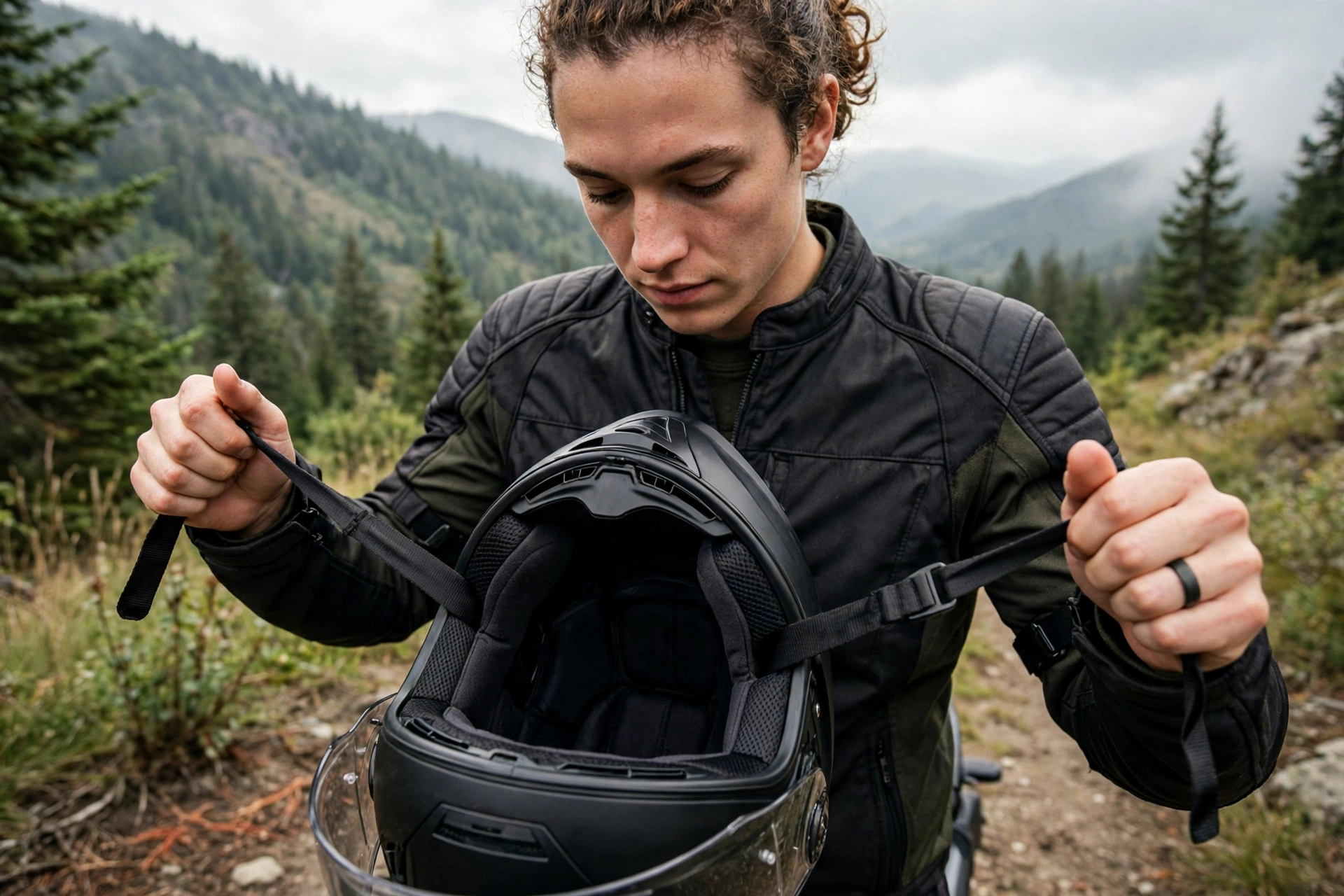
- Pull the straps outward. Draw your hands apart so the straps pull the cheek pads wide and open the helmet up. This is the key move — you are flexing the opening bigger, not forcing your head through a smaller hole.
- Roll it on, forehead first. Tilt the helmet, place your forehead into the brow opening, then roll the helmet backward and down over the crown of your head in one smooth motion.
- Release the straps and settle. Let go of the straps, wiggle the helmet side to side slightly to seat it, and check it sits level.
- Fasten the strap immediately. Make it a reflex: helmet on, strap done, then gloves, glasses adjustments, and everything else.
How Do You Stop Your Ears From Folding?
Folded, pinched ears come from dragging the cheek pads straight down over them. The strap-spread and roll-on technique solves most of it, because the pads pass around your ears rather than over them. If an ear still folds, do not yank the helmet around — reach up inside with a fingertip and flatten the ear against your head, or lift that side of the helmet slightly and let the ear spring back into the ear pocket.
Many helmets have recessed ear pockets in the liner; your ears should end up sitting in them, not pressed under the padding. Earrings deserve a mention: studs are usually fine, but hoops and dangling earrings should come off before the helmet goes on, and fresh piercings are a genuine reason to be extra gentle with the roll-on motion.
What About Balaclavas, Earplugs, and Long Hair?
Anything that lives under the helmet goes on before it, using the same roll-on technique. Put earplugs in first — they are nearly impossible to seat properly once the helmet is on. A balaclava or skull cap goes on next, pulled smooth with no wrinkles bunched at the forehead, because a folded edge becomes a pressure line within twenty minutes. Then the helmet rolls on over it exactly as described above; the strap-spread matters even more here, since the pads like to drag the balaclava down over your eyes. Once the helmet is seated, reach up and tug the balaclava’s eye port into place before fastening the strap.
For long hair, gather it low and flat against the back of your neck before you start, or braid it so it exits below the helmet’s lower edge. Feeding a thick ponytail through as the helmet rolls on almost always ends with the helmet sitting high and tilted. If hair keeps bunching, a thin skull cap worn over it contains everything and makes the whole donning process smoother.
When Do Glasses or Sunglasses Go On?
After the helmet — always. Putting glasses on first and forcing the helmet over them bends frames, scrapes lenses, and folds ears. The correct order is: helmet on and positioned, then slide your glasses straight in from the front, guiding the arms along the sides of your head until they settle on your ears. Taking the helmet off is the reverse: glasses out first, then helmet off. If your helmet has glasses channels in the cheek pads, aim the arms into them; if inserting glasses wiggles the helmet out of level, re-settle the helmet afterward and re-check the strap.
How Do You Fasten a D-Ring vs a Micrometric Buckle?
Two fastening systems cover nearly every helmet. With a double D-ring, pass the strap end through both rings, split the rings apart, loop the end back through the first ring only, and pull snug; secure the loose end with its snap so it does not flap. It feels fiddly for the first week and then becomes automatic — and it stays exactly as tight as you set it.
With a micrometric (ratchet) buckle, push the toothed tongue into the receiver until it clicks to your snug setting, and release it later with the pull tab or lever. Ratchets are faster with gloves on, but check your snugness setting periodically, since the adjustable slider can drift over time. Whichever system you have, the tightness test is the same: two fingers should fit snugly between strap and jaw, no more.
How Do You Check the Final Position?
Stand in front of a mirror or your bike’s reflection and confirm four things: the helmet is level, with the brow edge about two fingers above your eyebrows; it does not rotate when you shake your head; your ears sit flat inside their pockets; and the strap is fastened and snug. A helmet that goes on crooked tends to stay crooked for the whole ride, and a tilted or loose helmet is not the protective device you paid for — the differences in how protective headgear is designed and worn are spelled out in bike helmet vs motorcycle helmet comparisons.
Taking it off matters too, by the way: unfasten the strap, pull the straps outward again to spread the pads, and roll the helmet forward off your head. Dragging it off without spreading the pads is what tears cheek pads loose and wears out liners early.
Frequently Asked Questions
Why does my helmet hurt my ears when I put it on?
Your ears are folding as the cheek pads drag over them. Use the strap-spread technique — pull both chin straps outward to widen the opening and roll the helmet on forehead-first. If an ear still folds, flatten it with a fingertip rather than forcing the helmet.
Should a new helmet feel tight when I put it on?
Snug, yes; painful, no. A new helmet should squeeze your cheeks noticeably and feel uniformly firm, because the pads bed in over the first hours of riding. Sharp pressure on the forehead or temples that builds within 15 minutes means the wrong size or head shape.
Do I put my helmet on before or after my gloves?
Before. You need bare fingers to spread the straps, guide your glasses in, and thread a D-ring properly. Gloves go on last, right before you ride.

Olivia
Writer at Helmet Today, covering helmet reviews, fit and riding safety.