
Keeping a visor clear in the rain is really two separate battles: rain beading on the outside of the visor, and fog condensing on the inside. Win both and wet-weather riding becomes routine. The outside is handled with a clean visor, a water-repellent treatment made for visors, and airflow tricks at speed; the inside is handled with an anti-fog insert like a Pinlock, a breath guard, and smart vent use.
Neither problem is solved by wiping the visor with your glove at every stop — and done wrong, that actually makes things worse. Here is the full system, from preparation at home to techniques on the road.
Why does rain stick to the outside of a visor?
Water clings to a visor because of surface tension, and it clings worst to a dirty one. Road grime, bug residue, and oily film give droplets something to grip, so instead of blowing off, rain smears and beads into a thousand tiny lenses that scatter light — worst at night, under streetlights and oncoming headlights. A scrupulously clean visor behaves completely differently: water sheets across it and the wind strips it away.
So step one happens before the ride. Wash the visor with clean water and a soft microfiber cloth, and keep it clean between rides. Step two is a water-repellent treatment formulated for helmet visors — these encourage water to bead into round droplets that airflow can push off, dramatically improving visibility at road speeds.
One warning that matters: only use products that explicitly say they are safe for helmet visors and their coatings. Some automotive glass treatments and solvents can attack visor plastics and anti-scratch coatings, leaving the visor permanently hazed — a far worse outcome than rain ever was. When in doubt, plain clean water and a quality microfiber beat an unknown chemical every time.
What can you do about rain on the visor while riding?
At speed, your best tool is the wind itself. Briefly turning your head to one side, then the other, lets the airflow rake across the visor and blow beaded droplets off — riders have used this trick for decades because it works. It is most effective above town speeds, where there is real airflow to do the work.
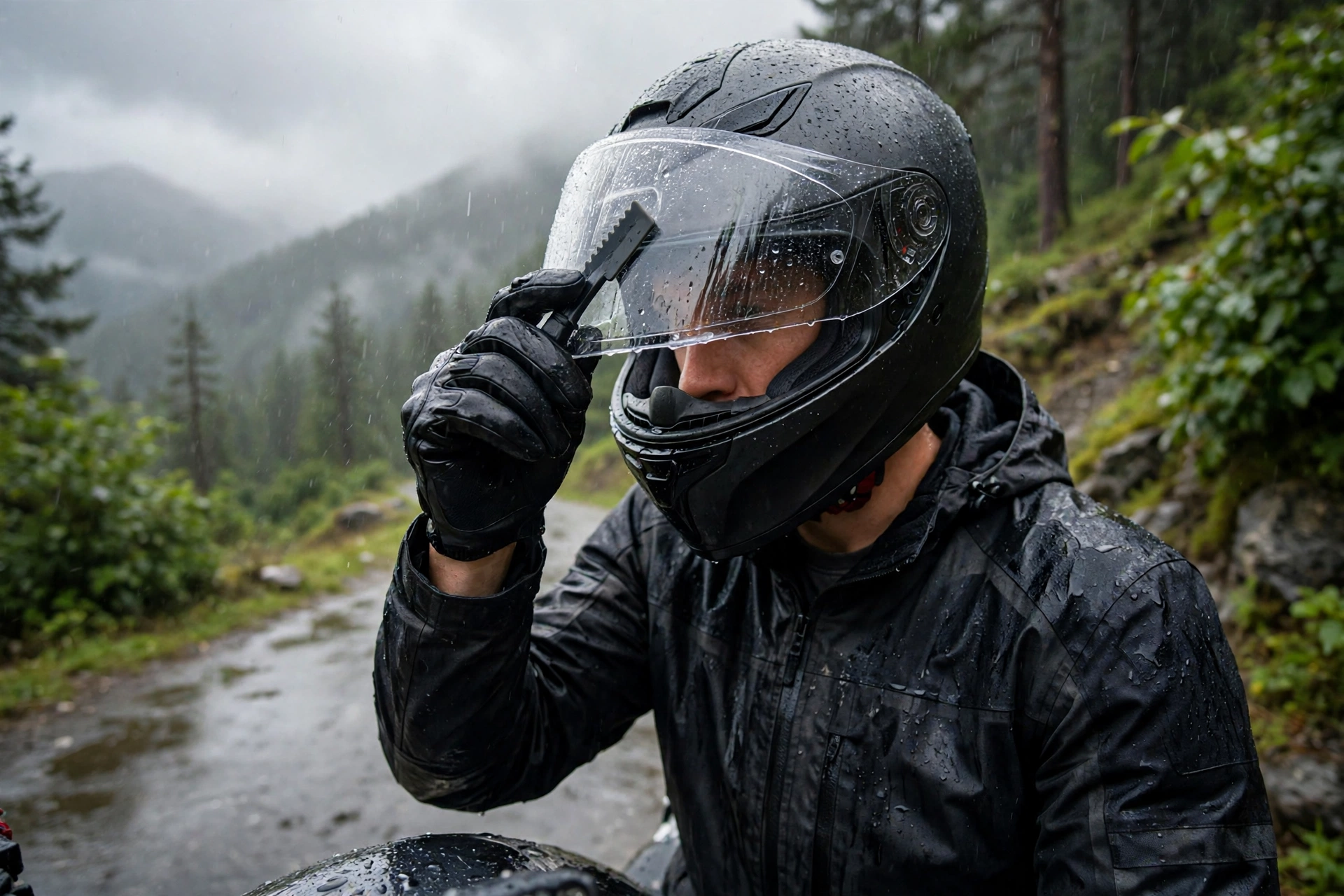
Your glove is the second tool, used correctly. Many winter and touring gloves have a small wiper blade or squeegee strip built into the left index finger or thumb, designed exactly for this: a single smooth sweep across the visor clears it without grinding anything into the surface. If your gloves lack one, a gentle sweep with a soft glove palm on a clean, wet visor is acceptable.
What you must never do is scrub at a gritty, wet visor. The water on a visor mid-ride is full of road grit, and wiping hard grinds that grit across the plastic like sandpaper. Every scratch you add becomes a permanent light-scatterer that makes the next rainy night ride worse. Clear gently, or wait for a stop and rinse with water first.
How do you stop the inside of the visor fogging up?
Inside fog is condensation: warm, moist breath meeting a cold visor. The definitive solution is an anti-fog insert — a Pinlock-style double-layer insert creates an insulating air pocket so the inner surface stays near the temperature of your breath and condensation cannot form. If your visor has the pins for one, fitting an insert is the single biggest wet-and-cold-weather upgrade you can make.
Supporting measures help too. A breath guard or breath box deflects exhaled air down and away from the visor. Cracking the visor open one notch — most visors have a first position that leaves a small gap — lets a stream of air sweep the inside surface and is a reliable emergency demister in slow traffic, where fogging is worst because there is little natural airflow.
Manage your vents with fog in mind: chin vents that direct air up the inside of the visor are demisting vents, so use them in town even in rain. And if your helmet’s safety spec includes features like the ones in our guide to MIPS rotational protection, remember fog control and crash protection are separate systems — a clear visor is what stops the crash from happening in the first place.
How does visor care between rides keep rainy rides clearer?
Most rainy-day visibility problems are created on dry days. A visor that is stored dusty, cleaned with paper towels (which scratch), or left coated in yesterday’s bug splatter will bead and smear the moment rain hits it. Build the simple habit: after rides, soak off bugs with a wet cloth laid over the visor for a few minutes, wash gently with water and a drop of mild soap, pat dry with microfiber, and store the helmet somewhere dust-free.
Inspect the visor seal as well. The rubber gasket around the eye port is what stops rain creeping in at the top edge and running down the inside — a common and maddening problem that looks like fog but is actually leakage. If the visor does not press evenly against the seal when closed, adjustment or a replacement seal is the fix, not more wiping.
Finally, know when a visor is done. A visor covered in fine scratches scatters light hopelessly in rain and darkness no matter how clean it is. Visors are consumables; replacing a tired one restores more wet-weather vision than any treatment or technique in this article.
What is the quick pre-ride checklist for a rainy day?
- Visor washed clean and treated with a visor-safe water repellent
- Anti-fog insert fitted and sealing all the way around its edge
- Breath guard in place, chin vent free to open for demisting
- Gloves with a visor wiper, or a plan to use head-turns at speed
- Visor seal checked — visor closes firmly and evenly
- Spare microfiber in a waterproof pocket for stops
Do those six things and rain stops being a visibility crisis. It becomes what experienced all-weather riders know it can be: an ordinary ride, at ordinary speeds, with a clear view of the road.
Frequently Asked Questions
Q: Can I use car windshield water repellent on my helmet visor?
A: Only if the product specifically states it is safe for helmet visors and plastic coatings. Many automotive treatments can damage visor plastics and anti-scratch coatings. Use a product made for motorcycle visors to be safe.
Q: What is the best single fix for visor fogging?
A: A Pinlock-style anti-fog insert. It creates a double-glazed effect that prevents condensation from forming in the first place, and it outperforms anti-fog sprays and wipes, which are temporary at best.
Q: Why does my visor leak rain down the inside?
A: Usually the top seal: the visor is not pressing evenly against its rubber gasket, or the gasket has aged and flattened. Adjust the visor mechanism or replace the seal — no amount of wiping fixes a leak.

Olivia
Writer at Helmet Today, covering helmet reviews, fit and riding safety.