A motorcycle helmet for summer commuting in traffic needs strong low-speed ventilation, a light shell, a sun visor, and a comfortable fit — because slow, stop-start riding in the heat is one of the hardest tests for any helmet. On a summer commute you spend most of your time crawling through traffic, with little airflow, the sun beating down, and the heat from the road rising around you. The right helmet makes that daily ride manageable, and the wrong one leaves you hot, sweaty, and distracted.
Summer commuting is different from a summer tour. On a tour you are moving at open-road speed, where the airflow through the vents keeps you cool. In traffic, you are barely moving, the vents get little airflow, and you stop at every light, where the heat builds up inside the helmet. Add the glare of the low sun, the dust and fumes of city traffic, and the need to arrive at work presentable, and the helmet has a lot to cope with. This guide explains what to look for and how to manage it, in general terms.
Why Is Summer Traffic So Hard on a Helmet?
The main problem is the lack of airflow. Helmet ventilation relies on your forward speed to push air through the vents, and in slow traffic there is almost no speed to work with. The air inside the helmet becomes hot and humid, sweat builds up, and the visor can fog when you stop, even on a hot day. A helmet that feels breezy on the open road can feel like an oven in a traffic jam.
Heat from the road and from other vehicles makes it worse. The road surface radiates heat, exhaust fumes warm the air around you, and the sun heats a dark shell quickly. A black helmet left in the sun can become hot to the touch in minutes, and that heat transfers straight through to your head. In a long traffic queue, there is nowhere to escape it.
What Should You Look for in a Summer Commuting Helmet?
Ventilation that works at low speed is the first priority. Look for a helmet with a large chin vent and top vents that can be opened wide, and a visor that can be cracked open slightly to let air in while you wait in traffic. Some helmets are designed with vents that catch air even at low speed, and these are worth seeking out for a commuting helmet. Try the vents with gloves on before you buy, because you will be adjusting them at traffic lights.
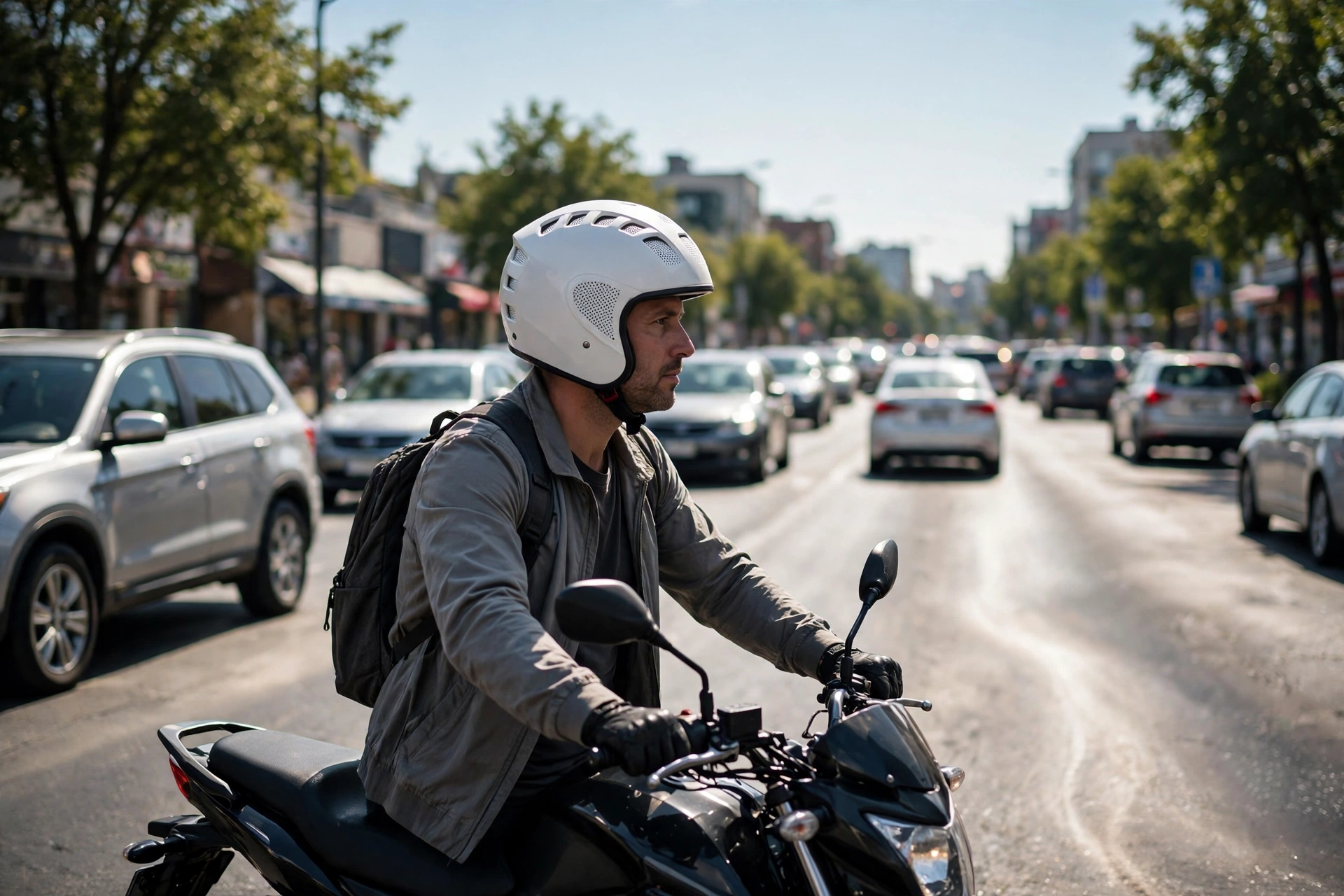
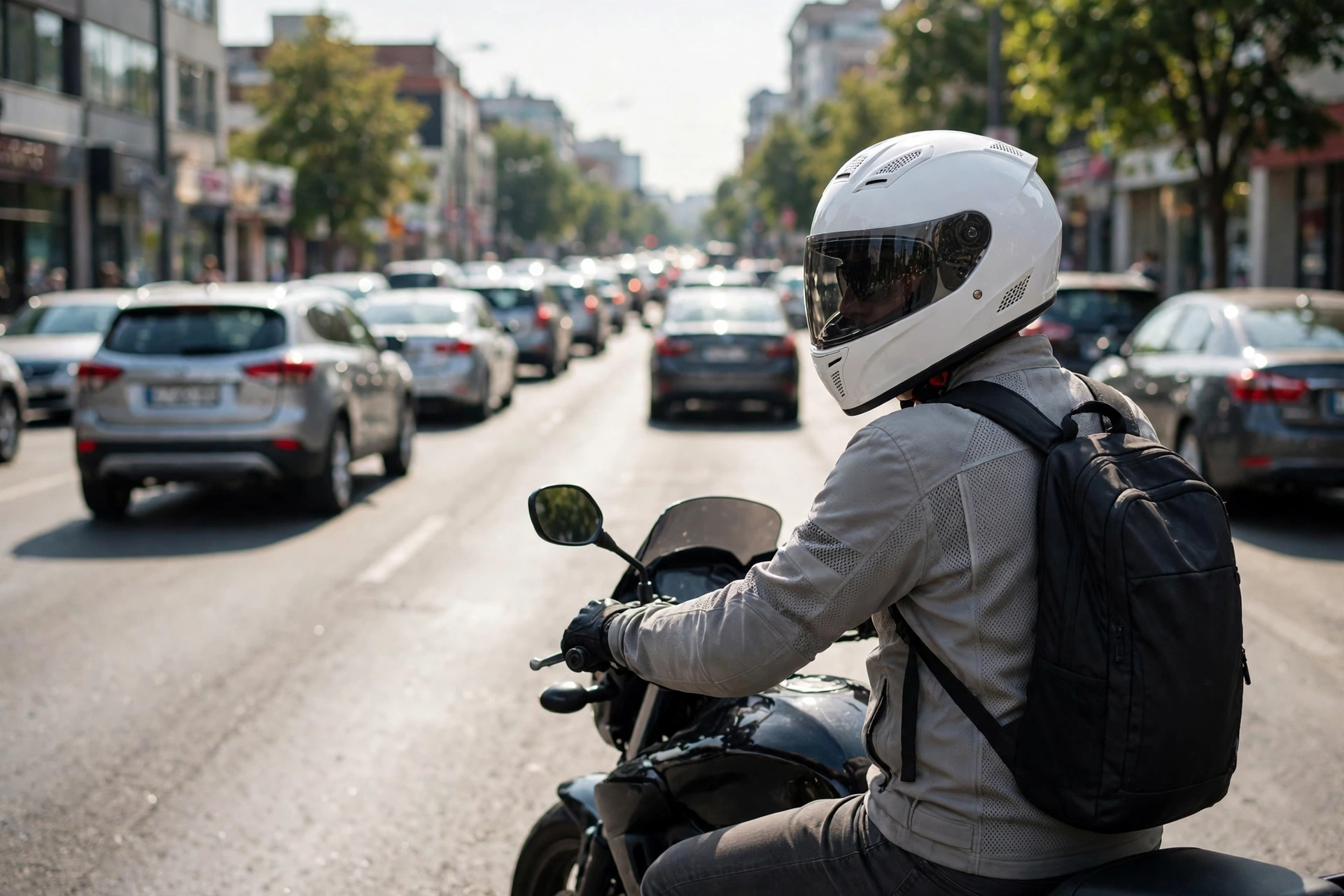
A light-coloured shell makes a real difference in summer sun. White, silver, or a pale colour absorbs far less heat than black, and the difference is noticeable after half an hour in traffic. A light shell also makes you more visible to other road users, which matters in busy traffic. Weight matters too: a light helmet is less tiring on a daily commute, and it is easier to carry when you walk into the office.
A built-in sun visor is one of the most useful features for a summer commuter. It drops down at the touch of a lever to cut the glare of the low sun, and flips back up when you ride into shade or a tunnel. It saves you from carrying sunglasses, and it means you can react to changing light without stopping. A washable liner is almost essential too, because a helmet worn daily in summer heat will need regular washing. If you want to understand the safety technology inside modern helmets, reading about what MIPS is for helmets can help you compare your options.
How Do You Stay Cool in Slow Traffic?
Open the vents before you set off, and keep them open through the ride. In slow traffic, crack the visor open by a small amount if your helmet allows it — even a small gap lets hot air out and cooler air in, and it makes a surprising difference when you are barely moving. At traffic lights, lift the visor fully for a few seconds to let the heat out, then close it again when you move off.
A thin, moisture-wicking liner cap or bandana can help a lot. It keeps sweat off your skin, helps the helmet’s ventilation work better, and can be rinsed out and dried overnight. Some riders soak a liner cap in water before a ride on the hottest days, which gives a cooling effect as the water evaporates, though it dries out quickly in traffic.
How Do You Deal with Sun Glare and Dust in Summer Traffic?
Sun glare is a serious problem on a summer commute, especially in the morning and evening when the sun is low. A built-in sun visor is the simplest answer, and it is worth using whenever the glare is strong. Keep the main visor clean, because a dirty visor scatters sunlight and makes glare worse, and a scratched visor is even harder to see through in bright sun. Wash the visor gently with lukewarm water and a soft cloth, and dry it with a clean microfibre cloth.
Dust and fumes are part of city traffic in summer, and they can get into the helmet through open vents. If you ride through a dusty stretch, close the chin vent briefly and rely on the top vents, then open it again once the air clears. A well-sealed visor keeps most dust out of your eyes, and a clean visor helps you see through the haze. If your eyes water in traffic, it may be a sign that too much air is coming through the chin vent, so close it slightly.
How Should You Look After a Summer Commuting Helmet?
Wash the liner regularly — at least once a week if you commute daily in summer heat. Most modern helmets have a removable liner that can be hand-washed in lukewarm water with mild soap and air-dried overnight. A clean liner wicks sweat better, smells fresher, and feels cooler, which makes the ventilation feel more effective even though nothing about the vents has changed.
Store the helmet somewhere cool and dry, out of direct sunlight, with the visor open so the inside can air out. Do not leave it on the bike in the sun all day, where the heat can build up inside it, and do not store it near petrol fumes or strong chemicals. In general terms, a helmet that is cleaned and aired after every ride will feel cooler and fresher the next morning, and that small routine makes a summer commute far more pleasant.
Frequently Asked Questions
Q: What is the best helmet for summer commuting in traffic?
A: In general terms, a light, light-coloured full-face or flip-up helmet with strong low-speed ventilation and a built-in sun visor. Look for vents you can open wide and a washable liner, and try it on to check the fit.
Q: Should I ride with my visor open in summer traffic?
A: Cracking the visor slightly in slow traffic helps a lot with heat, but do not ride with it wide open at speed, as dust and insects can hit your eyes. Close it when you move off, and use the vents to keep air flowing.
Q: Does a white helmet really stay cooler in traffic?
A: Yes, in general terms a light-coloured shell absorbs less heat from the sun than a dark one, and the difference is noticeable in slow traffic. Ventilation and a clean liner matter too, but shell colour is a real factor on a hot commute.

Olivia
Writer at Helmet Today, covering helmet reviews, fit and riding safety.