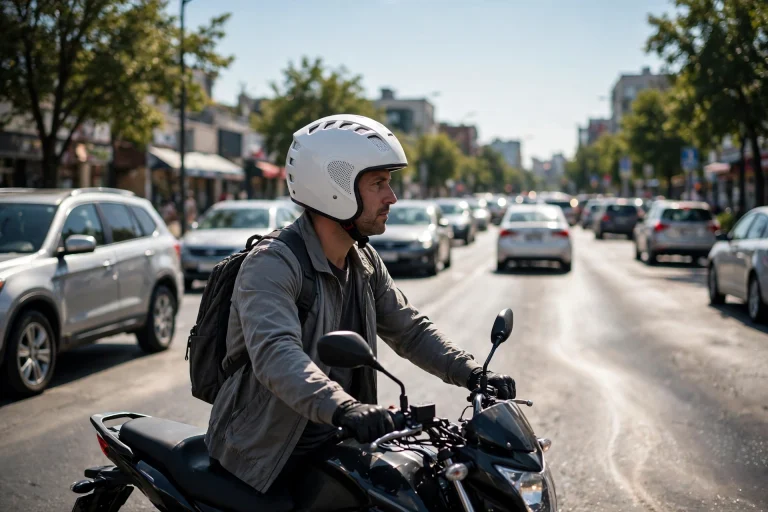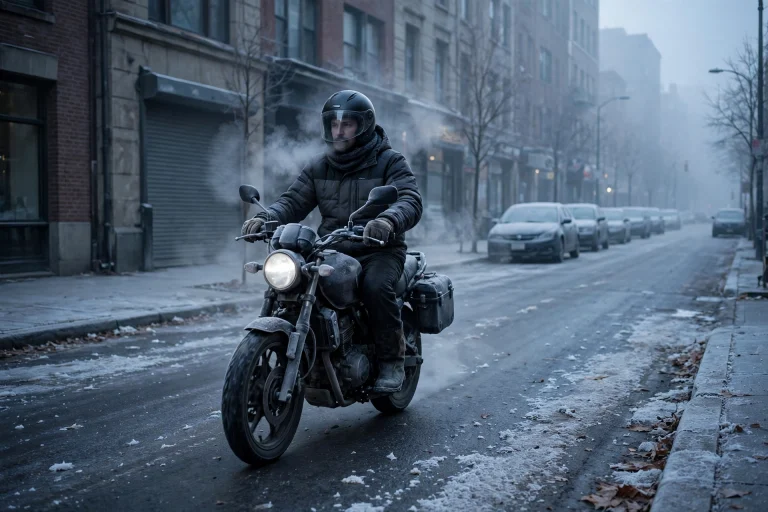
Yes — a motorcycle helmet for riding in a convoy is, in general terms, a comfortable, well-fitting full-face or modular helmet that protects your head while still letting you see, hear, and communicate with the riders around you. There is no special “convoy helmet” sold as a separate category. What matters is a helmet that stays comfortable for hours, gives you a wide field of vision, keeps wind noise manageable, and works with whatever communication system your group uses, so you can ride as part of the group rather than struggling with your own gear.
Riding in a convoy is different from riding alone. You travel in a formation with other riders, usually at a steady pace and on a planned route, and you need to keep an eye on the rider ahead and the rider behind. Your helmet is part of that teamwork. This guide explains, in general terms, what to look for in a helmet for convoy riding, how communication and comfort fit in, and how to prepare before the group sets off.
What Makes Riding in a Convoy Different from Riding Alone?
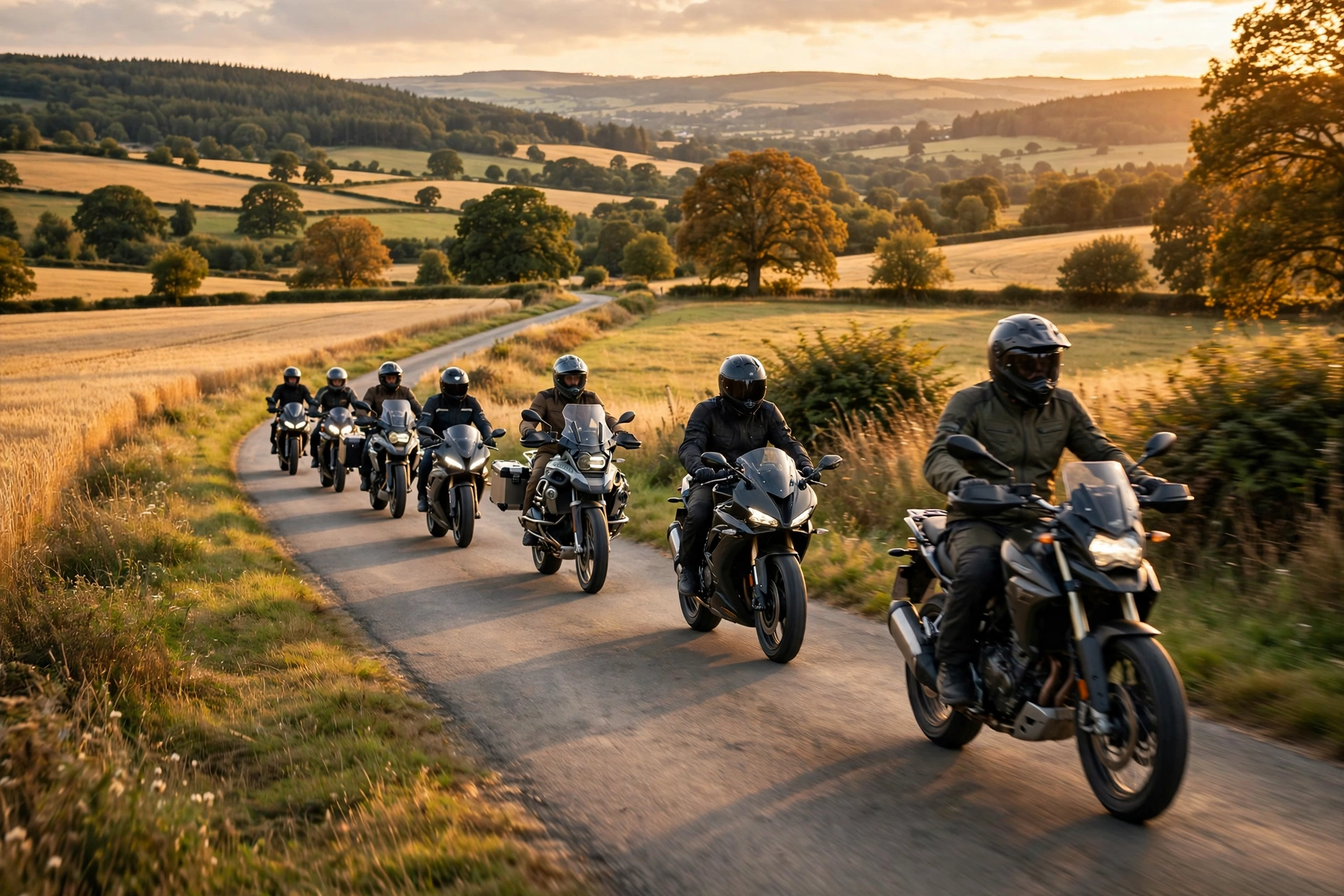
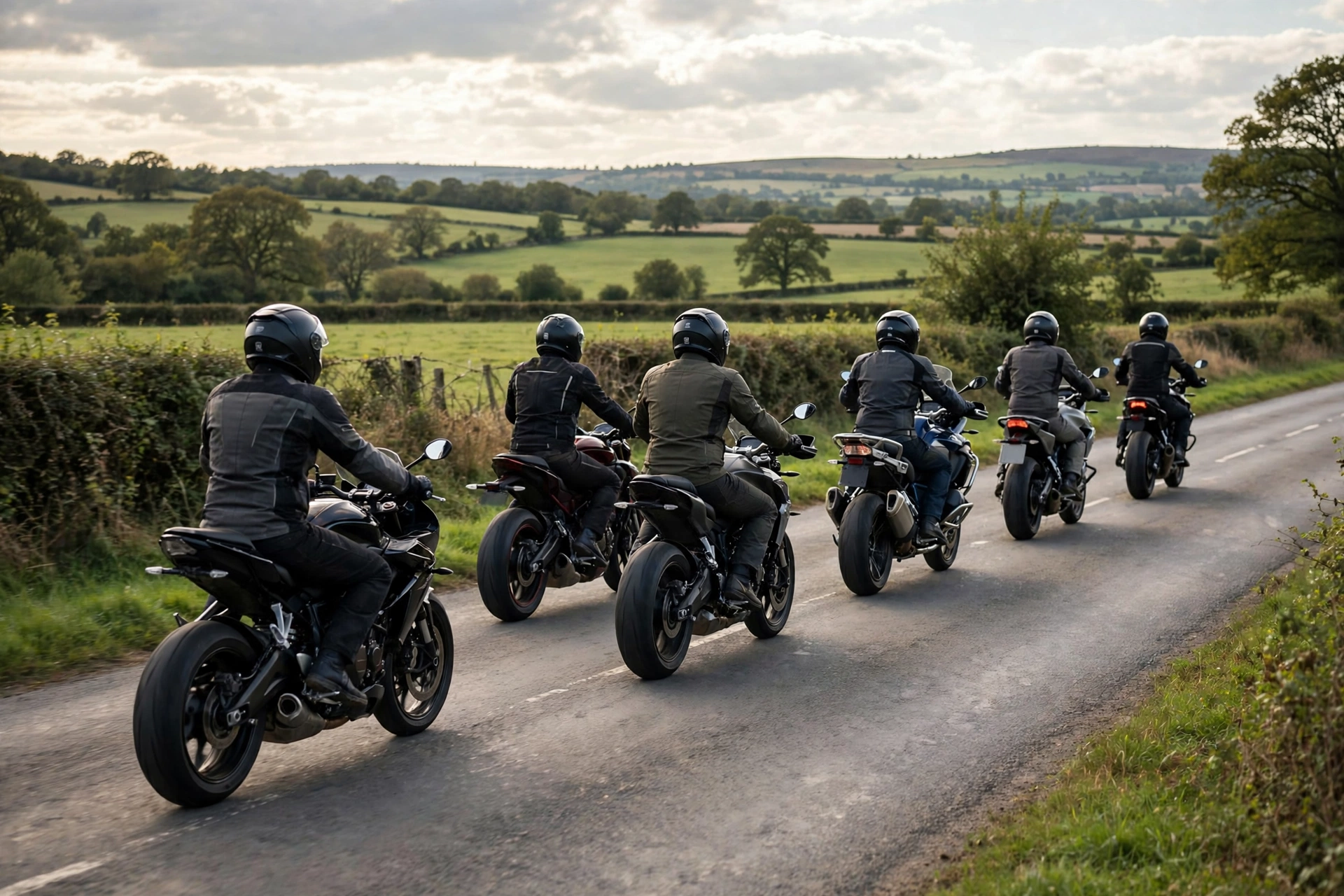
When you ride alone, you set your own pace, choose your own line through corners, and stop whenever you like. In a convoy, you give up some of that freedom in exchange for company, safety in numbers, and a shared route. You ride in a staggered formation, keep a steady gap to the bike in front, and watch for hand signals or brake lights from riders ahead. That means your attention is split between the road and the group, and anything that narrows your vision or distracts you makes the whole ride harder.
Convoy rides also tend to last longer than a quick solo trip. A group outing can mean several hours in the saddle, with planned fuel and rest stops, and the pace is set by the slowest or least experienced rider rather than the fastest. A helmet that feels fine for a twenty-minute commute can become a real problem after two hours, pressing on your forehead or letting in a draught that chills your neck. In general terms, comfort over distance is the single most important quality for a convoy helmet, because discomfort builds slowly and steals your concentration long before you notice it.
What Type of Helmet Works Best in a Convoy?
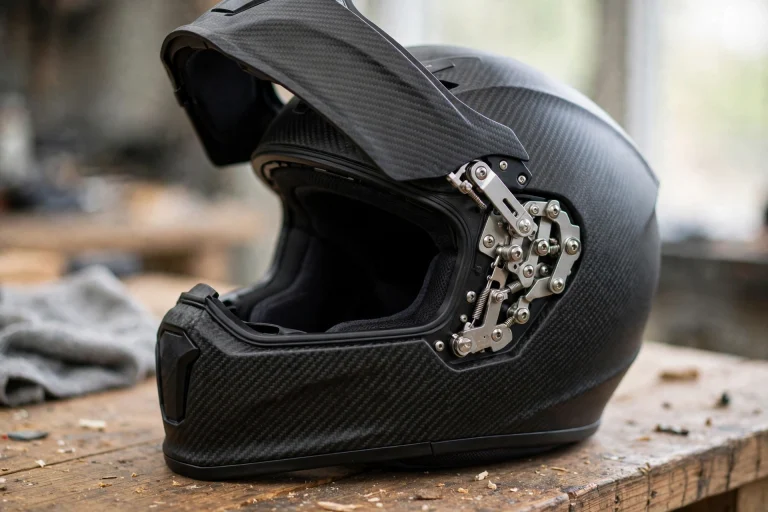
In general terms, a full-face helmet is the most common choice for convoy riding, and for good reason. It protects your whole head and face, keeps out wind, rain, and insects, and usually offers the best noise control at motorway speeds. Many riders also choose a modular helmet, which has a chin bar that lifts up, because it lets you talk easily to other riders at fuel stops without taking the helmet off, and it gives you fresh air while the group is waiting. Either type works well, and the right choice is the one that fits your head shape and feels comfortable after an hour or more.
Open-face helmets do appear on convoy rides, often on classic or cruiser-style bikes, and they give excellent hearing and a wide view. The trade-off is less protection for your face and chin, and more wind and weather in your eyes, which can be tiring on a long ride. If you ride with an open-face helmet, good eye protection is essential, and you may find yourself more tired at the end of the day than riders in full-face helmets. Whatever style you choose, make sure it fits snugly without pressure points, and that the visor opens and closes smoothly with gloved hands. If you want to understand more about the safety technology inside modern helmets, reading about what MIPS is for helmets can help you compare designs.
How Important Is Communication When Riding in a Group?
Communication is one of the biggest practical differences between solo riding and convoy riding. Many groups use Bluetooth intercom systems fitted inside the helmet, which let riders talk to each other, share directions, and warn about hazards ahead. If your group uses one, check that your helmet has speaker pockets and space for a microphone, and that the intercom unit fits neatly without pressing on your ear. A helmet that works well with your group’s system is worth more than a helmet with features nobody in the group uses.
Not every convoy uses electronics, and many groups still rely on hand signals. The rider at the front signals turns, hazards, and stops, and each rider passes the signal back down the line. For this to work, your helmet must not block your peripheral vision, and your visor must stay clear in all weathers. Practise the group’s signals before the ride so you recognise them at a glance, and agree on what each signal means, because a misunderstood signal can split the group or cause a sudden stop. In general terms, a helmet that keeps your vision wide and your hearing open makes both electronic and hand-signal communication easier.
What Should You Check Before the Convoy Sets Off?
A short check before the ride saves trouble later. Start with the helmet itself: make sure the strap fastens securely, the visor is clean and scratch-free, and the padding sits evenly with no loose parts. Put the helmet on and wear it for a few minutes while you check the bike, because a pressure point that is easy to ignore at home becomes hard to ignore after an hour on the road. If you wear glasses, check that they sit comfortably under the helmet and do not fog when you breathe.
- Clean the visor inside and out, and carry a cloth and a small bottle of water for cleaning it at stops.
- Check that your intercom is charged, paired with the group, and that you can hear it clearly at a low volume.
- Make sure the helmet fits the same way it did when you bought it, with no loose lining or worn strap.
- Agree on the route, the rest stops, and the hand signals with the group leader before anyone starts an engine.
- Carry a spare visor or a tinted insert if the ride runs from bright daylight into the evening.
How Do You Stay Safe and Comfortable on a Long Group Ride?
The golden rule of convoy riding is to ride your own ride within the group. Keep a steady gap to the bike ahead, stay in your part of the formation, and do not feel pressured to keep up if the pace feels too fast. A good group leader sets a pace everyone can manage, and a good group never leaves a rider behind. If you feel tired, hot, or uncomfortable, say so at the next stop rather than pushing on in silence, because a tired rider is a risk to the whole group.
Frequently Asked Questions
Q: Do I need a special helmet for riding in a convoy?
A: No, there is no special convoy helmet. In general terms, a comfortable, well-fitting full-face or modular helmet with good vision, manageable noise, and room for an intercom is the best choice for group riding.
Q: Is a modular helmet good for convoy riding?
A: Yes, many riders like modular helmets for convoys because the lifting chin bar makes it easy to talk at stops without removing the helmet. Just make sure it fits well and the chin bar locks firmly when closed.
Q: How do I hear other riders while wearing a full-face helmet?
A: Most riders use a Bluetooth intercom fitted inside the helmet, or rely on hand signals passed down the group. A helmet with speaker pockets and a clear visor makes both options work better.

Olivia
Writer at Helmet Today, covering helmet reviews, fit and riding safety.