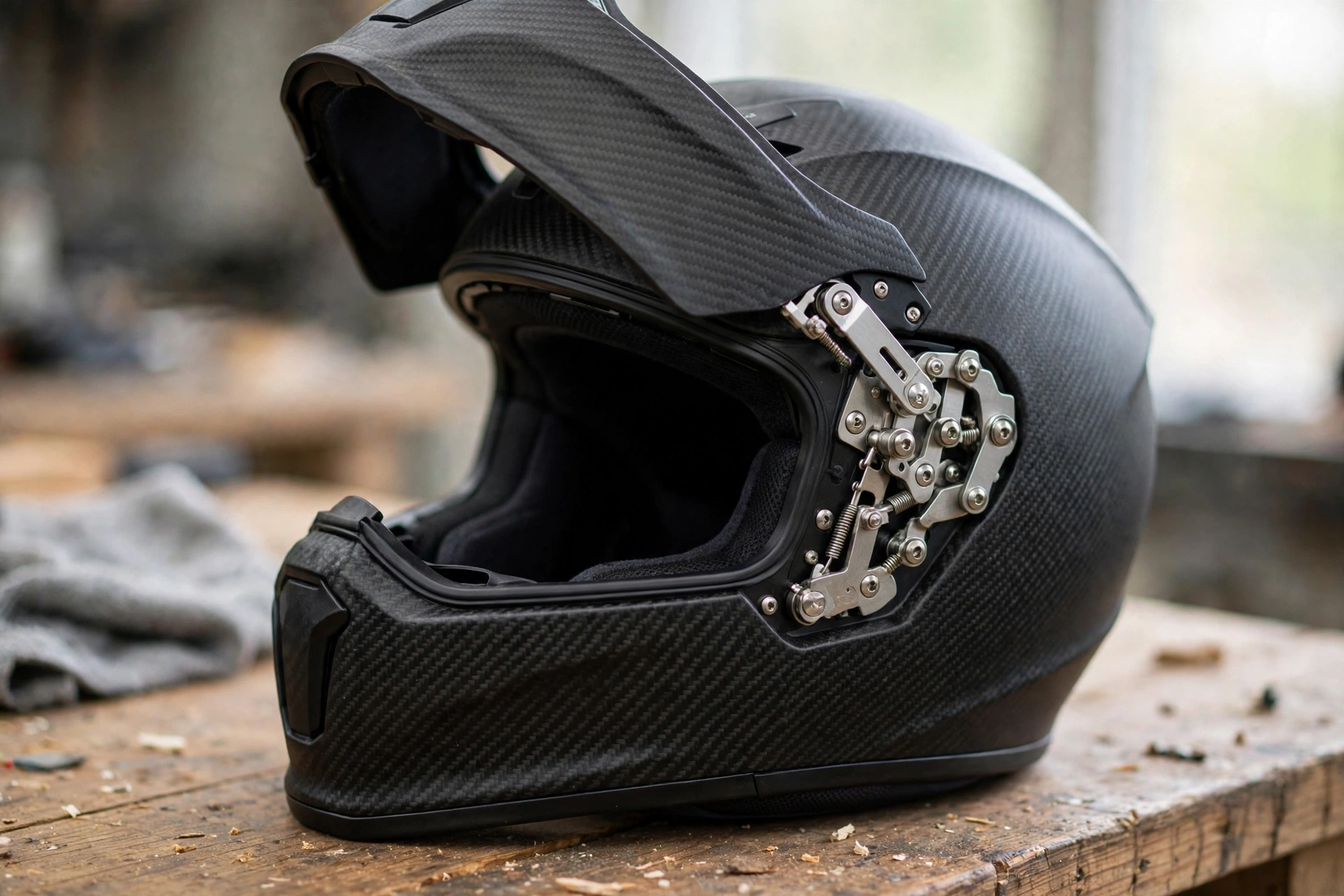
Modular motorcycle helmet hinge care means keeping the hinge pivots clean, lightly lubricated with a suitable product, and checked regularly for looseness, stiffness, or damage — and doing that keeps the chin bar moving smoothly and locking firmly for years. The hinge is the part that makes a modular helmet work, letting you flip the chin bar up and down, and it is also the part most likely to wear out if it is ignored. A little regular care is all it takes to keep it working properly.
Modular, or flip-up, helmets are popular because they offer the protection of a full-face helmet with the convenience of an open face. But that convenience depends on a hinge mechanism with moving parts, springs, and a locking catch, and those parts are exposed to dust, rain, and road grime every time you ride. If the hinge gets stiff, gritty, or loose, the chin bar can become hard to move, fail to lock, or rattle while you ride. This guide explains how to look after it, in general terms.
How Does a Modular Helmet Hinge Work?
A modular helmet hinge is a pivot on each side of the shell, usually near the temples, that lets the chin bar rotate up and over the top of the helmet. Inside the mechanism there is a spring or a detent that holds the chin bar in place when it is down and when it is up, and a locking catch that keeps it firmly closed while you ride. Some helmets also have a release button or lever that you press to unlock the chin bar before flipping it up.
The hinge has to do two jobs at once: it must move smoothly when you want to flip the chin bar, and it must hold firmly when the chin bar is down. That is why the mechanism is made to precise tolerances, and why dirt or wear can affect it so quickly. A small amount of grit in the pivot can make the movement feel rough, and a worn locking catch can let the chin bar move when it should stay put.
How Do You Clean a Helmet Hinge?
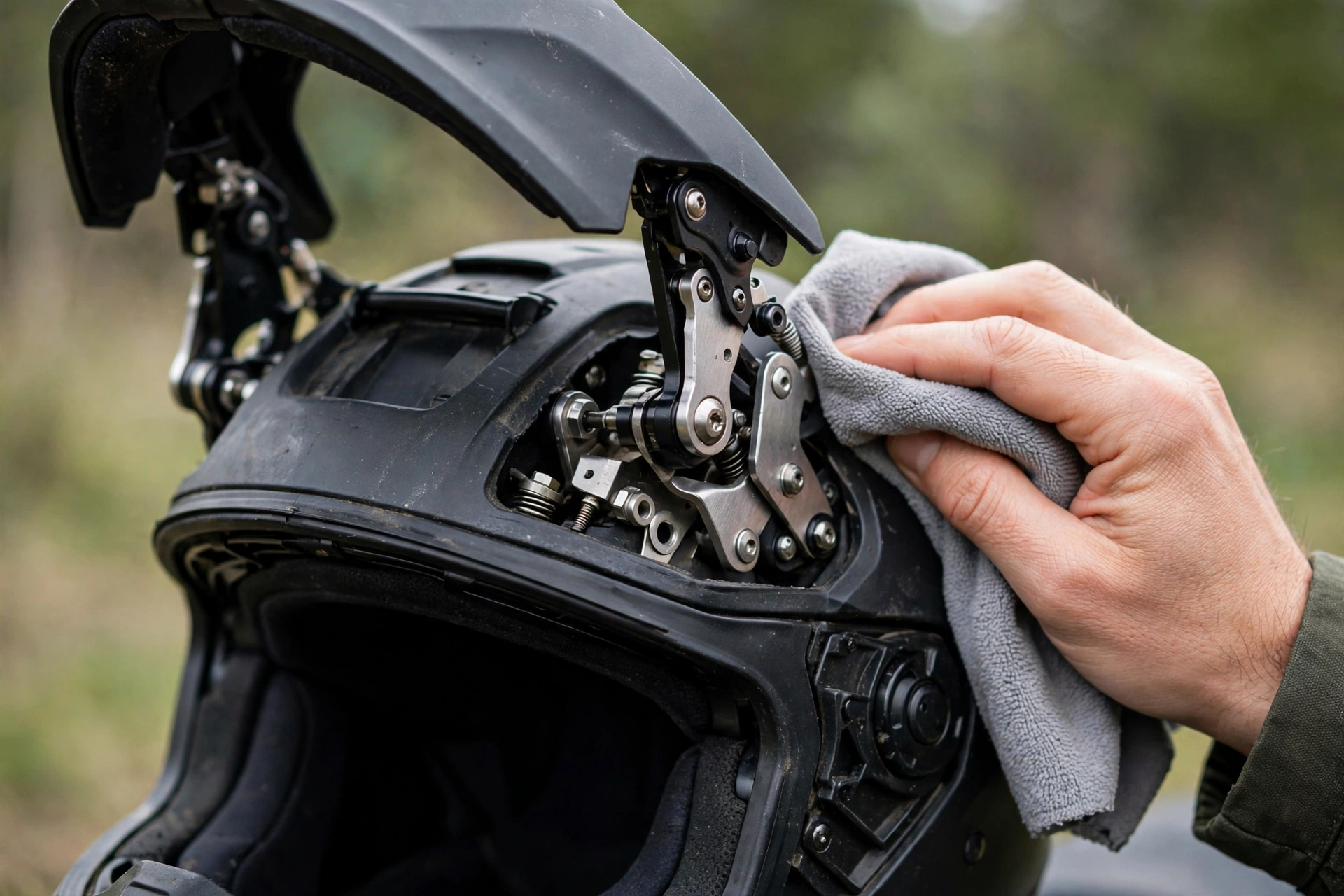
Start by flipping the chin bar up and wiping around the hinge area with a soft, damp cloth. This removes the surface dust and grime that collects around the pivot. Use a soft brush, such as an old toothbrush, to clean gently around the hinge and the locking catch, taking care not to force dirt further into the mechanism. Wipe away what the brush loosens with the cloth.
If the hinge area is very dirty, use a little lukewarm water with a drop of mild soap on the cloth, and wipe the area carefully. Avoid spraying water or cleaner directly into the hinge, because water trapped inside the mechanism can cause corrosion and stiffness. Dry the area thoroughly with a clean cloth afterwards, and let the helmet air-dry with the chin bar up so any remaining moisture can escape.
Clean the hinge regularly, not just when it starts to feel stiff. After riding in rain, dust, or mud, a quick wipe around the hinges takes a minute and stops grime building up. It is also worth cleaning the hinge when you wash the helmet liner, so the whole helmet gets attention at the same time. In general terms, a clean hinge is a smooth hinge, and regular cleaning is the simplest form of hinge care.
Should You Lubricate a Helmet Hinge, and With What?
If the hinge feels stiff or squeaky after cleaning, a very small amount of lubrication can help — but use the right product, and use it sparingly. Your helmet manual may recommend a particular lubricant, often a silicone-based product, and that is the safest choice. Avoid heavy oils, grease, and spray lubricants that contain solvents, because these can damage the plastic parts of the mechanism and attract more dirt.
Apply a tiny amount to the pivot point only, using a cotton bud or a cloth rather than spraying it on. Work the chin bar up and down a few times to spread the lubricant through the mechanism, then wipe away any excess. Too much lubricant is worse than none, because it traps dust and grit and turns into a paste that makes the hinge stiffer over time. A thin film is all you need.
What Are the Signs of Hinge Wear or Damage?
The first sign is usually a change in how the chin bar feels. If it becomes stiff, gritty, or hard to move, the hinge may be dirty or worn. If it becomes loose or wobbly, or if it moves side to side when it is down, the pivot may be worn or a fastener may have come loose. If the chin bar no longer locks firmly, or if it pops open while you ride, stop using the helmet in that state and have it checked — a chin bar that will not stay locked cannot protect you properly.
Look at the hinge area closely from time to time. Check for cracks in the cover plates, missing screws, or parts that look bent or out of place. Listen for rattles when you move the chin bar, and feel for any grinding or catching as it moves. Any of these signs means the hinge needs attention, and the sooner you deal with it, the simpler the fix is likely to be.
Some hinge parts can be replaced, and many manufacturers sell spare hinge covers, springs, or locking parts for their modular helmets. If the hinge is worn but the shell and liner are in good condition, a dealer may be able to fit new parts. If the hinge mechanism itself is damaged, or if the shell around the hinge is cracked, the helmet should be replaced. If you want to learn more about the safety technology inside modern helmets, reading about what MIPS is for helmets is a useful starting point.
How Do You Keep Hinges Working Well for Years?
Make hinge care part of your regular helmet routine. Wipe the hinges after wet or dusty rides, clean them properly when you wash the liner, and check the chin bar movement every time you put the helmet on. Flip the chin bar up and down and make sure it moves smoothly and locks firmly in both positions before you ride.
In general terms, a modular helmet hinge is a small mechanism that does a big job, and it repays a little attention. Clean it, lubricate it lightly when needed, and check it regularly, and it will keep working smoothly for the life of the helmet. If it ever stops locking firmly, treat that as a serious problem and have the helmet checked before you ride again.
Frequently Asked Questions
Q: How often should I clean my modular helmet hinges?
A: Wipe them after wet or dusty rides, and clean them properly whenever you wash the liner. In general terms, a quick wipe takes a minute and stops grime building up, so regular light cleaning is better than occasional deep cleaning.
Q: Can I use WD-40 on a helmet hinge?
A: In general terms, no — spray lubricants with solvents can damage plastic parts and attract dirt. Use only a product your helmet manual recommends, usually a silicone-based lubricant, and apply a tiny amount to the pivot only.
Q: What should I do if my chin bar will not stay locked?
A: Stop using the helmet for riding until it is checked. Clean the hinge and locking catch first, but if the chin bar still will not lock firmly, have a dealer inspect it — a chin bar that pops open cannot protect you properly.

Olivia
Writer at Helmet Today, covering helmet reviews, fit and riding safety.