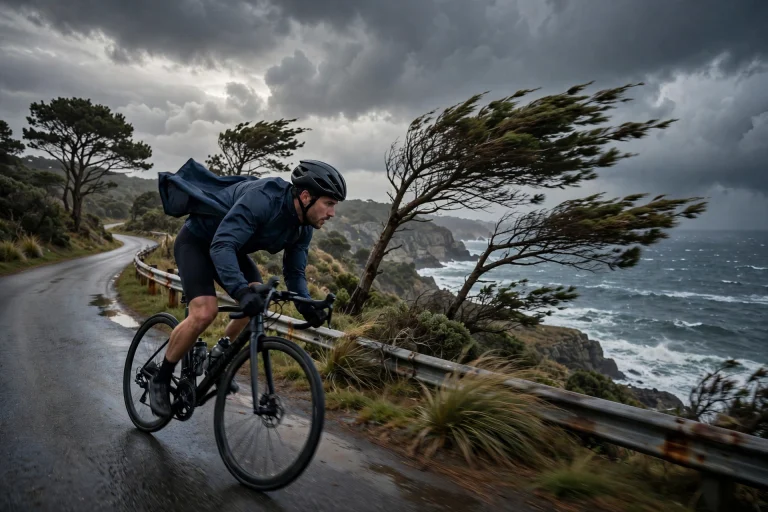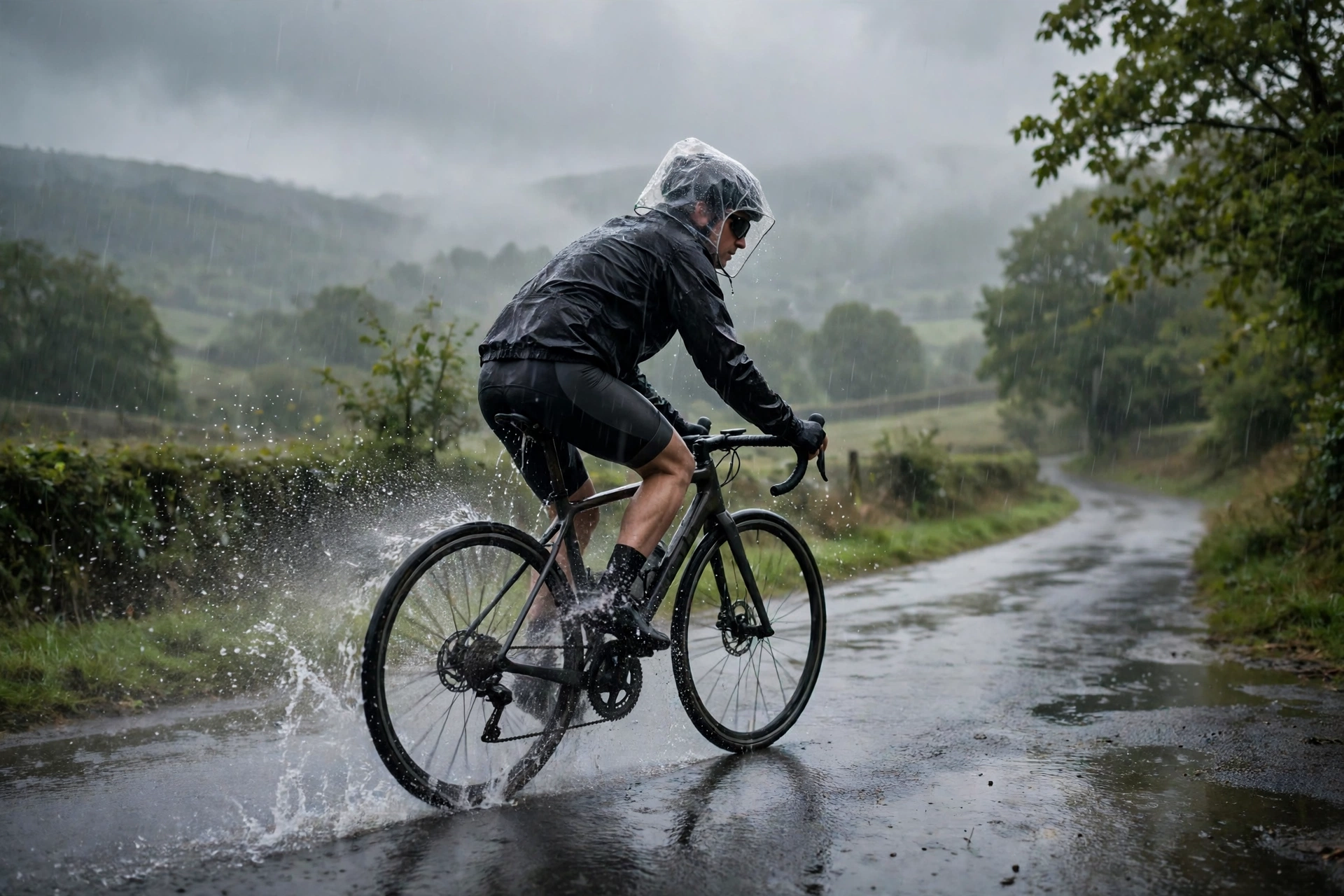
Yes — a bike helmet for riding in the rain works perfectly well in wet weather, and in general terms the best choice is a well-fitting helmet with a secure visor or peak, good drainage, and straps and padding that stay comfortable when wet. Rain does not make a helmet less protective, but it changes what you need from it: you need clear vision and ventilation that keeps the inside of your visor or glasses from fogging up. The right helmet keeps the rain out of your eyes so you can concentrate on a slippery road.
Riding in the rain is a different experience from riding on a dry day. Roads become slippery, braking distances grow longer, spray from other vehicles fills the air, and your body gets cold faster. A helmet that is fine on a sunny day can become a problem in the rain if water runs down your face, the straps loosen as the padding soaks up water, or the inside fogs over. This guide explains, in general terms, what to look for in a helmet for wet-weather riding and how to keep it working well when the weather turns.
Does Rain Affect How a Helmet Protects You?
In general terms, no — rain does not reduce the protection a helmet offers in a crash. The shell and the protective liner inside are designed to work in all weathers, and getting wet does not make them weaker in normal use. What rain does change is the riding around the helmet: wet roads mean less grip, spray means worse visibility, and cold rain means you tire more quickly. So the helmet’s job in the rain is less about extra protection and more about keeping your vision clear and your head comfortable while you deal with harder riding conditions.
One thing to watch is fit. Some padding absorbs water and becomes heavier and softer when wet, which can make a helmet feel looser than it did when dry. If your helmet starts to slip or rock on your head in the rain, tighten the fit dial and check the straps at your next stop, because a helmet that moves around is a distraction and may not sit in the right place if you fall. A helmet with padding that dries quickly and a fit system you can adjust with wet gloves is worth its weight in rain.
What Features Help a Helmet Work Well in the Rain?
A peak or small visor is one of the most useful features for wet riding. It shields your eyes and face from rain and from spray thrown up by cars, and it helps keep your glasses or sunglasses dry. Some helmets have a short, fixed peak, while others have a longer one you can adjust or remove, and either can work well. Try the helmet with the peak fitted and tilt your head up as if you were looking at a traffic light, because a peak that blocks your upward view is more trouble than it is worth.
Ventilation is just as important in the rain as in the sun, though for a different reason. When you ride in the rain, warm air from your head meets cold, wet air outside, and moisture can condense on the inside of your visor or glasses. Vents that let air flow through the helmet reduce this fogging, and some riders also use a thin layer of anti-fog treatment on their glasses or visor. If you want to understand more about the safety technology inside modern helmets, reading about what MIPS is for helmets can help you compare designs.
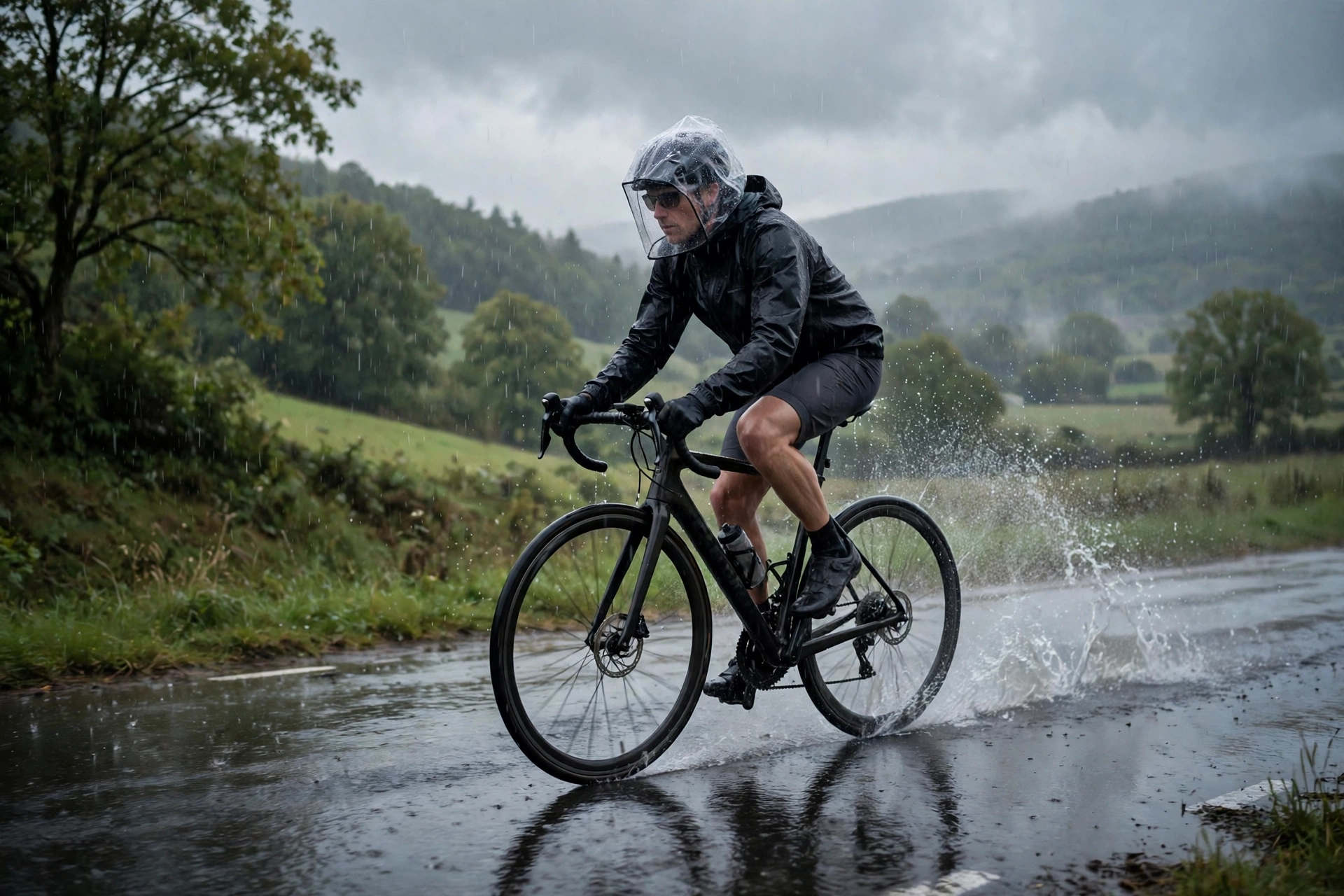
A rain cover is another simple and effective option. It is a thin, waterproof cover that slips over the helmet and keeps most of the rain out of the vents, while often adding a bright colour or reflective panels that help you be seen. Some covers have a clear panel at the back for a light. They are cheap, light, and easy to carry in a pocket or bag, so you can put one on when the rain starts and take it off when it stops. In general terms, a rain cover turns an ordinary helmet into a wet-weather helmet in seconds.
How Do You Keep Your Vision Clear in the Rain?
Clear vision is the hardest thing to maintain in the rain, and it is also the most important. Rain on your visor or glasses blurs the road, spray from vehicles makes it worse, and fogging on the inside can close off your view entirely. Start with a clean visor or clean glasses, because dirt and grime give water something to cling to. A water-repellent treatment, applied to the outside of the visor or glasses, makes rain bead up and blow off as you ride, which can transform your view in heavy rain.
Your riding position also matters. Tucking your head slightly and letting the peak do its work keeps direct rain off your face, and looking through the clearest part of your visor rather than through a smeared section helps you read the road ahead. Carry a small cloth in a waterproof pocket so you can wipe your visor or glasses at traffic lights, and avoid wiping with a wet glove, which usually smears the water rather than clearing it.
How Should You Ride Differently When It Is Raining?
Rain changes the road itself, so your riding needs to change too. Wet roads are slippery, especially at the start of rain, when oil and dust on the surface mix with water. Painted lines, metal covers, and fallen leaves become very slippery when wet, so ride around them where you can and cross them upright rather than leaning. Brake earlier and more gently than usual, using both brakes evenly, and give yourself more space behind other vehicles.
Spray is another factor. Cars and lorries throw up a curtain of water that can blind you for a second or two, so keep your distance from large vehicles and be ready for your vision to close in suddenly. A helmet with a peak and a water-repellent visor helps here, but the best defence is space and patience. Slow down before puddles rather than riding through them at speed, because a puddle can hide a pothole or a drain cover.
How Do You Care for a Helmet After a Wet Ride?
Good aftercare keeps a rain-ridden helmet working well for years. As soon as you get home, take the helmet inside and let it dry in a room with good airflow. Remove the padding if it comes out, and wash it with mild soap and water, then let it dry naturally. Wipe the shell and the vents with a soft cloth, and check that no mud or grit is stuck in the vents or around the fit dial.
Frequently Asked Questions
Q: Does rain make my bike helmet less safe?
A: In general terms, no. Rain does not reduce the protection a helmet offers, but wet roads and poor visibility make riding harder. The key is a helmet that keeps rain out of your eyes and stays snug when wet.
Q: Should I use a rain cover on my bike helmet?
A: A rain cover is a simple, cheap way to keep rain out of the vents and add visibility. It slips over most helmets, is easy to carry, and can be put on or taken off in seconds.
Q: How do I stop my visor or glasses fogging up in the rain?
A: Keep air flowing through the helmet by opening the vents, and consider an anti-fog treatment. A small gap at the bottom of the visor also helps moist air escape instead of condensing inside.

Olivia
Writer at Helmet Today, covering helmet reviews, fit and riding safety.