For cycling holidays abroad, take a helmet you already know fits well — in general terms, a lightweight, well-ventilated road helmet that is comfortable for long days, packs safely in your luggage, and suits the weather where you are going is the right choice, and it is far better than buying a new helmet at your destination. A cycling holiday means long days in the saddle, unfamiliar roads, and weather that may be very different from home, so your helmet needs to be comfortable, reliable, and ready to ride the moment you arrive. The helmet you trust at home is the helmet to take with you.
A cycling holiday is one of the best ways to explore a new place, whether you are riding through vineyards, along a coast, or up mountain passes. This guide explains, in general terms, how to choose and pack a helmet for a cycling holiday abroad, and how to stay safe on unfamiliar roads.
Should You Take Your Own Helmet or Hire One?
In general terms, take your own helmet. You know how it fits, you know it is comfortable for long days, and you know it has not been dropped or damaged. A hire helmet may be the wrong size or shape, and it may have been worn by many riders before you, which means the padding could be worn and the fit uncertain. Trying a new helmet on the first day of a holiday, when you have a long ride ahead, is a poor way to start.
There are times when hiring makes sense, such as when you are travelling very light or flying with strict baggage limits. If you do hire, try the helmet on before you ride, check the straps and fit dial carefully, and look for cracks, worn padding, or a buckle that does not fasten firmly. Ask the hire shop how old the helmet is and whether it has been in a crash. If anything feels wrong, ask for a different one, because a helmet that does not fit properly is worse than no plan at all.
How Do You Pack a Helmet for Travel?
Packing a helmet well is simple, but it matters. A helmet that is crushed or knocked about in transit can be damaged without any visible sign, so protect it. Put it in your bag with the opening facing up, and fill the inside with soft clothing such as socks or a jersey, which cushions it and saves space at the same time. Wrap it in a soft layer, and pack it in the middle of your bag, surrounded by clothes, rather than at the edge where it can be knocked.
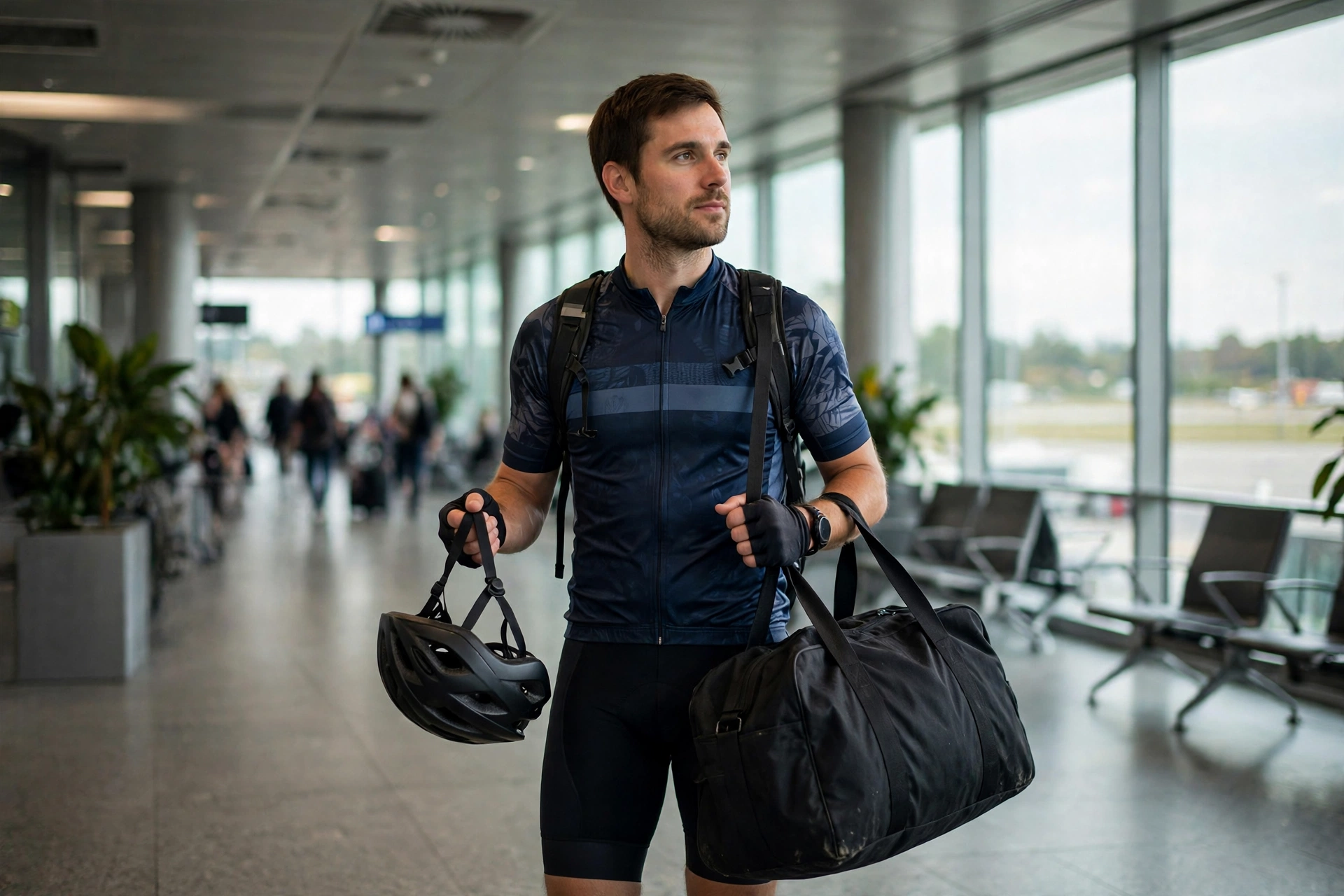
If you are flying, carry the helmet in your hand luggage if you can, because that way you know it has not been thrown around. If it must go in checked luggage, put it in the centre of the case with clothes packed tightly around it, and consider a padded helmet bag for extra protection. Do not pack heavy items on top of it, and do not hang it from a strap on the outside of a bag, where it can be knocked against walls and doorways. If you want to understand more about the safety technology inside modern helmets, reading about what MIPS is for helmets can help you compare designs.
When you arrive, check the helmet before your first ride. Look for cracks or dents, check that the straps and buckle work, and make sure the fit dial still tightens properly. Put it on and check that it still sits level and snug. If you have any doubt that it was damaged in transit, do not ride in it — find a local bike shop and ask their advice. In general terms, a few minutes of checking on arrival is worth far more than a day of riding in a damaged helmet.
What Kind of Helmet Suits a Cycling Holiday?
The best holiday helmet is a lightweight, well-ventilated road helmet that you can wear comfortably for several hours a day, several days in a row. Ventilation matters because holiday riding is often in warmer weather than you are used to, and long days in the heat with a poorly ventilated helmet will leave you tired and uncomfortable. A light colour helps too, because it reflects the sun rather than absorbing it.
Think about the weather where you are going. If you are heading somewhere hot, prioritise ventilation and a light colour. If you are going somewhere with changeable weather, a helmet with a small peak and a rain cover in your bag is a good combination. If you are riding in the mountains, remember that the weather can change quickly with height, so pack layers you can add or remove, and check that your helmet still fits comfortably over a thin cap.
How Do You Stay Safe on Unfamiliar Roads Abroad?
Unfamiliar roads need extra care. Before each day’s ride, study the route and note where the busy sections, junctions, and climbs are. Find out which side of the road traffic drives on, because this is easy to forget when you are tired, and learn the local rules for cyclists, such as whether you must use a cycle lane or whether you may ride two abreast. A little research before you set off saves confusion on the road.
Carry the essentials with you: water, food, a phone, a repair kit, and a card with your hotel address and an emergency contact number written down. Tell someone where you are riding and when you expect to be back, especially if you are riding alone in a remote area. And keep your phone charged, because it is your map, your camera, and your way of calling for help if something goes wrong.
- Study the route before each ride and note busy sections and junctions.
- Learn the local traffic rules, including which side of the road to ride on.
- Carry water, food, a phone, a repair kit, and your hotel address.
- Tell someone your route and expected return time each day.
- Slow down on descents and unfamiliar corners, where surprises are most likely.
What Should You Do If Your Helmet Is Lost or Damaged?
If your helmet is lost or damaged on holiday, do not panic, but do not ride without one either. Most cycling destinations have a bike shop within reach, and a shop can help you find a replacement that fits, even if it is not your first choice. Take the time to try it on properly, check the straps and fit dial, and wear it for a few minutes before you ride, because a rushed purchase is a poor purchase.
Frequently Asked Questions
Q: Should I take my own helmet on a cycling holiday abroad?
A: Yes, in general terms. Your own helmet fits you, is comfortable for long days, and has a known history. A hire helmet may be the wrong size or worn, so take your own if you possibly can.
Q: How do I pack a bike helmet in a suitcase?
A: Put it in the middle of the case with soft clothes packed around it and inside it, and do not put heavy items on top. If you can, carry it in hand luggage so it is not thrown around.
Q: What if my helmet is damaged during the trip?
A: Do not ride in it. Find a local bike shop and buy a replacement, trying it on properly before you ride. A helmet damaged in a fall should be replaced even if it looks fine from the outside.

Olivia
Writer at Helmet Today, covering helmet reviews, fit and riding safety.