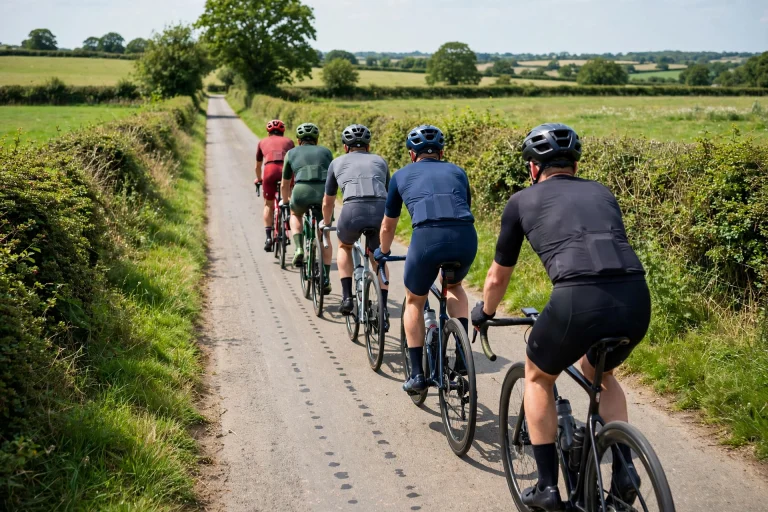
For your first road bike, choose a well-fitting, well-ventilated road helmet in a bright colour — in general terms, a mid-priced helmet from a reputable maker, fitted properly in a shop, is the right choice, and you do not need the lightest or most expensive model to be safe and comfortable. Your first helmet should be comfortable enough to wear on every ride, easy to adjust, and protective if you fall, and it should leave you money for the other kit you will need. Fit matters far more than brand or price.
Buying your first road bike is exciting, and the helmet is one of the first things you need. It can also be confusing: there are dozens of models at very different prices, with features you may not understand yet, and advice from experienced riders that does not always agree. It is easy to spend too much on a racing helmet you do not need, or too little on a helmet that does not fit properly. This guide explains, in general terms, how to choose your first road helmet with confidence.
What Should You Look for in a First Road Helmet?
Fit is the first and most important thing. A helmet should sit level on your head, covering your forehead without sliding over your eyes, and it should feel snug all round without pressing anywhere. Shake your head gently: the helmet should move with your head, not slide on its own. Try several models in a shop, because different makers suit different head shapes, and a helmet that fits one rider perfectly can press painfully on another. Wear it for several minutes in the shop, because a helmet that feels fine for thirty seconds can start to hurt after five minutes.
Ventilation is the next priority. Road riding is physical work, and you will get hot, especially on climbs. A helmet with large front vents and air channels that carry air over your head will keep you cooler and more comfortable, and it will reduce sweat running into your eyes. Look for a helmet where you can feel air moving through when you ride, and for padding that absorbs sweat without becoming soggy. In general terms, a cool helmet is a comfortable helmet, and a comfortable helmet is one you will wear on every ride.
How Much Should You Spend on Your First Helmet?
In general terms, you do not need to spend a lot to get a good first helmet. Mid-priced helmets from reputable makers offer strong protection, good ventilation, and a reliable fit system, and they are a sensible choice for a new rider. Very cheap helmets can be harder to fit and less comfortable, while very expensive helmets are built for racing, with weight savings and aerodynamics that matter little to a beginner.
What matters more than the price tag is that the helmet meets a recognised safety standard and fits you properly. Check the label inside the helmet for the standard it meets, and buy from a reputable shop rather than an unknown online seller, so you know the helmet is genuine and has not been damaged in storage. A shop can also help you fit the helmet properly, which is worth more than any feature on the box. If you want to understand more about the safety technology inside modern helmets, reading about what MIPS is for helmets can help you compare designs.
It is also worth thinking about what else you need. A first road bike brings a list of extras — lights, a lock, a pump, a repair kit, and clothing — and it is better to buy a good mid-priced helmet and have money left for those than to spend everything on a top-end helmet and ride without lights. In general terms, a balanced budget beats a single expensive purchase.
How Do You Get the Fit Right?
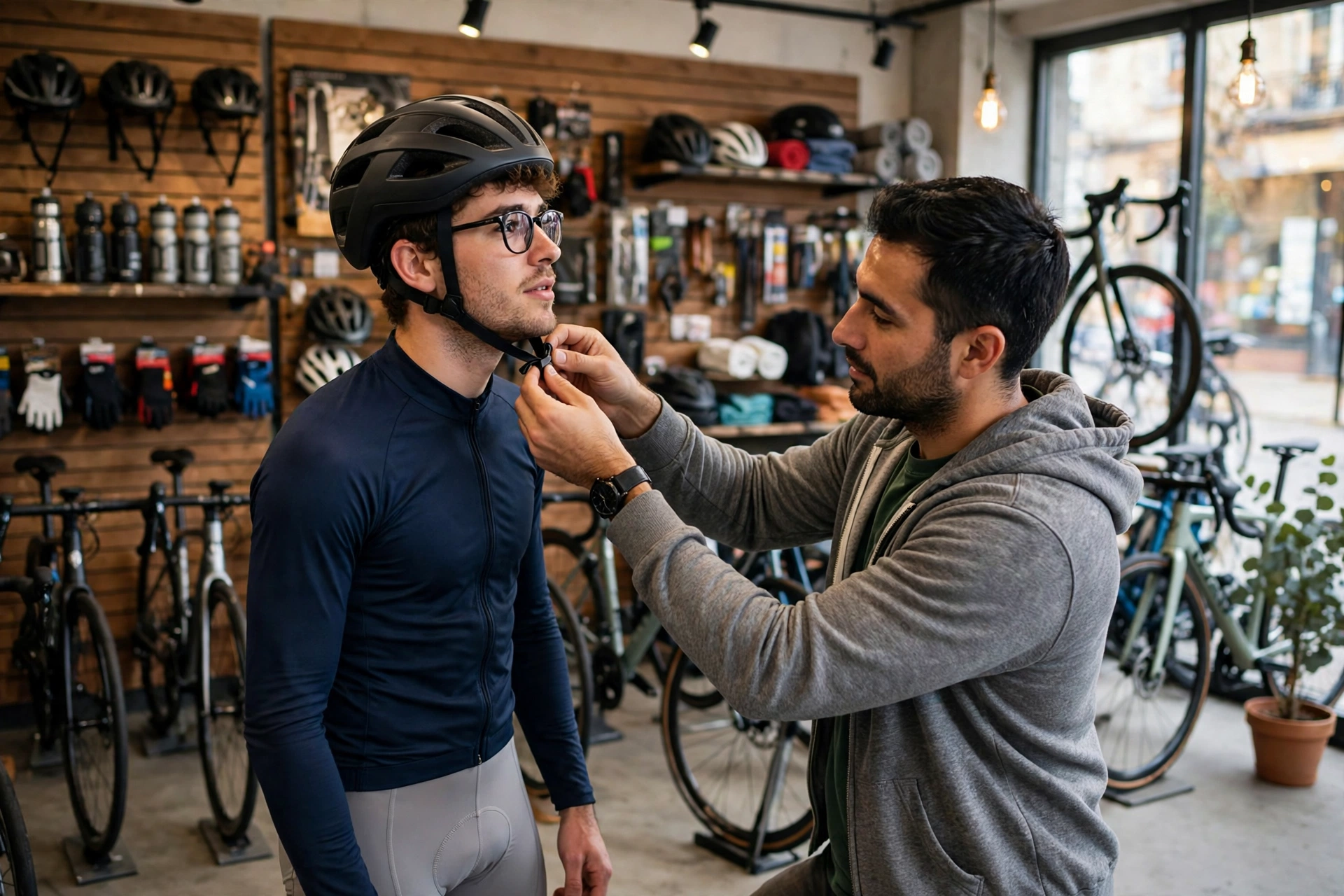
Start by measuring around your head just above your eyebrows and ears, and compare the number with the maker’s size guide. Sizes vary between brands, so treat the measurement as a starting point, not a final answer. In the shop, try the helmet on and tighten the fit dial at the back until the helmet feels snug all round, without any one point pressing hard. The helmet should stay level and should not rock forward or back when you push it gently.
Then adjust the straps. They should form a neat V around each ear, sit flat against your face, and fasten with the buckle just under your chin, leaving room for two fingers between the strap and your chin. If you wear glasses or sunglasses, bring them to the fitting and check that the helmet does not press the arms into your head. If you wear a cap or a thin skullcap in cold weather, try the helmet with that on too, because it changes the fit.
- Measure your head and use the size guide as a starting point, not a final answer.
- Try several brands, because different makers suit different head shapes.
- Wear the helmet for several minutes in the shop before you decide.
- Adjust the straps with your glasses on, so they are not trapped underneath.
- Check the helmet stays level and secure when you shake your head gently.
What Features Are Worth Paying For?
A few features are genuinely useful for a new road rider. A rear adjustment dial that you can turn with one hand is one of them, because it lets you fine-tune the fit while you ride. A bright colour or reflective details are another, because they help drivers notice you, especially in low light. And a helmet with a mount or clip for a rear light is worth having, since a light at helmet height is easy for drivers to see.
Other features are nice but not essential for a first helmet. An aerodynamic shape, a magnetic buckle, or a special ventilation system may be worth paying for later, when you know what kind of riding you enjoy, but they will not make your first rides any safer or more enjoyable. The same goes for a built-in camera mount or a communication system: useful for some riders, but not something a beginner needs on day one. In general terms, spend on fit, ventilation, and visibility first, and add extras later when you know what you want.
What Mistakes Should New Riders Avoid?
The most common mistake is buying a helmet that is too big. A loose helmet slides around, blocks your vision, and may not stay in place if you fall. It is tempting to choose a larger size because it feels more comfortable at first, but a helmet should feel snug when new, because the padding settles slightly with use. If the helmet rocks or slides when you shake your head, try a size smaller or a different model.
Frequently Asked Questions
Q: Do I need an expensive helmet for my first road bike?
A: No. In general terms, a mid-priced helmet from a reputable maker, fitted properly, is the right choice for a new rider. Fit, comfort, and ventilation matter far more than racing features or a high price.
Q: How do I know what size road helmet I need?
A: Measure around your head above your eyebrows and ears, then try the helmet on. It should sit level, feel snug all round without pressing anywhere, and stay put when you shake your head gently.
Q: Can I buy my first road helmet online?
A: You can, but it is better to try helmets on in a shop first, because fit varies between brands. If you buy online, choose a seller with a good returns policy and test the fit at home before riding.

Olivia
Writer at Helmet Today, covering helmet reviews, fit and riding safety.