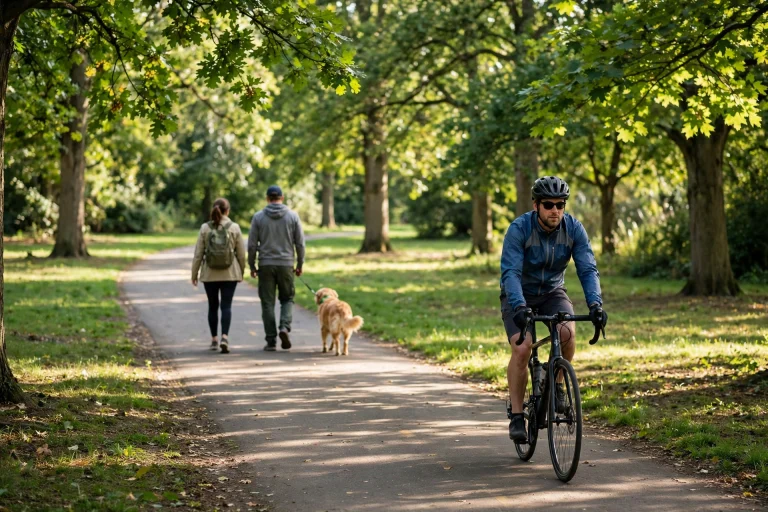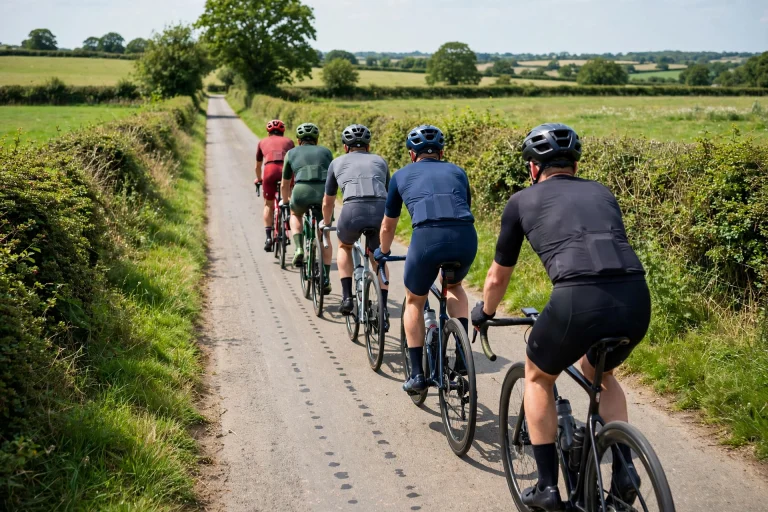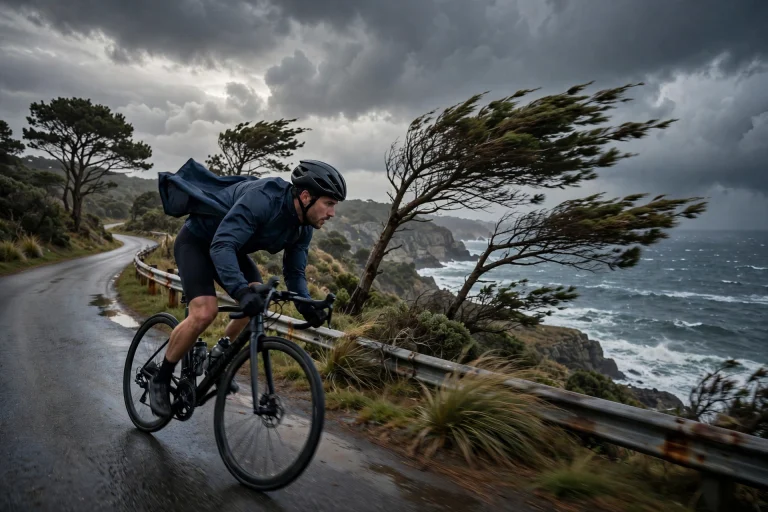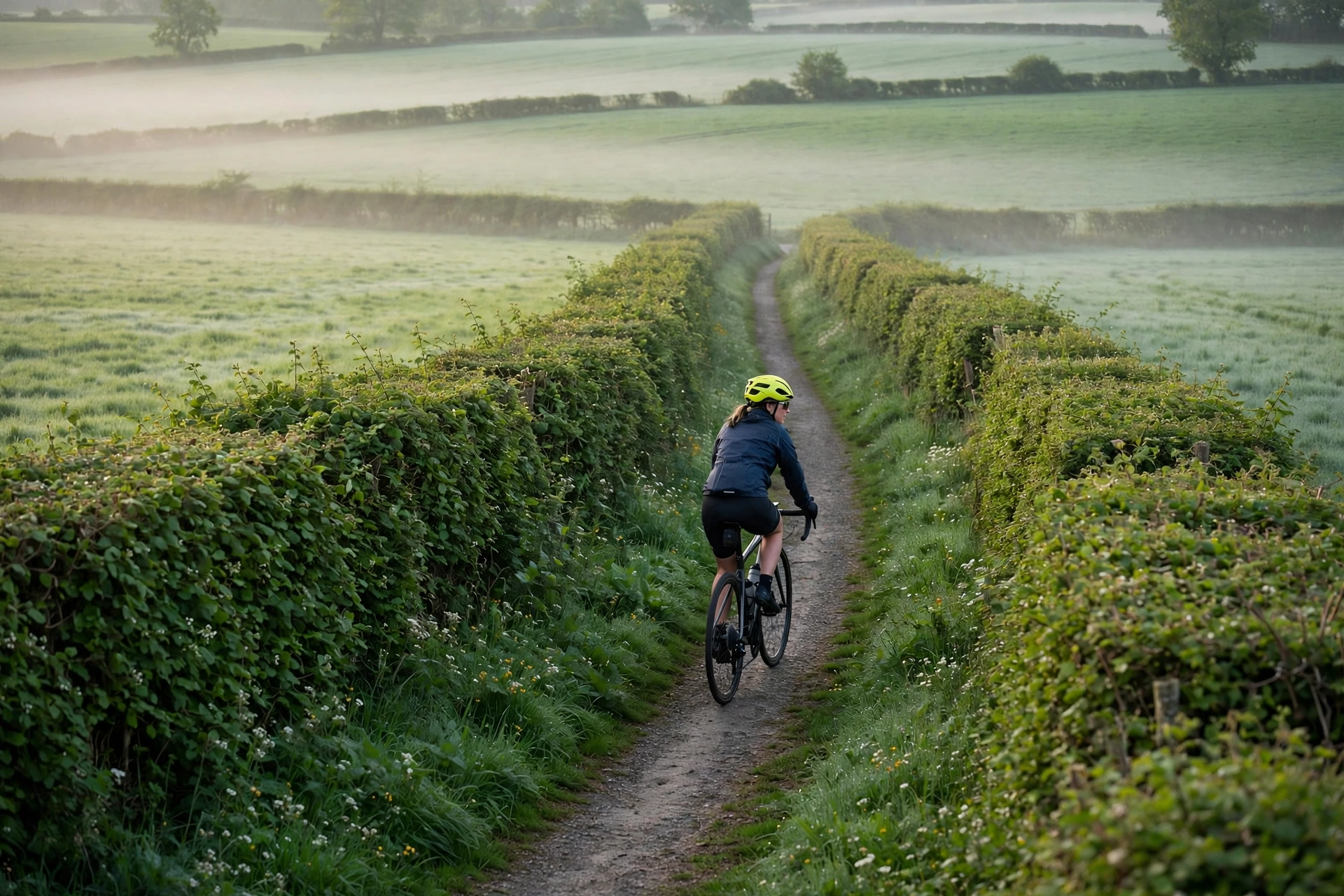
For riding on country lanes, choose a comfortable, well-ventilated helmet with good visibility — in general terms, a lightweight road or commuter helmet in a bright colour, with a small peak for sun and low branches, is the right choice, because country lanes bring narrow roads, blind corners, mud, and fast traffic in places you least expect it. Country lanes look peaceful, but they demand as much attention as any city street. A helmet that is comfortable for hours, easy to see, and keeps branches and sun out of your eyes lets you enjoy the quiet roads without being caught out by their surprises.
Country lanes are some of the most enjoyable roads to ride, with hedges, fields, and little traffic. They are also unpredictable. A lane can narrow suddenly, a blind bend can hide a tractor or a horse, and the surface can change from smooth tarmac to gravel, mud, or potholes without warning. Your helmet needs to cope with all of that: long, quiet stretches where comfort matters most, and sudden hazards where vision and awareness matter more. This guide explains, in general terms, what to look for in a helmet for country-lane riding and how to stay safe on these lovely but tricky roads.
What Makes Country Lanes Different from Other Roads?
Country lanes are narrow, often with no centre line and no pavement, and they twist and turn with blind bends and hidden dips. You may meet a car, a tractor, a horse rider, or a dog around a corner with very little room to pass, and the verge may be soft grass or a deep ditch rather than a safe place to pull over. Visibility is often poor, because high hedges block your view of what is coming, and the road surface can be rough, with potholes, loose gravel, and mud washed across it after rain.
Rides on country lanes also tend to be longer and more relaxed than city rides, with fewer stops and a steady pace. That means comfort matters a great deal: a helmet that presses or feels heavy will become a burden over several hours, while a well-ventilated helmet will keep you cool as you ride through sun and shade. In general terms, a country-lane helmet needs to be comfortable for the long, quiet miles and practical for the sudden surprises.
What Type of Helmet Suits Country Lanes?
A lightweight road helmet is a good choice for country lanes, because it is comfortable for long rides, well ventilated, and easy to wear for hours. A commuter helmet also works well, especially if it has a peak and a bright colour. What matters most is that the helmet fits well, feels light, and gives you a wide field of vision, so you can spot hazards early and look over your shoulder easily on narrow roads.
A small peak is genuinely useful on country lanes. It shades your eyes from low sun shining through the trees, keeps light rain off your face, and stops low branches and twigs from brushing your forehead. Choose a peak that is short enough not to block your view when you look up, and one you can remove if you prefer. If you want to understand more about the safety technology inside modern helmets, reading about what MIPS is for helmets can help you compare designs.
Visibility is just as important in the countryside as it is in the city, though for a different reason. Drivers on country lanes do not always expect to meet a cyclist around a blind bend, so a bright helmet — white, yellow, or orange — helps them spot you sooner. Reflective details help on dull days and at dusk, when many country rides end. In general terms, a bright, comfortable helmet with a small peak is the classic country-lane choice.
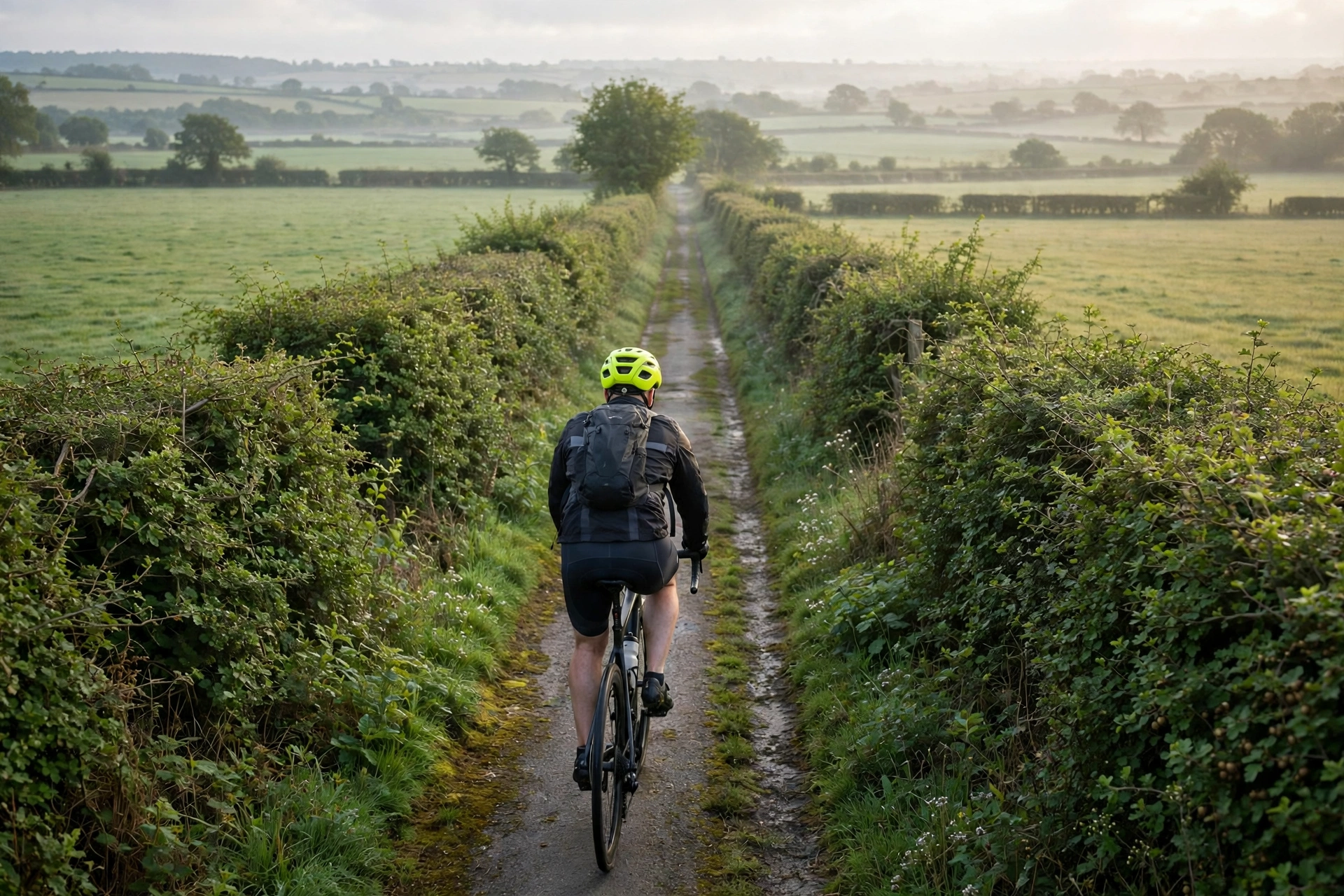
How Do You Stay Safe on Narrow Lanes?
The golden rule on country lanes is to ride as if something is coming around every bend, because often something is. Slow down before blind corners, keep to your side of the road, and be ready to stop. Use your bell or call out on very narrow stretches, so walkers and horse riders know you are there. And when you meet a horse, slow right down, pass wide and slowly, and speak calmly so the horse knows you are a person, not a silent machine.
Road position matters on lanes. Ride far enough from the edge to avoid the worst of the potholes, gravel, and mud, but be ready to pull in when a vehicle approaches. On a single-track lane, use passing places and be patient with other road users: a tractor driver who has pulled over for you deserves a wave, and a driver who waits for you to pass a narrow section deserves the same courtesy. In general terms, country lanes work best when everyone is patient and polite.
What Should You Watch Out for on the Surface?
Country-lane surfaces are full of surprises. Potholes can be deep and hard to see in dappled shade, loose gravel can sit on the surface after a tractor has passed, and mud washed across the road after rain can be as slippery as ice. Fallen leaves in autumn hide all of these hazards, and in winter, frost can linger in shaded stretches long after the sun has melted it elsewhere.
The best defence is to look ahead and read the road. Scan the surface in front of you, not just the road immediately below your wheel, and slow down when you cannot see the surface clearly. Avoid sudden braking or sharp turns on loose or slippery surfaces, and keep your weight balanced over the bike. A helmet with a peak helps here too, because it keeps low sun and rain out of your eyes, so you can see the surface better. In general terms, a careful rider who reads the road will avoid most surface hazards before they become a problem.
- Slow down before blind bends and be ready to stop for oncoming traffic.
- Watch for potholes, gravel, mud, and leaves, especially in dappled shade.
- Pass horses wide and slowly, and speak calmly so they know you are there.
- Use passing places on single-track lanes and be patient with other users.
- Carry a phone, water, and a repair kit — country lanes can be remote.
How Do You Stay Comfortable on Long Country Rides?
Long country rides are a pleasure, and comfort is what makes them so. A well-ventilated helmet keeps you cool as you ride through sun and shade, and padding that manages sweat keeps you comfortable on climbs. Take your helmet off at rest stops, drink water regularly, and eat before you feel hungry, because country rides can be longer than you expect and there may be nowhere to buy food.
Frequently Asked Questions
Q: What is the best helmet for riding on country lanes?
A: In general terms, a lightweight, well-ventilated road or commuter helmet in a bright colour, with a small peak for sun and branches, is the best choice for country lanes. Comfort over long rides matters most.
Q: Do I need a peak on my helmet for country lanes?
A: A small peak is very useful on country lanes. It shades your eyes from low sun, keeps rain off your face, and stops low branches from brushing your forehead, without blocking your view.
Q: How do I stay safe around horses on country lanes?
A: Slow right down, pass wide and slowly, and speak calmly so the horse knows you are there. Never ring your bell loudly or speed past a horse, and be patient if the rider asks you to wait.

Olivia
Writer at Helmet Today, covering helmet reviews, fit and riding safety.