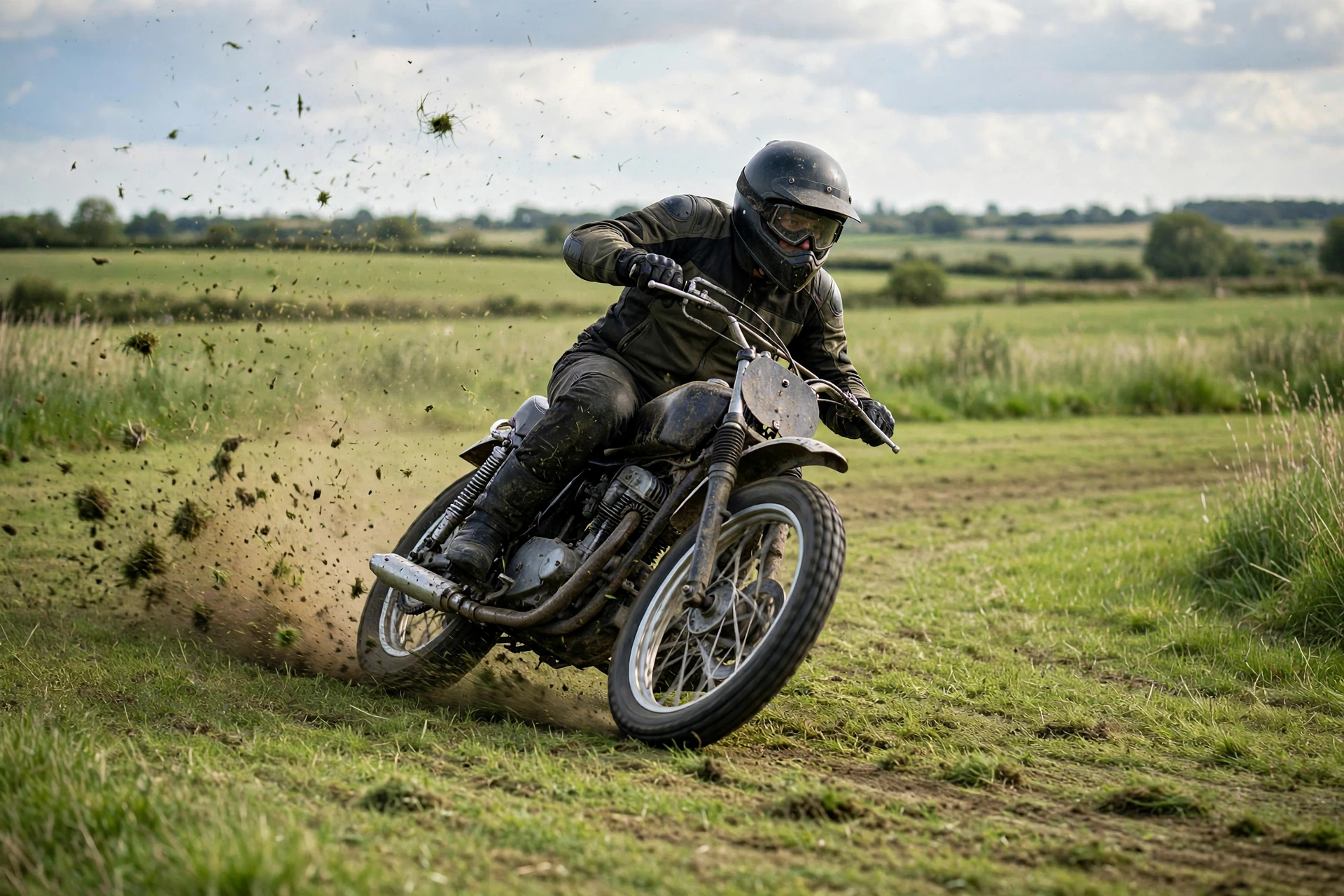
A grass track racing helmet is a full-face motorsport helmet worn for flat-track motorcycle racing on grass — a lightweight helmet that protects the rider in fast, sliding turns while keeping dust and grass out of the eyes and letting the rider hear the engine and the bikes around them. Grass track racing is one of the oldest forms of motorcycle sport: riders race solo bikes with no brakes around an oval marked out on a grass field, sliding the rear wheel through the turns at speed. The surface is natural grass over soil, which can be smooth and fast when dry or slippery and rutted when wet. In general terms, a grass track helmet is a full-face off-road or flat-track style helmet with a wide eye port, strong ventilation, and a secure fit that holds steady through the sideways slides and bumps of a grass oval.
This guide explains what a grass track racing helmet is, how it differs from helmets used on tarmac or in motocross, and what to look for when choosing one. It covers fit, goggles and visibility, the demands of a grass surface, and how to look after a helmet that lives in dust, mud, and grass cuttings. Whether you are starting out at a local grass track meeting or moving from another discipline, the right helmet helps you concentrate on the racing.
What Is Grass Track Racing and What Does It Ask of a Helmet?
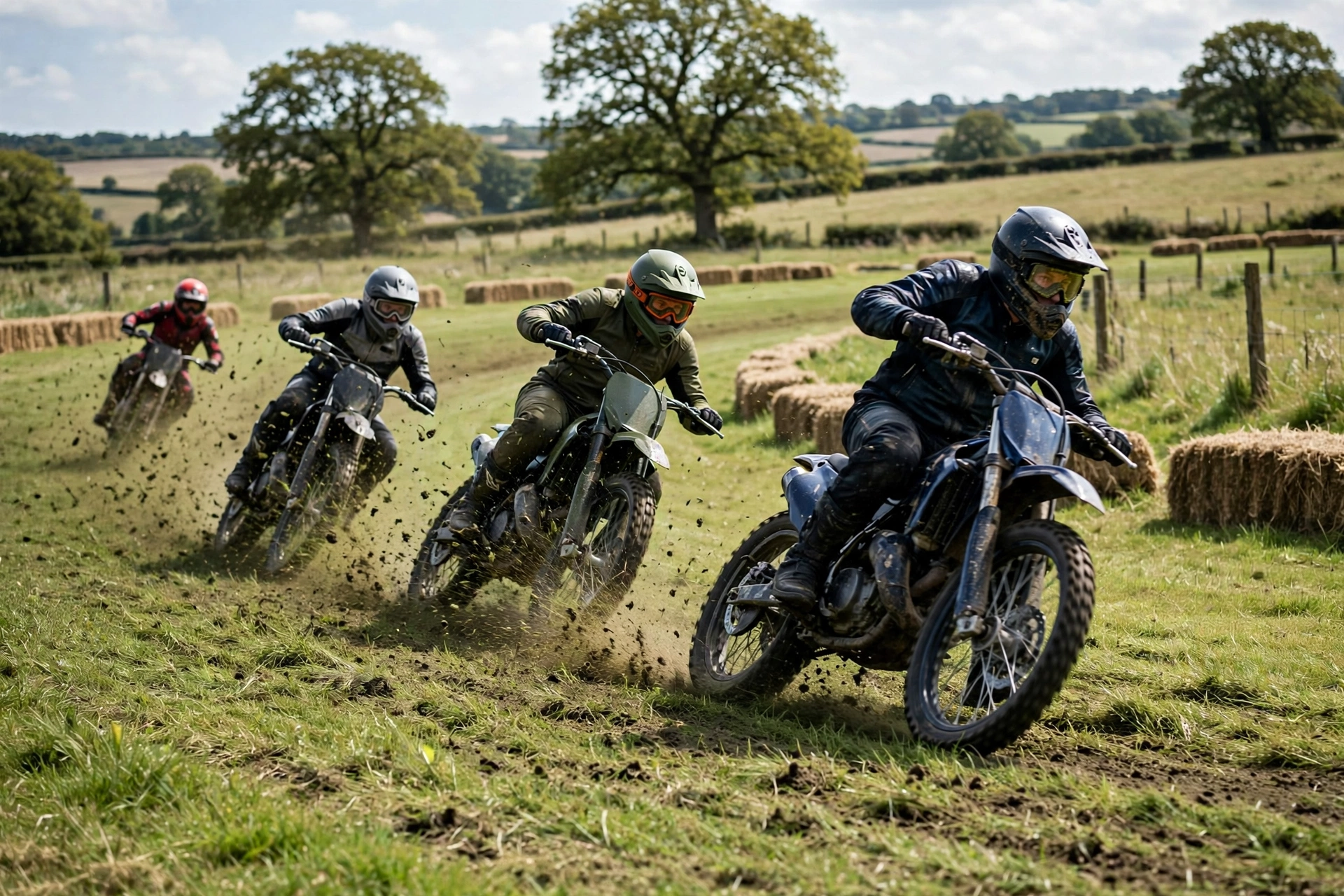
Grass track racing is simple and fast. Riders race brakeless solo motorcycles around a grass oval, usually over four laps, with four riders on the line at a time. The bikes slide through the turns, kicking up dirt and grass, and the racing is close, with riders fighting for the inside line. Because there are no brakes, the rider controls speed with the throttle and the slide, which means the bike is often sideways and the rider’s head is moving a lot. A helmet for this needs to stay firmly in place through slides, bumps, and the occasional fall onto soft ground.
The grass surface adds its own demands. A dry track is dusty, and a wet track throws up mud and grass, so the rider’s eyes need protection. The helmet works with goggles, and the eye port must be wide enough for a clear view of the track and the riders around you. Grass track helmets are light and well ventilated, and built to work with goggles rather than a visor.
How Should a Grass Track Helmet Fit?
Fit is the first thing to get right. The helmet should be snug all round, with even pressure and no loose spots, and it should not move when you shake your head. It should sit low enough to protect your forehead, with the eye port giving you a wide view of the track ahead and to the sides. Try it on with your goggles, because the goggles and the helmet work together: the goggles should seal against the eye port without a gap, and the strap should sit comfortably over the helmet.
Pay attention to how the helmet feels when you move your head. In grass track, you are looking ahead to the next turn, glancing sideways for a rider alongside you, and bracing for the bumps of a rutted surface. The helmet should move with your head, not flop around, and it should not press on your collarbone when you tuck into the riding position. If you are learning about how helmets handle different kinds of impact, reading about what MIPS is for helmets can help you understand one of the technologies used in modern helmet design.
What About Goggles, Dust, and Visibility?
Visibility is the biggest challenge on a grass track. The rider ahead kicks up dust on a dry day and mud on a wet one, and the track itself can throw up grass cuttings and soil. Goggles are essential, and they need to fit the helmet’s eye port well, sealing against it without a gap. A clear lens usually works best, because grass track meetings are often held in daylight and a tinted lens can make a shaded part of the track harder to read. Keep a spare pair of goggles or spare lenses in your kit, because a muddy pair can be swapped in seconds between races.
Tear-off strips are useful on a grass track too. Thin clear layers over the goggle lens can be pulled away one at a time, so a dirty lens can be cleared quickly without taking the goggles off. Whatever system you use, make sure the goggles fit comfortably under the helmet and do not press on your nose or temples. A comfortable, clear view is worth more than any other feature on a grass track.
Why Does Ventilation Matter on a Grass Track?
Grass track meetings are held outdoors, often in warm weather, and the racing is short and intense. Riders work hard in bursts, and they sweat heavily under a helmet and leathers. A helmet with good ventilation helps keep the rider cool and the goggles clear, which matters when you are sliding through a turn at speed and need to see the track ahead. Vents at the front bring in fresh air, and vents at the back let warm air out, with channels inside that move air across the rider’s head.
Ventilation has to work with the dust, not against it. On a dry track, open vents can let dust into the helmet, so some riders close the vents when the track is very dusty and open them when the air is clear. After the meeting, let the helmet air out fully before putting it away, and wash the lining regularly, because sweat and dust build up quickly over a day of racing.
How Do You Look After a Grass Track Helmet?
A grass track helmet gets dirty. It is covered in dust, mud, and grass after every meeting, and it takes knocks in the pits and on the track. After each meeting, clean it properly. Wipe the shell with a soft, damp cloth, and clean the vents so they are not blocked with dirt or grass. Clean the goggles separately, and check the lens for scratches.
Check the helmet for damage before every meeting. Look for cracks in the shell, check the chin strap and its buckle, and make sure the goggle strap is in good condition. If the helmet has been involved in a crash or a heavy impact, it should be replaced, even if it looks fine, because the damage that matters may be inside the shell. Store the helmet in a cool, dry place, away from fuel and chemicals, and keep it in its bag when you are not using it.
Frequently Asked Questions
Q: Can I use a motocross helmet for grass track racing?
A: In general terms, yes. A motocross helmet is a lightweight, full-face off-road helmet with a peak and a large eye port for goggles, which suits grass track well.
Q: Do I need tear-off strips for grass track?
A: They are very useful, though not always required. Tear-offs let you clear a dusty or muddy goggle lens in seconds between races, which keeps your vision sharp when the track is dry and loose.
Q: How do I keep my goggles from fogging on a grass track?
A: Make sure your helmet vents are open so air flows across the lens, and use goggles with an anti-fog lens if you can. Keep the vents clear of mud and grass, and let the goggles air out between races.

Olivia
Writer at Helmet Today, covering helmet reviews, fit and riding safety.