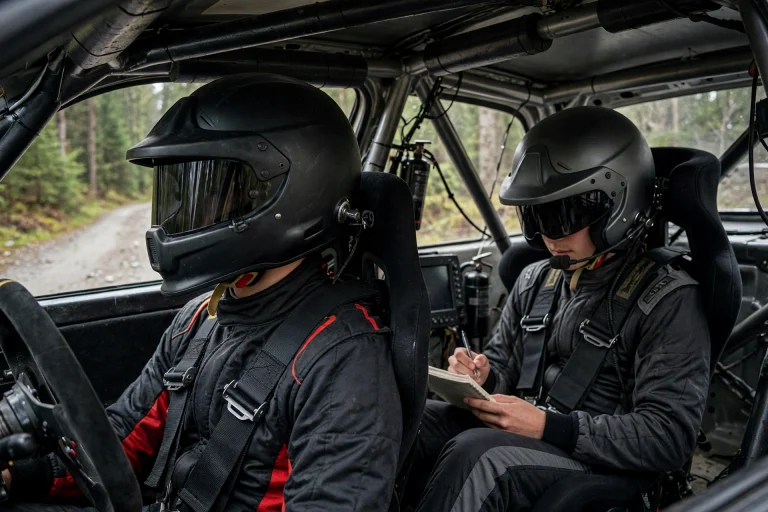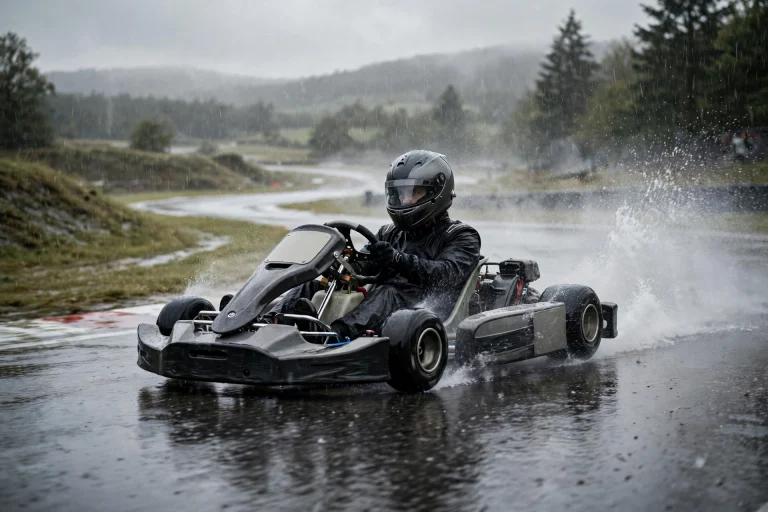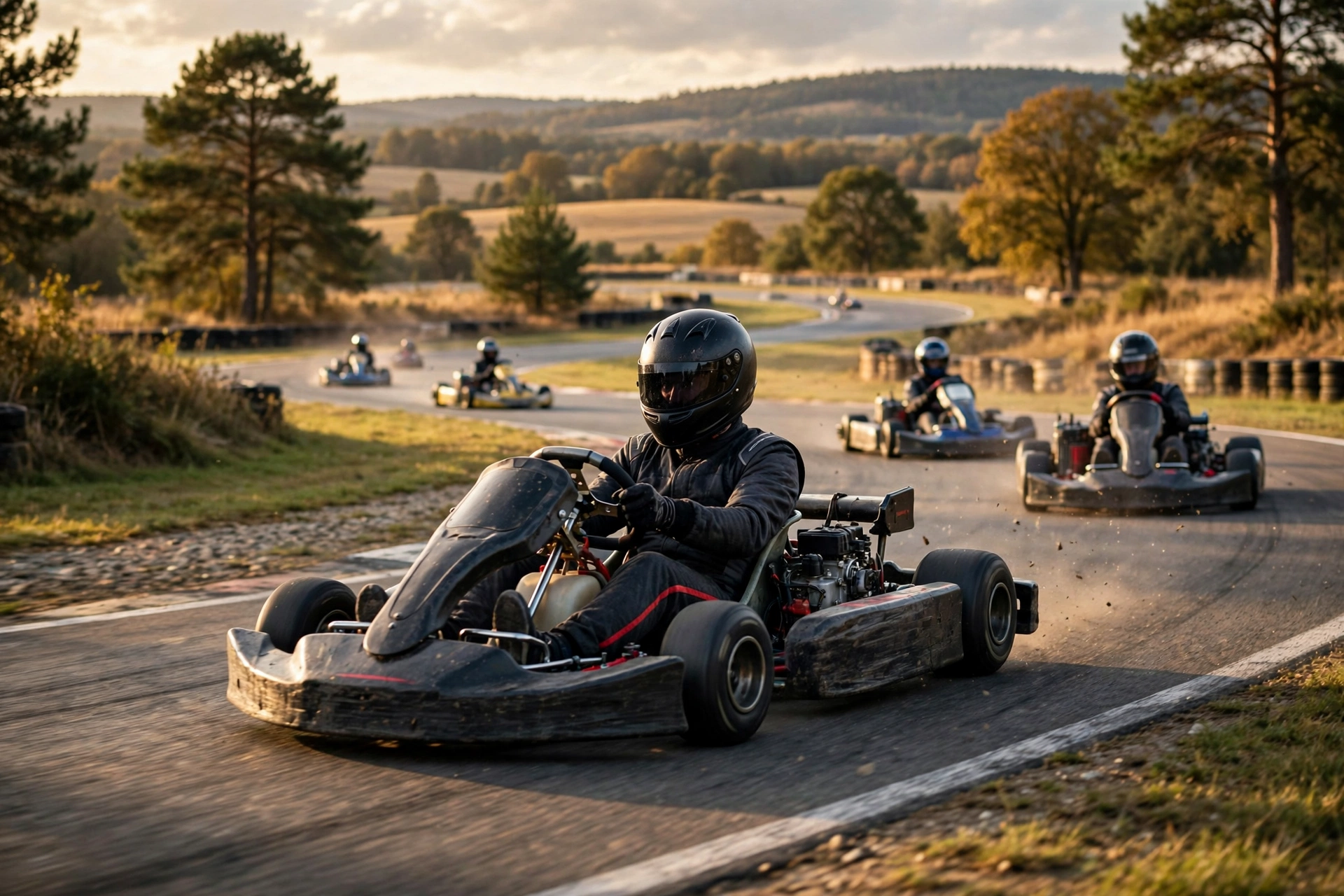
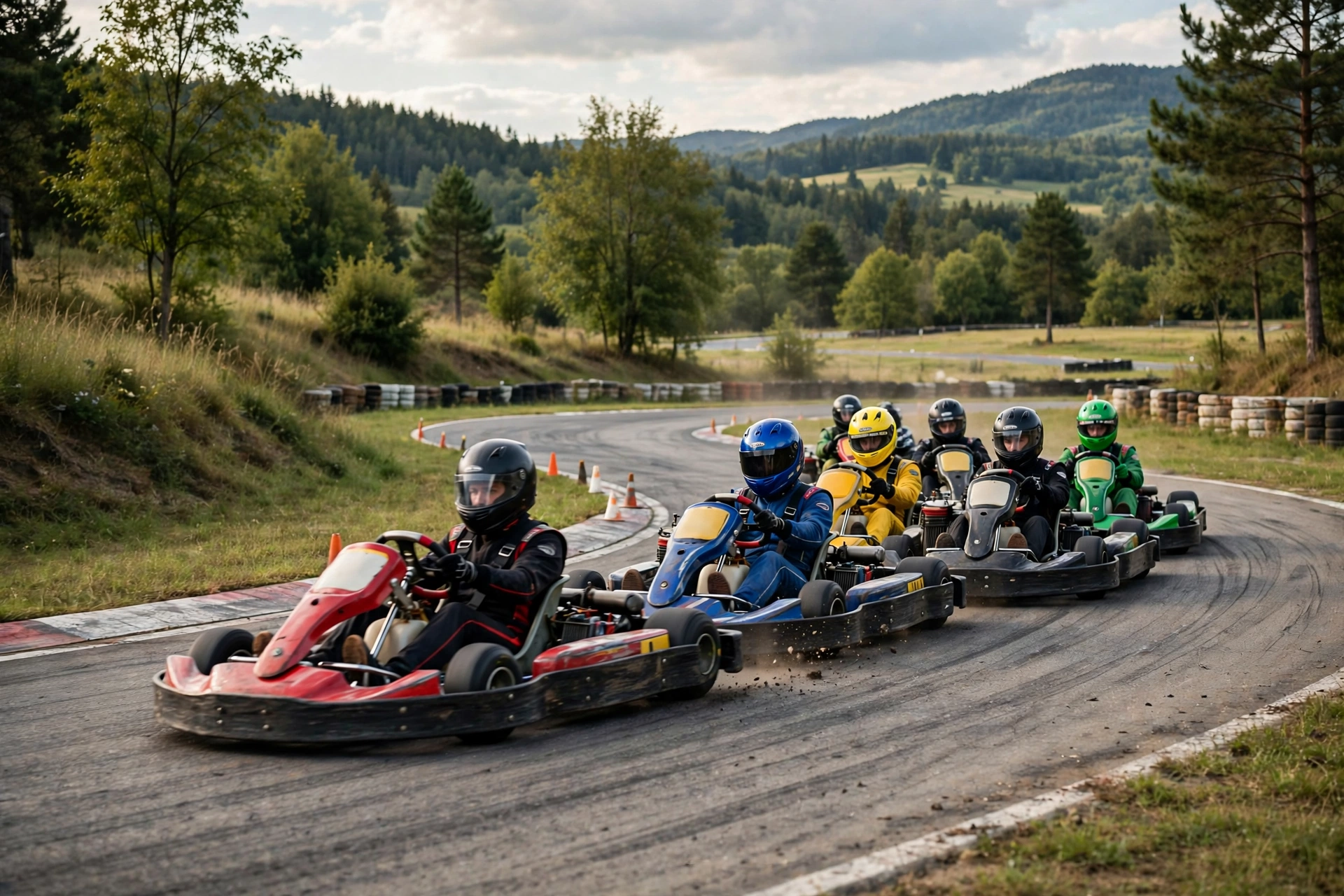
A karting helmet for endurance races is a full-face motorsport helmet built for long stints behind the wheel — a comfortable, well-ventilated helmet that stays secure and clear-headed for an hour or more at a time, while protecting the driver in close, wheel-to-wheel racing. Endurance karting is a team sport: drivers share a kart over a race that can last from an hour to a full day, taking turns in stints and swapping in the pits. Each driver may drive for a long stretch without a break, in a tight cockpit, at full effort, in heat, rain, or cold. In general terms, the helmet for this job needs to be light enough to wear for a long stint, ventilated enough to keep the driver cool, and fitted well enough to stay put through hours of cornering and braking.
This guide explains what an endurance karting helmet is, how it differs from a helmet used in sprint karting, and what to look for when choosing one. It covers fit and comfort over long stints, visors and visibility, ventilation, communication with the team, and how to look after a helmet that is shared between drivers. Whether you are joining your first endurance race or moving up from sprint karting, the right helmet helps you stay sharp for the whole stint.
What Makes Endurance Karting Different from Sprint Karting?
Sprint karting is short: heats of ten or fifteen minutes, with a break between each one. Endurance karting is long. A single stint can last an hour or more, and the race itself can run for many hours, with drivers taking turns. That changes what matters in a helmet. A helmet that feels fine for fifteen minutes can develop a pressure point after an hour, and a visor that mists slightly in a sprint can become a real problem over a long stint. Comfort over time is the main difference.
The racing is different too. Endurance races are about consistency and looking after the kart, not just outright speed. Drivers share the kart, so the helmet may be used by more than one driver, and the team works together on strategy, fuel, and driver changes. It should also work with the team’s radio system, so the driver can hear pit instructions during the race.
How Should an Endurance Karting Helmet Fit?
Fit matters more in endurance racing than in sprint racing, because a small discomfort becomes a big one over an hour. The helmet should be snug all round, with even pressure and no loose spots, and it should not move when you shake your head. It should sit low enough to protect your forehead, with the visor opening giving you a wide view of the track ahead and to the sides. Try it on with your balaclava, because that changes how the helmet sits and how tight it feels.
Wear the helmet for a while before buying, ideally for at least half an hour, because a pressure point that is barely noticeable at first can become painful after a long stint. Pay attention to where the lining presses on your forehead and temples, and to whether the chin bar sits comfortably when you breathe hard. If you are learning about how helmets handle different kinds of impact, reading about what MIPS is for helmets can help you understand one of the technologies used in modern helmet design.
What About Visors and Visibility Over a Long Stint?
Visibility over a long stint is about more than seeing the track. The visor has to stay clear for an hour or more, in changing light and weather, while the driver is sweating. A visor that mists up will cost the driver vision and confidence, and there is no chance to stop and wipe it during a stint. Good ventilation helps keep the visor clear, and some visors have an anti-fog coating or a double layer that reduces misting. Make sure the visor seals well against the shell, because a gap lets in rain and spray.
Visor choice also matters for light. Endurance races often run through the day and into the evening, so the light changes during the race. A clear visor is the safest choice for changing light, and some drivers carry a tinted visor for bright conditions. Tear-off strips are useful in endurance racing too, because they let the driver clear a dirty visor without stopping.
Why Does Ventilation Matter So Much in Endurance Karting?
A karting driver works hard. There is no power steering, the seat is tight, and the driver is braking and turning constantly, so the body heats up quickly. Over a long stint, that heat builds up, and a helmet with poor ventilation will trap it, making the driver hot, tired, and less focused. Good ventilation — vents at the front to bring in fresh air and vents at the back to let warm air out — helps keep the driver cool and alert for the whole stint.
Ventilation also keeps the visor clear. Warm, moist air from the driver’s breath can mist the inside of the visor, especially in cold or wet weather, and good airflow across the visor stops that happening. Some helmets have vents that can be opened or closed, which is handy when the weather changes during a long race. After the race, let the helmet air out fully before putting it away, and wash the lining regularly, because sweat builds up quickly over a long stint.
How Do You Manage Driver Changes and Shared Helmets?
Driver changes are a big part of endurance karting, and the helmet needs to fit into that routine. The driver coming out of the kart hands over to the next driver, and the change has to be quick, because time lost in the pits costs places on the track. If each driver has their own helmet, the radio and any other fittings need to be swapped or set up for each driver, which takes a little longer but gives each driver a better fit.
Sharing a helmet also means sharing sweat, so hygiene matters. A balaclava worn under the helmet helps, and it should be washed between drivers if possible. Some teams keep a spare balaclava for each driver and swap them at each change. Check the helmet between stints: look for damage, check the visor, and make sure the radio is working. A quick check at each driver change is a good habit, and it means any problem is caught before the next driver goes out.
Frequently Asked Questions
Q: Can I use a sprint karting helmet for endurance races?
A: In general terms, yes. A sprint karting helmet is a full-face motorsport helmet, and it will protect you in endurance racing too. The main thing to check is comfort over a long stint — a helmet that is fine for fifteen minutes may press uncomfortably after an hour.
Q: How do I stop my visor fogging during a long stint?
A: Make sure your helmet vents are open so air flows across the visor, and use a visor with an anti-fog coating if you can. A balaclava that directs your breath away from the visor also helps, and keeping the visor clean makes misting less likely.
Q: Should each driver have their own helmet in endurance karting?
A: It is better if each driver has their own helmet, because fit is personal and a helmet that fits well is safer and more comfortable. If you do share, check the fit for each driver and use a fresh balaclava at every change.

Olivia
Writer at Helmet Today, covering helmet reviews, fit and riding safety.