A helmet for a rider with a balance condition is, in general terms, a well-fitting protective helmet that stays stable on the head, is light and comfortable, and is easy to put on and fasten without a struggle. The helmet itself cannot treat or fix a balance condition, and it does not prevent falls. What it can do is provide head protection if a fall does happen, and a helmet that fits securely and feels comfortable is more likely to be worn every time, which is what matters most.
Balance conditions vary a great deal, and so does their effect on riding. Some riders feel unsteady when starting or stopping, others find slow-speed manoeuvres or uneven surfaces difficult, and some notice their balance changes from day to day. Riding a bicycle or a motorcycle with a balance condition takes care, judgement and often advice from a medical professional about whether riding is suitable at all. This guide focuses on the helmet side of the picture: what to look for in fit, stability and comfort, and how to choose and test a helmet, all in general terms and without medical advice.
How Can a Balance Condition Affect Riding?
Balance is involved in almost every part of riding. Starting off, stopping at a junction, turning at low speed, riding over a bump or a patch of loose surface, and even looking over a shoulder all require the rider to stay steady. A rider with a balance condition may find some of these moments harder than other riders do, and may need more time, more space or a different approach to handle them safely.
It is also worth remembering that a helmet can only help after a fall has happened. It does not keep a rider upright, and it does not make a wobble less likely. That is why the helmet is only one part of the picture. Route choice, riding speed, rest, and honest judgement about whether to ride on a given day all matter at least as much, and a medical professional can advise on the wider question of whether riding is suitable.
What Should a Helmet Offer a Rider with a Balance Condition?
Stability is the first thing to look for. A helmet that fits well and stays in place does not shift around when the rider moves their head, and it does not need constant adjustment. This matters for any rider, but it matters more when balance is already a concern, because a helmet that slips over the eyes or slides to one side is a distraction at exactly the wrong moment.
Weight is the second consideration. A lighter helmet puts less strain on the neck and is easier to hold steady, which can help a rider who already works hard to stay balanced. In general terms, helmets made with lighter materials tend to cost more, but even a modest reduction in weight can be noticeable over a long ride. Try lifting a few helmets in the shop and notice how each one feels.
Comfort is the third piece. A helmet that presses, pinches or feels hot is a helmet that distracts the rider, and distraction is unhelpful when balance needs attention. Good ventilation, soft padding and a fit system that can be adjusted easily all help here. The chin strap should be easy to fasten and should sit comfortably without needing to be pulled very tight. If you are learning about how helmets handle different kinds of impact, reading about what MIPS is for helmets can help you understand one of the technologies used in modern helmet design.
Why Does Fit Matter Even More Here?
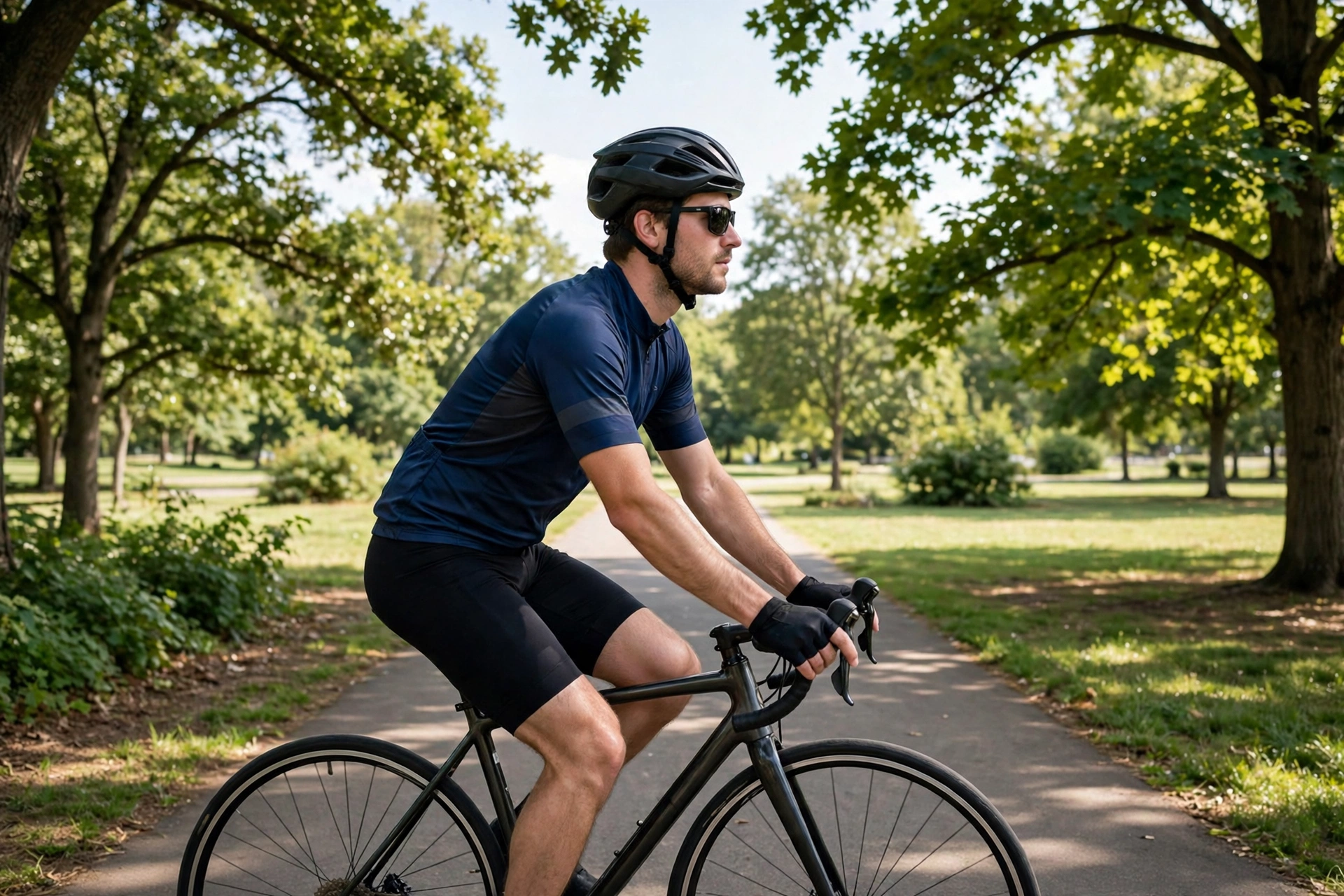
Fit is the foundation of everything a helmet does. A helmet that fits properly sits level on the head, covers the forehead without slipping down over the eyes, and feels snug all the way around without pressing painfully in any one spot. The inner padding should touch the head evenly, and when the helmet is shaken gently from side to side, it should move the skin of the forehead with it rather than sliding freely over the head.
For a rider with a balance condition, a poor fit is more than an annoyance. A helmet that is too loose will shift when the rider looks around or leans, and that movement can be distracting or even unsettling. A helmet that is too tight will cause discomfort that builds over the ride, and discomfort is a distraction too. Taking time over fit, and trying several sizes and shapes, is time well spent.
What Else Can Support Safer Riding?
The helmet is only one part of staying safe, and the other parts deserve just as much attention. Choosing routes that suit the rider matters a great deal: flat, smooth, quiet roads or paths with few junctions are easier than busy, hilly or uneven ones. Riding at a comfortable speed, leaving extra space, and avoiding riding when tired or unwell all help too.
Some riders find that a different kind of cycle suits them better. A tricycle, a recumbent cycle or a cycle with a lower centre of gravity can be more stable than a standard two-wheeled bicycle, and these are worth considering for riders whose balance condition makes two wheels difficult. This is a personal choice, and it is worth trying different options before deciding.
How Should a Rider Choose and Test a Helmet?
The best test is a slow, honest one in the shop. Put the helmet on and take it off several times, exactly as you would before and after a ride. Fasten and unfasten the buckle, adjust the fit dial, and slide the straps. If any step feels like a struggle in the shop, it will feel like a struggle at home too, so do not assume it will get easier with practice.
Wear the helmet for several minutes in the shop as well, to check for pressure points and to see whether it stays comfortable when you move your head. Walk around in it, look over both shoulders, and tilt your head forward and back. The helmet should stay in place through all of this, without needing to be pushed back into position.
- Check the helmet sits level and covers the forehead without slipping.
- Shake your head gently to make sure the helmet stays in place.
- Fasten the buckle and confirm the strap is snug but comfortable.
- Turn the fit dial and check it holds its setting.
- Wear it for five minutes to check for pressure or discomfort.
If a helmet passes all of these tests, it is a good candidate. If it fails one, try a different size or a different model. A good shop will be happy to help you compare, and the time spent testing is time well spent.
Frequently Asked Questions
Q: Can a helmet help with a balance condition?
A: In general terms, a helmet cannot treat a balance condition or prevent a fall. It provides head protection if a fall does happen, and a well-fitting, comfortable helmet is more likely to be worn every time, which is what matters most.
Q: Should someone with a balance condition ride at all?
A: That is a question for a medical professional, not for a helmet guide. Balance conditions vary a great deal, and only a clinician who knows the rider’s situation can advise on whether riding is suitable and what precautions make sense.
Q: What is the most important thing when choosing a helmet with a balance condition?
A: Fit and stability come first: a helmet that sits level, stays in place and feels comfortable without distracting the rider. Light weight and an easy-to-use buckle are useful extras, but a good fit is the foundation.

Olivia
Writer at Helmet Today, covering helmet reviews, fit and riding safety.