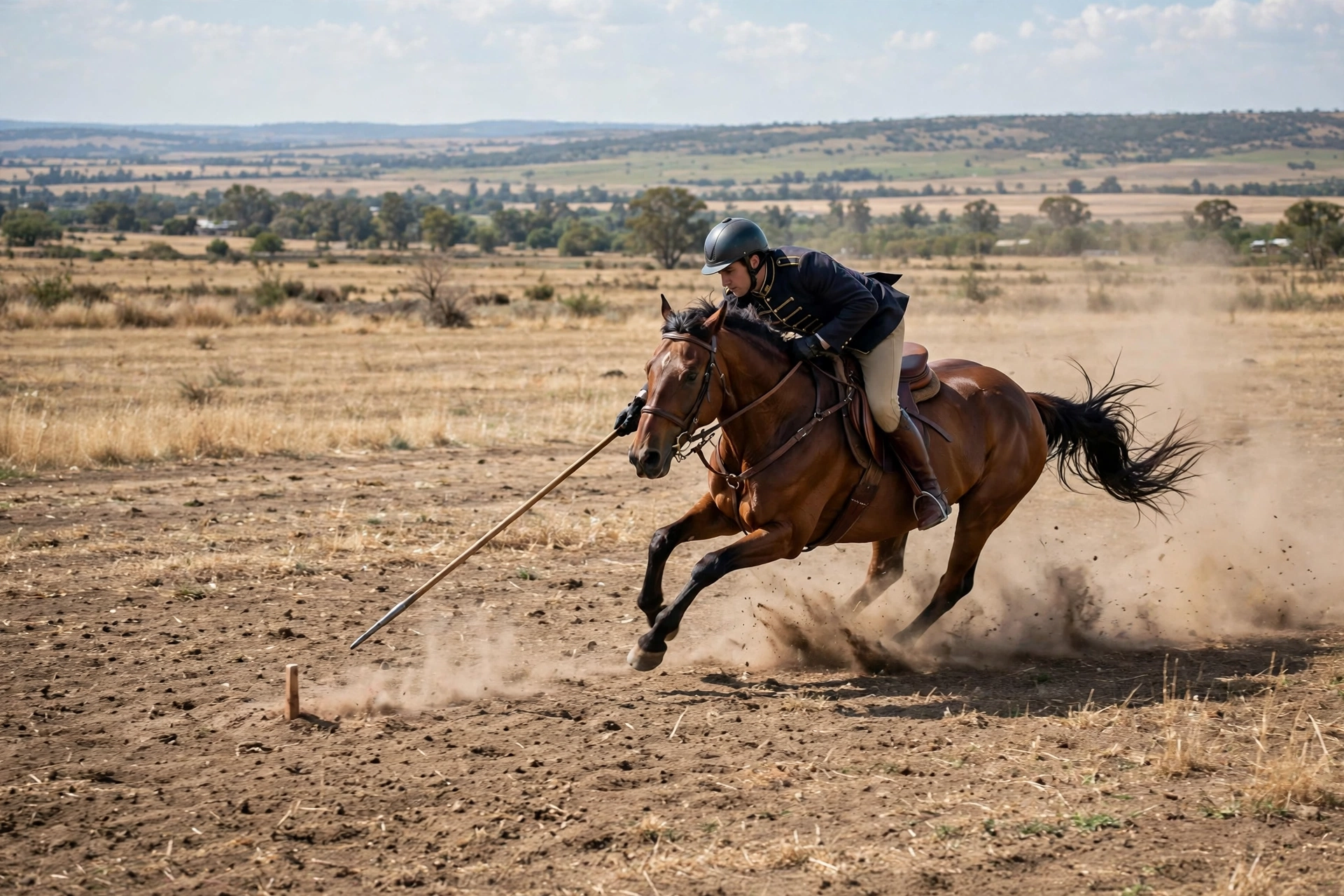
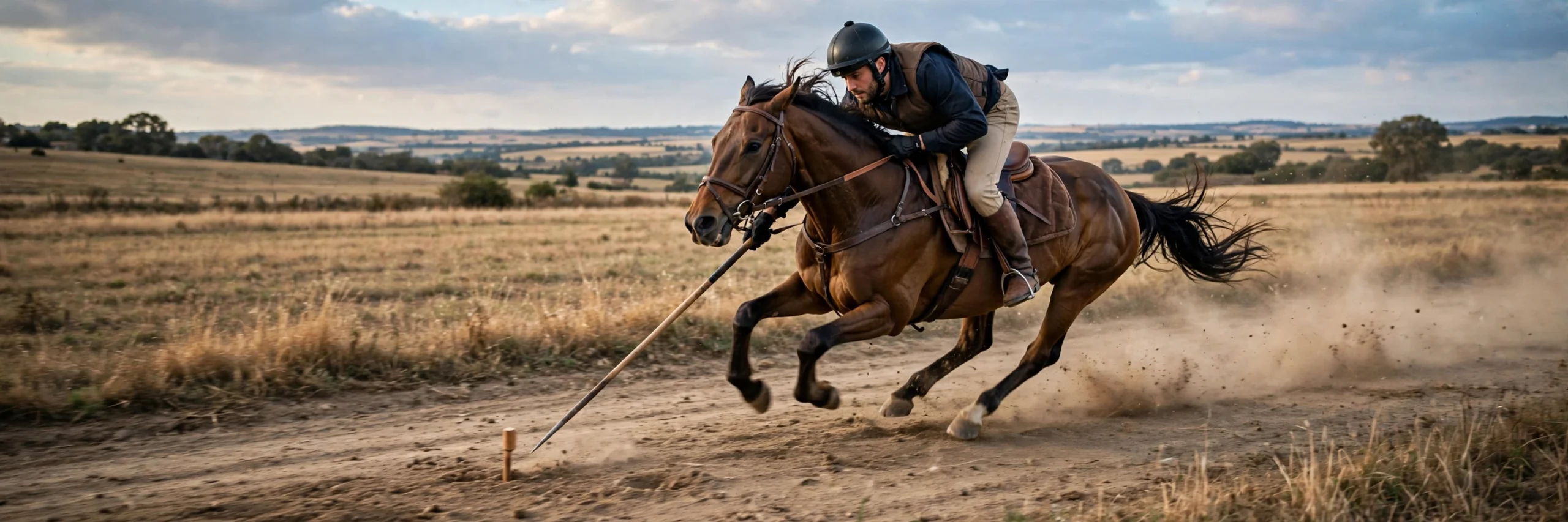
Tent pegging is a fast equestrian sport in which a rider gallops past a row of small pegs set in the ground and tries to pick them up with a lance or slash them with a sword, and a tent pegging helmet is a riding helmet worn to protect the rider’s head during that high-speed, leaning-down riding. It is a traditional cavalry sport, still popular in many countries, and it demands balance, timing, and courage — the rider leans low out of the saddle at full gallop while holding a long weapon, which makes a fall a real possibility.
Because the rider’s head comes close to the ground and to the horse’s neck at speed, head protection matters a great deal in tent pegging. A good helmet should stay firmly in place through the gallop and the lean, feel comfortable enough to wear through a whole competition, and meet the safety expectations of the event organisers. This guide explains what tent pegging involves, what to look for in a helmet, and how to wear and care for it.
What Is Tent Pegging and How Is It Ridden?
Tent pegging takes its name from the old cavalry exercise of pulling up enemy tent pegs on horseback. In the modern sport, riders gallop down a marked track, usually around a hundred metres long, and use a lance to pick up a small wooden peg from the ground, or a sword to cut through a target such as a lemon or a ring. There are team events too, where several riders run the course one after another and the scores are added together.
The riding itself is demanding. The horse must gallop straight and steady while the rider leans down and to one side, reaching towards the ground with the lance. That lean shifts the rider’s weight and balance, and if the horse stumbles, swerves, or the lance catches in the ground, the rider can be thrown. Speeds are high, the ground is often hard, and the rider’s head is low — all of which make a well-fitted helmet an important piece of kit.
Tent pegging is governed in many countries by national federations, and competitions usually have rules about dress and equipment. Riders often wear a uniform or team colours, and helmets are normally required. In general terms, the helmet used for tent pegging is a standard equestrian riding helmet rather than a special design, but it needs to suit the demands of galloping and leaning at speed.
What Should a Tent Pegging Helmet Do?
A tent pegging helmet has one main job: to protect the rider’s head if they fall or are struck. The shell spreads the force of an impact, and the liner inside absorbs some of it, reducing the force that reaches the head. That protection only works if the helmet fits properly and stays in place, so fit is the first thing to get right.
Ventilation matters too, since tent pegging is usually an outdoor sport in warm weather and riders gallop hard. A helmet with good airflow helps keep the rider cool and comfortable, which helps them concentrate on the peg rather than on a hot, sweaty head. Look for vents that let air in at the front and out at the back, and a removable, washable lining that can be cleaned after a dusty day on the track.
How Do You Choose the Right Helmet for Tent Pegging?
Start by checking what your competition or federation requires. Some events ask for helmets that meet a particular safety standard, so check the rules before you buy. A helmet that meets a recognised equestrian safety standard has been tested for the kinds of impacts riders face, and that testing is worth having.
Think about the lance and the lean as well. A helmet with a low profile and a smooth shell is less likely to catch on anything, and a peak that is not too long will not block your view when you lean down to the peg. A fixed peak is common on riding helmets, and it helps keep sun out of the eyes on a bright day. If you are learning about how helmets handle different kinds of impact, reading about what MIPS is for helmets can help you understand one of the technologies used in modern helmet design.
How Should You Wear and Adjust the Helmet?
Put the helmet on so that it sits level, not tilted back or pulled down over the forehead. The front edge should sit about two fingers above the eyebrows, and the helmet should feel snug all the way around without pressing hard in one spot. If it rocks when you shake your head, it is too loose or the wrong shape for your head.
Adjust the harness so the straps form a neat V under each ear, and fasten the chin strap so you can fit two fingers between the strap and your chin. The strap should hold the helmet firmly: if you open your mouth wide, you should feel the helmet pull down slightly. That is a good sign that the strap is doing its job.
Before each run, give the helmet a quick check. Make sure the strap is fastened, the peak is secure, and nothing is loose. During a competition, it is easy to rush between runs, but a few seconds spent checking the helmet is time well spent. If the helmet has been dropped hard or involved in a fall, it should be checked carefully and replaced if there is any doubt about its condition.
How Do You Look After a Tent Pegging Helmet?
After a day on the track, brush off dust and dirt and wipe the shell with a damp cloth. Sweat and dust build up inside the lining, so remove it if you can and wash it according to the maker’s instructions, or wipe it down and let it air dry. Never dry a helmet on a radiator or in a hot car, since heat can damage the shell and the liner.
It is also worth keeping a note of when you bought the helmet. Helmets age over time, and makers give guidance on how long a helmet should be used for. If your helmet is old, or if it no longer fits well, replace it rather than hoping it will still protect you. A helmet that fits badly or is past its best is not a bargain, however little it cost.
Frequently Asked Questions
Q: Do I need a special helmet for tent pegging, or will any riding helmet do?
A: In general terms, a standard equestrian riding helmet that meets a recognised safety standard is suitable for tent pegging. The key is a secure, comfortable fit that stays in place at a gallop, so try helmets on and check your event’s rules before you buy.
Q: Why does the helmet need to stay in place so firmly in tent pegging?
A: Because the rider leans low out of the saddle at full gallop to reach the peg, a loose helmet can slip over the eyes or fall off at the worst moment. A snug fit and a fastened chin strap keep the helmet where it belongs.
Q: Should I replace my helmet after a fall in tent pegging?
A: Yes, in general terms. A helmet that has taken a heavy impact may have hidden damage even if the shell looks fine. Replace it after a serious fall or a hard knock, and check it carefully after any incident.

Olivia
Writer at Helmet Today, covering helmet reviews, fit and riding safety.