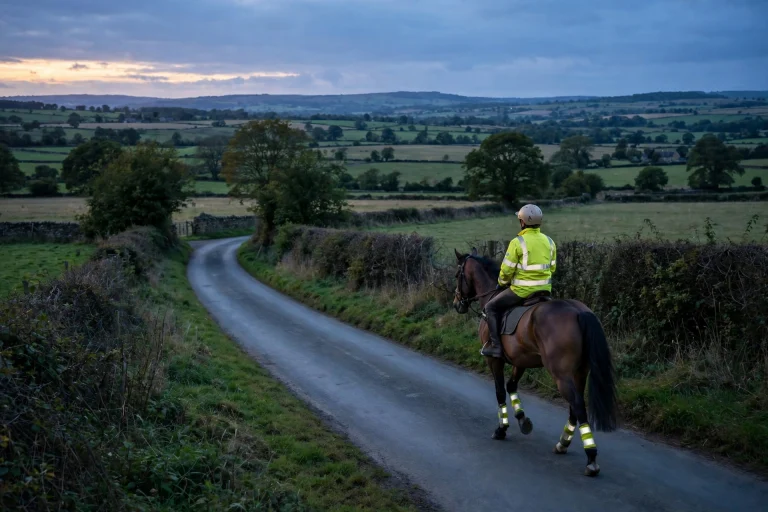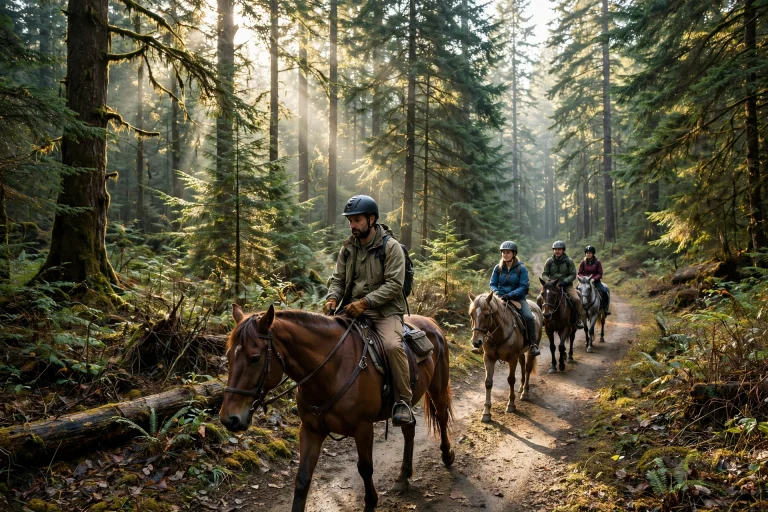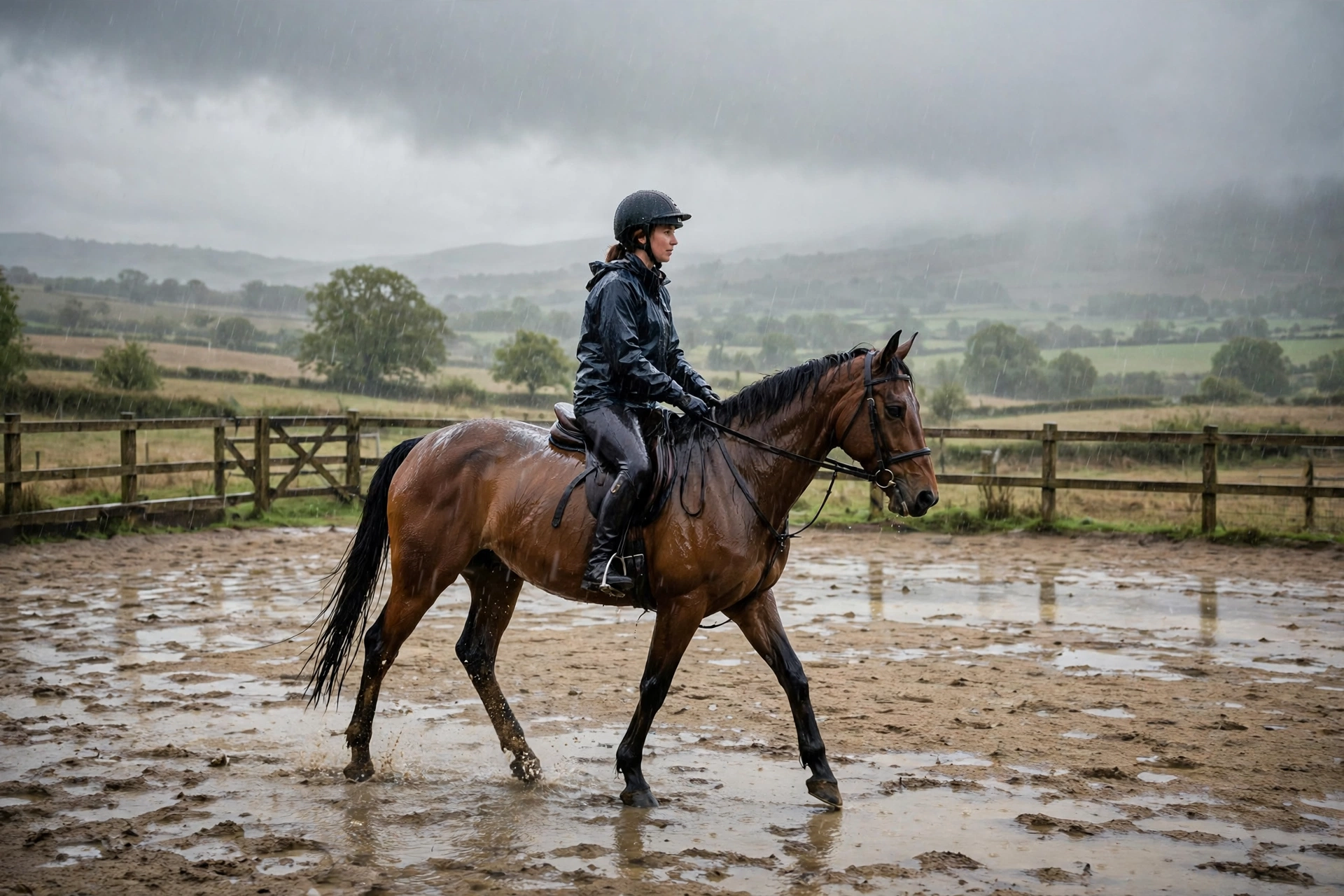
Riding a horse in the rain is a normal part of horse riding, and a helmet for riding in the rain on horseback is, in general terms, a standard riding helmet that fits well and stays secure when wet — ideally with a good peak to keep rain out of the eyes, and worn with waterproof clothing so the rider stays warm and comfortable. The helmet itself does not change much in the rain, but wet conditions affect grip, balance, and visibility, and those are the things a rider needs to think about.
Rain changes the way a ride feels. The saddle and reins become slippery, the ground becomes softer and more treacherous, and rain on the face makes it harder to see. Horses can also behave differently in rain: some are unbothered, while others become tense or rush to get home. A good helmet, properly fastened, is the rider’s protection if a slip or a shy leads to a fall. This guide explains how rain affects riding, what to look for in a helmet and clothing, and how to ride safely in wet weather.
How Does Rain Change Riding?
Wet ground is the first thing to think about. Grass becomes slippery, mud gets deeper, and paths that were firm in dry weather can turn boggy. A horse is more likely to slip or stumble on wet grass or a muddy slope, and a slip at speed can easily unseat a rider. Riding more slowly and avoiding steep or very muddy ground reduces that risk.
Rain also affects the rider’s grip. Wet reins are harder to hold, wet gloves slip, and a wet saddle can make the rider slide around. A rider who is sliding in the saddle is less secure and more likely to lose balance if the horse moves suddenly. Keeping the reins short enough to stay in contact, and using gloves with a good grip, helps a great deal.
Visibility is the third change. Rain on the face and on glasses makes it harder to see, and a rider who cannot see the path ahead cannot react to hazards in time. A helmet peak helps here, shielding the eyes from the worst of the rain. In heavy rain, it may be better to ride in an arena or a covered school than out on the trails.
What Should a Rain Riding Helmet Do?
A helmet for riding in the rain needs to do the same job as any riding helmet: protect the head in a fall, fit snugly, sit level, and stay in place with a fastened chin strap. Rain does not change those basics, but it does add a few practical points worth checking.
The third point is the shell itself. Most riding helmets are made from materials that cope well with rain, but it is worth checking the shell and the vents after a wet ride for dirt or grit that may have washed in. A quick wipe with a damp cloth keeps the helmet clean and lets you spot any damage more easily.
What Clothing Should You Wear for Riding in the Rain?
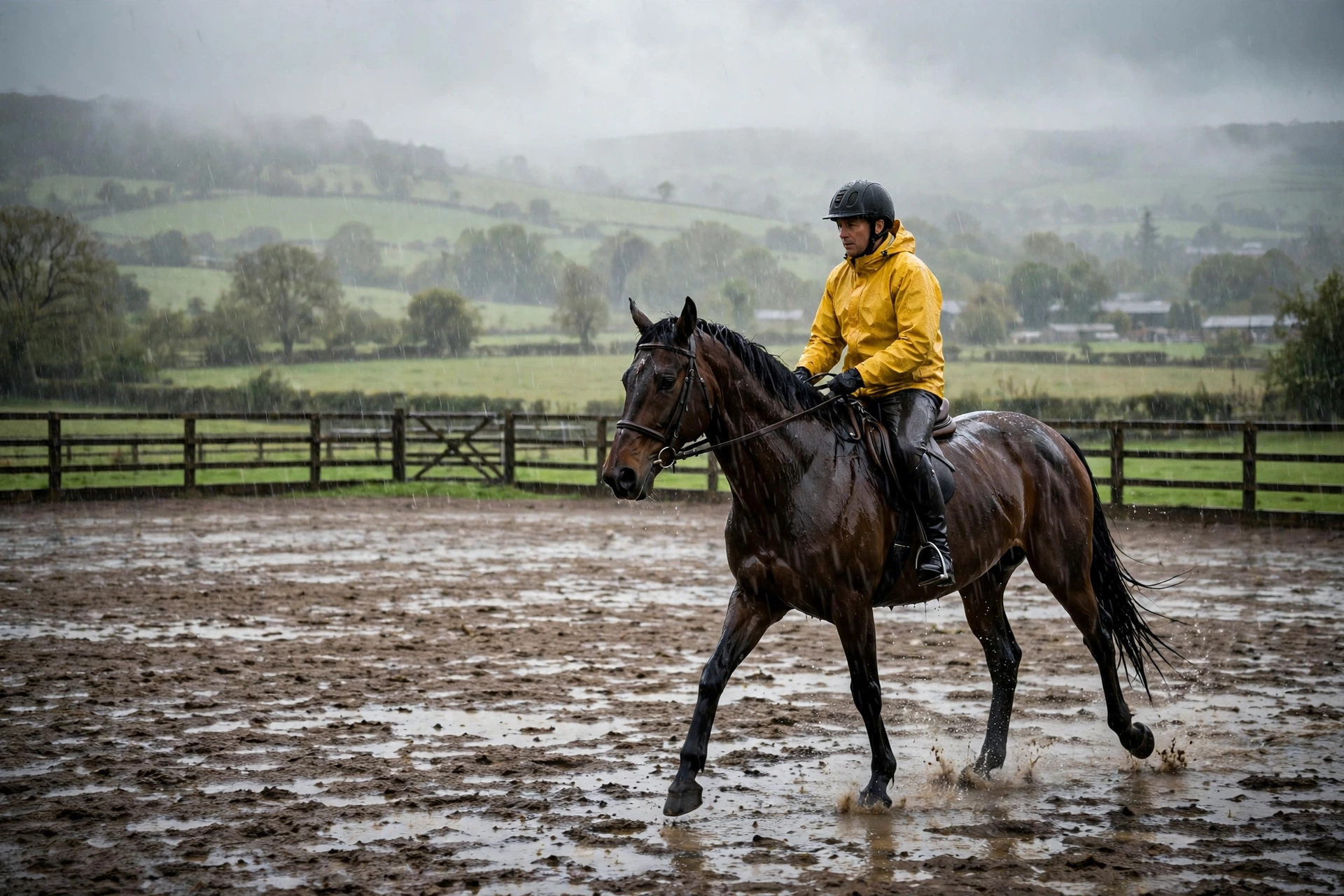
Waterproof clothing makes a big difference on a wet ride. A waterproof jacket with a hood that fits over the helmet, or a jacket with a high collar, keeps rain off the neck and shoulders. Waterproof over-trousers or chaps keep the legs dry, and waterproof gloves keep the hands warm and improve grip on wet reins.
Staying warm matters as much as staying dry. A rider who is cold and wet becomes stiff, and a stiff rider is less able to move with the horse and stay in balance. Layers under the waterproof jacket trap warmth, and a thin thermal layer is often enough on a cool, wet day. Avoid heavy, waterlogged clothing, which restricts movement and adds weight.
Boots need attention too. Wet stirrups and wet boot soles can slip, so check that your boots have a good tread and that the stirrup treads are clean and grippy. A boot with a small heel stops the foot from sliding too far through the stirrup, which is especially important when everything is wet.
How Do You Ride Safely in the Rain?
Slow down. That is the simplest and most important rule for riding in the rain. Walk and trot rather than cantering or galloping, avoid sharp turns on wet grass, and give the horse time to pick its way over slippery ground. A horse that is allowed to go at its own pace on wet ground is far less likely to slip than one that is pushed.
Choose your route with care. Stick to paths you know, avoid steep muddy slopes, and stay off roads where standing water hides potholes. If lightning starts, stop riding at once and get off the horse, since a rider on horseback is exposed in a storm. In general terms, light rain is fine to ride in, but heavy rain, thunder, and lightning are reasons to stop.
Keep your position balanced and your hands soft. A rider who grips hard with the legs or pulls on the reins makes the horse tense, and a tense horse is more likely to slip or shy. Sit deep, keep your weight centred, and let the horse move underneath you. If the horse feels nervous in the rain, a calm, steady rider helps it settle.
How Do You Look After a Helmet After a Wet Ride?
After a ride in the rain, wipe the shell with a clean, damp cloth to remove mud and grit, and leave the helmet to air dry in a ventilated place. Remove the lining if you can and dry it separately, or at least pull it out so air can reach it. Never dry a helmet on a radiator or with a hairdryer, since heat can damage the shell and the liner inside.
Check the straps and buckle once the helmet is dry. Wet straps can stretch, and a buckle that has been in mud may need a rinse to work smoothly. If the helmet has taken a knock during a wet ride, check the shell carefully for cracks and dents — wet conditions can hide damage, so look in good light.
Store the helmet somewhere cool and dry, away from damp tack rooms if possible. A helmet that is stored wet can develop a smell and the lining can degrade, so it is worth taking a few minutes to dry it properly after every wet ride. If you want to understand how helmets handle different kinds of impact, reading about what MIPS is for helmets can help you learn about one of the technologies used in modern helmet design.
Frequently Asked Questions
Q: Can I ride a horse in the rain?
A: Yes, in general terms light rain is fine to ride in, provided you slow down, choose a safe route, and wear waterproof clothing. Avoid heavy rain, thunder, and lightning, and avoid steep, muddy ground where the horse may slip.
Q: Does rain damage a riding helmet?
A: Rain itself does not damage most riding helmets, but a helmet should be dried properly after a wet ride. Air dry it away from direct heat, clean the shell, and check the straps and lining before the next ride.
Q: What is the most important thing about a helmet for riding in the rain?
A: A good fit and a fastened chin strap matter most, as with any riding helmet, plus a peak that keeps rain out of your eyes so you can see the path ahead. Waterproof clothing and slower riding complete the picture.

Olivia
Writer at Helmet Today, covering helmet reviews, fit and riding safety.