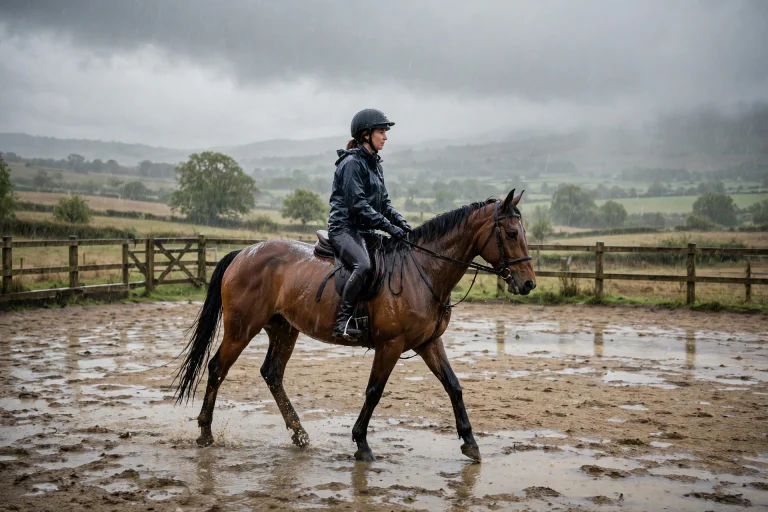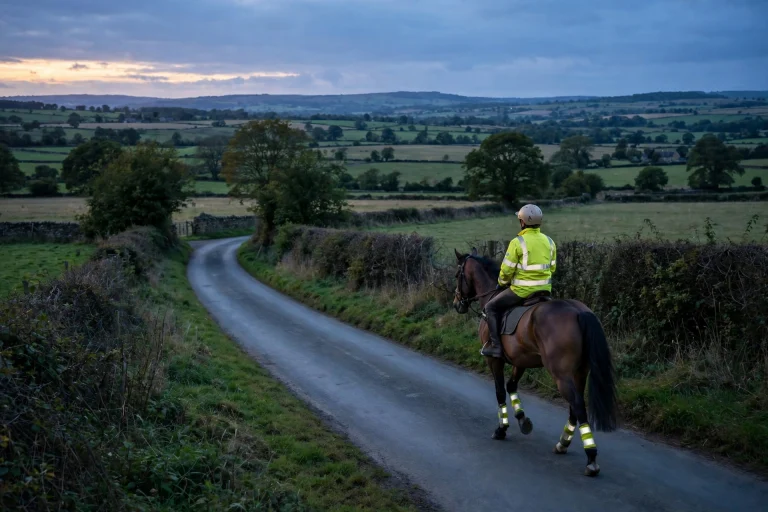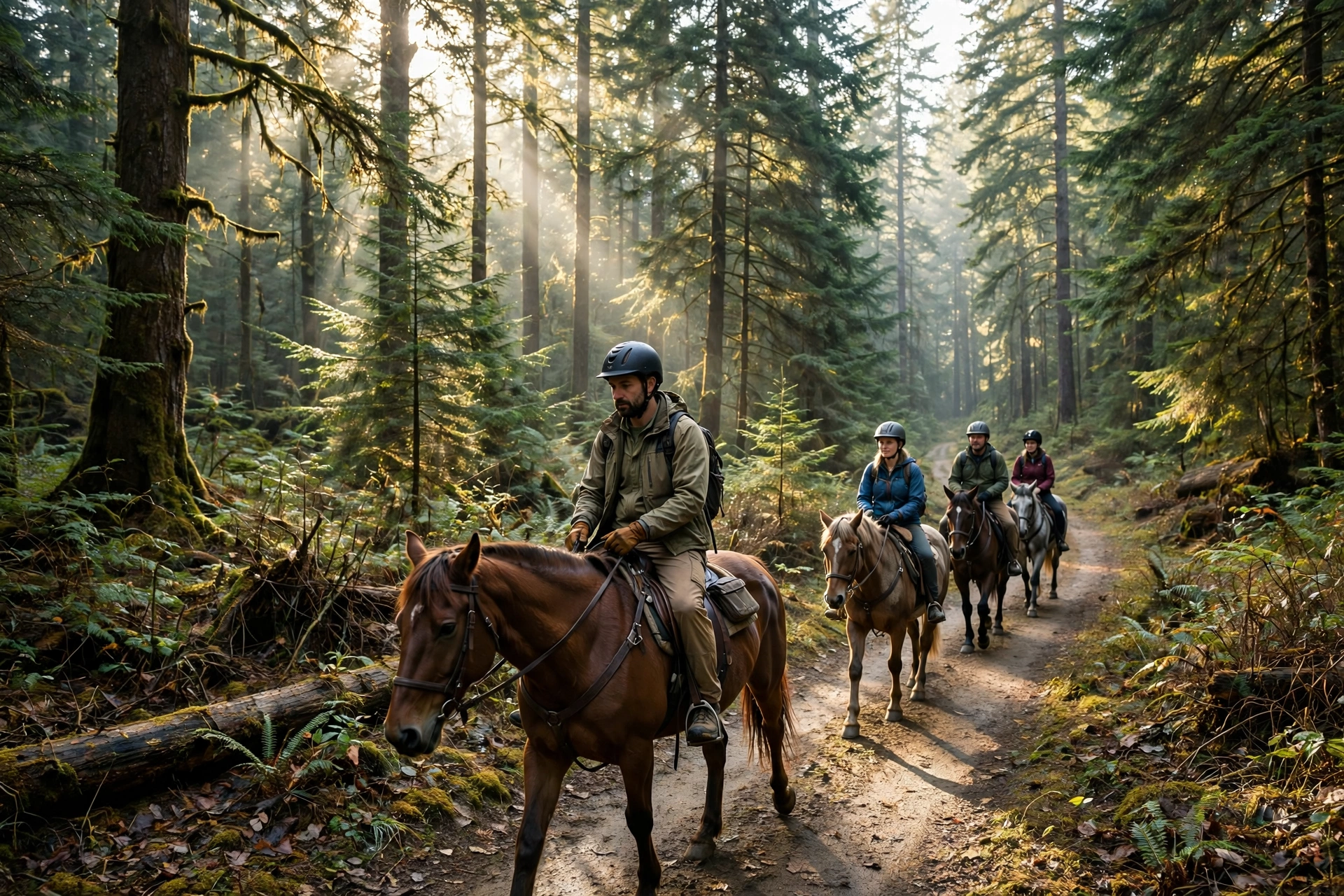
A horseback tour guide helmet is a riding helmet worn by the guide who leads a group of riders on a trail ride, and in general terms it needs to be a well-fitted, comfortable helmet that stays secure for hours on the trail while the guide rides ahead, watches the group, and deals with whatever the trail brings. The guide’s helmet protects the guide’s own head, and it also sets the example: when the guide wears a helmet properly, the whole group is more likely to do the same.
Trail rides take riders out of the arena and into open country — along forest paths, across fields, up hills, and sometimes through water. Horses can trip on roots, shy at wildlife, or slip on wet ground, and the guide is often riding ahead on unfamiliar or changing terrain. A helmet that fits well and can be worn comfortably for a long ride is essential. This guide explains what a tour guide’s helmet needs to do, how to choose one, and how to wear it on the trail.
What Does a Horseback Tour Guide Do?
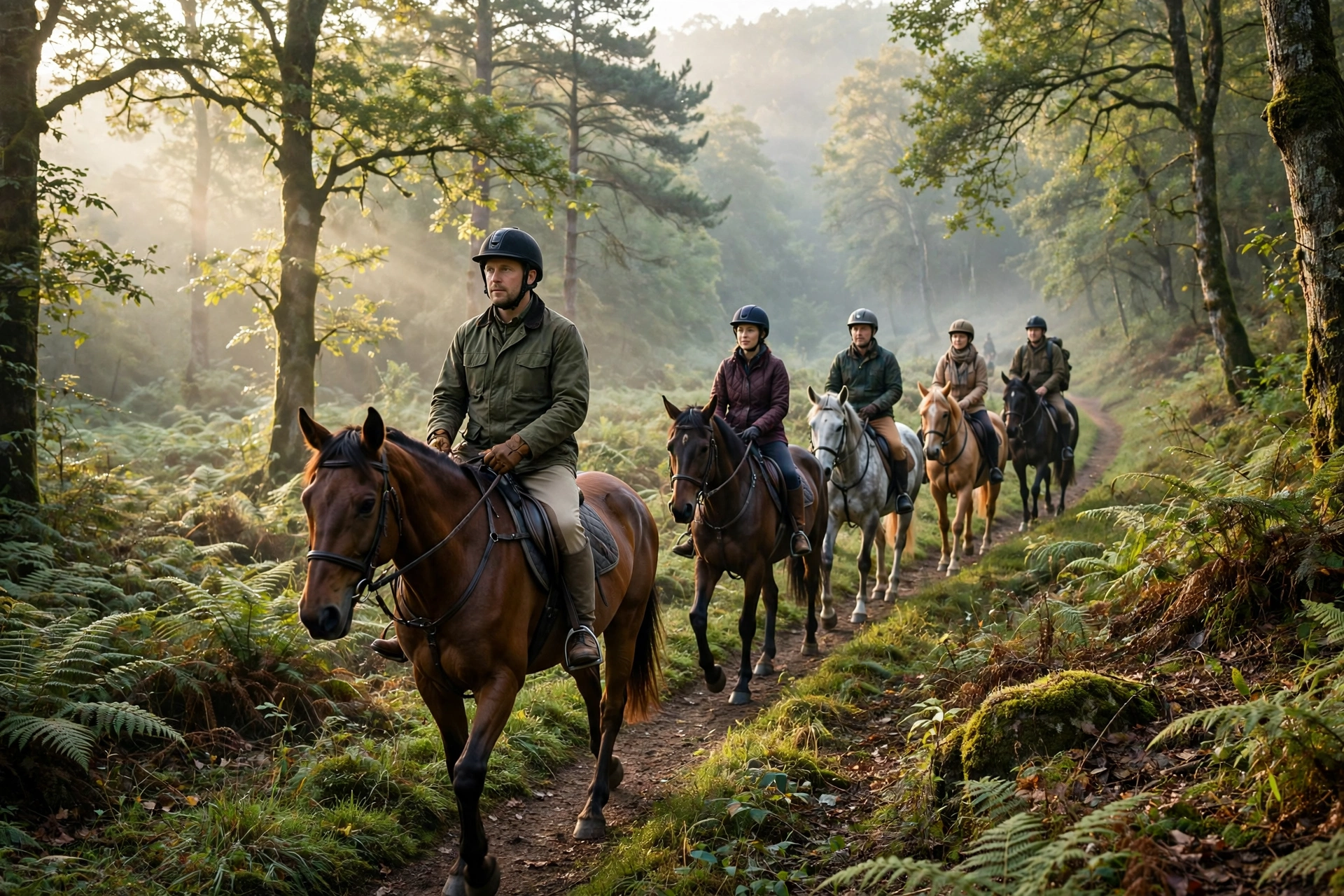
A horseback tour guide leads a group of riders, often a mix of beginners and more experienced riders, along a planned route. The guide rides at the front, sets the pace, chooses the path, and keeps an eye on the riders behind. They also look after the horses, check the tack, and handle any problems that come up on the trail, from a loose girth to a rider who is nervous or tired.
Guides need to be good riders and good communicators. They explain the route before setting off, give clear instructions about speed and spacing, and watch for riders who are struggling. They also need to read the terrain: a muddy slope, a low branch, or a narrow bridge can all be hazards, and the guide’s job is to spot them early and steer the group around them safely.
Because the guide is responsible for the group, their own safety matters even more than usual. A guide who is injured cannot help the group, so wearing a good helmet is part of doing the job properly. Many tour companies require guides to wear helmets, and many also provide helmets for their guests.
Why Does a Tour Guide Need a Different Kind of Helmet?
A tour guide’s helmet is not a special design, but the demands on it are different from those on an arena helmet. A guide may wear it for several hours at a time, in sun, wind, and rain, while riding, talking, and watching the group. Comfort over a long ride matters a great deal: a helmet that pinches or overheats will be a distraction, and a distracted guide is a less safe guide.
Ventilation is one of the most important features for a trail helmet. Riding for hours in warm weather builds up heat, and a helmet with good airflow keeps the guide cool and comfortable. A removable, washable lining is also useful, since the helmet will get sweaty on long rides and needs regular cleaning.
How Do You Choose a Helmet for Guiding Trail Rides?
Start with the safety standard. Choose a helmet that meets a recognised equestrian standard, and check whether your employer or tour company has any requirements. A helmet that has been tested to a standard gives a solid baseline of protection, and that matters when you are responsible for a group.
Fit is next, and it is worth taking time over. Try helmets on in person, wear one for a while, and check for pressure points. The helmet should sit level, about two fingers above the eyebrows, and feel snug all the way around. Since you will wear it for hours, comfort is not a luxury — it is part of the helmet doing its job.
Think about the conditions you ride in. If you guide in a hot climate, ventilation matters most. If you ride in rain, a helmet with a good peak and a cover helps. If you ride in cold weather, check that the helmet fits over a thin liner or hat. Some guides also like a helmet with a slightly wider peak for sun protection. If you are interested in how helmets handle different kinds of impact, reading about what MIPS is for helmets can help you understand one of the technologies used in modern helmet design.
How Should a Guide Wear a Helmet on the Trail?
Put the helmet on level, with the front edge about two fingers above the eyebrows, and fasten the chin strap so two fingers fit between the strap and the chin. The straps should form a neat V under each ear. Give the helmet a shake test before you set off: if it rocks or slides, adjust it before the group moves.
Check the helmet before every ride, just as you check the horses and the tack. Look for cracks, worn straps, and a buckle that works smoothly. If the helmet has taken a knock, take it out of service and check it carefully. A guide’s helmet gets more use than most, so it may need replacing sooner than a helmet worn once a week.
Wear the helmet for the whole ride, from the moment you mount to the moment you dismount. It is tempting to take it off during a rest stop, and that is fine on the ground, but put it back on before mounting again. Many accidents happen during mounting and dismounting, when the horse may move unexpectedly.
How Does a Guide’s Helmet Set an Example?
Guests on a trail ride watch the guide, and they copy what the guide does. If the guide wears a helmet properly, guests are more likely to wear theirs properly too. If the guide rides without a helmet, or with the strap undone, guests may think helmets do not matter. A guide who takes helmet safety seriously helps the whole group take it seriously.
That example extends to the briefing before the ride. A good guide checks every rider’s helmet fit before setting off, shows beginners how to fasten the strap, and explains why helmets are worn. A few minutes spent on that check at the start can prevent problems later on the trail, and it shows guests that safety is part of the experience, not an afterthought.
It also helps to carry a spare helmet or two on the ride, if that is practical. A guest’s helmet may break a strap or fit badly, and having a spare means nobody has to ride without one. Some tour companies keep spares at the yard rather than on the trail, but either way, planning for a helmet problem is part of planning a safe ride.
Frequently Asked Questions
Q: Does a horseback tour guide have to wear a helmet?
A: In general terms, most tour companies require guides to wear helmets, and many local rules expect it too. Even where it is not required, a guide should wear one — it protects the guide and sets the right example for the group.
Q: What matters most in a helmet for long trail rides?
A: Comfort and ventilation matter most for long rides, along with a secure fit and a reliable chin strap. The helmet should meet a recognised safety standard, sit level, and stay comfortable for hours in the saddle.
Q: Should a tour guide check guests’ helmets before a ride?
A: Yes. A quick fit check before setting off — helmet level, strap fastened, no rocking — helps every rider stay safe on the trail and shows that the guide takes safety seriously.

Olivia
Writer at Helmet Today, covering helmet reviews, fit and riding safety.