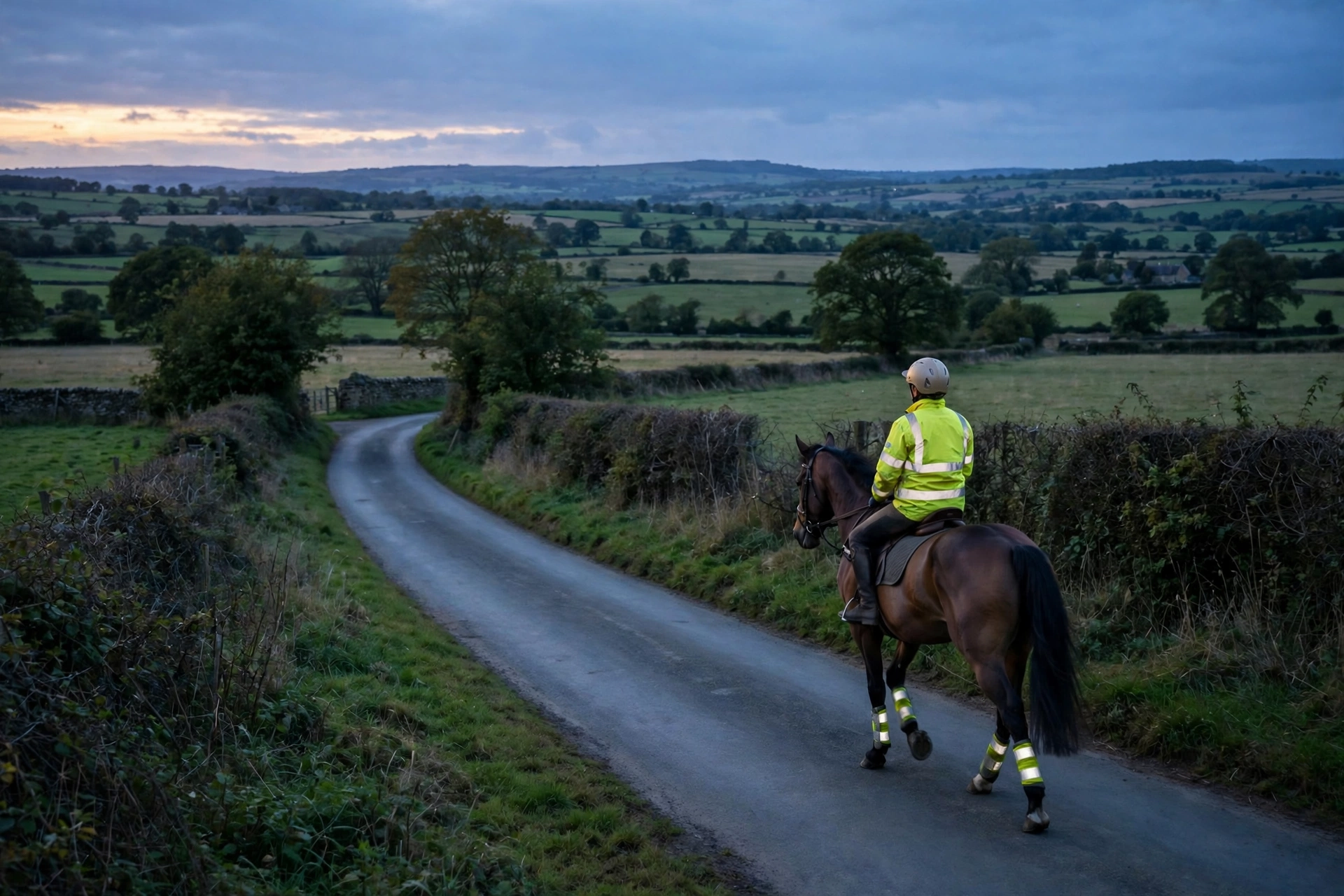
Riding a horse at night is possible with the right preparation, and a helmet for night riding on horseback is, in general terms, a well-fitted riding helmet — often in a light colour with reflective markings — worn together with reflective gear and lights so the rider can see and be seen in the dark. The helmet itself protects the head in a fall, just as it does in daylight, but at night it also plays a second role: its light colour and reflective strips help other road users and riders spot the horse and rider sooner.
Night riding is riskier than daytime riding. Horses cannot see as well in the dark as people sometimes assume, hazards such as holes, branches, and ditches are harder to spot, and drivers may not expect a horse on the road after dark. That does not mean night riding should never be done — some riders hack out in the early morning or evening, and some events and rides run after dark — but it does mean extra care is needed. This guide explains the risks, the helmet and visibility gear that help, and how to ride safely at night.
What Are the Risks of Riding at Night?
Other road users are a second risk. Drivers may not expect horses on the road after dark, and a dark horse with a dark-clad rider can be almost invisible until a car’s headlights pick them up. That is why reflective gear matters so much: it catches headlights from a distance and gives drivers time to slow down and pass wide.
There is also the risk of getting lost or disoriented. Familiar paths look different in the dark, and a rider who takes a wrong turn may end up on a busier road or rougher ground than planned. Riding a route you know well, in an area you have ridden in daylight, reduces that risk a great deal.
How Should a Helmet for Night Riding Be Different?
The helmet for night riding starts with the same basics as any riding helmet: it must meet a recognised safety standard, fit snugly, sit level on the head, and have a fastened chin strap. Those basics do not change after dark. What changes is visibility, and the helmet can help with that.
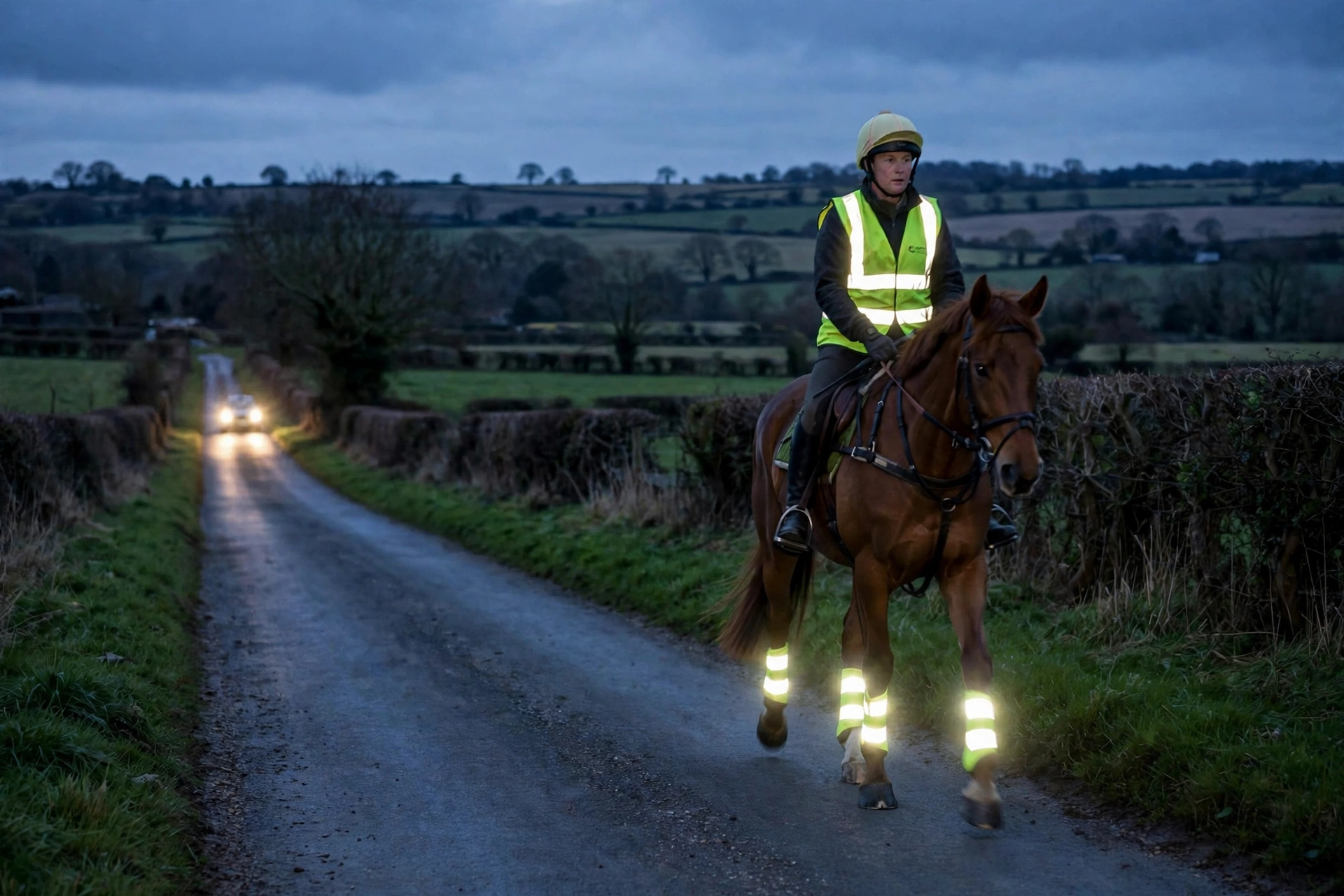
A light-coloured helmet — white, silver, or a bright yellow — is easier to see at night than a dark one. Some helmets come with reflective strips or a reflective cover, and some riders add reflective stickers to the shell. Those markings catch car headlights and torchlight, making the rider’s head visible from a distance. If you add stickers, keep them small and do not cover the whole shell, since that can hide damage.
A headlamp or a clip-on light can also be fitted to some helmets, and it helps the rider see the ground ahead and be seen by others. A small white light at the front and a red light at the back are a common choice for road riding. Make sure any light is attached securely so it does not slip or fall off during the ride.
What Other Visibility Gear Do You Need at Night?
The helmet is only part of the picture at night. The horse should wear reflective gear too: reflective leg bands, a reflective exercise sheet, and a reflective breastplate or tail guard all help drivers see the horse from every angle. A rider in a high-visibility jacket with reflective strips is far easier to spot than one in dark clothing.
Lights are the other half of the setup. A white light at the front and a red light at the rear, attached to the rider or the horse, show other road users which way the horse is facing and how fast it is moving. Some riders also carry a torch for checking the path ahead or for signalling. Make sure the lights do not shine into the horse’s eyes or dazzle other riders.
It is also worth thinking about what the horse can see. Horses see better in low light than people do in some ways, but they still need time to adjust to the dark, and sudden changes from bright light to darkness can startle them. Give the horse time to settle, and avoid riding straight from a brightly lit yard into total darkness without a pause.
How Do You Ride Safely on Horseback at Night?
Choose a route you know well, and ride it in daylight first if you have not ridden it before. Stick to quiet lanes and bridleways rather than busy roads, and avoid routes with hazards you cannot see in the dark, such as low branches or uneven ground. Tell someone where you are going and when you expect to be back.
Ride at a walk or a slow trot, and avoid cantering or galloping in the dark. At speed, the horse has less time to react to something in the path, and the rider has less time to stay in balance if the horse shies. Keep to the left on roads where that is the rule, and pass parked cars and junctions with extra care.
Stay alert and keep your phone charged, but do not ride while looking at it. If you need to check a map or make a call, stop the horse first. Ride with a companion if you can, especially on roads, since two horses and riders are easier to see than one, and a companion can help if something goes wrong.
When Should You Avoid Riding at Night?
Some nights are not suitable for riding, however well prepared you are. Heavy rain, fog, ice, or strong wind all make night riding much riskier, and on those nights it is better to stay in the yard or the arena. Fog is particularly dangerous, since it hides the horse from drivers even with reflective gear.
Also avoid riding at night on a horse that is nervous, young, or unfamiliar with the route. A horse that is already anxious in daylight is likely to be more anxious in the dark, and a nervous horse is more likely to shy. If you are unsure how modern helmets handle different kinds of impact, reading about what MIPS is for helmets can help you understand one of the technologies used in modern helmet design.
Finally, check local rules before riding at night. Some areas have rules about lights and reflective gear for horses on the road after dark, and some bridleways close at night. Following those rules keeps you legal and keeps you safer, since they are usually written with exactly these risks in mind.
Frequently Asked Questions
Q: Is it safe to ride a horse at night?
A: It can be done safely with preparation — a known route, a calm horse, a well-fitted helmet, reflective gear, and lights — but it is riskier than daytime riding. Avoid busy roads, bad weather, and unfamiliar routes, and ride slowly.
Q: What colour helmet is best for night riding on horseback?
A: In general terms, a light-coloured helmet such as white or silver, especially one with reflective markings, is best at night because it is easier for drivers to see. A dark helmet with reflective strips added is a reasonable alternative.
Q: Do I need lights on my horse at night?
A: Lights are strongly recommended for road riding at night, along with reflective gear on the horse and rider. A white light at the front and a red light at the rear help drivers see which way you are facing and give them time to slow down.

Olivia
Writer at Helmet Today, covering helmet reviews, fit and riding safety.