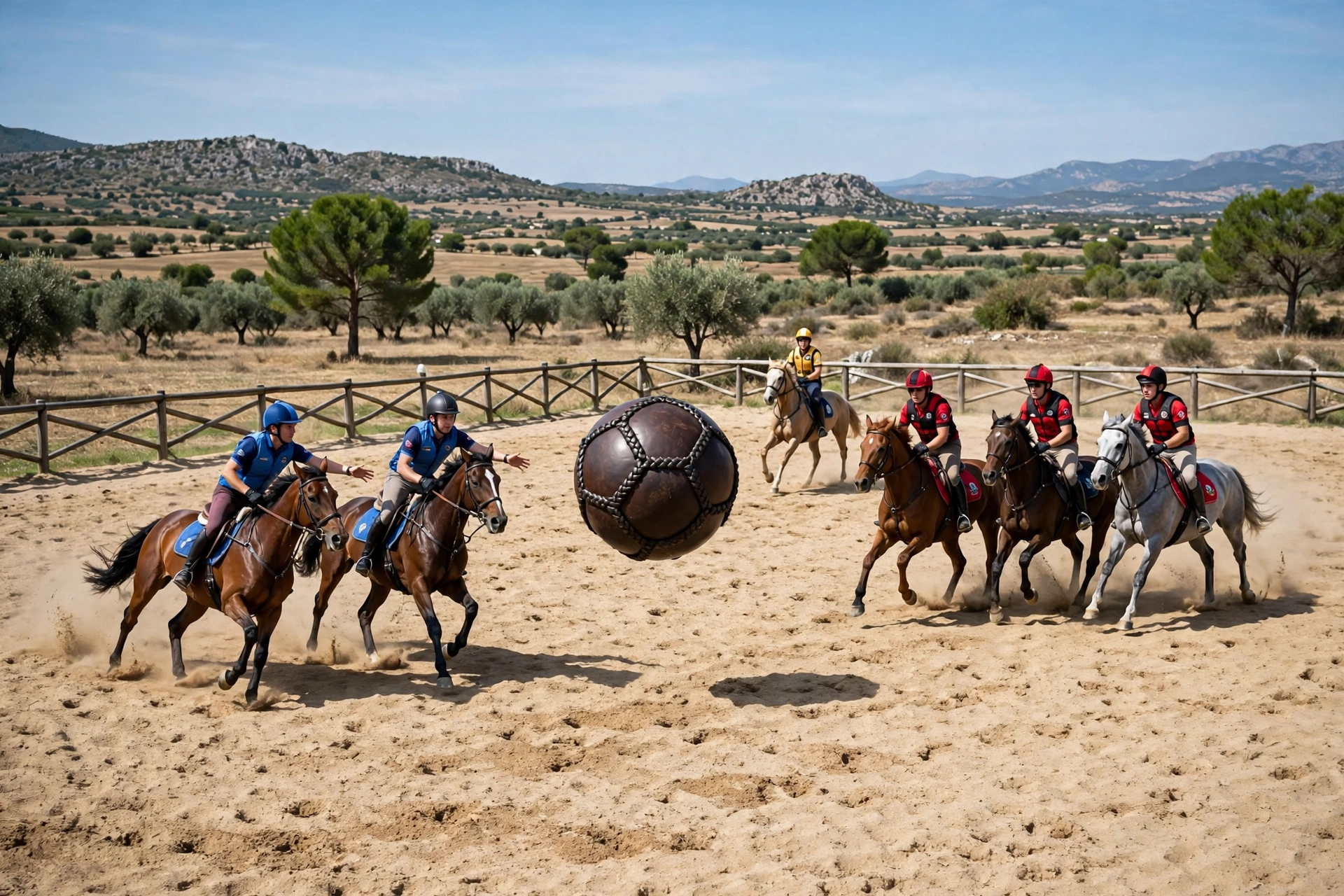
Horseball is a fast team sport played on horseback, a little like a mix of basketball and rugby, in which riders pick a ball up from the ground at a gallop, pass it between teammates, and try to score through a hoop — and a horseball helmet is a riding helmet worn to protect the rider’s head during that close, fast, physical play. With several horses moving quickly in a small arena, riders reaching low for the ball and leaning across each other, falls and knocks are part of the game, so a secure helmet is essential kit.
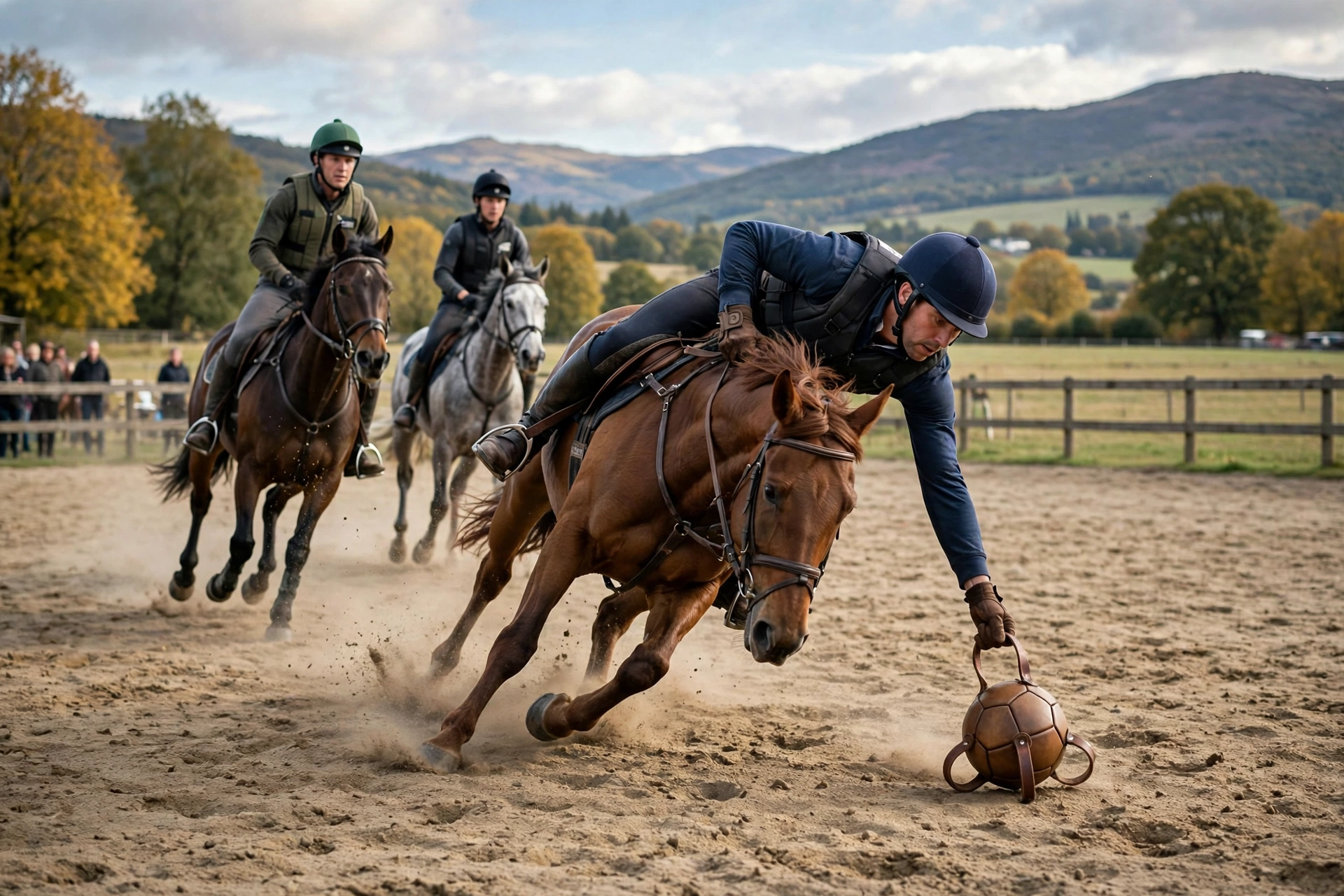
Horseball is played by two teams, usually of four riders each, and the ball is a football-sized ball with handles that riders scoop up from the ground without stopping. Play moves quickly, horses turn sharply, and riders often ride shoulder to shoulder. A helmet that stays firmly in place through all of that is not a nice extra — it is a basic safety need. This guide explains how horseball works, what a horseball helmet should do, and how to choose, wear, and look after one.
How Is Horseball Played?
The game is fast and physical. Horses gallop, turn, and stop suddenly, and riders lean out of the saddle to pick the ball up or to reach across and take it from an opponent. Contact between riders is allowed within the rules, and horses sometimes bump into each other as they chase the ball. That closeness is part of what makes horseball exciting, and it is also what makes head protection so important.
Horseball is organised by national and international federations, and helmets are required in organised play. Matches are usually played on a sand or grass surface, and riders wear team colours. The sport has grown well beyond its origins, and today there are youth, amateur, and international competitions in many countries.
Why Does Horseball Need a Secure Helmet?
The main risk in horseball is a fall at speed, and falls can happen in several ways. A horse may turn sharply while the rider is leaning low for the ball, a rider may be bumped by an opponent, or a horse may slip on the surface during a sudden stop. In any of those cases, the rider can come off and land on a hard surface, sometimes with other horses nearby.
There is also the risk of being struck by the ball or by another rider’s arm or leg during a challenge. A helmet cannot prevent every knock, but it adds a layer of protection to the most vulnerable part of the body. In general terms, the helmet is the single most important piece of safety equipment a horseball player wears, and it should be treated as such.
What Should You Look For in a Horseball Helmet?
Start with the safety standard. Check what your league or federation requires, and choose a helmet that meets a recognised equestrian standard. A helmet that has been tested to such a standard has been checked for the kinds of impacts riders face, and that testing gives you a solid baseline to work from.
Fit comes next, and it matters a great deal in a fast, physical sport. The helmet should sit level on the head, about two fingers above the eyebrows, and feel snug all the way around without pressing hard in one place. It should not rock from side to side or slide forward when you shake your head. Try helmets on in person, and wear one for a few minutes to check for pressure points before you buy.
Look for a strong, reliable chin strap and harness. A four-point harness that keeps the helmet stable from several angles is a good choice for horseball, since the rider moves in many directions during play. The strap should be easy to fasten with gloves on and should stay snug through a whole match. Ventilation is also worth checking, since horseball is hard work and a hot, sweaty helmet is a distraction. If you want to understand how helmets handle different kinds of impact, reading about what MIPS is for helmets can help you learn about one of the technologies used in modern helmet design.
How Should You Wear a Horseball Helmet?
Put the helmet on level, with the front edge about two fingers above the eyebrows. The straps should form a neat V under each ear, and the chin strap should be fastened so you can fit two fingers between the strap and your chin. If you open your mouth wide, you should feel the helmet pull down a little — that shows the strap is holding it properly.
Check the fit before every match, not just when the helmet is new. Straps stretch, linings compress, and a helmet that fitted well last season may be looser now. Give the helmet a shake test before you mount: if it rocks or slides, adjust the harness or consider whether it is time for a replacement.
Never wear a horseball helmet loose, tilted back, or with the strap undone, even for a quick practice pickup. Most falls happen when riders are not expecting them, and a helmet that is not fastened is little better than no helmet at all. Make fastening the strap part of your routine, like checking your girth before you mount.
How Do You Look After a Horseball Helmet?
After a match, brush off arena sand and wipe the shell with a damp cloth. The lining will be sweaty after hard play, so remove it if you can and wash it according to the maker’s instructions, or wipe it down and leave the helmet to air dry. Do not dry it on a radiator or leave it in a hot car, since heat can damage the shell and the protective liner inside.
Store the helmet in a cool, dry place in a bag or box that protects it from knocks. Do not hang it by the chin strap, and do not toss it into a tack room corner where it can be stepped on or knocked off a shelf. Check the shell for cracks and dents, and check the straps and buckles for fraying or wear, on a regular basis.
Replace the helmet after a serious fall or a heavy knock, even if it looks fine from the outside, since the liner may have absorbed the impact already. Also keep an eye on the helmet’s age and the maker’s guidance on service life. A helmet that is old, loose, or damaged is not a saving — it is a risk. If in doubt, replace it.
Frequently Asked Questions
Q: Is a normal riding helmet good enough for horseball?
A: In general terms, yes — a standard equestrian riding helmet that meets a recognised safety standard is suitable for horseball. The key is a secure fit and a strong chin strap that keeps it in place during fast, physical play.
Q: Why do horseball players need such a secure chin strap?
A: Because horseball involves galloping, sharp turns, leaning low for the ball, and contact with other riders, a helmet can easily slip or come off. A snug, well-adjusted chin strap keeps it in place through all of that.
Q: Should I replace my helmet after a fall during a horseball match?
A: Yes, in general terms. A helmet that has taken a heavy impact may have hidden damage in the liner even if the shell looks fine. Replace it after a serious fall and check it after any knock.

Olivia
Writer at Helmet Today, covering helmet reviews, fit and riding safety.