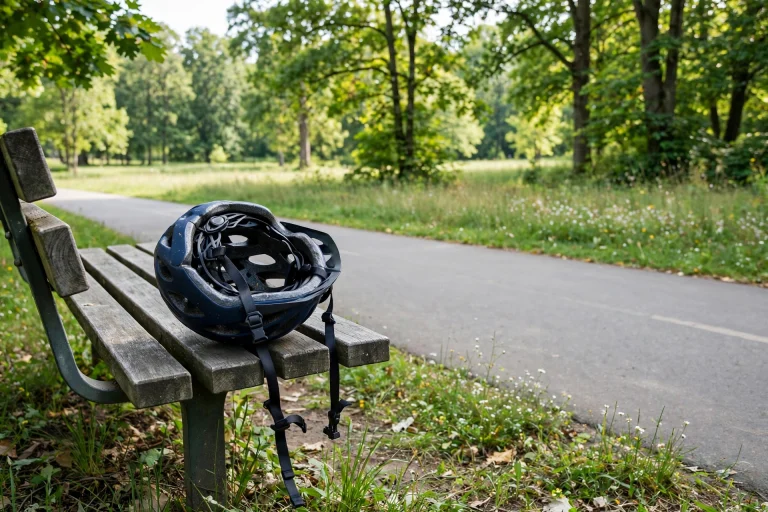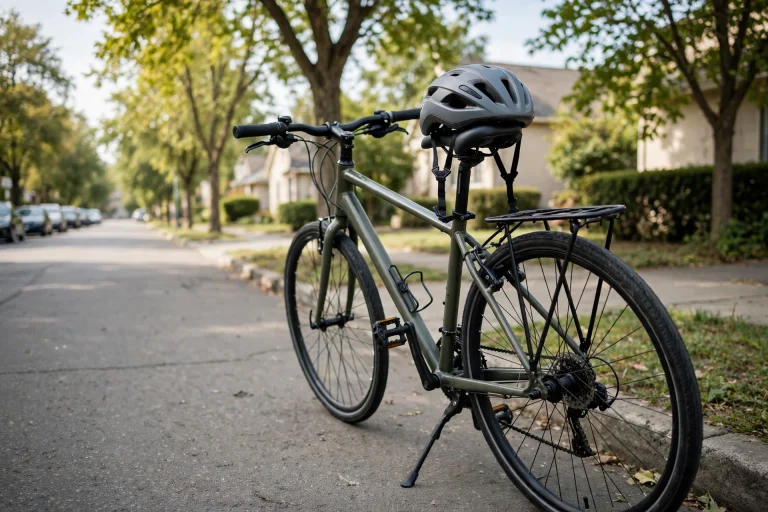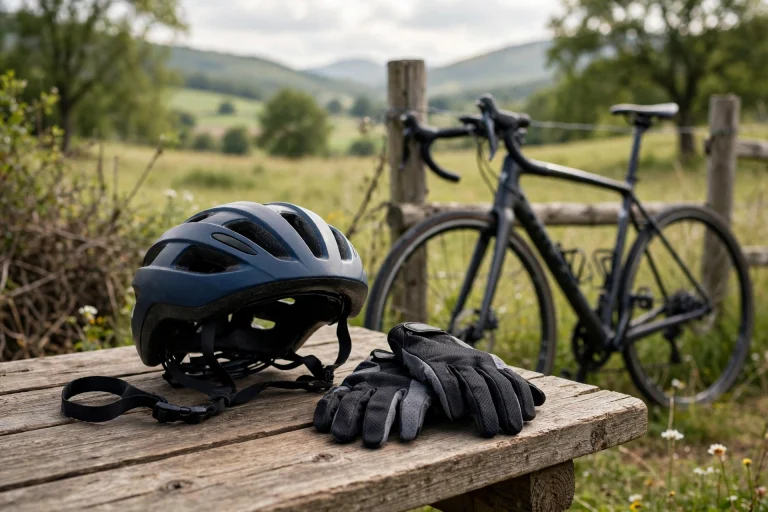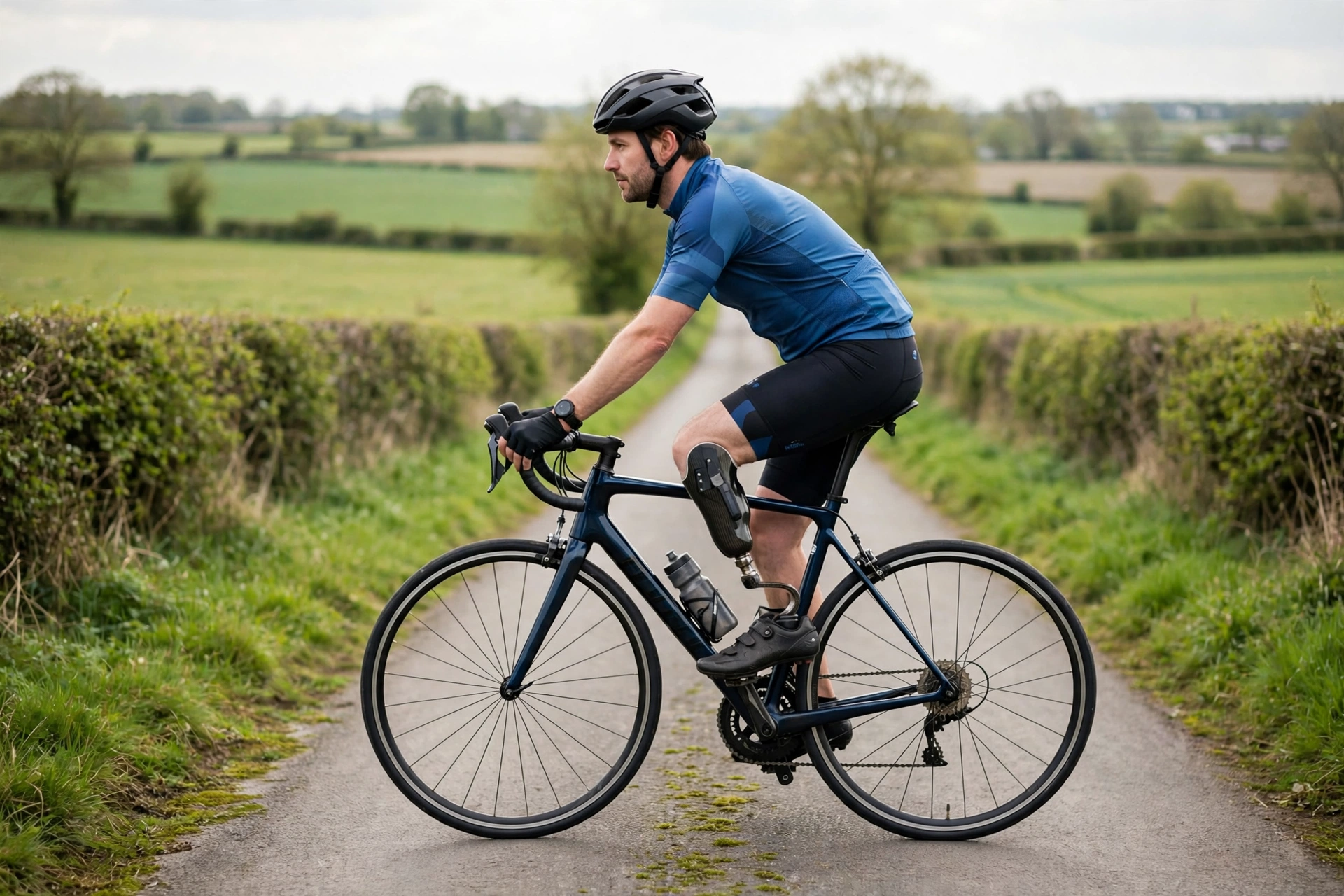
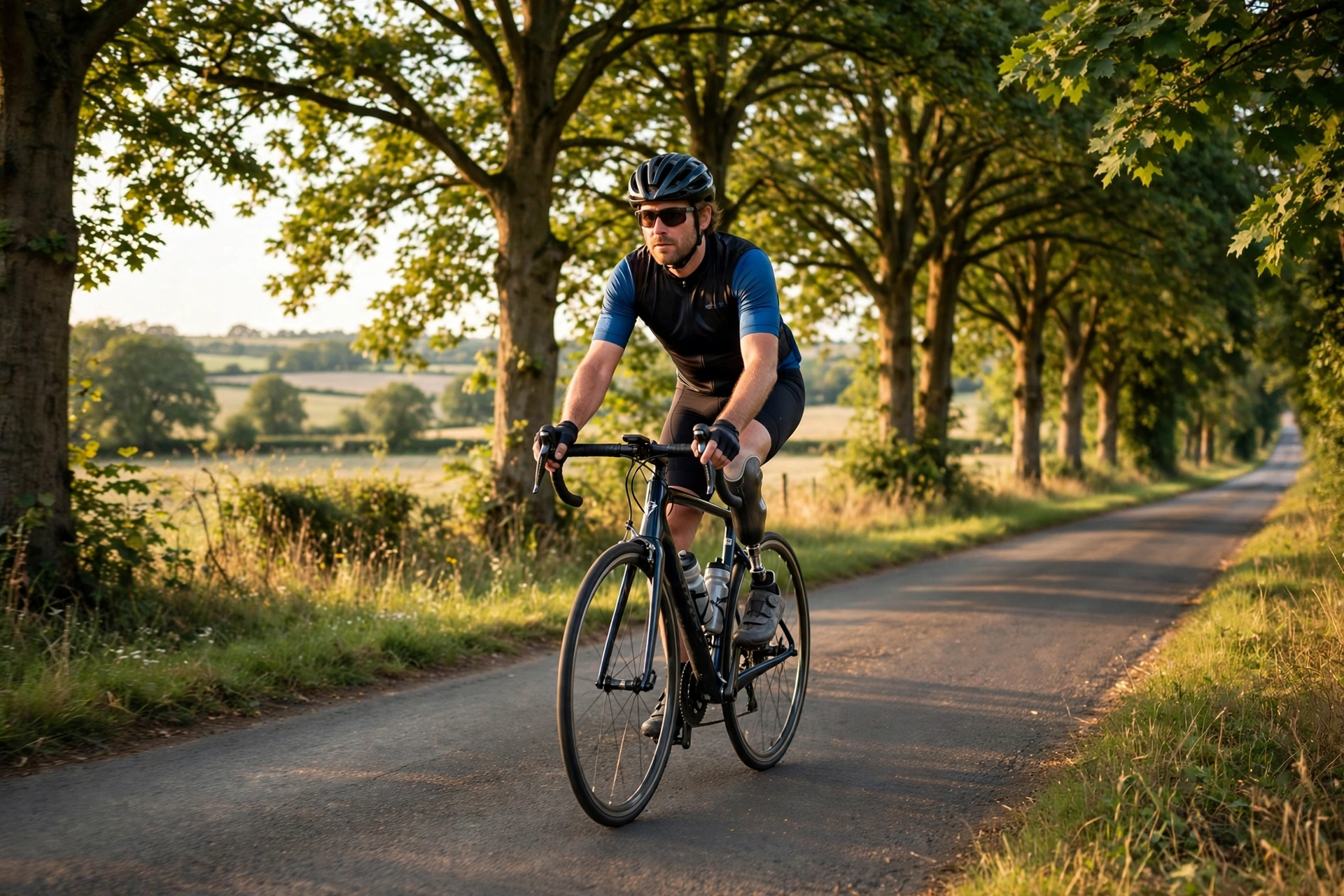
A helmet for riders with a prosthetic leg is, in general terms, the same well-fitting helmet any rider would choose — because a prosthetic leg does not change what a helmet needs to do, but it can change how a rider mounts the bike, balances at a stop, and falls, and the helmet and the rest of the kit should suit those differences. Riders with a prosthetic leg ride road bikes, mountain bikes, handcycles, and adapted cycles, and they face the same risks as any other rider: a fall can happen to anyone, and a helmet protects the head when it does. Mounting the bike, balancing at a stop, and putting a foot down can be harder with a prosthesis. In general terms, the best helmet is a comfortable, well-fitting helmet chosen for the type of riding, with a secure fit that stays put through the movements of mounting, stopping, and riding.
This guide explains what riders with a prosthetic leg should look for in a helmet, how fit and comfort work when a rider’s balance and movements are different, and which habits and adaptations help. It covers choosing a helmet for the type of riding, fit and mounting the bike, visibility and hearing, and the checks worth doing before a ride. Whether you ride for sport, for commuting, or for fun, the right helmet helps you ride with confidence.
Does a Prosthetic Leg Change the Helmet You Need?
In general terms, no. A helmet protects the head, and the head does not change because the rider has a prosthetic leg. The helmet should be chosen for the type of riding — a road helmet for road riding, a mountain bike helmet for trails, a commuter helmet for city riding — and it should fit well, ventilate well, and stay secure. The prosthesis does not call for a special helmet, and there is no helmet made only for riders with a prosthetic leg.
What can change is how the rider falls and how they balance. A rider with a prosthetic leg may find it harder to put a foot down quickly at a stop, and a low-speed fall at a junction or on a trail is a common risk. A helmet that fits securely and covers the head well is especially important in that situation, because a low-speed fall can still cause a head injury.
How Should the Helmet Fit?
Fit follows the same rules for every rider. The helmet should sit level on the head, low at the front, with roughly two fingers’ width between the eyebrows and the rim. It should feel snug all round without pressing painfully anywhere, and it should move with the head when shaken gently, not slide around on its own. The retention dial at the back should be adjusted until the helmet feels secure, and the straps should form a neat V under each ear, with the buckle just under the chin.
Pay attention to how the helmet feels through the movements of riding with a prosthesis. Mounting the bike, swinging a leg over, and putting a foot down all involve the head moving and the body shifting, and the helmet should stay put through all of it. Try the helmet on the bike, not just in the shop, and practise mounting and stopping with the helmet on before a first ride. If the helmet shifts when you lean the bike or put a foot down, adjust the retention system or try a different size. A helmet that stays put is a helmet you can forget about, and that lets you concentrate on the ride. If you are learning about how helmets handle different kinds of impact, reading about what MIPS is for helmets can help you understand one of the technologies used in modern helmet design.
What About Balance, Mounting, and Stopping?
Mounting and stopping are the moments that need the most thought. A rider with a prosthetic leg may mount from the side that feels most stable, and may need a little more time to get clipped in or to get a foot on a pedal. At a stop, the rider needs a stable foot down, and a prosthesis may not give the same feel for the ground as a natural foot. Choosing a route with fewer stops, and practising stopping and starting in a quiet place, can build confidence before riding in traffic.
The bike set-up can help too. A lower saddle height can make it easier to reach the ground, and flat pedals can be easier than clip-in pedals for a rider who needs to get a foot down quickly. Whatever the set-up, the helmet’s job is the same: to stay secure and protect the head if the rider falls. A helmet that fits well and does not distract the rider helps with balance, because the rider can concentrate on the road rather than on their gear.
How Do Visibility and Hearing Fit In?
Visibility and hearing matter for every rider, and they matter just as much for a rider with a prosthetic leg. A helmet that leaves the ears open helps the rider hear traffic, other riders, and warnings from behind. A brightly coloured helmet, or one with reflective details, helps other road users see the rider, which is especially useful at junctions and on busy roads. A mirror on the handlebar or the helmet can also help, by letting the rider check behind without turning the head as far.
On a group ride or a shared path, communication is just as important. Call out hazards, signal turns clearly, and let other riders know if you need a little more time at a stop or a junction. A helmet that lets you hear and be heard is part of that: it keeps you connected to the riders around you, and it helps you stay aware of what is happening on the road.
What Should You Check Before a Ride?
Before a ride, check the helmet for damage. Look for cracks in the shell, check that the straps are not frayed, and make sure the retention dial works smoothly. If the helmet has been dropped hard or involved in a crash, replace it, even if it looks fine from the outside. A helmet that has already absorbed an impact may not protect you properly next time.
Check the bike and the prosthesis too. Make sure the prosthesis is secure and comfortable, the bike’s brakes work well, and the tyres are pumped up. Plan the route in advance, and choose roads or paths that suit your riding, with places to stop and rest if you need them. A little planning makes the ride calmer, and it leaves you free to enjoy the ride itself.
Frequently Asked Questions
Q: Do riders with a prosthetic leg need a special helmet?
A: In general terms, no. A helmet should be chosen for the type of riding — road, mountain, or commuter — and it should fit well and stay secure. There is no special helmet for riders with a prosthetic leg.
Q: What is the biggest helmet-related risk for a rider with a prosthetic leg?
A: Low-speed falls at stops and junctions, where it can be harder to get a foot down quickly. A well-fitting helmet that stays secure protects the head in exactly that kind of fall.
Q: Should I use flat pedals or clip-in pedals with a prosthetic leg?
A: Flat pedals are often easier, because you can get a foot down quickly at a stop. Some riders use a pedal adapted for their prosthesis.

Olivia
Writer at Helmet Today, covering helmet reviews, fit and riding safety.