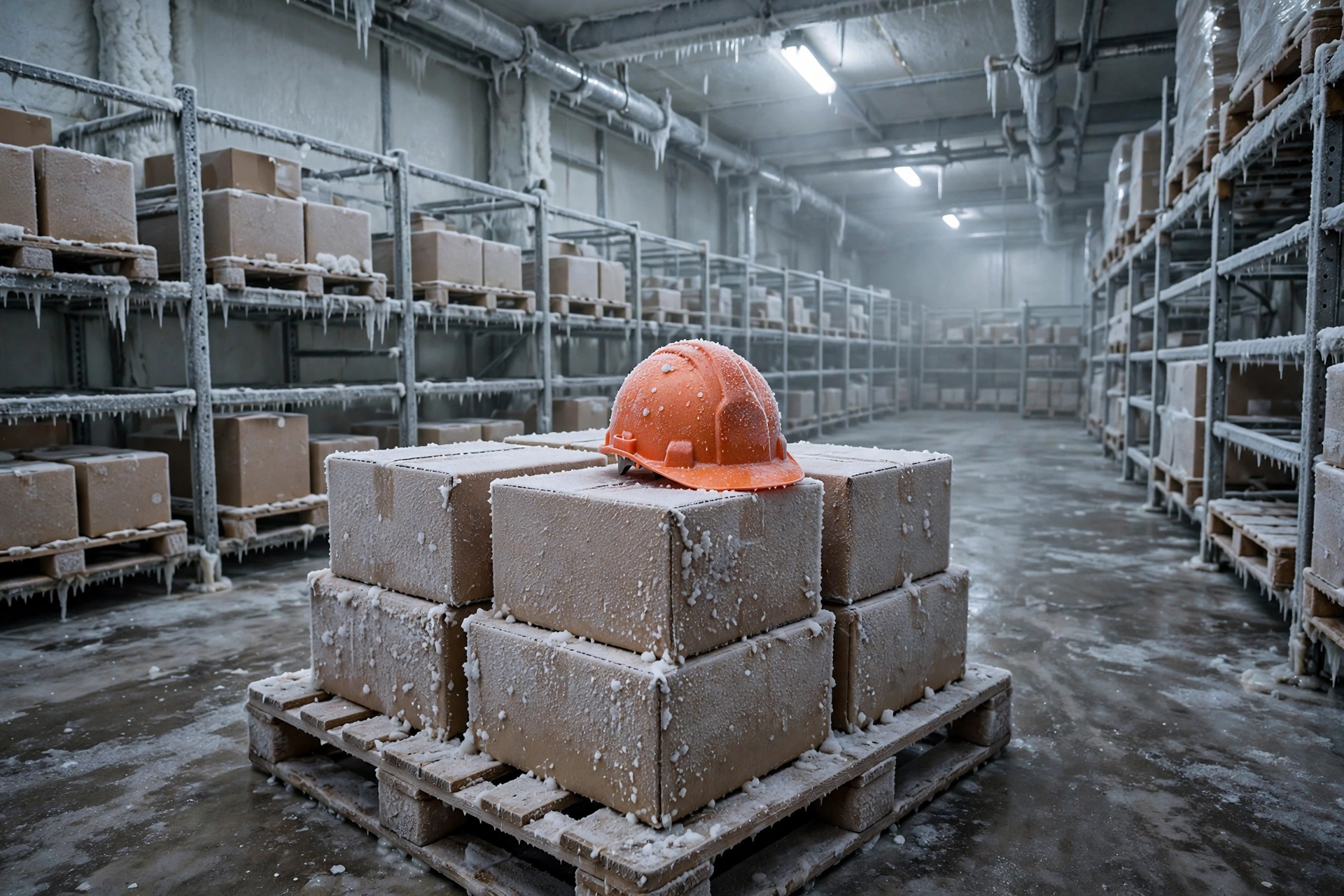
A cold store worker helmet is, in general terms, a hard hat that protects the head from falling objects and knocks in a refrigerated warehouse, while also coping with freezing temperatures that can make ordinary helmets stiff, brittle and uncomfortable. Cold stores keep food and other goods at temperatures well below freezing, and workers spend whole shifts inside them, moving pallets, stacking boxes and driving forklifts. A helmet in this setting has to protect the head and still work properly in the cold.
The cold changes the job in ways that are easy to overlook. Plastic and padding behave differently when frozen, a chin strap can stiffen, and a helmet that is comfortable at room temperature can feel hard and unforgiving after an hour in a freezer. Add in forklifts, high racking, falling boxes and slippery floors, and the case for a helmet that is chosen for the cold is clear. This guide explains what a cold store helmet needs to do, how cold affects it, and how to look after one, all in general terms.
What Makes Cold Store Work Different?
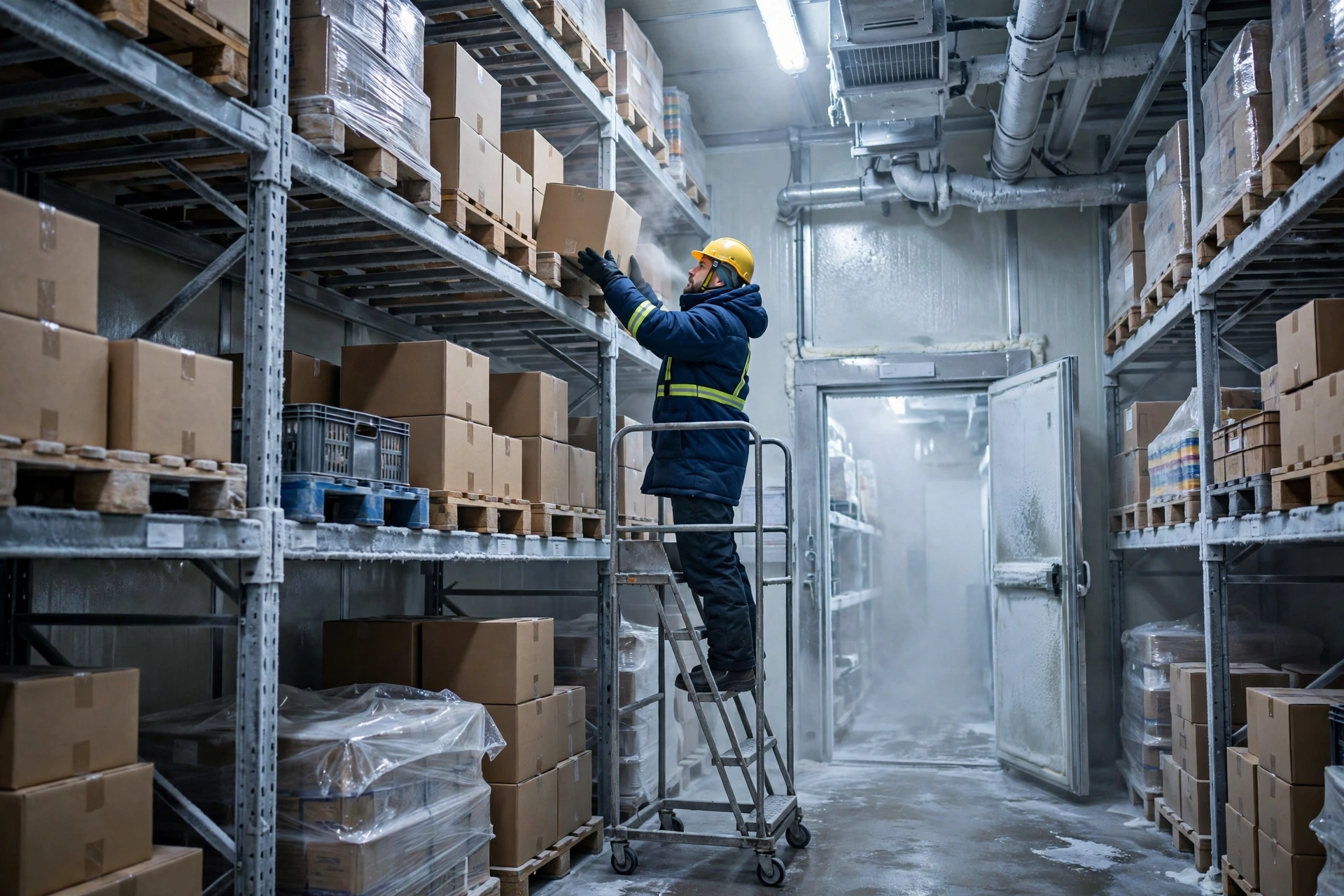
The obvious difference is the temperature. Cold stores are kept well below freezing, often for the whole working day, and workers move between the cold store and warmer areas such as loading bays and offices. This constant change of temperature is hard on both the worker and their gear, and it is one of the things that sets cold store work apart from an ordinary warehouse job.
The work itself is much like any warehouse job: pallets are stacked high, forklifts move loads around, and boxes can fall from racking or slip from a pallet. A worker can also bump their head on racking, a low beam or a forklift mast, especially when reaching up to place or retrieve stock. The cold makes these everyday risks worse, because cold hands are clumsier and cold muscles are stiffer.
What Kind of Helmet Is Used in a Cold Store?
In general terms, the helmet for this work is a hard hat of the kind used across industrial and warehouse jobs, chosen with the cold in mind. It has a rigid outer shell that spreads the force of an impact, and an inner suspension or padding system that holds the shell away from the head and absorbs some of the shock. This is the basic design that has protected industrial workers for many years.
The key question is whether the helmet is suited to low temperatures. Some hard hat materials become brittle in the cold, which means they can crack rather than flex on impact, and some padding systems go hard and uncomfortable when frozen. The maker’s guidance on low-temperature use should be checked before choosing, and a helmet that is rated for cold conditions is the safer choice.
Fit is adjusted with a simple system at the back or sides of the helmet, often a dial or a sliding strap. The helmet should sit level on the head and feel snug without pressing painfully anywhere, and it should fit comfortably over a thin balaclava or liner if one is worn. It should not wobble when the wearer bends down or moves quickly. If you are learning about how helmets handle different kinds of impact, reading about what MIPS is for helmets can help you understand one of the technologies used in modern helmet design.
How Does Cold Affect Helmet Materials and Comfort?
Cold affects helmet materials in several ways. The shell can become stiffer and more brittle, the padding can go hard, and straps and buckles can stiffen so that they are harder to fasten and adjust. A helmet that has been left in the cold store overnight will be at its coldest at the start of the shift, which is when it is likely to feel least comfortable.
Comfort is a real concern in the cold. A hard, cold shell pressing against the head is unpleasant, and a helmet that is uncomfortable will be taken off, which leaves the worker unprotected. A warm liner or a balaclava worn under the helmet can help, but it changes the fit, so the helmet should be tried on with the liner in place. Some helmets have a cold-weather liner available as an accessory, which is worth considering.
What About Visibility and Communication?
Visibility matters in a cold store, because forklifts and workers share the same aisles and the light can be uneven. A helmet in a bright colour, such as white, yellow or orange, is easier for forklift drivers and colleagues to see. Some helmets have reflective strips, which help in the darker corners of the store and on night shifts.
Communication can be harder in the cold, because thick clothing and hoods muffle sound and refrigeration equipment adds background noise. Some helmets have slots for attaching ear protection or a headset, which can help a worker hear instructions and warnings. A helmet that works with the communication gear used on site is worth choosing.
How Should a Cold Store Helmet Be Cared For?
A work helmet needs regular care if it is to keep doing its job, and cold store helmets need a little extra attention. The helmet should be cleaned often, because frost, moisture and grime can build up on the shell and the padding. Warm water and mild soap are usually enough, and the helmet should be left to dry naturally in a well-ventilated place rather than placed on a heater, which can damage the shell.
The inside of the helmet deserves attention too. The sweatband and padding can stay damp in a cold store, and damp padding is uncomfortable and can go hard when it freezes. The padding should be dried out between shifts and replaced when it is worn or flattened. Most helmets have replacement parts available, and swapping a sweatband is a simple job that makes a real difference to comfort.
- Inspect the shell and suspension before each shift for cracks or cold damage.
- Replace the helmet after any heavy impact, even if no damage is visible.
- Clean the shell and padding regularly and let them dry fully between shifts.
- Store the helmet away from direct heat, sunlight and chemicals.
- Follow the maker’s guidance on low-temperature use and working life.
A helmet that has taken a heavy knock, been dropped from a height, or shows cracks or dents should be taken out of service. Even if the damage looks minor, the shell may have been weakened in a way that is hard to see, and cold can make a weakened shell more likely to fail.
Frequently Asked Questions
Q: Does a cold store worker need a helmet?
A: In general terms, yes. Cold stores involve falling boxes, high racking, forklifts and regular knocks, so head protection is a sensible part of the job’s protective gear, alongside insulated clothing and high-visibility clothing.
Q: Can any hard hat be used in a cold store?
A: Not quite. Some helmet materials become brittle in freezing temperatures, so the maker’s guidance on low-temperature use should be checked. A helmet rated for cold conditions, worn with a suitable liner, is the safer choice.
Q: How often should a cold store helmet be replaced?
A: It should be replaced after any heavy impact or visible damage, and after the working life given in the maker’s guidance. In general terms, a hard hat in daily use is replaced after a number of years even if it looks fine, because the materials can weaken over time and cold can add to that wear.

Olivia
Writer at Helmet Today, covering helmet reviews, fit and riding safety.