A bomb disposal helmet is, in general terms, a specialised protective helmet worn as part of a bomb disposal suit, designed to protect the wearer’s head and face from the blast, heat and fragments that can result if a device explodes. Bomb disposal is one of the most dangerous jobs there is, and the helmet is only one part of a full protective suit that covers the whole body. It is worn by highly trained specialists, and it works together with the suit’s body armour, visor and communications equipment.
The helmet’s role is a protective one, in general terms. If a device explodes, the blast sends out a shock wave, intense heat and fast-moving fragments, and the head and face are among the most vulnerable parts of the body. A bomb disposal helmet is built to reduce the force that reaches the head and to shield the face, while still allowing the wearer to see, hear and communicate. This guide describes the helmet’s protective role in general terms only, without detail about devices, procedures or tactics.
What Is a Bomb Disposal Helmet For?
The helmet’s main purpose is head and face protection during bomb disposal work. It is worn with a full protective suit, and together the helmet and suit are designed to give the wearer the best available protection if a device explodes while they are working on it. The helmet covers the head and, with its visor, the face, which are the areas most at risk from blast and fragments.
It is important to understand that no protective equipment can make bomb disposal safe. The helmet and suit reduce the risk, but they cannot remove it, and the work relies first and foremost on the specialist’s training, judgement and procedures. The helmet is a last line of protection, not a guarantee of safety.
What Makes a Bomb Disposal Helmet Different?
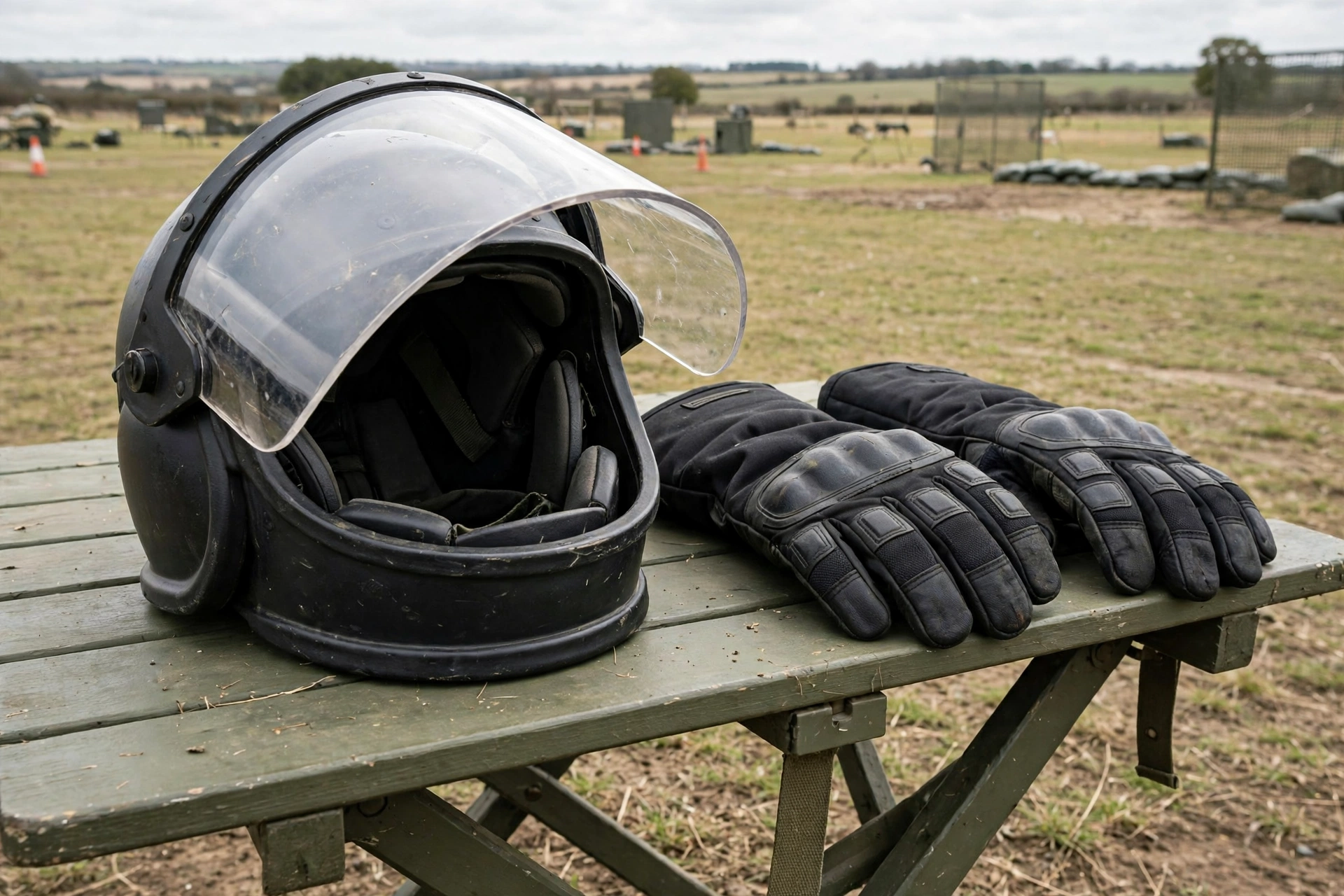
A bomb disposal helmet is very different from an ordinary hard hat or a sports helmet. It is heavier and more heavily built, because it is designed to cope with blast forces and fast-moving fragments rather than a simple fall or knock. It covers more of the head and face than a standard helmet, and it is worn as part of a full suit rather than on its own.
The visor is a key part of the design. It is a thick, transparent shield that covers the face and is built to resist fragments and blast pressure, while still letting the wearer see clearly. A clear view is essential for the delicate work of examining and handling a device, so the visor must stay clear of fog and scratches, and it must not distort what the wearer sees.
The helmet is also designed to work with the suit’s other systems. It connects with the body armour to protect the neck and the join between head and body, and it has space for communication equipment so the wearer can talk to colleagues. Ventilation and cooling are important too, because the full suit is hot and heavy, and the wearer may be working in it for a long time. If you are learning about how helmets handle different kinds of impact, reading about what MIPS is for helmets can help you understand one of the technologies used in modern helmet design.
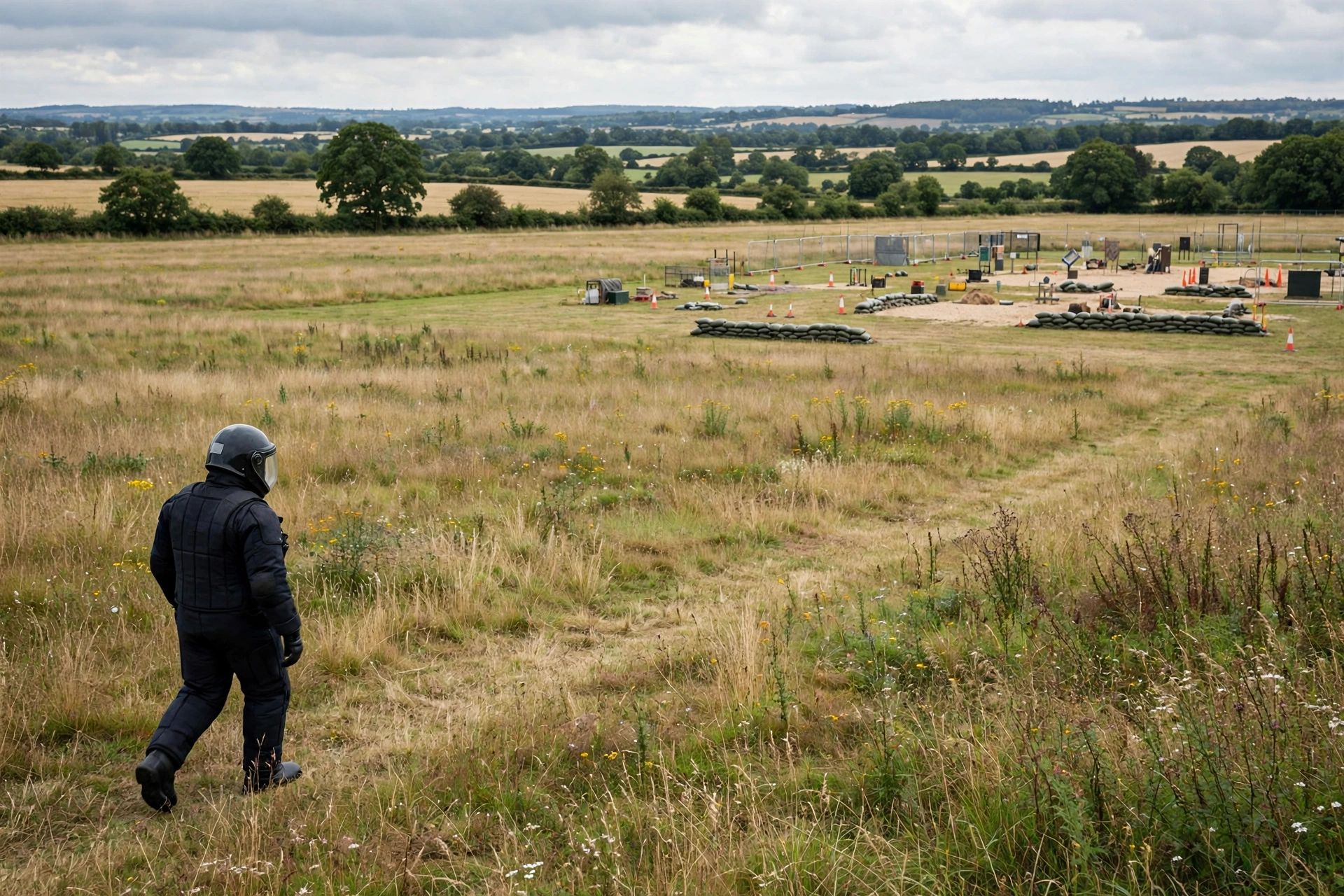
How Does It Work with the Rest of the Protective Suit?
The helmet and the suit work as a single system. The suit covers the torso, arms and legs with heavy protective panels, and the helmet covers the head and face, with the two overlapping at the neck so that there is no gap in protection. The overlap is important, because the neck is a vulnerable area and a gap there would leave the wearer exposed.
The weight of the whole suit is considerable, and the helmet adds to it. The suit is designed to spread the weight as evenly as possible, but wearing it is still physically demanding, and specialists train to work in it for extended periods. The helmet must sit comfortably and securely, without pressing painfully or slipping, even when the wearer is bending, kneeling or reaching.
What About Weight, Comfort and Communication?
Weight is one of the biggest challenges of a bomb disposal helmet. The helmet is heavy because it is built to resist blast and fragments, and that weight sits on the head and neck for the whole time the suit is worn. A good fit helps here, because a helmet that sits evenly and is held securely by its harness puts less strain on the neck than one that shifts around.
Comfort matters too, because the work is slow and careful and can take a long time. Heat builds up inside the suit, and the helmet can become hot and uncomfortable. Cooling systems and ventilation help, and the padding inside the helmet should be soft, well-shaped and able to absorb sweat. A helmet that is uncomfortable distracts the wearer, and distraction is dangerous during this kind of work.
Communication is essential. The wearer needs to talk to colleagues, who may be at a safe distance, and to hear instructions and warnings. The helmet has space for a headset and microphone, and the suit’s communication system must work clearly even in noisy conditions. The helmet should not muffle the wearer’s hearing or make it hard to speak clearly.
How Is the Helmet Cared For and Checked?
A bomb disposal helmet is specialist equipment, and it is cared for by trained people following strict routines. It is inspected regularly for damage, wear and any sign that its protective parts have been affected. The visor is checked for scratches, cracks and clarity, because a damaged visor may not protect as it should and may also make it harder to see.
Cleaning is part of the routine too. The helmet and visor are cleaned carefully, using methods that do not scratch the visor or damage the shell, and the padding and harness are checked for wear. Any part that is worn or damaged is replaced, and the helmet is stored in a clean, dry place away from heat and sunlight.
- Inspect the shell, visor and harness before and after every use.
- Check the visor for scratches, cracks and clarity.
- Clean the helmet and visor with approved methods only.
- Replace worn padding, straps or visors promptly.
- Store the helmet in a clean, dry place away from heat and sunlight.
A helmet that has been exposed to a blast, or that shows any sign of damage, is taken out of service and assessed by specialists. In general terms, protective equipment that has done its job in a real incident is not simply put back into use: it is checked, and replaced if there is any doubt about whether it can still protect as it should.
Frequently Asked Questions
Q: Does a bomb disposal helmet make the job safe?
A: No, in general terms. The helmet and suit reduce the risk if a device explodes, but they cannot remove it. The work relies first on the specialist’s training, judgement and procedures, with the helmet as a last line of protection.
Q: Why is a bomb disposal helmet so heavy?
A: It is built to resist blast forces and fast-moving fragments, which calls for thick, strong materials and a heavy visor. The weight is the trade-off for that protection, and specialists train to work in the full suit for extended periods.
Q: Can a bomb disposal helmet be used on its own?
A: In general terms, no. It is designed to be worn as part of a full protective suit, with the helmet and suit overlapping at the neck so there is no gap in protection. Worn on its own, it would not provide the protection it is designed for.

Olivia
Writer at Helmet Today, covering helmet reviews, fit and riding safety.