A helmet for a one-armed rider is, in general terms, a standard protective helmet chosen so that it can be put on, fastened, adjusted and removed comfortably with one hand. The helmet itself does not need to be a special medical device. What matters is that every step of using it — from lifting it onto the head to clipping the chin strap — works smoothly with a single hand, without needing a second hand to hold, steady or pull anything.
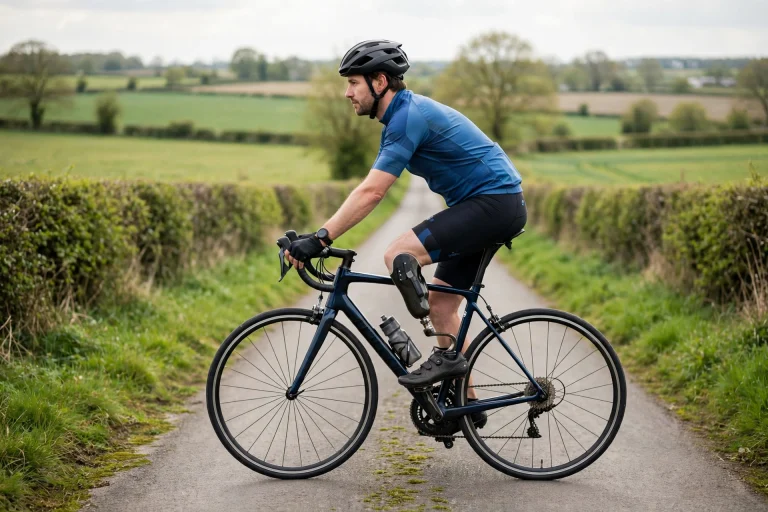
Riding with one arm takes skill and practice, and the same is true of managing a helmet one-handed. Many riders who have one arm, whether from birth or from an injury or amputation, ride confidently and regularly. The helmet question is a practical one: most helmets are designed with two-handed use in mind, so the challenge is finding a model and a routine that work well with one hand. This guide looks at the fastenings and fit features that help, how to put a helmet on and take it off, and how to choose the right style, all in general terms and without medical advice.
What Makes Helmet Use Different for a One-Armed Rider?
The main difference is that the usual two-handed routine does not work. A two-handed rider typically holds the helmet steady with one hand while fastening the buckle or adjusting the fit dial with the other. A one-armed rider has to do all of this with a single hand, which means the helmet must be stable enough to stay in place while the hand works, and the fastenings must be operable without anything holding the other side.
The chin strap is usually the biggest single obstacle. Most strap buckles need one hand to hold the strap and the other to press the release, and the strap itself can slip away while one hand is busy. A buckle that can be closed and opened with a single hand, and straps that stay where they are put, make the whole routine far simpler. This is why the buckle deserves the most attention when choosing a helmet.
Which Fastenings Work Best with One Hand?
Magnetic buckles are often the easiest option for one-handed use. A magnetic buckle pulls itself together when the two halves are brought close, so the rider only needs to guide the strap ends near each other rather than lining them up precisely and squeezing them together. Releasing one usually takes a simple slide or twist of a single part, which can be done with one hand.
Some helmets use a buckle that clips together with a single press, and these can also work well if the clip is large enough and the strap is easy to hold. The key test is whether the buckle can be closed and opened while the helmet is on the head, using one hand only, without the strap slipping out of reach. Trying this in the shop is the only reliable way to know.
The rear fit dial deserves attention too. A large dial with a good grip surface can be turned with one hand while the helmet sits on the head, especially if the dial is easy to reach and does not need a pinch grip. Some helmets also have a fit system that adjusts with a simple lever or a sliding pad, which may suit some riders better. Whatever the system, it should be operable with one hand and should hold its setting once adjusted. If you are learning about how helmets handle different kinds of impact, reading about what MIPS is for helmets can help you understand one of the technologies used in modern helmet design.

How Important Is Fit and Stability?
Fit is crucial for a one-armed rider, because a well-fitting helmet stays put on its own. A helmet that fits properly does not need constant adjustment, and it does not slide around while the rider is trying to fasten the strap. A loose helmet, on the other hand, shifts about and makes every one-handed job harder, because the rider has to steady the helmet and work the fastening at the same time.
A good fit means the helmet sits level, covers the forehead, and feels snug all the way around without pressing painfully in any one spot. The inner padding should touch the head evenly. When the rider shakes their head gently, the helmet should move the skin of the forehead with it rather than sliding freely. This is the same test every rider should use, but it matters even more when only one hand is available to fix a poor fit.
Stability also depends on the strap setup. Straps that are adjusted correctly and stay in place mean the rider does not have to re-thread or re-position them every time the helmet is worn. Once the straps are set, they should hold their length, and the buckle should sit comfortably under the chin. Taking the time to set the straps up properly at the start saves effort on every ride afterwards.
What About Putting the Helmet On and Taking It Off?
A good routine makes one-handed helmet use much easier. Many one-armed riders develop their own method over time, and it is worth practising at home before the first ride. One common approach is to rest the helmet on a table or a knee, open the straps out, and then lift it onto the head in a single smooth movement, using the shape of the helmet itself to guide it into place.
How Can a Rider Choose the Right Style?
The best helmet for a one-armed rider is the one that fits well, fastens easily with one hand, and suits the kind of riding being done. A road cyclist, a mountain biker and a commuter all need slightly different helmets, and the right choice depends on the riding as much as on the rider. There is no need to choose a helmet that is marketed for any particular group: a standard helmet with the right fastenings is usually the best answer.
- Try the buckle one-handed in the shop, with your riding gloves on.
- Check the fit dial can be turned with one hand while the helmet is on.
- Put the helmet on and take it off several times without help.
- Make sure the straps stay in place and do not slip away.
- Wear it for a few minutes to check for pressure points.
If a helmet passes these tests, it is a strong candidate. If it fails one, ask whether a different buckle or a different model would fix it. A good shop will be happy to help, and the time spent testing is time well spent.
Frequently Asked Questions
Q: Can a one-armed rider wear a normal helmet?
A: Yes, in general terms. Most one-armed riders use a standard helmet, chosen for easy one-handed fastening, a good fit and a suitable style for their riding. There is no need for a special medical helmet.
Q: What is the easiest chin strap buckle to use with one hand?
A: A magnetic buckle is often the easiest, because it pulls itself together when the two halves are brought close. The best way to choose is to try several buckles one-handed in the shop and see which feels simplest.
Q: How can I practise putting my helmet on one-handed?
A: Practise at home before your first ride, using a table or your knee to steady the helmet while you lift it on. Loosening the fit dial before taking the helmet off gives extra room, and keeping the straps tidy stops them slipping out of reach.

Olivia
Writer at Helmet Today, covering helmet reviews, fit and riding safety.