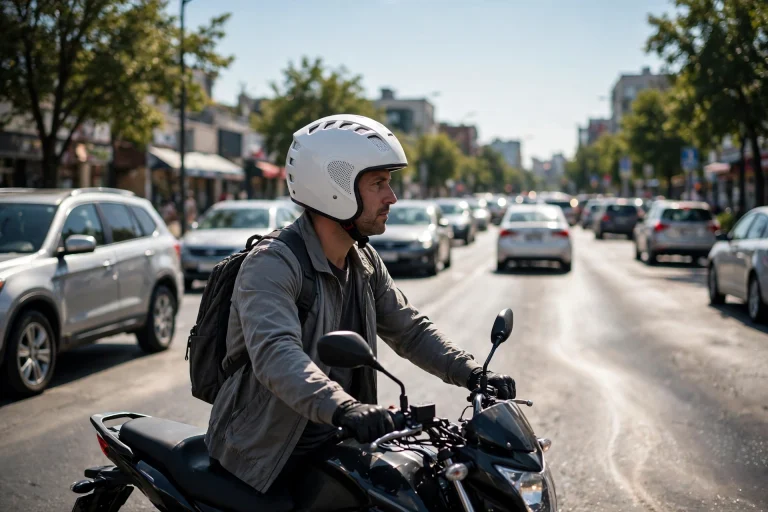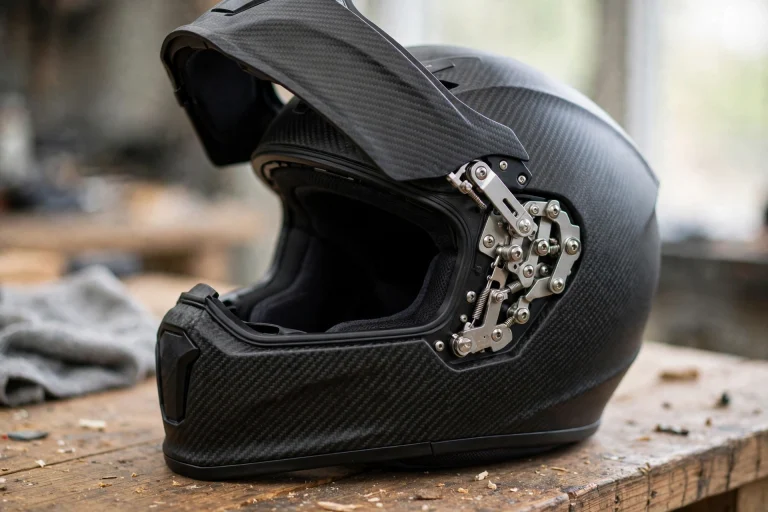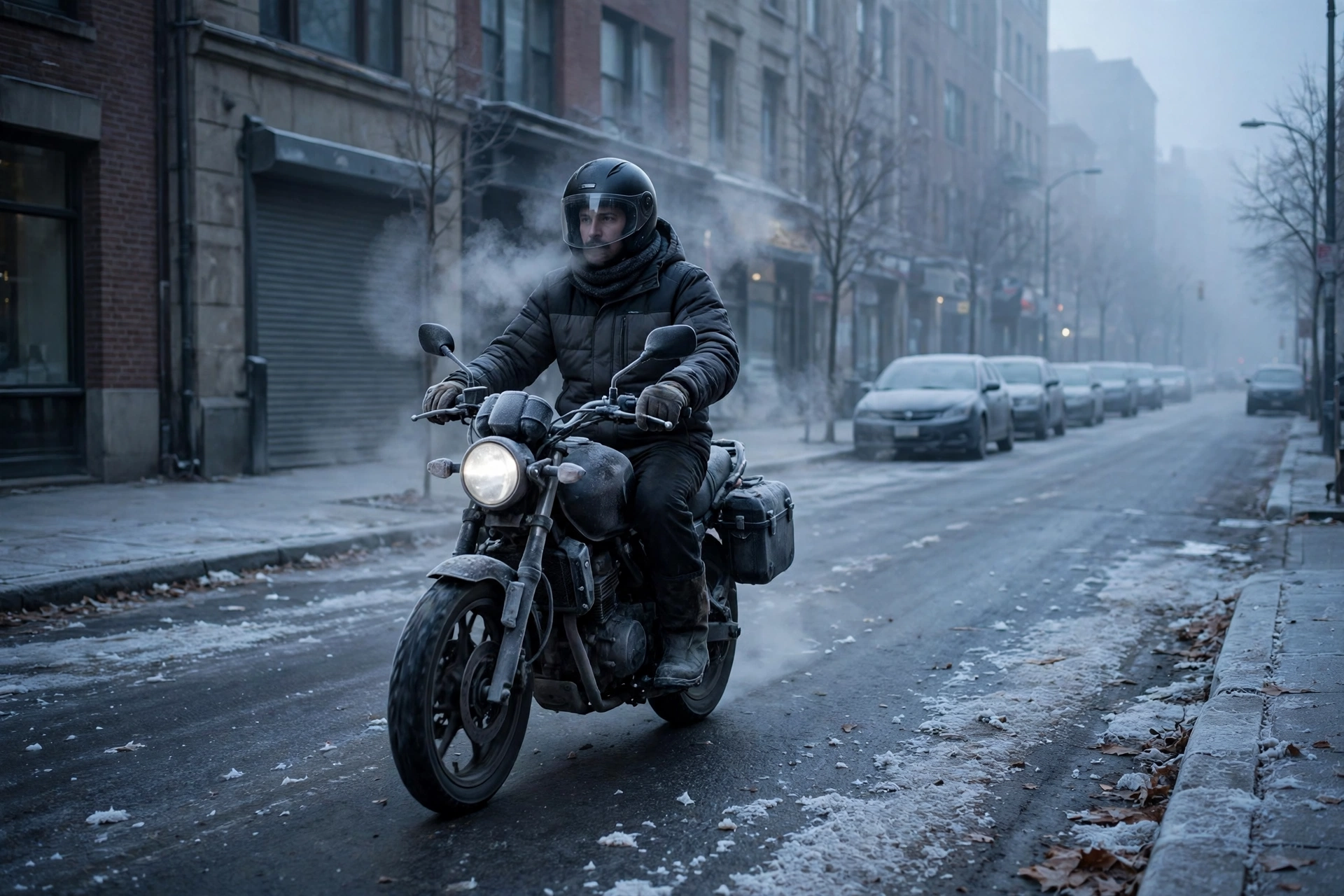
A motorcycle helmet for cold-weather commuting needs to keep your head warm, keep the visor clear, and seal out wind and rain — and the best choice is usually a full-face helmet with good sealing, a working chin vent, and room for a thin balaclava underneath. Commuting in the cold is different from a weekend ride: you ride the same route every day, in the dark, in rain, and in freezing temperatures, and you need a helmet that works reliably without fuss. Getting the choice right makes the daily ride far more bearable.
Many commuters ride through winter because they have to, not because they enjoy the cold. That means the helmet is part of the working day, worn twice a day in all weathers, and it needs to be practical as well as protective. A helmet that fogs up at the first traffic light, or lets a freezing draught in around the neck, will make every commute miserable. This guide explains what to look for and how to manage the helmet through the colder months, in general terms.
What Makes Cold-Weather Commuting Hard on a Helmet?
The biggest challenge is the temperature gap between the inside and the outside of the helmet. Your breath is warm and moist, the outside air is cold, and the visor sits between them, so fogging is almost guaranteed unless the helmet can move moist air out. Commuting makes it worse, because you stop and start in traffic, and every time you stop, the airflow drops and the fog appears.
Cold air also gets in through the gaps. The bottom of the helmet, around the neck and chin, is the usual entry point, and a cold draught there can chill your whole head. At commuting speed, wind chill makes even moderately cold air feel much colder, and a draught that seems minor in the first five minutes can become genuinely uncomfortable by the end of a half-hour ride.
Which Helmet Type Works Best for Winter Commuting?
A full-face helmet is usually the best choice for cold-weather commuting. It covers your whole head and face, seals better against wind and rain than an open-face helmet, and gives the most protection. The chin bar blocks the wind from your face, and the sealed visor keeps rain and spray out. For a daily commute in winter, that coverage matters more than the extra airflow an open-face helmet offers.
A flip-up helmet is also a good option for commuters. It gives the same coverage as a full-face helmet when the chin bar is down, and you can flip it up at traffic lights or when you stop, which lets fresh air in and clears fog quickly. Some commuters find this very handy in slow traffic, where fogging is worst. The trade-off is that a flip-up helmet is usually a little heavier and noisier than a full-face helmet of similar quality.
Whatever type you choose, fit matters more in winter than in summer, because you will be wearing a balaclava or a neck warmer underneath. Try the helmet on with the layers you will actually wear, and make sure it still fits snugly without pressing painfully. A helmet that fits perfectly in summer can feel tight in winter once the extra layers are added, so test it properly before you buy.
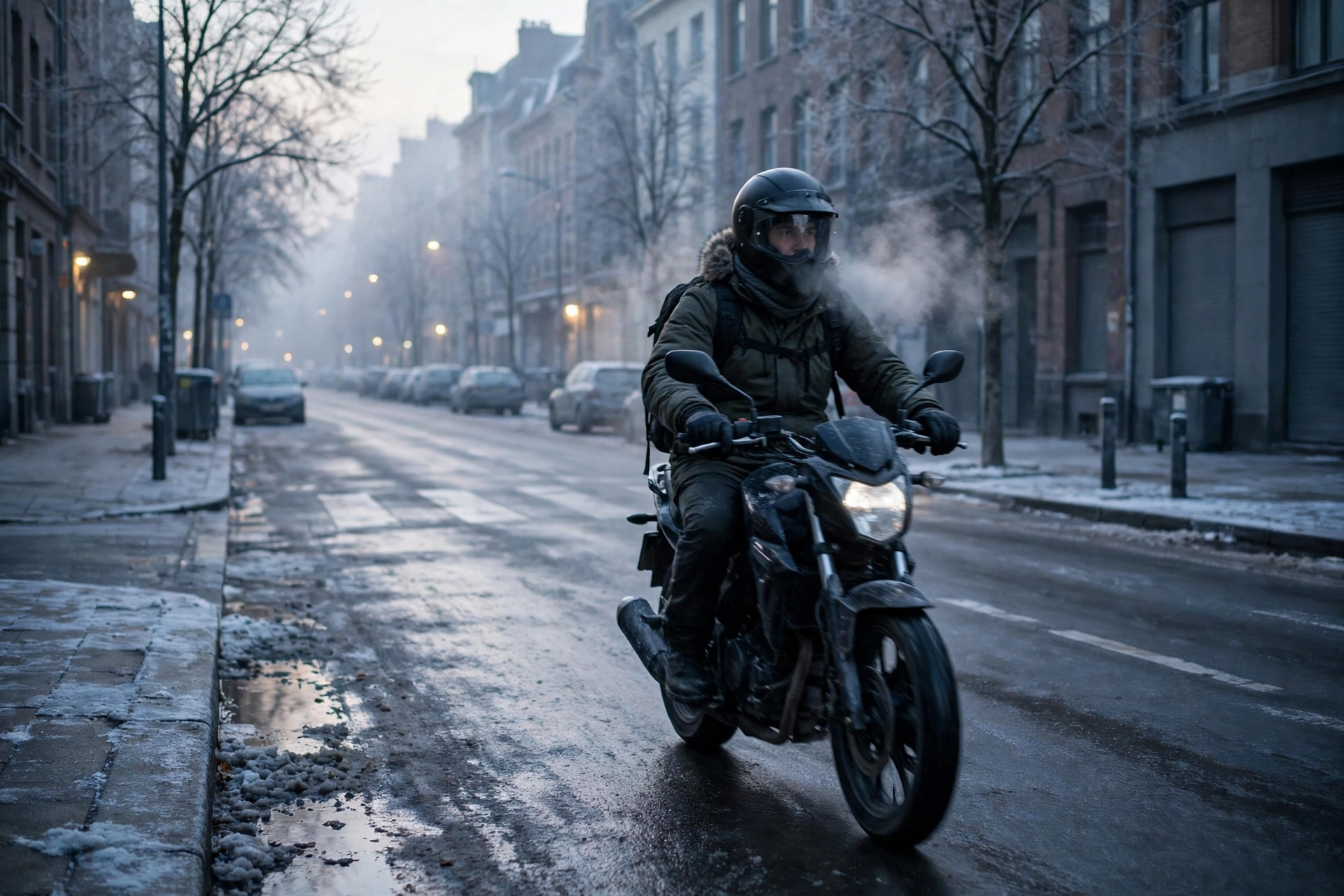
How Do You Keep the Visor Clear on a Cold Commute?
The chin vent is your best tool. Open it slightly before you set off, so air is already flowing across the inside of the visor when you start riding. If the visor still fogs, crack it open a notch — most helmets have a first position that leaves a small gap — and the extra airflow will usually clear it. Do this before you stop at traffic lights, not after the fog appears, because it is easier to prevent fogging than to clear it.
An anti-fog insert is one of the best winter additions for a commuter. It fits on the inside of the visor and creates a double layer that stays warmer than the visor itself, so moisture does not condense on it. Make sure it is fitted correctly and sealed all the way round, and keep it clean. A breath guard or chin curtain also helps by directing your breath down and away from the visor.
Keep the visor clean, because a dirty visor fogs more easily and is harder to see through in the dark and rain. Wash it gently with lukewarm water and a soft cloth, and dry it with a clean microfibre cloth. If you ride in rain, a visor treatment that helps water run off can make a real difference, and it is worth reapplying regularly through the winter. If you want to learn more about the safety technology inside modern helmets, reading about what MIPS is for helmets is a useful starting point.
How Do You Stay Warm Inside the Helmet?
A thin balaclava is the simplest and most effective way to stay warm. It covers your head, neck, and chin, keeps warmth in, and reduces the chill from any air that comes through the vents. Choose a thin one that fits under the helmet without changing the fit, and pick a moisture-wicking material so sweat does not make you cold. A thicker balaclava is better on the coldest days, but it needs a helmet with enough room to fit it.
A neck warmer is just as important, because cold air often gets in at the bottom of the helmet. A good neck warmer seals the gap around your neck and keeps the draught out, which means you can keep the chin vent open enough to stop fogging without feeling cold. Make sure it sits comfortably and does not push the helmet up or interfere with the chin strap.
How Should You Look After a Commuting Helmet in Winter?
A helmet used for daily winter commuting needs regular care. Wash the liner often, because it soaks up sweat and moisture every day, and a damp liner feels cold the next morning. Many helmets have a removable liner that can be hand-washed and air-dried overnight, which is ideal for a commuter. If your liner is fixed, wipe it down regularly and air the helmet out after every ride.
Store the helmet indoors, in a cool, dry place, with the visor open so the inside can dry out. Do not leave it on the bike overnight in the cold, where moisture can freeze inside it, and do not store it near a radiator or other heat source. In general terms, a helmet that is cleaned and dried after every ride will feel warmer and fresher the next morning, and that small routine makes winter commuting far more comfortable.
Frequently Asked Questions
Q: What is the best helmet for cold-weather commuting?
A: In general terms, a full-face helmet is the best choice, because it seals out wind and rain and covers your whole face. A flip-up helmet is a good alternative if you want to open the chin bar at traffic lights to clear fog.
Q: How do I stop my visor fogging on my winter commute?
A: Open the chin vent slightly, fit an anti-fog insert, and crack the visor open a notch in slow traffic. A breath guard helps too. Prevent fogging before you stop, rather than trying to clear it afterwards.
Q: Should I wear a balaclava under my helmet in winter?
A: Yes, a thin balaclava keeps your head and neck warm and lets you keep the chin vent open for clear vision without feeling cold. Make sure the helmet still fits properly with it on, and choose a moisture-wicking material.

Olivia
Writer at Helmet Today, covering helmet reviews, fit and riding safety.