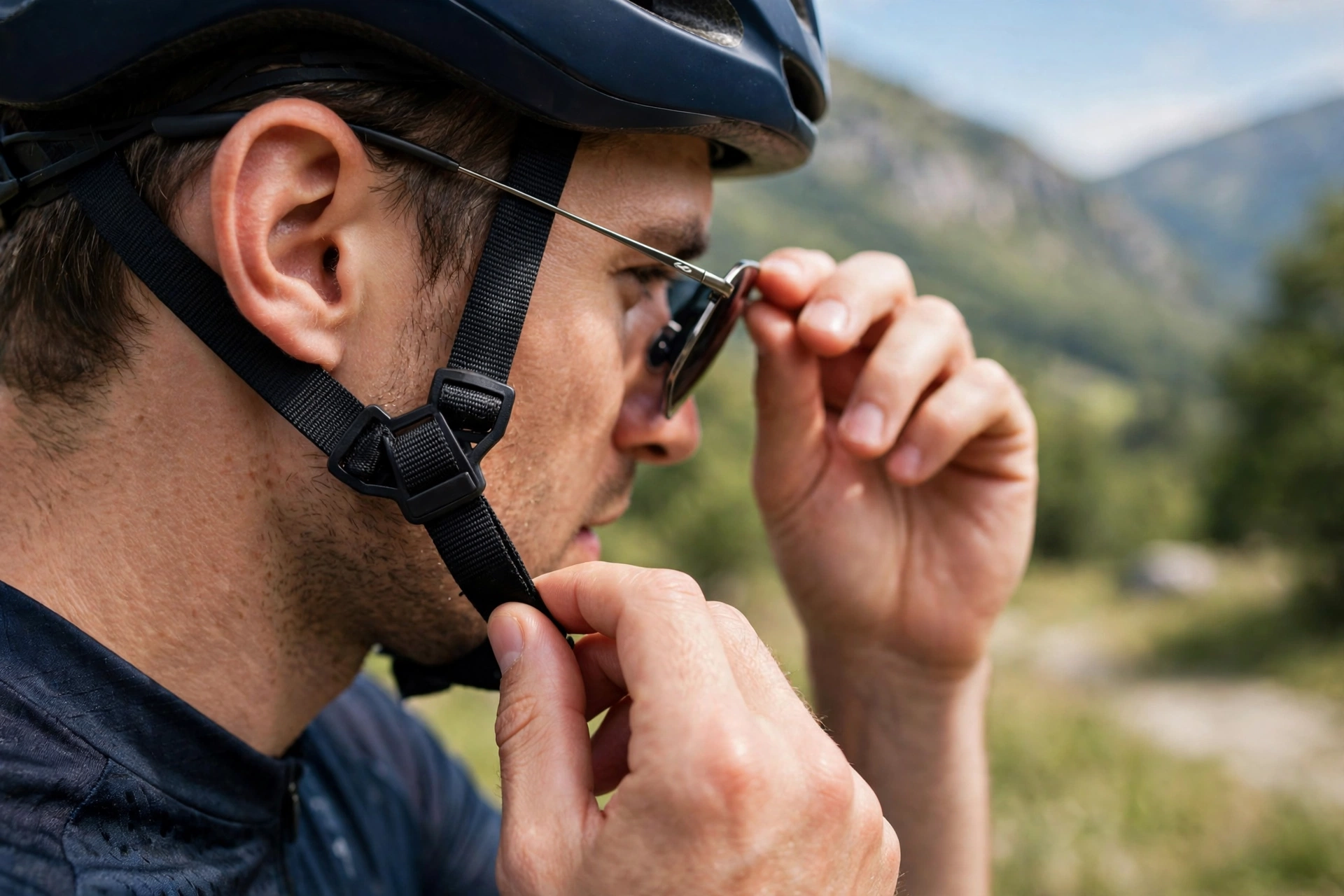
If your bike helmet presses on your sunglasses, the fix is usually a better fit, not a new helmet — in general terms, adjust the helmet so it sits level and snug without pushing the glasses arms into your head, or switch to glasses with thinner, straighter arms that slide cleanly under the helmet. The pressure almost always comes from the helmet and the glasses fighting for the same space at your temples, and once you find the combination that fits together, the discomfort usually disappears. A few small adjustments are often all it takes.
This is a common problem, and it is also an annoying one. A helmet that presses on your sunglasses can give you a headache within minutes and leave red marks on your temples. This guide explains, in general terms, why the pressure happens and how to fix it step by step.
Why Does a Helmet Press on Sunglasses?
The most common cause is fit. A helmet that is slightly too small, or that sits too low on your forehead, pushes the glasses arms against your temples. The arms have nowhere to go, so they press into your skin, and the pressure grows worse as you ride because the helmet settles and the straps tighten. A helmet that is the wrong shape for your head can do the same thing even if the size is right: if the shell narrows sharply at the temples, it will squeeze anything that passes through that area, including glasses arms.
The glasses themselves are the other half of the problem. Sunglasses with thick, curved, or hooked arms take up more space and are much more likely to be squeezed by a helmet. Arms that hook behind the ear can also catch on the helmet straps or the fit cradle, pulling the glasses out of position. In general terms, the slimmer and straighter the arms, the easier they slide under a helmet without pressure, which is why many cycling glasses are designed with thin, straight temples.
How Do You Adjust the Helmet to Stop the Pressure?
Start by putting the helmet on without your glasses, and adjust it until it sits level and snug, with the fit dial tightened just enough that the helmet stays put when you shake your head. Then put your sunglasses on and notice exactly where the pressure is. Is it at the temples, behind the ears, or on the bridge of your nose? Knowing the exact spot tells you what to change, because pressure at the temples usually means the helmet is too tight or too low, while pressure behind the ears usually means the arms are catching on the straps.
Try moving the helmet slightly higher on your forehead, just a few millimetres, and see if the pressure eases. Loosen the fit dial by a small amount and check whether the helmet still stays secure. Then adjust the straps so they sit flat and do not cross over the glasses arms. It helps to do this in front of a mirror, or to ask someone to look, because strap position is hard to judge by feel alone. If you want to understand more about the safety technology inside modern helmets, reading about what MIPS is for helmets can help you compare designs.
If the helmet still presses after these adjustments, the problem may be the helmet itself. Some helmets have a glasses groove — a small channel in the padding at the temples designed to let glasses arms pass through without being squeezed. If your helmet does not have one, a helmet with wider temple space or a different shell shape may suit you better. In general terms, a helmet that is comfortable with glasses on is worth more than a helmet that is comfortable only without them, because you will be wearing both together on every ride.
What Type of Sunglasses Work Best with a Helmet?
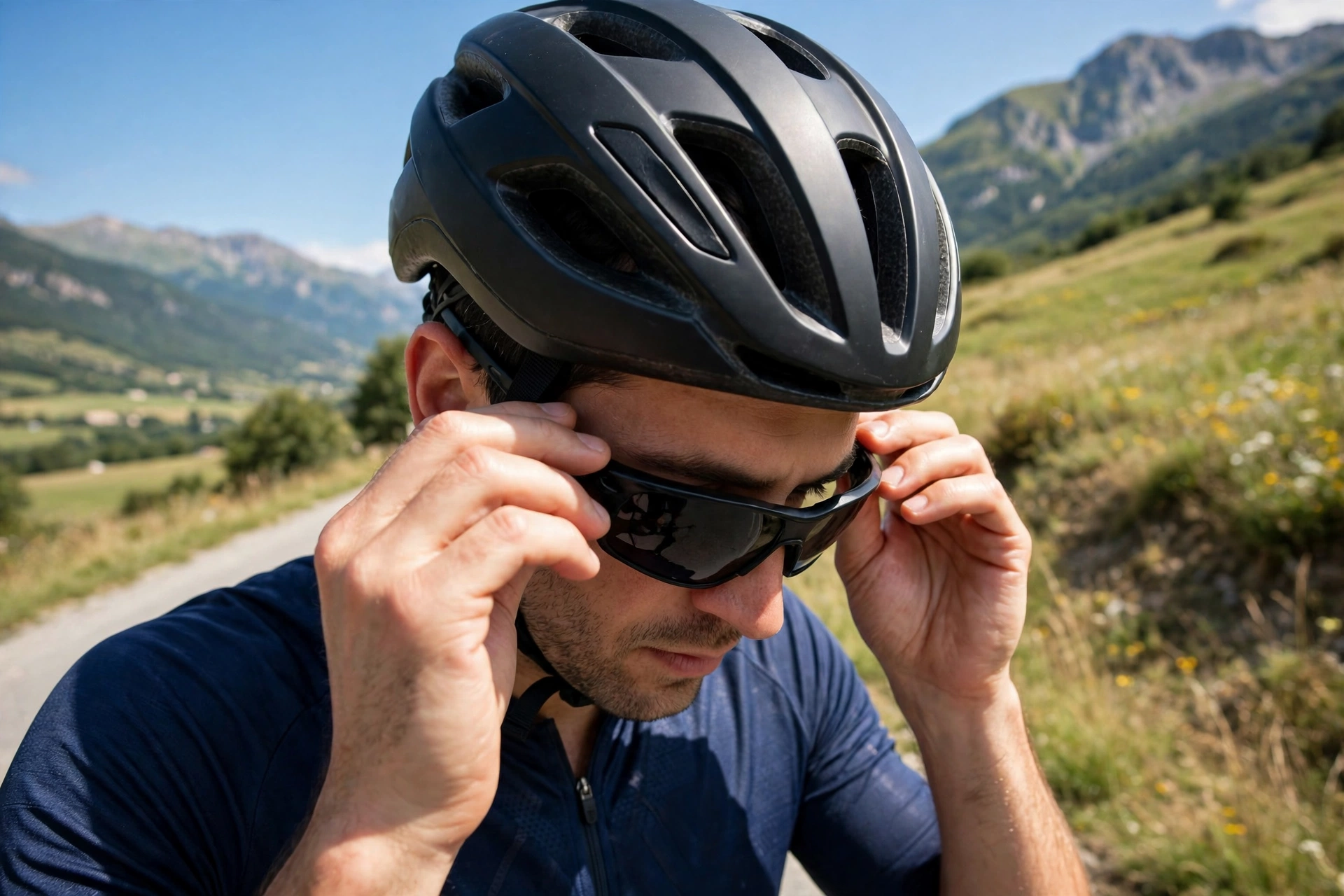
Cycling-specific sunglasses are designed with helmets in mind, and they solve most of the problem before you even put the helmet on. They usually have thin, straight arms that slide easily under the helmet, lightweight frames that do not press, and lenses that wrap around to protect your eyes from wind and dust. Many also have adjustable nose pads, so you can set the glasses to sit comfortably without slipping down when you sweat.
Ordinary sunglasses, especially fashion styles with thick arms or heavy frames, are much harder to wear with a helmet. They were not designed to share space with a shell and straps, and they often press, slip, or sit at an angle. If you wear prescription glasses, look for frames with thin, straight temples, or ask your optician about cycling-friendly frames. Some riders use a strap or retainer to keep their glasses in place, which can help if the glasses tend to slip forward under the helmet.
What If the Pressure Keeps Coming Back?
If you have adjusted the helmet and tried slimmer glasses and the pressure still returns, check the fit again from the start. Measure your head and compare it with the maker’s size guide, because you may be wearing a size that is too small and compensating by loosening the dial, which lets the helmet move and press unevenly. A helmet that is the right size should feel snug all round without any single point pressing hard, with or without glasses.
Check the padding as well. Padding that has become compressed or worn can let the helmet sit lower or closer to your head than it used to, which changes where it meets your glasses. Replacing worn padding is cheap and can restore the original fit. Also check that the fit cradle at the back of the helmet is not sitting too low, because a cradle that presses on the glasses arms behind your ears will cause pain that feels like temple pressure.
- Try the helmet with the glasses on for ten minutes at home before you buy or ride.
- Look for helmets with a glasses groove or extra temple space.
- Choose glasses with thin, straight arms designed for cycling.
- Adjust the straps with the glasses on, so the arms are not trapped underneath.
- Replace worn padding, which can change how the helmet sits on your head.
How Can You Test the Fit Before a Ride?
The best test is a simple one: put the helmet and glasses on together at home and wear them for ten to fifteen minutes while you move around, look up and down, and shake your head gently. Pay attention to any pressure that builds slowly, because that is the pressure that will become a headache on a long ride. If you feel a hot spot or a pinch, stop and adjust the helmet or the glasses rather than hoping it will go away.
Frequently Asked Questions
Q: Should my helmet feel tight when I wear sunglasses?
A: No. In general terms, a helmet should feel snug all round without pressing on any one spot, with or without glasses. If it presses on your sunglasses, the fit, the strap position, or the glasses themselves need adjusting.
Q: Are cycling sunglasses better than normal sunglasses with a helmet?
A: Yes, in general terms. Cycling sunglasses have thin, straight arms that slide under a helmet easily, while ordinary sunglasses often have thick or hooked arms that get squeezed and cause pressure.
Q: Can I wear prescription glasses under a bike helmet?
A: Yes. Choose frames with thin, straight temples, fit the helmet with the glasses on, and check the straps do not trap the arms. Many riders wear prescription glasses comfortably with the right helmet and frame combination.

Olivia
Writer at Helmet Today, covering helmet reviews, fit and riding safety.