A rotational impact is a crash that sets your head spinning or twisting instead of just moving it in a straight line — and most real-world crashes do exactly that, because riders usually hit the ground at an angle. Instead of all the force arriving in one direct blow, an angled impact makes the helmet (and the head inside it) rotate suddenly. That twisting motion is why helmet science has spent the last couple of decades paying as much attention to rotation as to straight-line force.
Traditional helmet design and testing focused on linear impacts: a head dropped straight down onto a surface. Rotational impact is the other half of the picture, and understanding it explains a lot of modern helmet design — slip-plane liners, oblique test rigs, and the arguments about which helmet technology matters most.
What Is the Difference Between Linear and Rotational Impact?
A linear impact moves the head in a straight line and then stops it abruptly — think of being dropped vertically onto a flat surface. The danger is concentrated force: peak acceleration in one direction, which the helmet’s foam handles by crushing and spreading the stop over distance and time.
A rotational impact adds a twist. When a helmet strikes a surface at an angle, friction grabs the shell while the head’s momentum keeps it moving, so the head rotates sharply around the neck. In practice, nearly every real impact is a blend: some straight-line force and some rotation, in proportions that depend on the angle, the surface, and how the rider falls.
The distinction matters because the two motions stress the brain differently, and because a helmet optimized only for straight drops may do little about the twisting component. Modern standards have begun adding oblique impact tests for exactly this reason, though in general terms coverage still varies by standard and helmet type.
Why Do Most Real Crashes Involve Rotation?
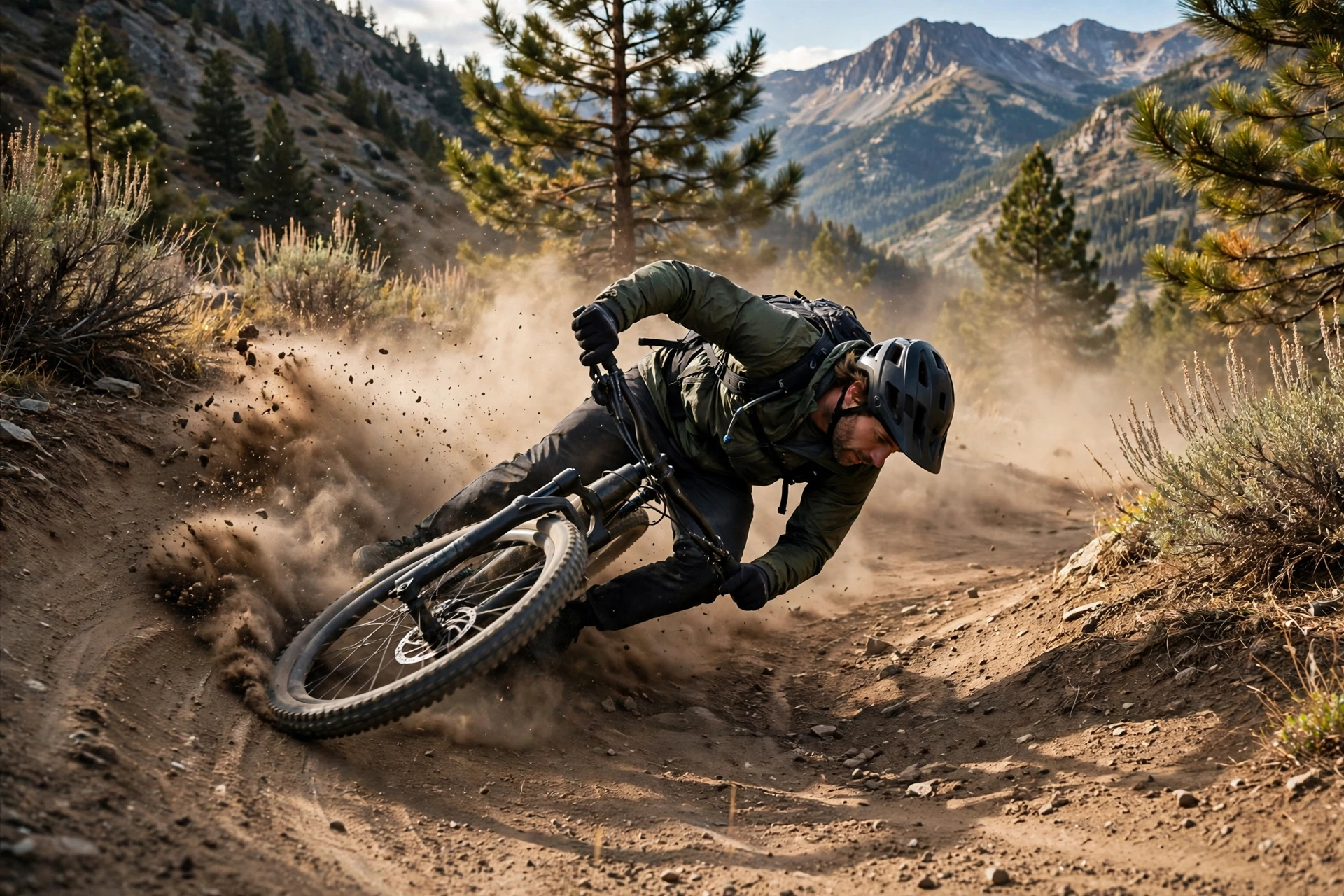
Because riders rarely fall straight down. A cyclist who goes over the bars lands moving forward as well as down. A rider who lowsides on a motorcycle slides along the road. A skateboarder who catches an edge pitches sideways. In each case the helmet meets the ground or an object at an angle while the body still has horizontal speed.
That angle is what creates rotation: the contact point grips, the head and body keep traveling, and the result is a rapid twist. Even falls that look vertical — toppling off a bike at a standstill — usually involve the head striking while the body rotates around the hips or shoulders.
Road surfaces add to the effect. Asphalt is grippy, so a helmet that lands on it tends to be grabbed and turned rather than skidding cleanly. This is also why helmet shells are smooth and rounded: a shell that slides more easily, with no snagging edges or protrusions, gives rotation less to work with, in general terms.
How Can Rotational Motion Injure the Brain?
The brain is soft and suspended in fluid inside the skull, and it tolerates some kinds of motion better than others. Rapid rotation is particularly harmful because it shears brain tissue: different layers of the brain move at different speeds during a twist, stretching and tearing the delicate connections between them.
In general terms, rotational forces are strongly associated with concussions and with diffuse brain injuries, where damage is spread across connections rather than concentrated in one bruised spot. This is also why concussion can happen without a dramatic direct blow — a glancing, twisting impact can jolt the brain even when the skull itself is barely marked.
Researchers measure this in the lab with instrumented headforms that record angular acceleration during oblique impacts, and those measurements now underpin the newer generation of helmet testing and liner design. The practical takeaway is not a number; it is that the twist matters as much as the thump.
How Do Helmets Reduce Rotational Impact?
The main strategy is to let the helmet move slightly relative to the head during those first milliseconds of an angled impact, so some of the twisting energy is absorbed by the liner instead of being passed straight to the brain. The best-known implementation is a low-friction slip-plane liner that allows a small amount of relative movement between the head and the helmet shell — our full guide to what MIPS is and how rotational liners work walks through that mechanism in detail.
Other designs attack the same problem with collapsing structures: cellular liners designed to crumple and shear, or layers of small tubes that crumple on impact. The details differ, but the shared goal is to lengthen the impact event and redirect some rotational energy into deforming the liner.
Design basics help too. A smooth, round shell with no sharp ridges or stuck-on accessories is less likely to grip the road and spin the head. Whatever technology a helmet carries, fit remains part of the equation: a helmet that is loose enough to shift on your head before the impact is already in the wrong position when the twist arrives.
Does a Standard Helmet Still Help in a Rotational Crash?
Yes — it is important not to overcorrect. The thick energy-absorbing foam in any certified helmet still crushes in an angled impact, still lengthens the stop, and still reduces the forces of the blow, including some of the energy that would otherwise drive rotation. Certification tests exist because that basic protection works, and rotational features are an addition to it, not a replacement for it.
What a basic helmet does not specifically do is manage the twisting component: it has no dedicated slip layer or shear structure. In general terms, two certified helmets can perform identically in a straight drop test yet behave differently in an angled one, which is precisely the gap newer oblique tests and independent ratings are trying to expose.
So the sensible order of priorities is unchanged: a certified helmet, in good condition, that fits you properly comes first. If you are choosing between similar helmets and one adds a proven rotational-management system, that is a meaningful extra — but it never rescues a bad fit or a crashed helmet kept in service.
Frequently Asked Questions
Q: Is rotational impact more dangerous than a direct blow?
A: Neither is “safe,” and real crashes mix both. Rotational motion is singled out because it is strongly linked to concussion and diffuse brain injury through shearing of brain tissue, and because older testing largely ignored it. A direct blow concentrates force; a twisting blow spreads a different kind of damage.
Q: Do helmet standards test for rotational impact?
A: Increasingly, yes. Some newer standards have added oblique impact tests that measure rotational motion, while older established tests focus on straight-line drops. Coverage varies a lot by standard and region, so check what a specific certification actually includes rather than assuming.
Q: Can I add rotational protection to my existing helmet?
A: Not reliably. Rotational systems are designed and tested as part of a specific helmet, and aftermarket inserts change the fit and the tested structure in ways nobody has certified. If rotational protection matters to you, buy a helmet that was built and tested with it.

Olivia
Writer at Helmet Today, covering helmet reviews, fit and riding safety.