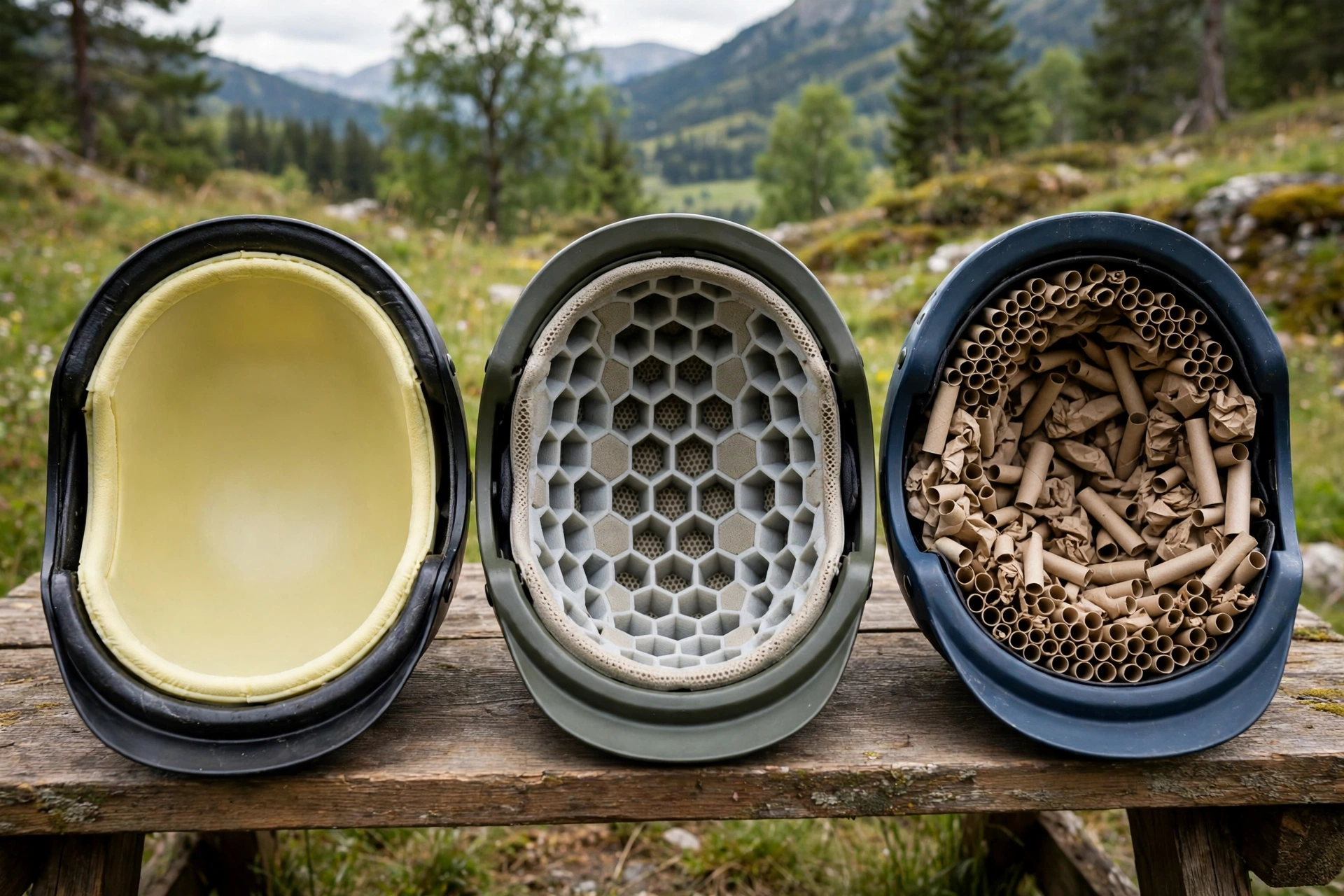
MIPS, WaveCel and Koroyd are three different liner technologies built for the same job: managing angled, rotational impacts better than a plain foam liner alone. MIPS uses a low-friction slip plane, WaveCel uses a collapsible cellular structure, and Koroyd uses a layer of welded polymer tubes that crumple. None of them replaces the helmet’s main energy-absorbing foam, and there is no universal winner — independent test results vary depending on how the testing is done.
That can make choosing frustrating, because each system arrives with confident marketing. This article explains how each one actually works, in plain terms, what it replaces or adds inside the helmet, and how to choose between them without pretending the science is simpler than it is.
What Problem Are All Three Liners Trying to Solve?
Start with the crash they are designed for. Most real impacts are angled: the helmet hits the ground while the rider is still moving forward or sideways, which tries to twist the head violently. That rotational motion is linked to concussion and diffuse brain injury, because it shears brain tissue as different layers move at different speeds.
A conventional helmet liner — usually EPS foam — is excellent at crushing to absorb a straight blow, but it grips the head and rotates with the shell, passing much of the twist along. The three systems in this article are three different attempts to interrupt that transfer: slip it, collapse through it, or crumple through it.
All three sit between the shell and your head as additions to a certified helmet that still has to pass the standard impact tests for its category. Think of them as a second line of defense aimed at the angled crash, layered on top of the foam that handles the direct force. Which behaviors matter most in a given crash depends on the crash — which is the root of every argument that follows.
How Does MIPS Work?
MIPS — Multi-directional Impact Protection System — is the most common of the three. It is a thin, low-friction layer fitted inside the helmet, attached so it can move a small amount in any direction relative to the shell. In an angled impact, that layer lets the helmet shift slightly around the head for the first instants of the crash, redirecting some of the rotational energy that would otherwise drive the head itself to spin.
Because it is a thin add-on rather than a structural material, MIPS changes the helmet’s shape and weight very little, which is why it appears in everything from road cycling helmets to ski and motorcycle helmets, at many price points. It does not absorb the main impact — the EPS foam still does that — it manages the twist while the foam manages the force.
If you want the deeper walkthrough, our dedicated explainer on how MIPS works inside a helmet covers the mechanism, the fit questions it raises, and what to check when you try one on. The short version: it is a slip plane, and slipping is the entire point.
How Does WaveCel Work?
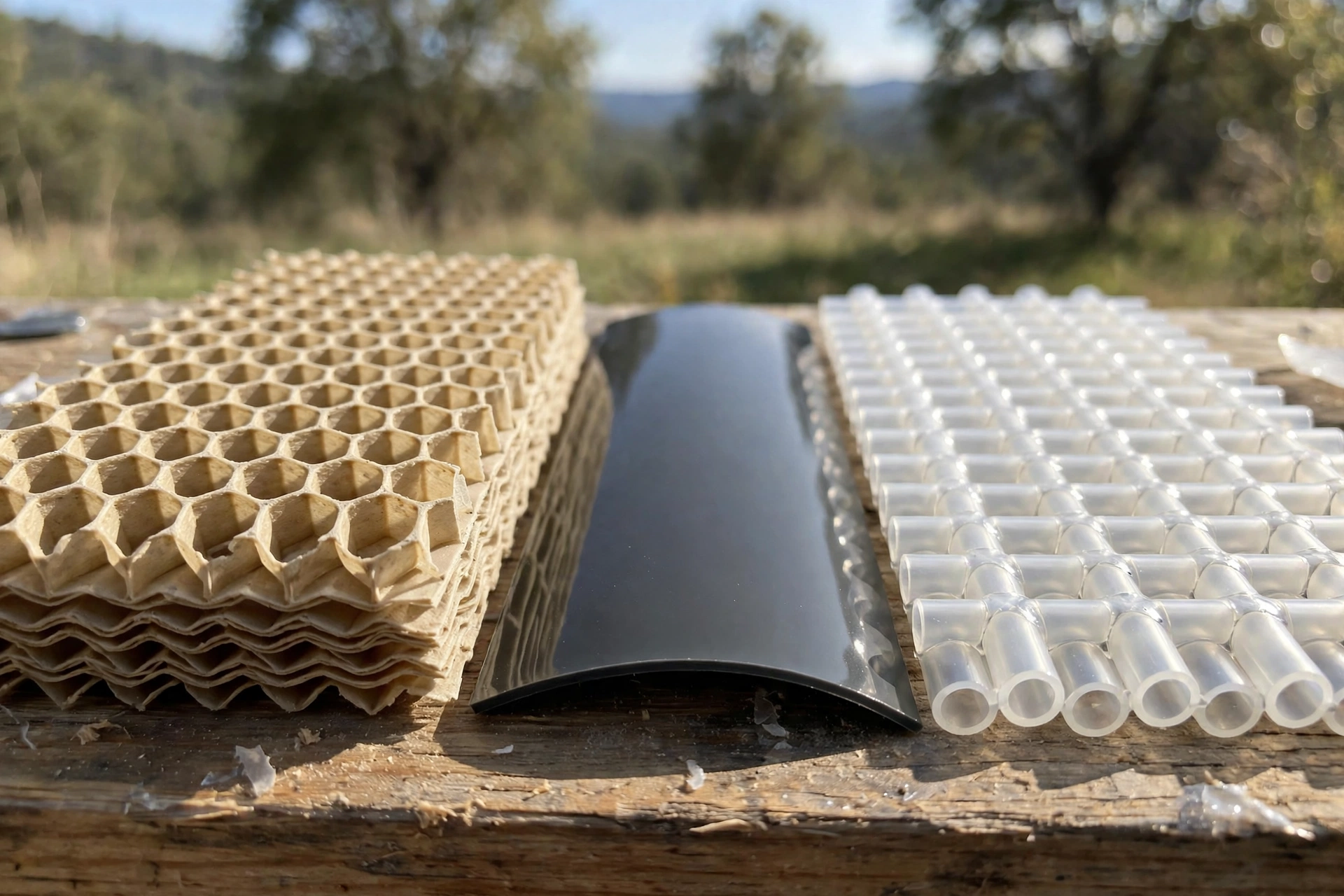
WaveCel takes a different approach: it replaces part of the helmet’s interior with a collapsible cellular structure — a flexible, grid-like material that behaves a bit like a honeycomb made to fold. On impact it works in stages: the cells flex and glide sideways, then crumple, absorbing energy both from the straight force of the blow and from the rotational component.
Because the material itself deforms in more than one direction, its designers argue it can address the twist without needing a separate slip layer. The trade-offs are practical: WaveCel occupies more volume than a thin liner, so helmets built around it have their own shapes and venting layouts, and the technology appears mainly in one brand’s cycling helmets rather than across the industry.
Like every system here, it is single-purpose crash equipment: the cellular structure is designed to sacrifice itself in an impact, so a helmet that has done its job in a crash is finished and should be replaced, however good it still looks.
How Does Koroyd Work?
Koroyd is built from thousands of small polymer tubes welded together into a structured core. When a helmet with a Koroyd layer takes a hit, the tubes crumple in a controlled way, absorbing energy consistently across the impact zone. The crumpling action is meant to manage both direct force and, by the way the structure shears and collapses, some of the rotational energy of an angled impact.
Koroyd is used as a foam replacement or supplement in specific zones of a helmet — sometimes across most of the liner, sometimes in selected areas — and it shows up in cycling, snow and motorcycle helmets from a handful of brands. Its advocates point to the consistency of tube crumpling compared with foam; its critics note that implementation varies, because where and how much of the material a helmet uses matters.
That last point applies to all three systems, and it is worth internalizing: you are never buying a technology in the abstract. You are buying a specific helmet in which that technology has been implemented in a specific way, and the implementation is part of the performance.
Which One Should You Choose?
Honestly: start with the helmet, not the logo. The best-documented independent comparisons rate whole helmets, not liner brands, and their rankings shuffle the technologies — a well-implemented version of any of the three can test better than a poor implementation of another. Results vary by test rig, impact angle and speed, which is exactly what you would expect when the differences being measured are this situation-dependent.
Practical differences may matter more to you day to day. MIPS is available in the widest range of helmets and budgets. WaveCel helmets come from a narrower range and have a distinctive internal feel some riders love and others find bulky. Koroyd models sit somewhere in between on availability, and the material is sometimes visible through the vents, which some riders like as a conversation piece and others simply ignore.
Then apply the unchanging rules. Certification for your sport and market first. Fit second — snug, level, stable, with the liner system not creating pressure points. Rotational technology third, as a genuine but secondary plus. A certified helmet with any of these systems, worn correctly on every ride, puts you ahead of most of the risk the research describes.
Frequently Asked Questions
Q: Is one of the three proven better than the others?
A: No — not in a way that survives across different independent tests. Each system has produced strong results in some evaluations and middling ones in others, because tests measure specific helmets in specific impacts. Anyone declaring an outright winner is usually quoting the test their favorite brand funded.
Q: Can a helmet have more than one of these systems?
A: Generally no. Each occupies the liner space in its own way, and helmets are designed and certified around one system. You will occasionally see Koroyd zones paired with other comfort features, but the rotational technologies themselves are alternatives, not layers to stack.
Q: Do these liners make a helmet last longer or survive multiple crashes?
A: No. All three are designed to deform, slip or crumple in a serious impact, and that damage is often invisible. After any significant crash, the helmet should be replaced whether it uses MIPS, WaveCel, Koroyd or plain foam.

Olivia
Writer at Helmet Today, covering helmet reviews, fit and riding safety.