Most electric scooters top out between about 15 and 25 mph, but the full range is much wider — and the right helmet depends on which speed class your scooter sits in. Shared rental scooters are usually limited to around 15 mph, typical privately owned commuter scooters cruise at roughly 15–25 mph, and high-performance models can go far beyond that, into motorcycle territory. Match the helmet to the top speed you actually ride at, not to the scooter’s size or price.
This guide breaks scooters down into three speed classes, explains how fast each one really goes in everyday use, and shows which style of helmet makes sense for each — from a certified bike helmet at shared-scooter speeds to a full-face motorcycle helmet for the fastest machines.
How fast do shared and rental e-scooters go?
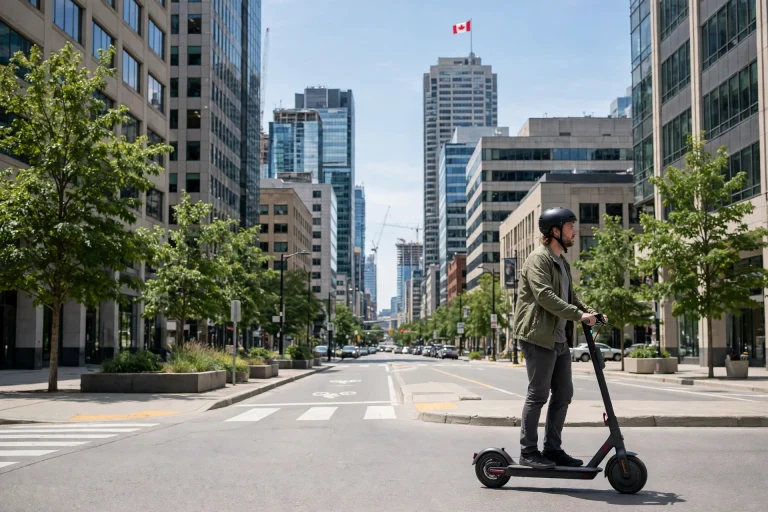
Dockless shared scooters — the kind you unlock with an app in a city center — are deliberately kept slow. In general terms, most shared fleets are electronically limited to about 15 mph, and some cities require even lower limits in busy pedestrian zones, where the scooter slows automatically when it enters a geofenced area.
That limit is not about weak motors. It is a safety and liability choice: rental riders are often first-timers, they ride in dense traffic, and they frequently ride without any protective gear at all. At around 15 mph, a fall is roughly comparable to falling off a bicycle at a brisk pace — painful, but the energy involved is far lower than at higher speeds. Crash energy rises quickly as speed climbs, which is why each speed class above this one deserves a more serious helmet.
How fast do typical consumer e-scooters go?
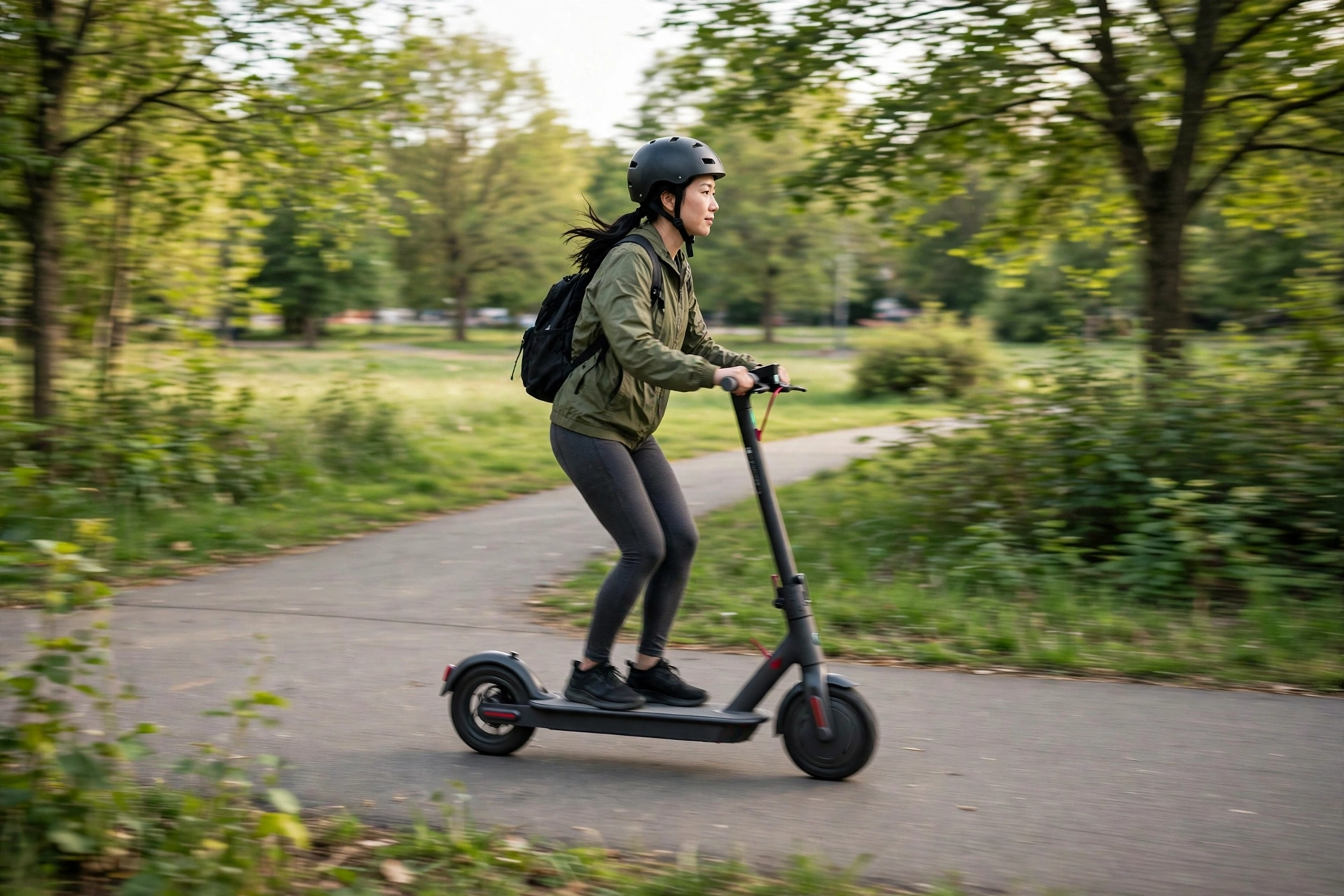
The scooters most people buy for commuting and errands — single-motor models with modest batteries — generally cruise at about 15–25 mph. Many are sold with a top speed in that band, and some arrive restricted to a lower limit that owners can change in the settings for use on private land or where local rules allow.
Real-world cruising speed is usually a few mph below the headline figure. Hills, rider weight, headwinds, and a draining battery all trim the top end, and most riders settle into a comfortable pace rather than holding the throttle wide open. Still, you should choose your helmet for the fastest speed the scooter can reach on your actual routes, because a long downhill or an open stretch of road is exactly where you will hit that number.
How fast can performance e-scooters go?
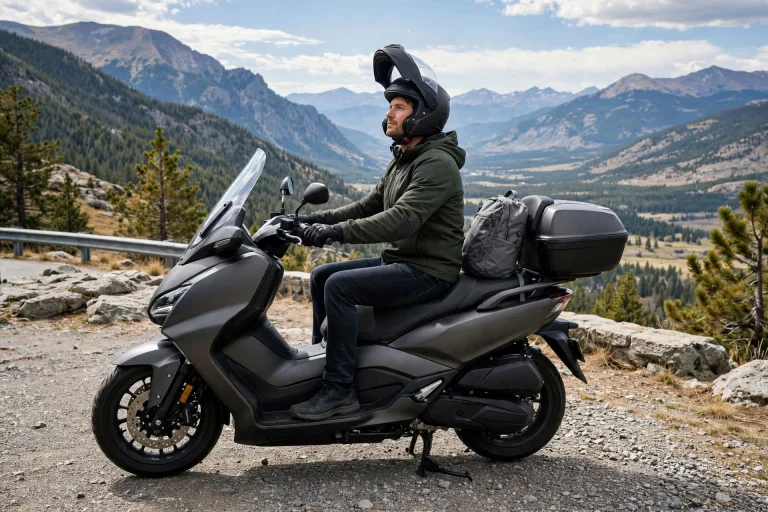
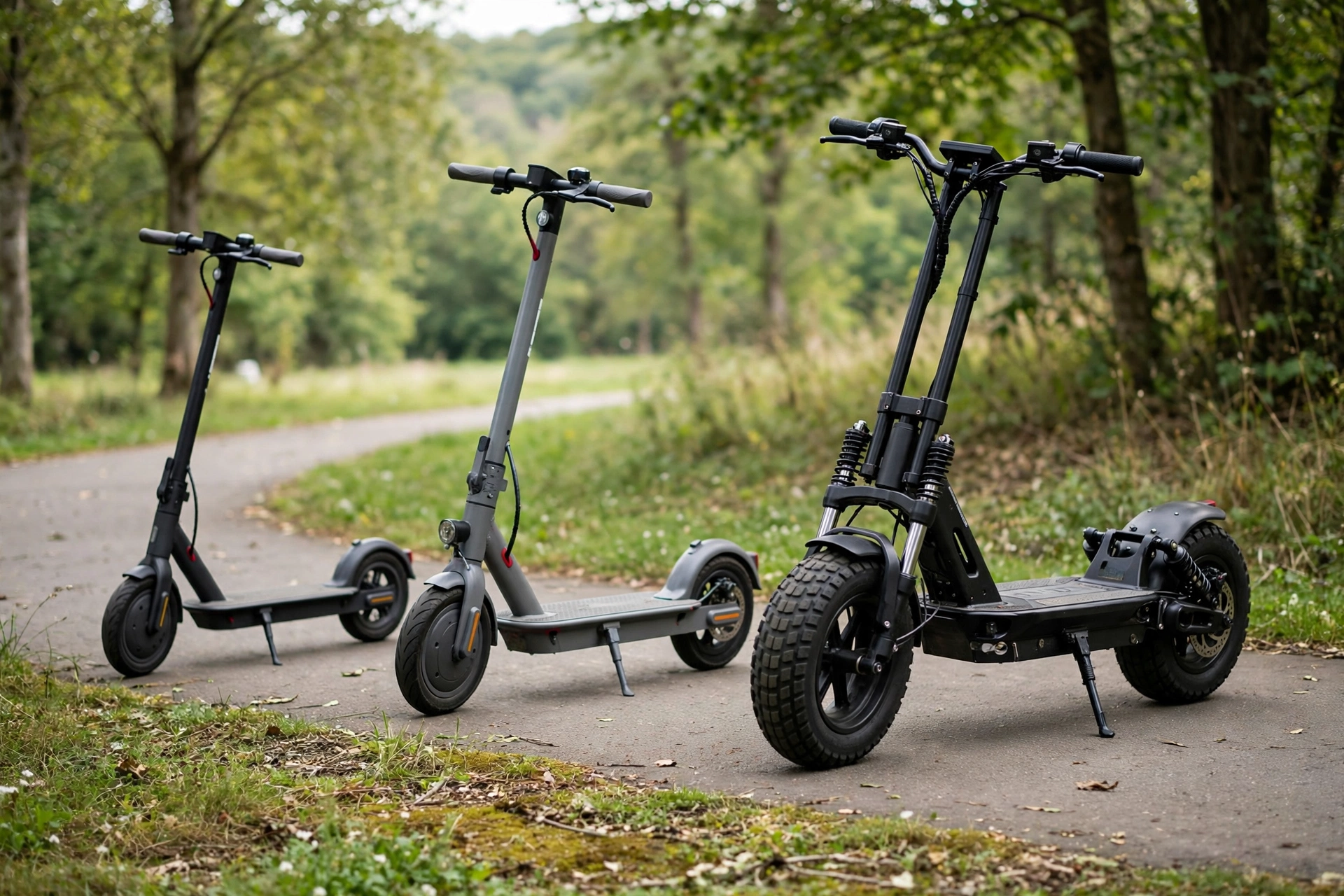
Performance scooters are a different class of machine. Dual-motor models with large batteries can exceed 40 mph, and the fastest flagship scooters go well past that in general terms — speeds that match or beat city motorcycle traffic. They wear bigger tires, hydraulic brakes, and motorcycle-style suspension for a reason.
At those speeds, the “it’s just a scooter” mindset becomes dangerous. A fall at 40 mph is not a bicycle fall; it is a motorcycle crash, and it should be geared for like one. If your scooter can cruise at or above roughly 30 mph, skip ahead mentally to the full-face advice below — the middle speed class is not enough protection for you.
Which helmet matches each speed class?
For shared scooters and casual riding at up to about 15 mph, a certified bicycle helmet (look for the CPSC certification in the US) is the sensible baseline. It is light, ventilated, and designed for exactly the kind of single fall to pavement that happens at bike speeds. If you regularly ride a rental scooter, keeping your own helmet matters — shared helmet availability is inconsistent at best.
For commuter scooters in the 15–25 mph band, step up to a helmet with more coverage: a downhill mountain bike certified helmet or an NTA 8776 speed-pedelec style helmet, in general terms, gives you a deeper shell over the back and sides of the head and testing at higher impact speeds. Rotational impact protection is worth looking for here too — our guide to how MIPS liners work inside a helmet explains how these low-friction layers are designed to reduce twisting forces in an angled fall.
For anything faster — roughly 30 mph and up — wear a full-face motorcycle helmet certified to DOT or ECE standards. The chin bar matters at these speeds, because forward falls onto the face are common in scooter crashes, and no bicycle helmet protects your jaw and teeth.
What else changes as scooter speed goes up?
Speed changes more than the helmet. Faster scooters need longer stopping distances, so gloves, closed shoes, and covered skin stop being optional extras. Small wheels are also less forgiving of potholes and wet leaves at speed — the faster you go, the less time you have to react to the road surface, and the more likely a simple bump becomes a fall.
- Up to ~15 mph: certified bike helmet, normal care in traffic
- ~15–25 mph: higher-coverage or NTA-style helmet, gloves recommended
- ~30 mph and above: full-face motorcycle helmet, gloves, jacket, sturdy footwear
Whatever class you ride in, fit matters as much as certification. A helmet that rocks on your head or sits perched too high cannot do its job, so measure your head, follow the maker’s size chart, and replace any helmet after a crash — even one that looks undamaged.
One more real-world wrinkle: many scooters can be unlocked or de-restricted through an app or settings menu, which means a scooter sold as a gentle 15 mph model may be capable of much more once a rider changes a setting. Judge your helmet needs by the speed your scooter can actually reach in the configuration you ride it, not by the number printed on the box when you bought it. If you unlock more speed, upgrade the helmet at the same time — the two decisions should always travel together.
Frequently Asked Questions
Q: Is a bike helmet enough for a 20 mph e-scooter?
A: It is the legal baseline in many places and far better than nothing, but at 20 mph a higher-coverage helmet — such as a downhill-certified or NTA 8776 style — is the smarter choice in general terms, because impact energy is higher than in a typical bicycle fall.
Q: Do I need a motorcycle helmet for my commuter scooter?
A: Not for a typical 15–25 mph commuter model; a well-fitting higher-coverage bicycle-style helmet is the usual recommendation. Once your scooter cruises at motorcycle-like speeds, around 30 mph and beyond, a certified full-face motorcycle helmet becomes the sensible standard.
Q: Why are rental scooters limited to about 15 mph?
A: Operators and cities cap shared scooters to keep falls closer to bicycle-level energy, to suit mixed rider experience, and to fit local rules for shared devices in general terms. Private scooters are not usually capped the same way, which is why their helmet needs can be greater.

Olivia
Writer at Helmet Today, covering helmet reviews, fit and riding safety.