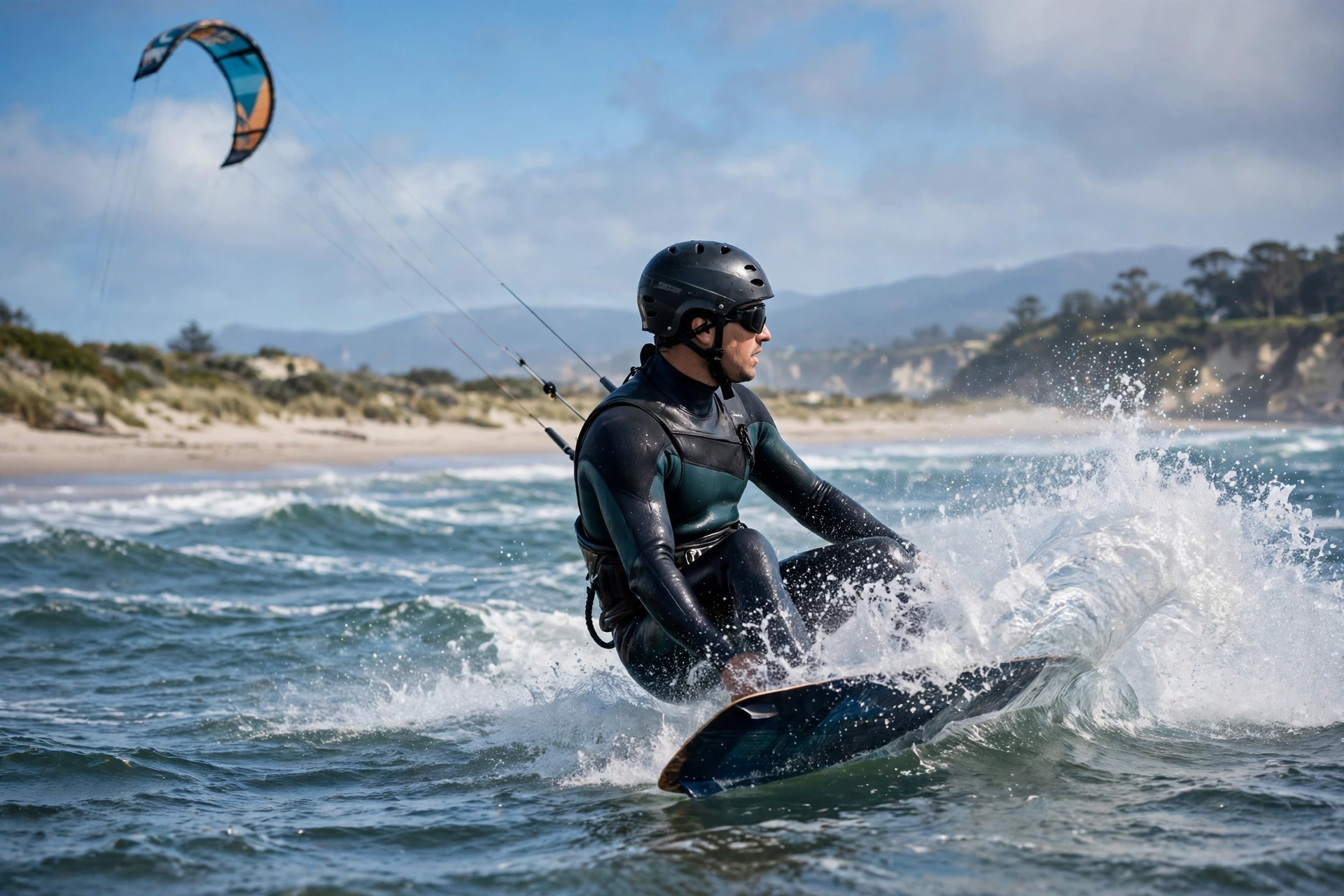
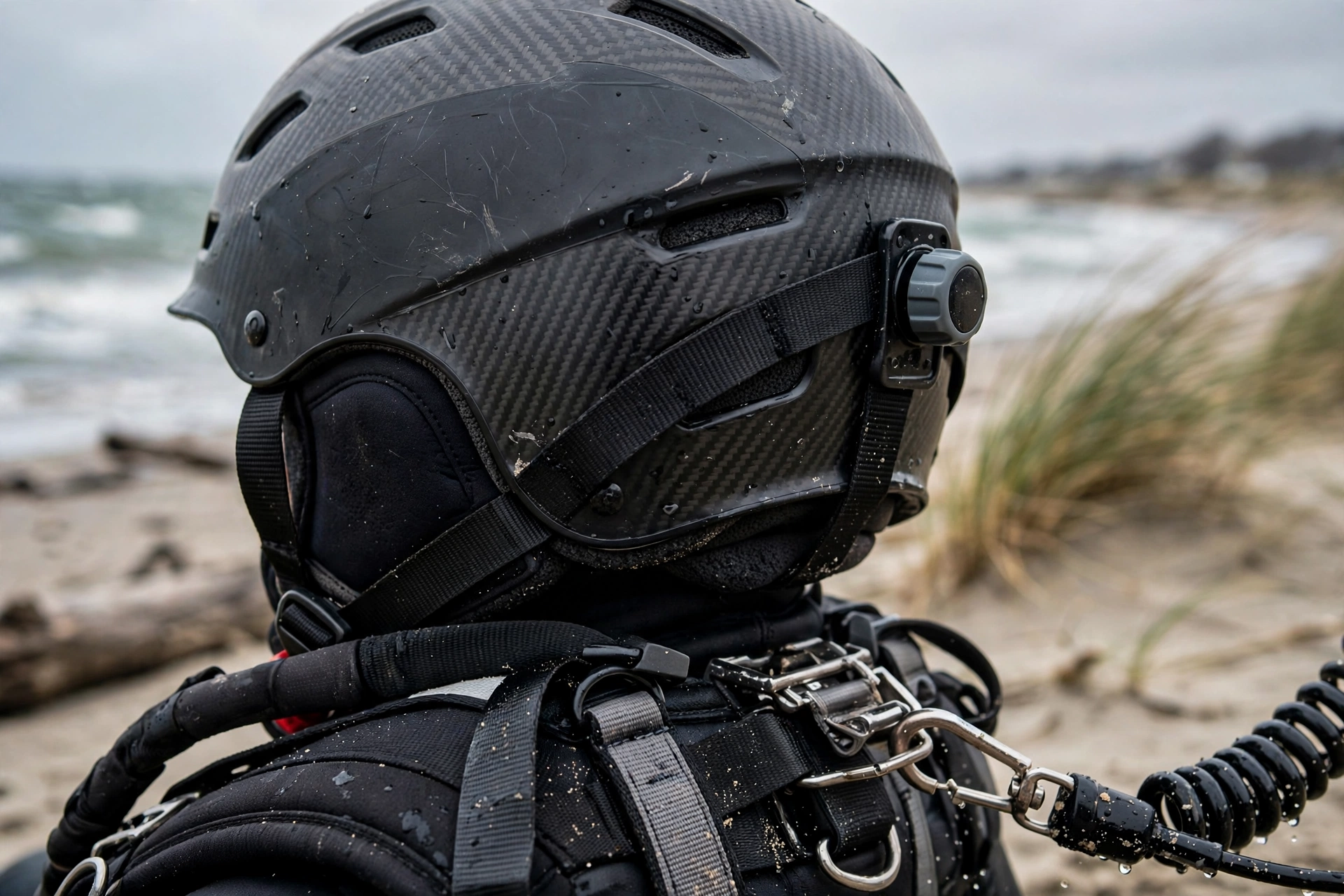
Look for a kiteboarding helmet that is made for water, not land: a low-profile shell with a snug strap system, closed-cell foam that does not soak up water, drainage or quick-drying padding, and ear protection that still lets you hear. A good kiteboarding helmet stays put through crashes and powered-up sessions, protects your head from board, bar, and water impacts, and feels light enough that you forget it is on.
Kiteboarding puts your head in a unique spot. You are moving fast, attached to a powerful kite, with a hard board at your feet and hard water below you. This guide explains what separates a real kiteboarding helmet from a borrowed bike or ski helmet, and how to choose one that suits your riding.
What Makes a Kiteboarding Helmet Different From Other Helmets?
The biggest difference is water. A kiteboarding helmet is built to get soaked all session, every session. Its liner uses closed-cell foam that does not absorb water, so the helmet does not get heavier as the day goes on and does not go soggy and loose. A bike or ski helmet, by contrast, often uses foam and padding that soak up water, dry slowly, and can break down faster with constant saltwater exposure.
The shape is different too. Kiteboarding helmets sit low and close to the head, with a smooth, rounded shell and no long peak or visor sticking out. That matters because a kite can drag you, a crash can tumble you, and anything that catches the water or a line adds unwanted force. A low profile also keeps the helmet from being pushed around when you hit the water at speed.
Retention is the third difference. Water helmets use strap systems designed to hold the helmet on through repeated wipeouts, including a secure chin strap and often coverage around the ears that helps the helmet stay in place. A helmet that floats off or shifts in the first crash is not protecting anyone.
What Features Should You Look For in a Kiteboarding Helmet?
Start with the shell and liner. In general terms, look for a tough outer shell over an impact-absorbing foam liner, with a label showing the helmet meets a recognised watersports or multi-impact standard for its intended use. Check the maker’s description rather than assuming any helmet-shaped product is tested the same way.
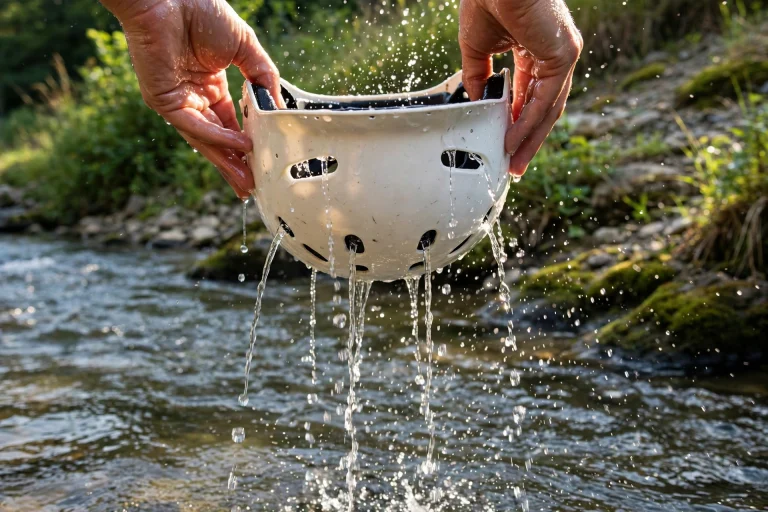
Next, look at drainage and padding. Removable, quick-drying comfort pads make rinsing out salt and sand easy, and vents or drain channels that let water escape stop the helmet feeling waterlogged after a crash. Ear pads or ear covers are a popular feature: they help protect your eardrums from hard slaps on the water and keep the straps sitting correctly, while still letting sound and wind cues through.
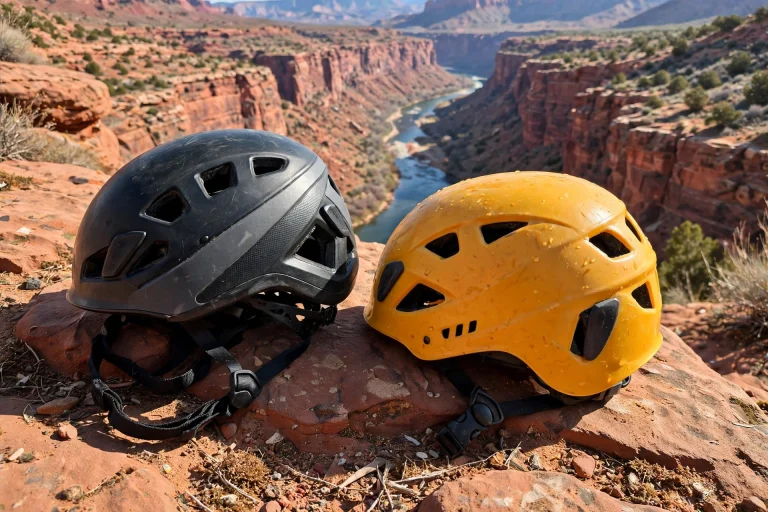
Finally, check the details you will live with. A simple, glove-friendly buckle, a strap that does not chafe a salty neck, and a fit-adjustment dial or pad kit all make the helmet easier to wear every session. Bright colours are worth considering too, because a visible head is easier for other riders, boats, and your launch partner to spot.
How Should a Kiteboarding Helmet Fit?
It should fit snug all the way around, with no rocking front to back or side to side when you shake your head. The helmet should sit level, low on the forehead, and stay in that position when you push on it firmly with a hand — that push test is a rough preview of what a water impact will try to do to it.
Use the maker’s size chart and measure your head around the largest part, just above the eyebrows and ears. If you are between sizes, the pad kits many water helmets include let you fine-tune the fit. Remember that the fit you need is the fit when wet: padding that feels fine in the shop can feel different after an hour in the water, so a secure, dialled-in fit matters more here than in most sports.
The chin strap should sit snugly under your chin with the buckle secure, tight enough that the helmet cannot be rolled off, but not so tight it hurts or restricts your breathing. If the straps slip through their adjusters easily, or the helmet lifts when you pull up on the front edge, keep looking — fit is the feature everything else depends on.
Do Kiteboarding Helmets Protect Against Rotational Impacts?
Most head impacts in kiteboarding are angled — a tumble across the water, a swing into the board, a fall onto packed wet sand. Angled impacts can twist the head as well as strike it, and that twisting motion is part of what modern helmet design tries to manage. Understanding what MIPS is for helmets helps explain the idea: low-friction liner systems are designed to let the helmet move slightly relative to the head, reducing some of the rotational force transferred in an angled hit.
Not every water helmet offers a rotational system, and a helmet without one is not automatically a poor choice. The fundamentals still come first: a helmet made for water, a proper standard for its use, and a genuinely snug fit. If two helmets both meet those basics, a model that also addresses rotational forces is a reasonable tie-breaker.
Whatever system a helmet uses, it can only work if it stays on and stays positioned. That is another reason the strap system and wet fit deserve as much attention as any technology inside the shell.
When Should You Replace a Kiteboarding Helmet?
Replace it after any hard impact, even if the shell looks unmarked. Foam that has crushed to absorb one big hit may not absorb the next one the same way, and the damage is often hidden under the shell or liner. A helmet that has been dragged, slammed, or struck by the board in a heavy crash has done its job once — do not ask it to do it twice.
Replace it, too, when age and saltwater catch up with it. In general terms, constant sun, salt, and sand age straps, padding, and shells, so check regularly for frayed straps, a buckle that no longer holds firmly, cracked or brittle shell material, and padding that has compressed so the fit has gone loose. Any of those is a sign the helmet is past its best.
Between sessions, rinsing the helmet in fresh water, letting it dry out of direct sun, and storing it away from heat will slow that ageing down. But no care routine lasts forever, and a fresh, well-fitting helmet is a small cost next to the powered-up sessions you ride in it.
Frequently Asked Questions
Q: Can I use a bike or ski helmet for kiteboarding?
A: It is not a good match. Land helmets often soak up water, sit higher on the head, and use straps not designed to stay secure through repeated wipeouts. A helmet made for water fits the job far better.
Q: Do I need ear protection in a kiteboarding helmet?
A: Many riders like it. Ear pads or covers help protect the eardrums from hard water slaps and help keep the helmet positioned, while still letting you hear wind and other riders reasonably well.
Q: Should a kiteboarding helmet float?
A: Most water helmets are close to neutrally buoyant and will not sink like a stone, which helps if one ever comes off. The real goal, though, is a strap system secure enough that it never comes off in the first place.

Olivia
Writer at Helmet Today, covering helmet reviews, fit and riding safety.