In general terms, check a growing child’s helmet fit often — at least once a month during periods of fast growth, at the start of every riding season, and after any fall or knock. Children grow in bursts rather than steadily, so a helmet that fitted perfectly a few months ago can become too tight, sit too high, or slide around without anyone noticing. A quick fit check takes only a couple of minutes, and it is the simplest way to make sure the helmet can still do its job.
Many parents check the fit when a child first gets a helmet and then forget about it. But a child’s head, hair, and riding habits all change over time. A thicker winter hat underneath, a new haircut, or a growth spurt can each change how the helmet sits. Building a regular check into your routine — for example, on the first weekend of each month — keeps small problems from turning into a helmet that no longer protects properly.
How often should you check a child’s helmet fit?
As a general guide, a brief check once a month works well for younger children, who tend to grow fastest, while older children can often be checked every couple of months and at the start of each season. In general terms, you should also check the fit straight away after a growth spurt you have noticed in clothes or shoes, after the helmet has been dropped or involved in a fall, and whenever your child complains that it feels different. If your child rides several times a week, the straps and pads also wear and loosen with use, which is another reason to check regularly rather than once a year.
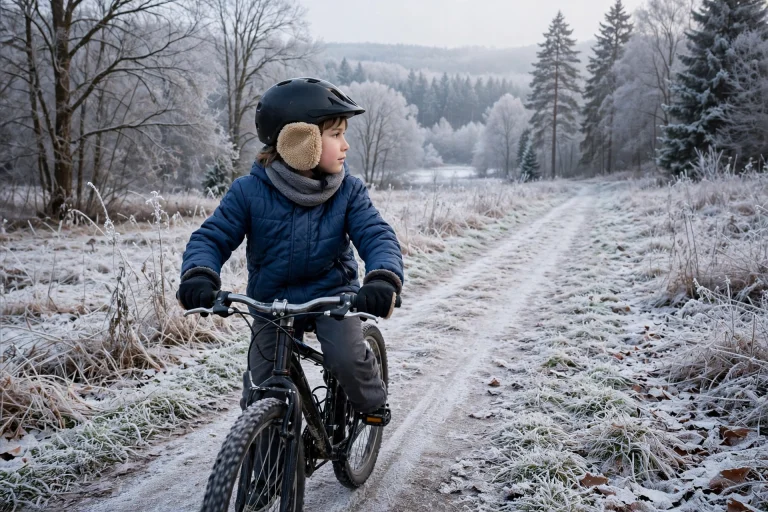
Seasonal changes matter too. A helmet checked in summer may fit differently in winter when a thin balaclava or hat goes underneath, and a helmet adjusted for winter layers may feel loose again in spring. Rather than guessing, run through the same short fit check each time the seasons change.
What are the signs that a child’s helmet no longer fits?
There are several easy signs to watch for. The helmet may feel tight and leave red marks on the forehead, or your child may complain of pressure or headaches. It may sit too high on the head, exposing the forehead, or rock forward and backward when your child shakes their head gently. The straps may need constant re-tightening, the side buckles may have slipped out of place, or the chin strap may no longer sit snugly under the chin. If the helmet has been adjusted as far as it will go and still moves around, that is a strong sign it has been outgrown.
Children are not always reliable reporters of fit problems. Some will say nothing because they do not want to stop riding, while others will complain about every helmet regardless of fit. That is why a hands-on check matters more than simply asking. Look at the helmet from the front, side, and back while your child wears it, and check that it sits level, low on the forehead, and does not slide when they move their head. If you are unsure, compare how it sits now with how it sat when it was new.
How do you do a quick helmet fit check at home?
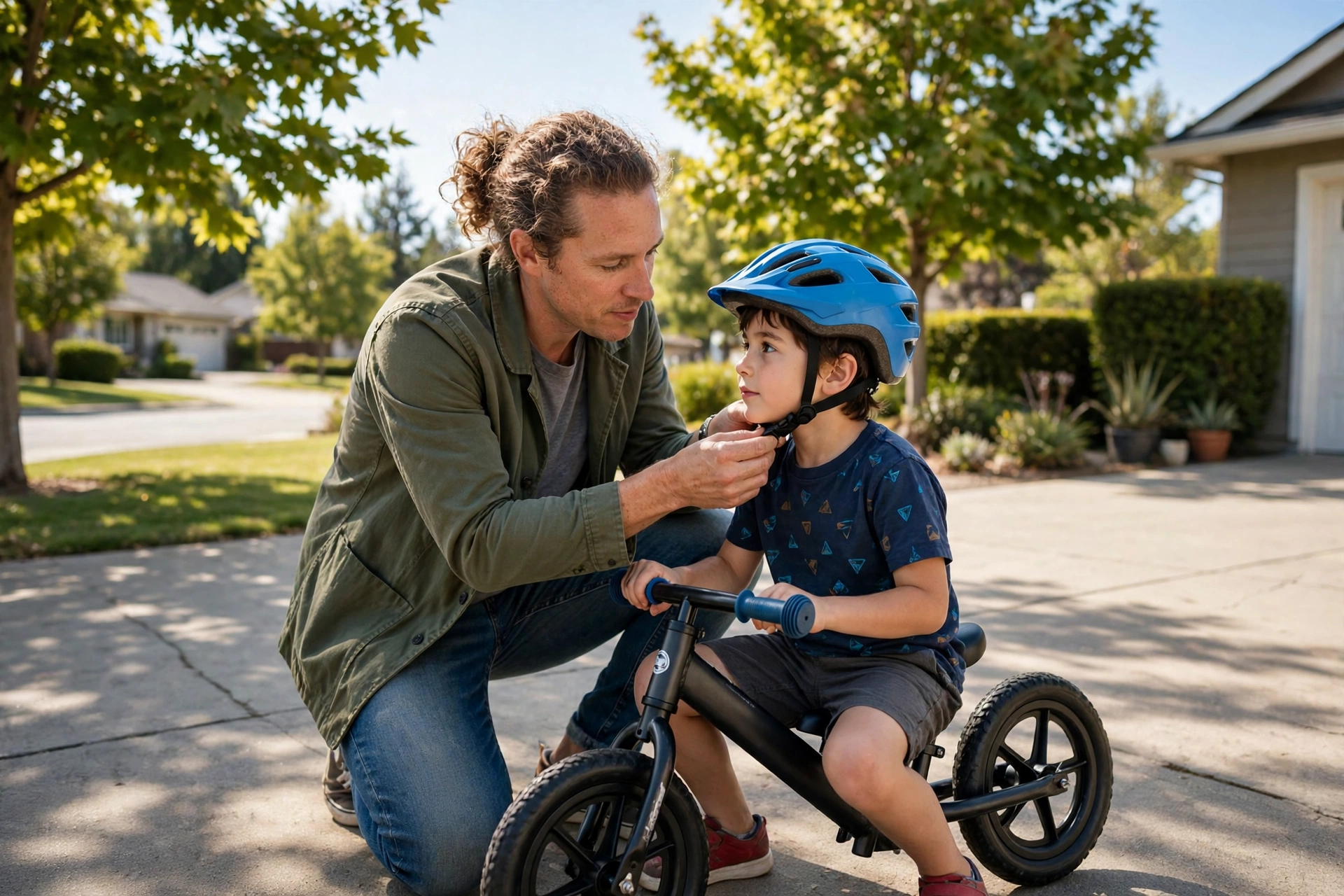
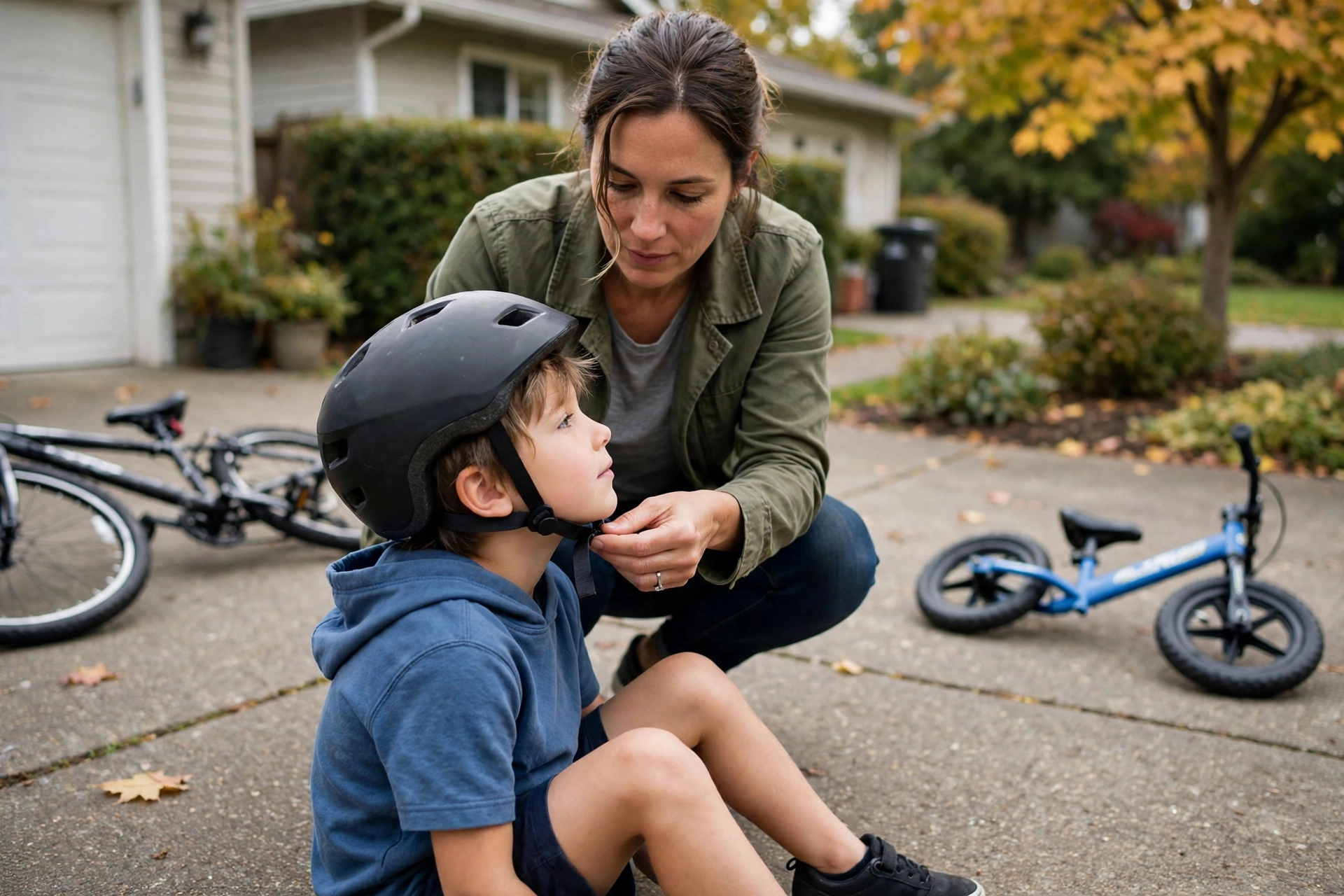
Start with your child wearing the helmet as they would for a ride, with no bulky hat underneath unless that is what they will actually wear. The helmet should sit level on the head, about two fingers’ width above the eyebrows, and it should feel snug all the way around without pressing painfully in one spot. Ask your child to shake their head gently from side to side and up and down; the helmet should move with the head, not slide independently over it.
Next, check the straps. The side straps should form a neat V shape just below each ear, and the chin strap should be snug enough that you can fit only about one or two fingers between the strap and the chin. Tighten or loosen the rear dial or pads if the helmet has them, and re-check the level position afterwards, because tightening one part can tilt the helmet. Finish by asking your child to open their mouth wide: the helmet should pull down slightly, which shows the chin strap is doing its job. If any step fails, adjust and repeat until the helmet passes all of them.
Does a child’s age change how often you should check?
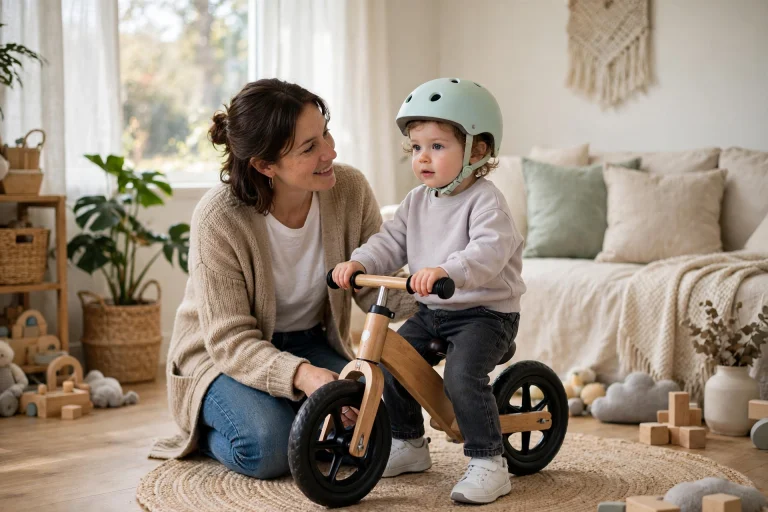
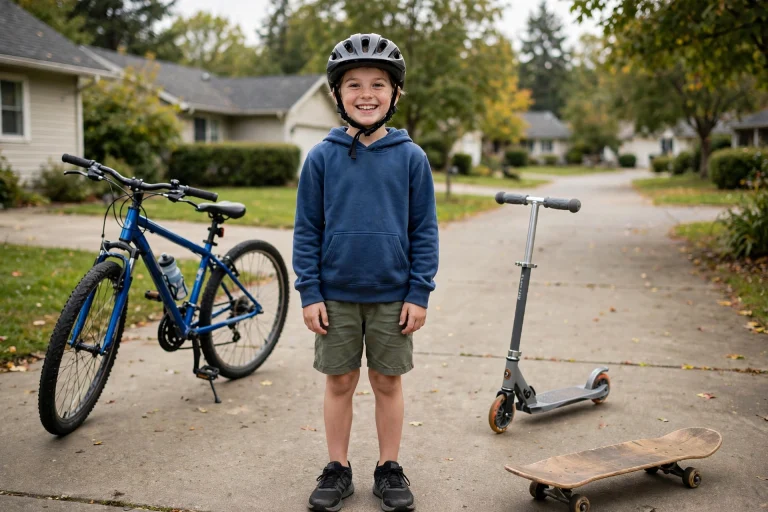
Yes, in general terms. Toddlers and younger children grow quickly, and their heads change shape as well as size, so monthly checks make sense. Primary-school children still grow fast, especially during growth spurts, and they also ride more independently, so they may not tell you when something feels wrong. Teenagers grow more slowly in head size, but they ride faster and more often, and they may swap helmets with friends or change hairstyles, both of which affect fit. For every age group, the rule is the same: check more often when growth, riding frequency, or riding conditions change.
It also helps to involve your child in the check as they get older. Teach them what a good fit feels like and how to spot a helmet that rocks or sits too high. Children who understand the check are more likely to speak up when a helmet feels loose or tight, and they are more likely to keep wearing a helmet that fits well. Make it a normal part of getting ready to ride, like checking the brakes or pumping the tyres, rather than a special event.
When should you adjust a helmet, and when should you replace it?
Adjust first. Most children’s helmets have a rear adjustment dial, interchangeable pads, and adjustable straps, and a helmet that feels slightly loose or slightly tight can often be fixed in minutes. Try thinner or thicker pads, re-route the straps, and re-set the side buckles before deciding the helmet is finished. If the helmet still rocks, sits too high, or cannot be tightened enough after adjustment, it is time to move up a size. A helmet that is too small cannot be made safe by loosening the straps, because the shell itself no longer covers enough of the head.
Also consider replacement after any significant impact, even if the helmet looks fine on the outside. Damage to the foam inside is not always visible, and a helmet that has absorbed a hard knock may not protect as well next time. If you are choosing a replacement, it is worth reading up on newer safety features, such as what MIPS for helmets means, so you understand the options available. Whatever you choose, fit comes first: the safest helmet is the one that fits your child’s head properly today, not the one with the most features.
Frequently Asked Questions
Q: How often should I check my child’s helmet fit?
A: In general terms, check once a month for younger children, every couple of months for older children, and always at the start of a season, after a growth spurt, and after any fall.
Q: What is the quickest way to tell if a helmet is too small?
A: If it sits high on the forehead, leaves red marks, causes complaints of tightness, or cannot be adjusted to stop it rocking, it has likely been outgrown and should be replaced with the next size up.
Q: Can I just loosen the straps if my child’s helmet feels tight?
A: Loosening the straps may ease pressure, but it will not fix a shell that is too small. If the helmet still sits too high or rocks after adjustment, a larger size is the safer choice.

Olivia
Writer at Helmet Today, covering helmet reviews, fit and riding safety.