In general terms, sizing a helmet for a child under two comes down to three steps: measure the head carefully, match that measurement to the maker’s size chart, and check the fit on your child’s head. Under-twos have smaller, rounder heads than older children, and they grow quickly, so a helmet that fits today may be snug within a few months. Taking the time to measure properly — rather than guessing from age — is the difference between a helmet that stays put and one that slides over the eyes or rocks from side to side.
Many parents find under-two sizing confusing, because toddler helmets use different size ranges from children’s helmets and because two helmets labelled the same size can fit differently. That is normal: shell shapes vary between brands, just as shoe shapes do. The good news is that you do not need any special equipment. A soft tape measure, a few minutes, and a hands-on fit check are enough to get a helmet that fits your toddler well.
How do you measure a toddler’s head for a helmet?
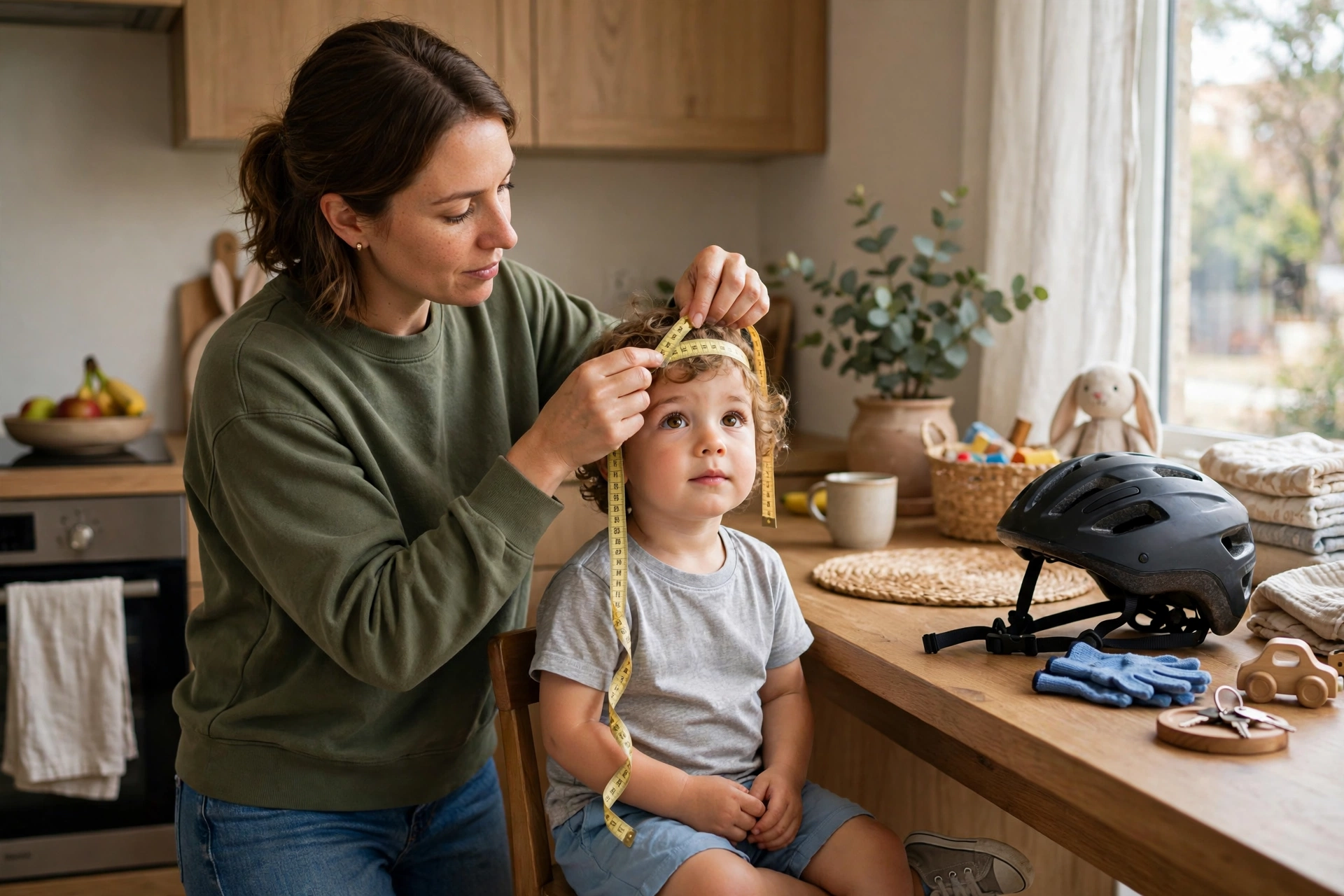
Use a soft fabric tape measure, or a piece of string you can measure against a ruler afterwards. Wrap it around the widest part of your toddler’s head, just above the eyebrows and ears, and around the fullest part at the back. Keep the tape level and snug but not tight — it should sit flat against the head without denting the skin. Take the measurement twice, because toddlers wiggle, and use the larger reading if the two differ slightly.
It helps to measure when your toddler is calm and settled, perhaps sitting on your lap with a toy to hold. If your child will not sit still for a tape measure, try measuring while they are distracted by a book or snack, or ask another adult to help. Write the measurement down, because you will need it when comparing size charts, and because it is useful to re-measure every month or two — under-twos can outgrow a size faster than parents expect.
What size helmet does an under-two usually need?
There is no single size for all under-twos, because head size varies widely at this age. In general terms, most helmet makers offer a toddler or extra-small size designed for the youngest riders, with an adjustment system that covers a range of head sizes rather than one fixed measurement. That is why the size chart matters more than the age label on the box: a small two-year-old and a large one-year-old may need different sizes, even though their ages suggest otherwise.
When comparing charts, find the range that contains your toddler’s head measurement, and prefer a helmet where your child’s measurement sits comfortably within the range rather than right at the edge. A helmet at the very top of its range will be outgrown sooner, while one at the very bottom may rely heavily on thick pads to fill the gap. If your toddler falls between two sizes, try both on if you can — the one that sits level and snug with minimal adjustment is usually the better choice.
Why is sizing trickier for under-twos than for older children?
Under-twos have proportionally larger, rounder heads and softer hair, and they cannot tell you clearly whether a helmet feels tight or loose. They may pull at any helmet simply because it is new, which makes it hard to judge fit from their reaction alone. Their heads also change shape as they grow, not just size, so a helmet that fitted well a few months ago may start to sit differently even if it still fastens.
Another complication is weight. A helmet that is fine for a four-year-old may feel heavy for a toddler, causing them to tilt their head or complain. Look for toddler-specific models, which are designed to be lighter and smaller, with a flatter back so your child can lean back in a bike seat or trailer. A helmet that is light, well-balanced, and correctly sized is far more likely to be accepted — and worn — than a heavier hand-me-down from an older sibling.
How should a toddler helmet fit when it is on?
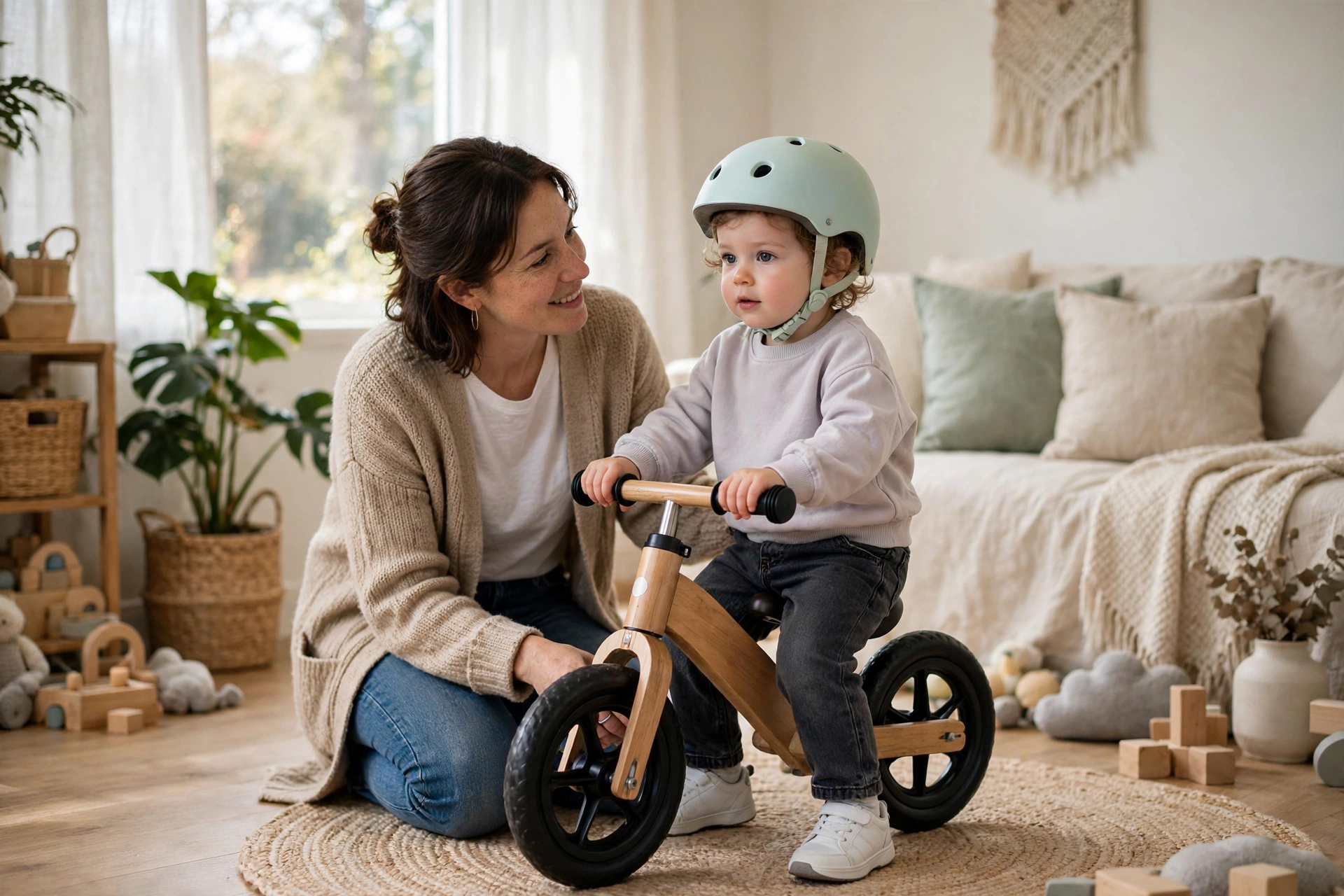
A well-fitting toddler helmet sits level on the head, low on the forehead, and snug all the way around. It should not slide down over the eyes, tip back to expose the forehead, or rock from side to side when your toddler shakes their head gently. The side straps should form a V shape just below each ear, and the chin strap should be snug enough that you can fit about one finger between the strap and the chin. If the helmet has a rear adjustment dial, tighten it until the helmet feels snug, then re-check that it still sits level.
Check the fit with your toddler wearing what they will actually wear on rides — for example, a thin hat in cold weather — because extra layers change the fit. Also check the helmet from behind: it should cover the back of the head well, not sit perched on top like a cap. If you have adjusted the dial, pads, and straps and the helmet still moves around, it is the wrong size or shape for your child, and a different model is a better option than forcing a poor fit.
When should you size up to the next helmet?
Size up when the helmet sits high on the head even after adjustment, when it leaves red marks or causes complaints of tightness, or when the adjustment dial is at its loosest and the helmet still feels tight. Also size up if your toddler has had a noticeable growth spurt — for example, if hats and clothes have suddenly become tight. Re-measuring the head every month or two makes this decision easy: when the measurement moves beyond the helmet’s size range, it is time for the next size.
Do not be tempted to buy a much larger helmet “to grow into.” A helmet that is too big will slide around and may not protect properly in a fall, and a toddler is far more likely to pull off a helmet that flops around. It is better to buy the size that fits now and replace it sooner than to buy big and hope. If you are choosing a new helmet and want to understand the safety features on offer, reading about what MIPS for helmets means can help, but correct sizing matters more than any extra feature for an under-two.
Frequently Asked Questions
Q: How do I measure my toddler’s head for a helmet?
A: Wrap a soft tape measure around the widest part of the head, just above the eyebrows and ears, keeping it level and snug. Measure twice and use the larger reading.
Q: Should I buy a bigger helmet so my toddler grows into it?
A: No. A helmet that is too big slides around and protects less well. Buy the size that fits now, and size up when the head measurement moves beyond the helmet’s range.
Q: How often should I re-check my under-two’s helmet size?
A: In general terms, re-measure every month or two, and always after a noticeable growth spurt, because under-twos can outgrow a helmet size quickly.

Olivia
Writer at Helmet Today, covering helmet reviews, fit and riding safety.