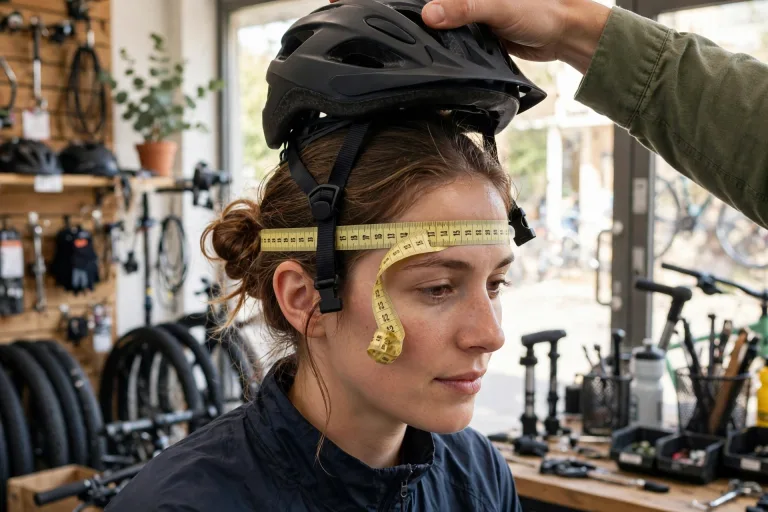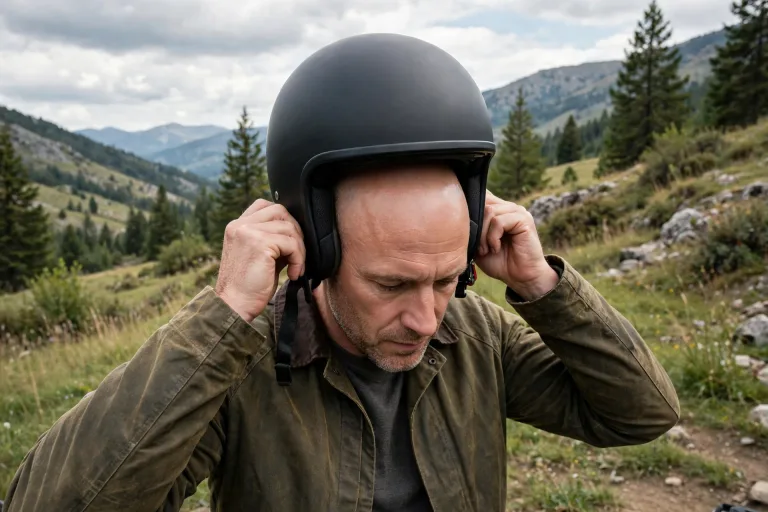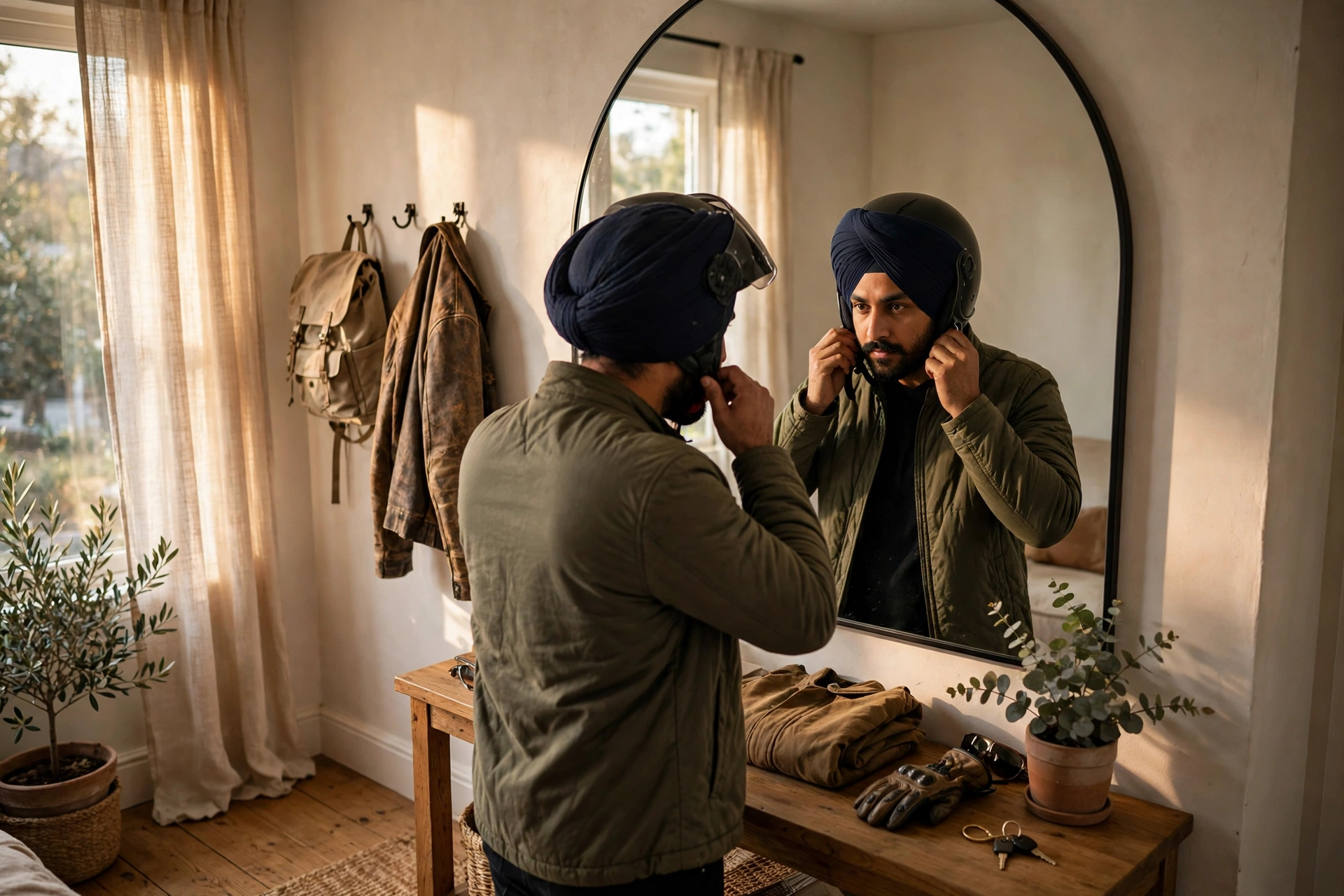
Helmet fit for riders with a turban means finding a helmet that can be worn safely and comfortably over a turban, with the helmet sitting level, snug, and secure on the head. In general terms, this usually means choosing a larger or more adjustable helmet and wearing the turban in a neat, compact style underneath, so that the helmet can sit in the right position rather than perched on top. There is no single size or model that works for everyone, because turbans differ in size, shape, and how they are tied.
This is a practical question that matters for Sikh riders and for anyone else who wears a turban for faith or culture and also rides a motorcycle, bicycle, or scooter. A helmet only protects well when it fits properly, so the goal is to respect the turban while still getting the helmet to sit where it should. The advice below is general and practical, and it is worth trying helmets on in person rather than guessing a size from a chart.
Why is helmet fit different when you wear a turban?
Helmet fit is different when you wear a turban because the turban adds bulk and shape around the head, and a helmet is designed to sit close to the skull. A standard helmet size that fits the same person without a turban may be too tight or may sit too high when the turban is worn, which can leave the forehead or the sides of the head less covered than they should be. The helmet may also feel unstable, because it is resting on fabric rather than gripping the head evenly.
A tall or loosely tied turban can push the helmet upward, while a neat, compact turban gives it a flatter surface to sit on. The best approach is to try the helmet on while wearing the turban exactly as you would wear it on the road.
How can you get a good helmet fit over a turban?
To get a good fit over a turban, start by wearing the turban in the way you normally wear it for riding, and then try on helmets that are one size larger than your usual size, or helmets with a deeper shell and a more adjustable fit system. The helmet should sit level on your head, low enough at the front to cover your forehead, and snug all round without pressing painfully in one spot. It should not tip forward over your eyes or slide back when you nod.
Check the fit by shaking your head gently from side to side and up and down. The helmet should move with your head rather than sliding around on its own, and the chin strap should fasten snugly under the chin without pulling the helmet out of position. If the helmet feels tight in one place and loose in another, try a different shell shape or a different brand, because helmet shapes vary and a rounder or more oval shell may suit your turban better.
What kind of helmet works best with a turban?
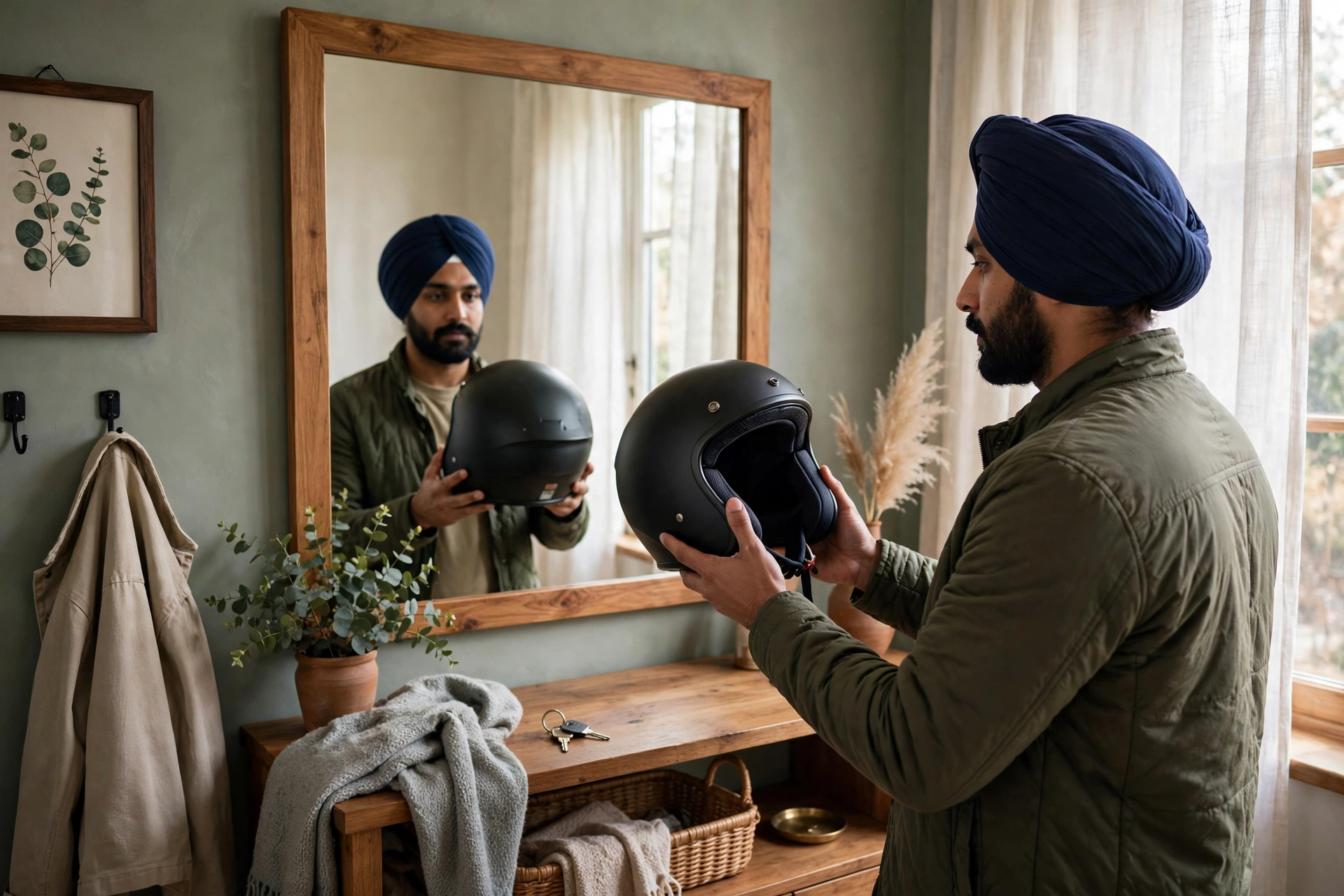
In general terms, an open-face helmet is often easier to fit over a turban than a full-face helmet, because there is less material around the chin and cheeks and more room to adjust the fit. That said, the best type depends on the riding you do. A full-face helmet gives more coverage, but it can be harder to put on and take off over a turban, and it may press on the fabric in a way that feels uncomfortable on a long ride.
Some riders prefer a helmet with a dial or ratchet system at the back, because it lets them fine-tune the fit around the turban without changing the shell size. Others look for a helmet with a removable lining, so that the fit can be adjusted and the lining washed. Whatever type you choose, the helmet should meet the safety standard for your riding, and the fit should be checked with the turban on, not without it. A helmet that fits well without a turban may not fit well with one, and the other way round.
What about comfort on longer rides?
Comfort on longer rides comes down to pressure, heat, and stability. A helmet worn over a turban can press on the fabric and create a sore spot, especially at the front or the sides, so it is worth wearing the helmet for a while in the shop before you buy it. If a pressure point appears within a few minutes, it is likely to feel worse after an hour on the road, and a different size or shape may be a better choice.
Heat is the other factor. A turban adds an extra layer, and a helmet adds another, so ventilation matters. Look for a helmet with vents that let air flow through, and a lining that can be removed and washed, because sweat can build up on a warm day. Some riders also find that a lighter helmet is easier to wear for a long stretch, and that a helmet with MIPS or a similar system feels no different in fit, since that system sits inside the helmet and is about reducing rotational forces in a fall rather than changing the shape.
What should you avoid when fitting a helmet over a turban?
Avoid a helmet that sits high on the head, tips easily, or can be pulled off without undoing the strap, because these are signs that the fit is not secure. Avoid forcing a helmet that is clearly too small, even if it is the style you like, because a helmet that is too tight can be uncomfortable and may not sit in the right position. In general terms, if you have to change the way you tie your turban a great deal just to make a helmet fit, it may be worth trying a different helmet first.
Also avoid judging the fit by how the helmet looks in a mirror alone. The look matters less than the position and the stability, and a helmet that looks neat but slides around is not doing its job. Check the fit with the strap fastened, check it again after walking around for a few minutes, and ask someone in the shop to look at the position from the side and the back.
Can you wear a helmet over a turban?
In general terms, yes, many riders wear a helmet over a turban by choosing a larger or more adjustable helmet and wearing the turban in a neat, compact style underneath. The key is to try the helmet on with the turban in place and check that it sits level and stays secure.
Should you buy a bigger helmet size for a turban?
Often, yes, a larger size is a good starting point, but size alone is not enough. The shell shape and the adjustment system matter too, so try on a few sizes and shapes and choose the one that sits level and feels snug all round.
Does wearing a turban change which helmet standard you need?
No, the safety standard depends on the type of riding you do, not on the turban. Choose a helmet that meets the standard for your motorcycle, bicycle, or scooter, and then find the size and shape that fits well over your turban.

Olivia
Writer at Helmet Today, covering helmet reviews, fit and riding safety.