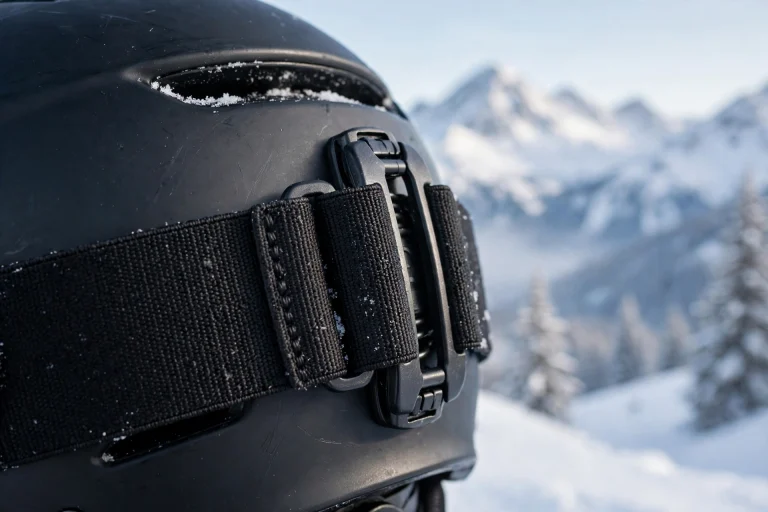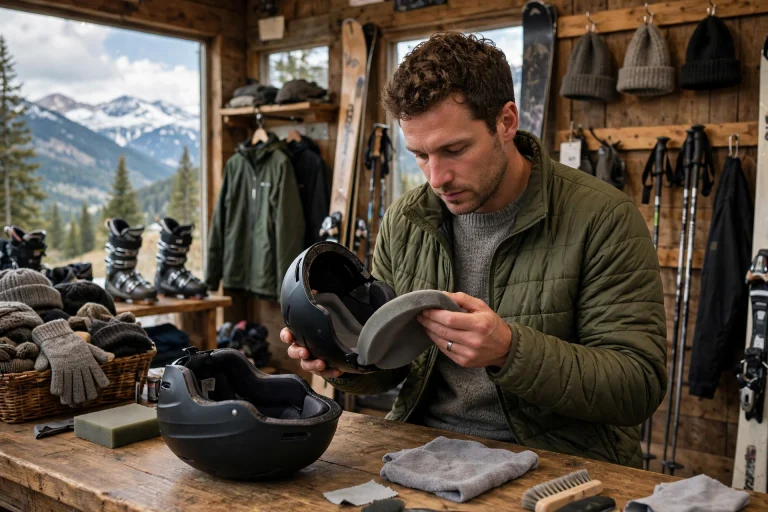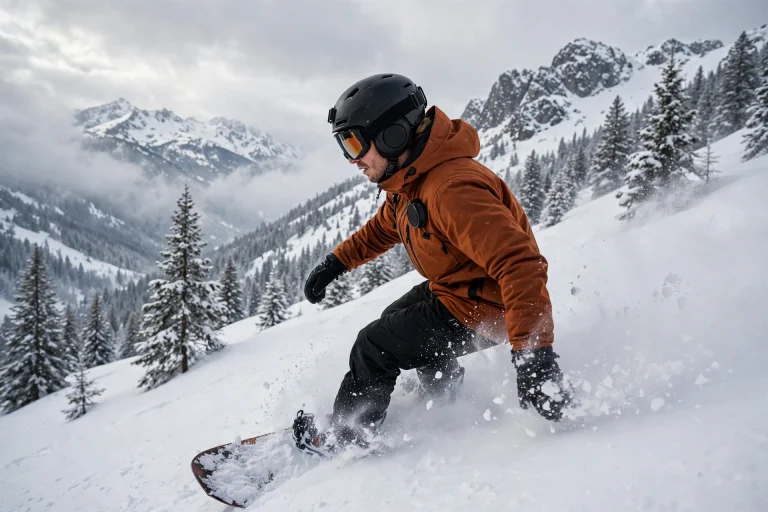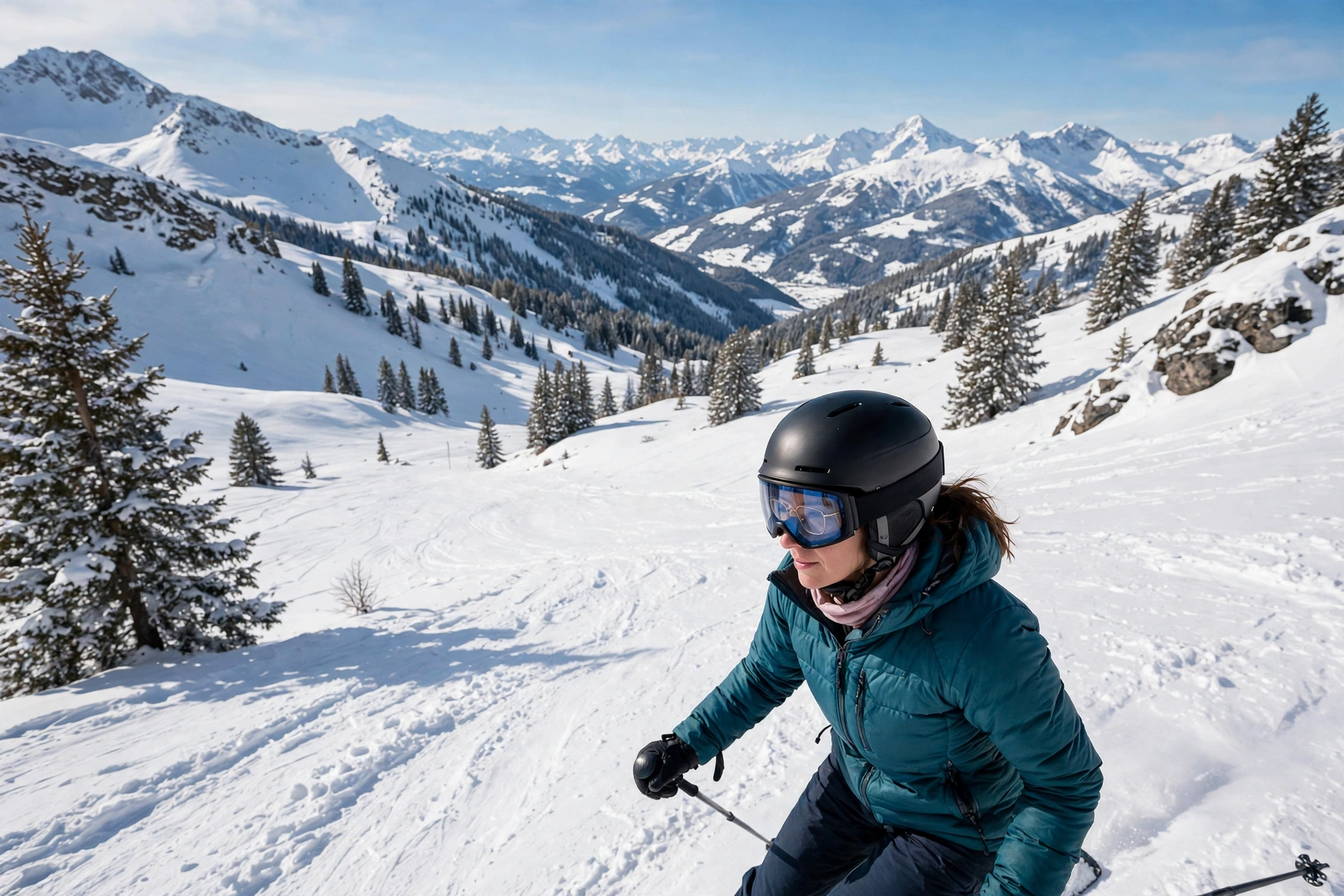
In general terms, an OTG ski helmet is one designed to be worn Over The Glasses, with extra room around the temples and a goggle channel shaped so your everyday glasses sit comfortably underneath without being squeezed against your face. If you wear prescription glasses on the slopes, an OTG helmet is usually the simplest route to clear vision, because it is built around the glasses rather than forcing them into a space made for bare eyes alone.
This guide explains what OTG really means, how to check whether your glasses fit, which features matter most for glasses wearers, and how to deal with fogging, so you can choose a helmet that protects your head without punishing your frames.
What Does OTG Mean on a Ski Helmet?
OTG stands for Over The Glasses, and it describes a helmet and goggle combination that leaves room for prescription glasses underneath. In general terms, an OTG helmet has a slightly roomier fit around the sides of the head, softer or reshaped padding at the temples, and a goggle frame deep enough that the glasses sit inside it rather than being pressed flat against your face. The label is applied to helmets, and often to goggles too, and the two parts are meant to work together as a system.
OTG helmets also tend to be designed with ventilation in mind. Glasses fog when warm, moist air from your face and breath gets trapped against cool lenses, so in general terms a helmet that moves air across the goggle area helps keep lenses clearer. Look for vents above the goggles and channels that direct air over the lenses rather than straight onto them, and check that the vents can be opened and closed, because conditions on the mountain change through the day.
How Do You Know If Your Glasses Fit Under an OTG Helmet?
The only reliable test is to try the helmet on with your own glasses and your own goggles, in that order. Put your glasses on first, then the helmet, then the goggles, and wear the combination for several minutes rather than just a few seconds. Pressure that feels minor at first can become a headache after an hour on the lift, and temple arms that dig in will only feel worse once you are moving and your face gets warm.
Check four things during the test. First, the temple arms should lie flat without bending or bowing outward. Second, the glasses should not slide down your nose when you nod or shake your head gently. Third, the goggle frame should close around the glasses without pushing them into your cheeks or eyebrows. Fourth, you should be able to see clearly to the sides without the goggle frame cutting off your peripheral vision, because a narrow view on a busy slope is a real safety problem.
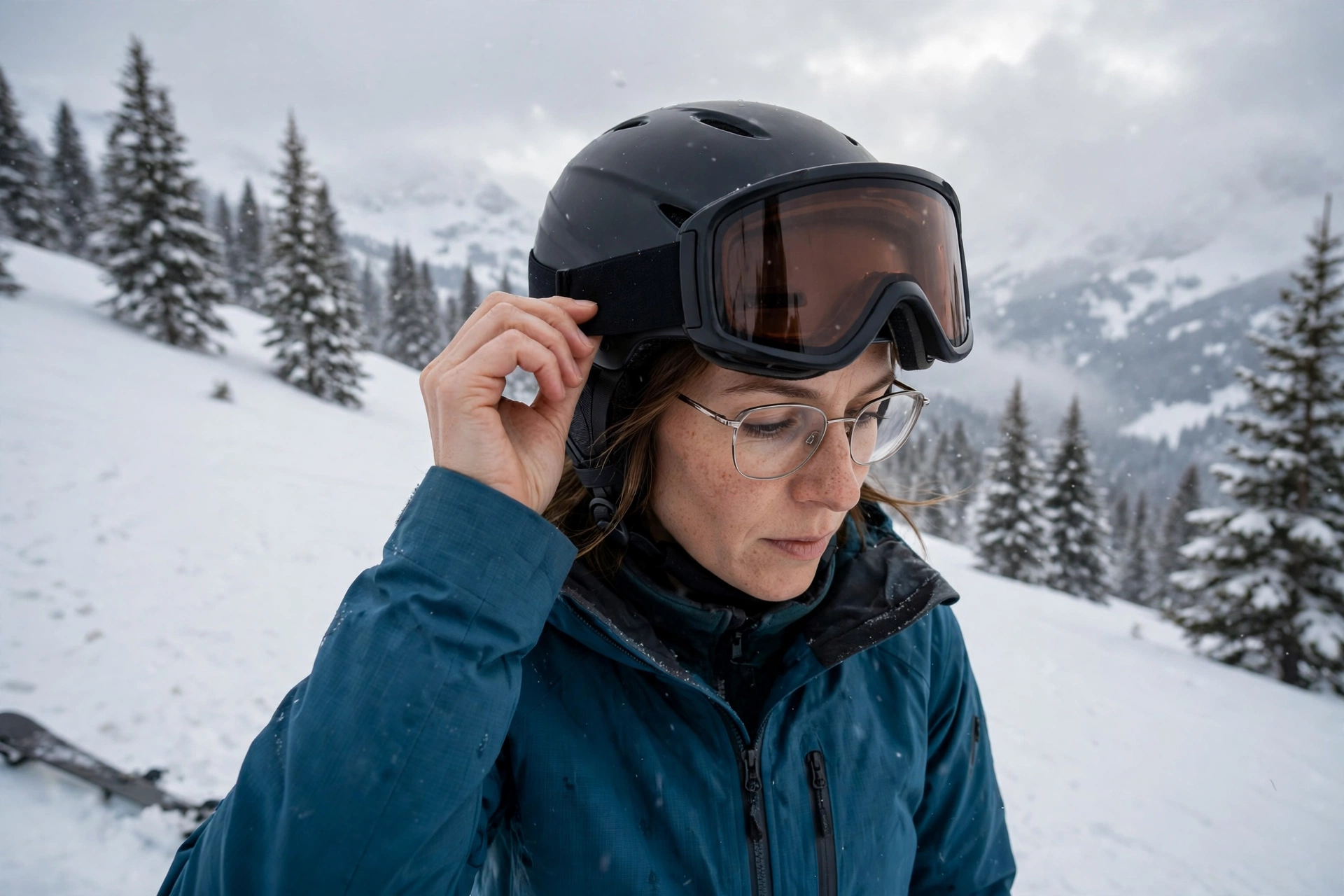
What Goggle and Vent Features Help Glasses Wearers Most?
Goggles matter as much as the helmet, because the goggles are what actually enclose your glasses. OTG goggles are deeper than standard goggles, with a frame that stands further from the face, and they often have notches or cut-outs in the foam where the temple arms pass through. Without that depth, the goggle lens presses the glasses against your face, which is uncomfortable and can distort your vision.
Ventilation is the second key feature. Goggles with vents at the top and bottom allow air to circulate, and when the helmet’s vents line up with the goggle vents, the whole system breathes better. In general terms, a helmet and goggle set from the same maker, or at least a pair known to fit together well, will line up better than a random combination. Ask the shop to check the pairing, or look for fit guides that list compatible combinations.
What Should You Avoid When Choosing a Ski Helmet for Glasses?
Avoid choosing a helmet a size too large just to make room for your glasses. A helmet that is too big will move on your head, slide over your eyes in a fall, and fail to protect you properly, however comfortable it feels in the shop. The helmet must fit your head first, and the glasses must fit inside that correctly sized helmet. If no size in a model works with your glasses, try a different model rather than sizing up.
Also avoid rigid, wide, or sharply bent temple arms, which are the frames most likely to cause pressure points. Thick arms also break the seal of the goggle foam, letting cold air and snow in around the edges. In general terms, straight, slim arms that sit close to the head work best under a helmet. If your everyday frames are wide, consider whether a slimmer pair is practical for skiing days.
How Do You Stop Glasses Fogging Under a Ski Helmet?
Fogging is the most common complaint from skiers who wear glasses, and it happens because warm air from your skin and breath meets cold lenses. The first fix is airflow: keep helmet and goggle vents open while you are moving, and avoid pulling a neck gaiter or balaclava up over your nose, because that directs your breath straight up behind the lenses. A gaiter worn below the chin, or one with a breathing vent, makes a noticeable difference.
Anti-fog wipes and sprays made for glasses can help, and they are cheap enough to carry in a pocket. Apply them before you head out, not after the lenses have already fogged, and reapply during the day as needed. In general terms, these products reduce fogging rather than eliminating it completely, so combine them with good ventilation rather than relying on them alone. Avoid household anti-fog tricks that could damage lens coatings, and check that any product you use is safe for your lens material.
When fogging does happen, the best move is usually to stop, lift the goggles briefly to let air circulate, and let the lenses clear naturally. Wiping fogged lenses with a glove tends to smear them and can scratch coatings. If fogging is constant despite vents and anti-fog treatment, the fit may be the problem: glasses sitting too close to your face, or goggles sealing too tightly, trap more warm air, and a different goggle or helmet combination may breathe better. Rotational protection matters too, and low-friction liner designs explained in this guide to what MIPS is for helmets are worth understanding when you compare helmet models.
Frequently Asked Questions
Q: Do I need an OTG helmet if I wear glasses?
A: In general terms, an OTG helmet makes life much easier, but it is not the only option. Some skiers use slim frames in a standard helmet, and others switch to contacts. OTG is the most straightforward choice if you want to keep wearing your everyday glasses on the slopes.
Q: Can I wear any glasses under an OTG helmet?
A: Not always. Very wide or thick frames may still pinch or break the goggle seal, even in an OTG setup. Try your own frames with the helmet and goggles before committing, and consider a slimmer pair for skiing if your usual frames do not fit well.
Q: Why do my glasses still fog in an OTG helmet?
A: Fogging comes from warm, moist air meeting cold lenses, and OTG room alone does not prevent it. Keep vents open, keep your breath directed away from the lenses, and use an anti-fog product made for glasses. If fogging stays constant, the helmet and goggle fit may need adjusting.

Olivia
Writer at Helmet Today, covering helmet reviews, fit and riding safety.